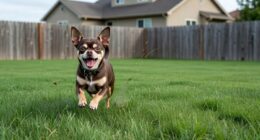


I thought I knew dogs before Rosie arrived. I had grown up with Golden Retrievers, fostered a few mutts, and spent years reading every training book I could find. Then this three-pound fawn-colored opinion showed up and within forty-eight hours I realized that everything I understood about living with a dog was either wrong or irrelevant when applied to a chihuahua. There are things chihuahua owners must know that simply do not apply to any other breed, and I learned every single one the hard way.
Three years later I have scar tissue on my ego and a much healthier chihuahua. The lessons I learned in those early months are the ones I wish someone had handed me on a laminated card the day I brought her home. These are not generic breed overview tips. These are the things that chihuahua owners must know because getting them wrong does not just inconvenience you — it can genuinely hurt your dog.
Their Tiny Size Makes Everything a Medical Risk Chihuahua Owners Must Know
I do not say this to be dramatic. I say it because Rosie fell off my bed at seven months old and fractured her front leg, and I spent the next six weeks carrying a dog in a splint who weighed less than my laptop charger. Chihuahuas are the smallest recognized breed in the world and that tininess creates vulnerability you have to think about every single day. Their bones are fragile. Their skulls sometimes have an open fontanel, a soft spot that never fully closes. Their tracheas can collapse from something as simple as leash pressure on a standard collar.
The AKC breed profile mentions these vulnerabilities in clinical terms, but living with them is different. You learn to scan the floor for dropped pills because one Tylenol can kill a chihuahua. You learn to check recliners before sitting because a sleeping chihuahua can be invisible in a cushion fold. A two-foot drop that would not register for a Labrador means a spiral fracture and a $3,000 vet bill for a dog whose leg bone is the width of a pencil.
Hypoglycemia Hits Without Warning
Low blood sugar hits chihuahuas faster and harder than almost any other breed because they have almost no fat reserves and a metabolism that burns glucose like a sports car burns premium fuel. Rosie went hypoglycemic once during a stressful vet visit. Watching a dog go from alert to glassy-eyed to unresponsive in ten minutes is something I never want to experience again. I now carry Nutri-Cal paste in my purse, the car, and the nightstand. The VCA guide on hypoglycemia explains why this matters and I recommend every chihuahua household read it.
Chihuahua Owners Must Know About Separation Anxiety
Chihuahuas are widely described as “one-person dogs” and that description does not capture what actually happens. Rosie did not just prefer me — she fused herself to me at a molecular level. She followed me room to room, panicked when I closed the bathroom door, and screamed like she was being tortured every time I left for work. Separation anxiety in chihuahuas is not just common. It is practically the default setting and the intensity caught me completely off guard.

What chihuahua owners must know is that this bonding pattern, left unmanaged, creates a dog who cannot function independently. Rosie refused to eat if I was not in the room. She shook and drooled in her crate. She once chewed through a kennel liner because the sound of my car starting triggered a full panic. I worked with a behavioral specialist to build her independence gradually and it took months of departure training before she could handle me leaving without an emotional collapse.
Building Independence from Day One
Start separation training the first week. Feed meals in a separate room with the door open. Practice short absences, thirty seconds, then a minute, then five, and return without fanfare. Give a frozen Kong during departures so your chihuahua associates leaving with something positive. Rosie now settles on her bed when I grab my keys. That transformation took four months of consistency. Our socialization guide covers the full approach.
Small Dog Syndrome Is Something Chihuahua Owners Must Know They Cause
This is the one that stings. Small dog syndrome, that cluster of excessive barking, snapping, refusing to walk, demanding to be carried, behaving like a tiny tyrant, is not a personality trait. It is the direct result of owners treating chihuahuas differently than they would treat a German Shepherd. I treated Rosie differently from the moment she came home and I created every problem I complained about.
I carried her everywhere because she was small. I let her growl at visitors because it seemed harmless. I fed her from the table because watching a three-pound dog beg was adorable. I laughed when she barked at bigger dogs because David versus Goliath is entertaining at four pounds. Within six months I had a dog who was genuinely difficult to live with and the fault was entirely mine.
The Rule That Fixed Everything
My trainer laid it out simply. Would you let a Rottweiler do that? If no, do not let the chihuahua do it either. Rosie now walks on leash like a normal dog. She sits for food. She greets visitors politely. None of this required harshness — just consistency. According to ASPCA behavioral experts, the single biggest predictor of small breed behavior problems is inconsistent owner boundaries.
Health Monitoring That Chihuahua Owners Must Know Is Non-Negotiable
Because chihuahuas are so small, health problems escalate faster than in larger breeds. A bout of diarrhea that a Labrador would shrug off can dehydrate a chihuahua dangerously in hours. Dental disease, which plagues the breed due to their crowded tiny jaws, can lead to systemic infections if teeth are not maintained. Patellar luxation, where the kneecap slips out of place, affects an estimated 30 percent of chihuahuas according to PetMD.
I now do a weekly health check on Rosie that takes about five minutes. I check her teeth for tartar buildup, feel her kneecaps for any looseness, look at her eyes for cloudiness or discharge, check her ears for redness or odor, and weigh her on a kitchen scale because even a quarter-pound fluctuation in a chihuahua can signal something serious. This routine has caught two problems early that could have become expensive emergencies. Our health issues guide covers what to watch for in detail.
What Three Years with Rosie Taught Me That Matters Most
I am not going to pretend I got everything right immediately. I still carry Rosie over icy sidewalks because her feet are genuinely too small for salt crystals. I still let her sleep in my bed because we both sleep better that way. But the big stuff — the medical vigilance, the separation training, the consistent boundaries, the weekly health checks — changed everything. Rosie is happier, calmer, and more confident than she was a year ago, and our relationship shifted from codependent mess to something that works for both of us.
If you are a new chihuahua owner or you have had them for years and are realizing some habits might be causing problems, start here. Protect their physical safety obsessively. Build emotional independence before attachment becomes pathology. Hold them to the same standards you would hold any dog. And monitor their health weekly because their size leaves no room for catching things late. That is what chihuahua owners must know and everything else is refinement. You might also appreciate our article on knowing when your chihuahua loves you.
Chihuahuas are not necessarily harder but they require different attention. Their small size means medical emergencies escalate faster, their intense bonding makes separation anxiety more common, and their reputation as purse dogs often leads owners to skip training. Owners who take their care seriously find chihuahuas to be wonderful, relatively low-maintenance companions.
Treating their chihuahua like a baby instead of a dog. Carrying them everywhere, never setting boundaries, laughing at growling, and failing to socialize properly during the puppy window. These habits create the small dog syndrome behaviors that give chihuahuas a bad reputation and they are entirely preventable with consistent early training.
Most adult chihuahuas do well with 20 to 30 minutes of moderate exercise daily split between walks and play sessions. They are energetic dogs who benefit from mental stimulation as well. Puzzle toys, short training sessions, and interactive play supplement walks, especially during extreme weather when outdoor time needs to be limited for temperature-sensitive chihuahuas.
Seek emergency care immediately for falls from furniture or arms, sudden lethargy or unresponsiveness which may indicate hypoglycemia, labored breathing or persistent coughing suggesting collapsed trachea, seizures, bloated abdomen, inability to urinate, or any injury where the dog is not bearing weight. Chihuahuas have less physiological reserve meaning conditions larger dogs tolerate for hours become critical in minutes.
Chihuahuas can coexist well with children but it requires active adult management. Children must learn a chihuahua is not a stuffed animal with no picking up without permission, no chasing, no sudden grabbing. The dog needs a safe retreat that children cannot access. Supervised interactions with clear rules protect both the child from nips and the chihuahua from accidental injury.
Are chihuahuas harder to care for than bigger dogs?
Chihuahuas are not necessarily harder but they require different attention. Their small size means medical emergencies escalate faster, their intense bonding makes separation anxiety more common, and their reputation as purse dogs often leads owners to skip training. Owners who take their care seriously find chihuahuas to be wonderful, relatively low-maintenance companions.
What is the most common mistake first-time chihuahua owners make?
Treating their chihuahua like a baby instead of a dog. Carrying them everywhere, never setting boundaries, laughing at growling, and failing to socialize properly during the puppy window. These habits create the small dog syndrome behaviors that give chihuahuas a bad reputation and they are entirely preventable with consistent early training.
How much exercise does a chihuahua actually need each day?
Most adult chihuahuas do well with 20 to 30 minutes of moderate exercise daily split between walks and play sessions. They are energetic dogs who benefit from mental stimulation as well. Puzzle toys, short training sessions, and interactive play supplement walks, especially during extreme weather when outdoor time needs to be limited for temperature-sensitive chihuahuas.
When should a chihuahua owner rush to the emergency vet?
Seek emergency care immediately for falls from furniture or arms, sudden lethargy or unresponsiveness which may indicate hypoglycemia, labored breathing or persistent coughing suggesting collapsed trachea, seizures, bloated abdomen, inability to urinate, or any injury where the dog is not bearing weight. Chihuahuas have less physiological reserve meaning conditions larger dogs tolerate for hours become critical in minutes.
Do chihuahuas get along with children in the household?
Chihuahuas can coexist well with children but it requires active adult management. Children must learn a chihuahua is not a stuffed animal with no picking up without permission, no chasing, no sudden grabbing. The dog needs a safe retreat that children cannot access. Supervised interactions with clear rules protect both the child from nips and the chihuahua from accidental injury.