

The Dog Who Trained Me First
My chihuahua, Fig, trained me before I trained her. She trained me to open the door when she stared at it. To hand over food when she pawed my leg. To pick her up when she stood at my feet and whined. She had me fully conditioned within two weeks of coming home.
It took me another month to realize I was the one being managed. Chihuahuas are smart. Dangerously smart. Training a chihuahua is not about dominance. It is about being slightly smarter than a four-pound animal with unlimited persistence.
Tip 1: Start With the Basics, No Shortcuts
Sit. Stay. Come. Down. These are not optional for chihuahuas just because they are small. A chihuahua who does not come when called is a chihuahua in danger. They are fast enough to reach the street and small enough that a driver will not see them.
Related: common Chihuahua health issues.
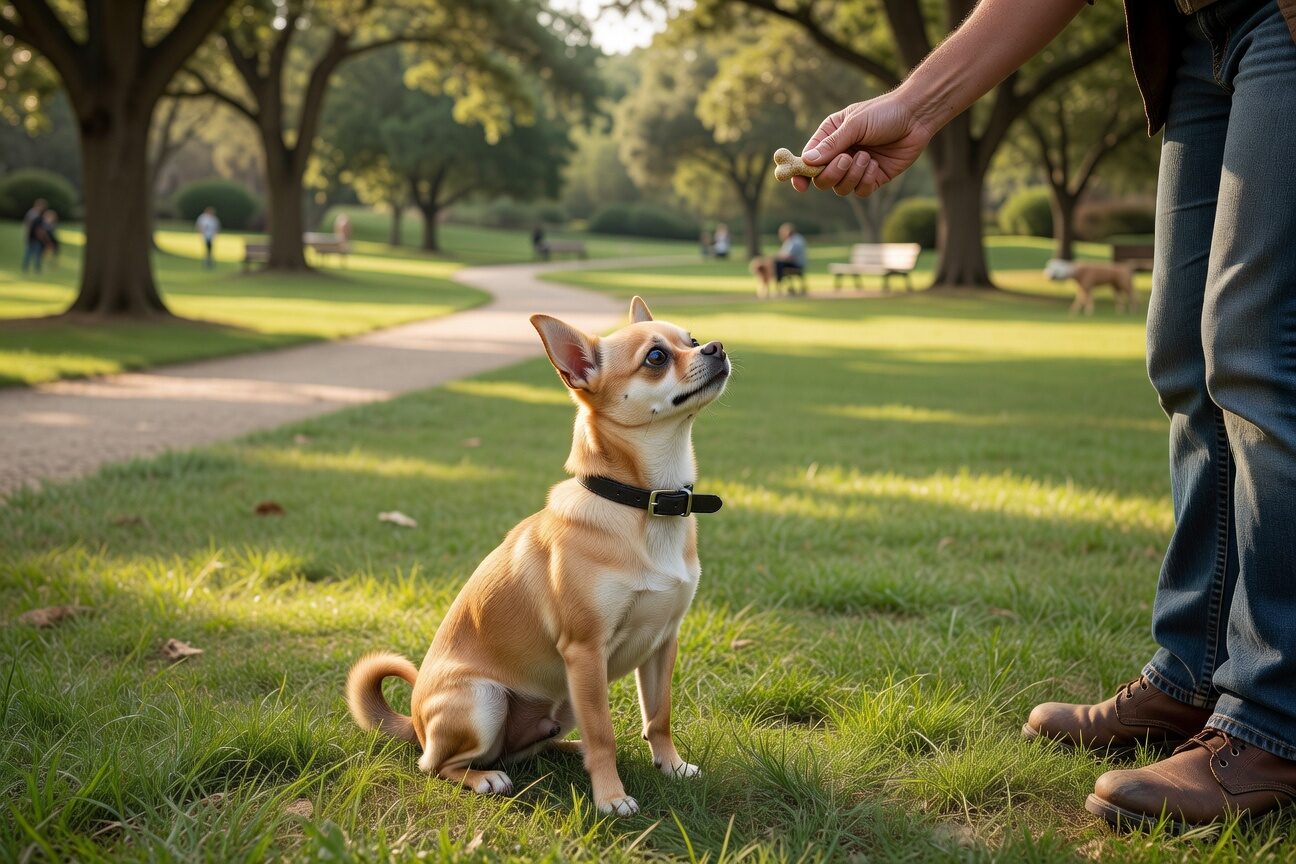
Teach sit by holding a tiny treat above your chi’s nose and moving it back over their head. Their bottom goes down naturally as their head tilts up. The second that bottom touches the ground, say “sit”, and give the treat. Timing matters. The word, the action, and the reward need to happen within a two-second window.
What I Wish I Knew Earlier
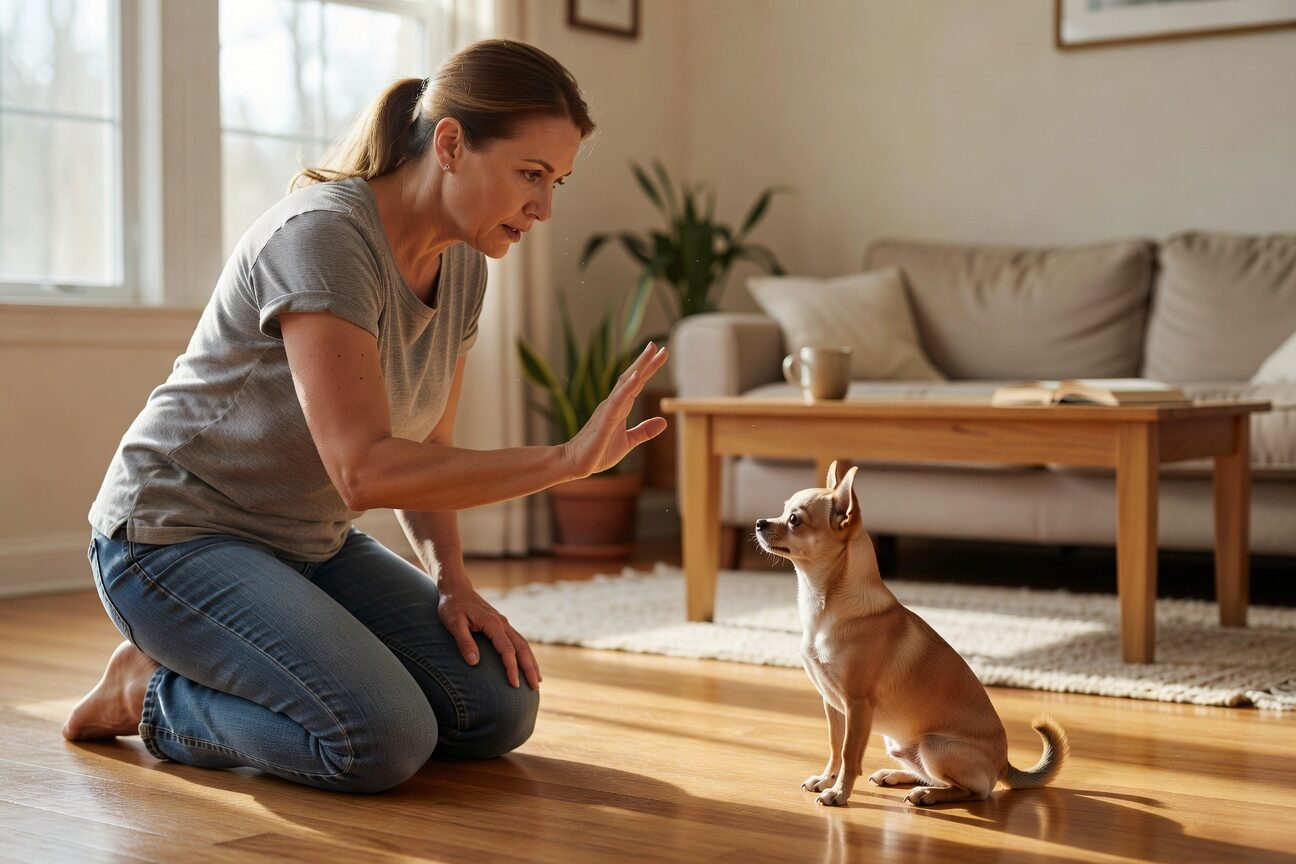
If your chihuahua is not following your instructions, the problem is probably the instructions. Are you being clear? Are you being consistent? A confused dog is not a stubborn dog.
Tip 3: Positive Reinforcement Is Not Optional
Chihuahuas do not respond well to punishment-based training. Yelling, hitting, or harsh corrections create fear. A fearful chihuahua becomes a reactive chihuahua who gives the breed a bad reputation.
Positive reinforcement means rewarding the behavior you want and ignoring or redirecting the behavior you do not. Dog sits calmly when a guest arrives? Treat and praise. Dog barks at the guest? You turn away, wait for quiet, then reward the quiet. No yelling. No drama.
Tip 4: Treats Are Currency
Every chihuahua has a price. For Fig, it is freeze-dried liver. She would sell me out for freeze-dried liver. Find your chi’s high-value treat and use it strategically during training sessions.
But here is the catch. Chihuahuas gain weight fast. A training treat for a chihuahua should be the size of a pea. Smaller if possible. If each one is a full-sized biscuit, you are creating a weight problem while solving a behavior problem.
Break treats into tiny pieces. Use their regular kibble for easier commands and save the good stuff for the hard ones. Over time, wean off treats and transition to verbal praise as the primary reward.
Tip 5: Keep Sessions Short
Five minutes. That is a full training session for a chihuahua. Ten minutes maximum. Their attention span is short and they get mentally tired quickly. A tired chihuahua stops learning and starts improvising, which usually means ignoring you with theatrical flair. com/chihuahua-owner-needs-training-too/” title=”Maybe the Chihuahua Is Not the One Who”>Maybe the Chihuahua Is Not the One Who.
Three five-minute sessions spread throughout the day beats one fifteen-minute marathon. End every session on a success, even if you have to go back to an easy command to get that win. The American Kennel Club recommends positive reinforcement methods for small breeds like chihuahuas.
Tip 6: Remove Distractions First
Start training in a quiet room. No other pets. No kids running around. No television. Once your chihuahua masters a command in a calm environment, slowly add distractions.
If your chi suddenly “forgets”, a command in a new environment, they have not forgotten. They are overwhelmed by new stimuli. Socializing your chihuahua gradually helps them handle new situations without short-circuiting.
Tip 7: Consider a Class
Obedience classes are not just for large dogs. A basic class gives your chihuahua structured learning with a professional who can spot what you are doing wrong. Plus socialization with other dogs in a controlled setting.
Look for classes that separate by size. Your chihuahua learning “stay”, next to an excited German Shepherd puppy is not productive for either dog. Many facilities offer small breed specific sessions. These are worth seeking out.
Tip 8: Be Honest About Who Needs Training
Most chihuahua behavior problems are human problems. We carry them too much. We let them bark because it is “cute.”, We skip training because they are small and the consequences seem minor.
An untrained chihuahua is not a happy chihuahua. They thrive on structure. They want to know the rules. They want to earn your approval through actions, not just exist as an accessory.
Fig is not a perfect dog. She still steals socks. But she comes when called, sits when asked, and walks on a leash without dragging me toward every interesting smell. That is a polite chihuahua who knows how to behave. And it started with me admitting that I was the one who needed training first.
Why Consistency Beats Technique Every Time
I have tried dozens of training techniques over the years, from clicker training to hand signals to voice commands in different tones, and the single most important factor in whether any of them worked was not the technique itself but how consistently I applied it. A mediocre training method used consistently every single day will outperform a brilliant training method used sporadically every time. Chihuahuas learn through repetition and predictability, and every time you change your approach or let a rule slide, you introduce confusion that sets the training back.
The consistency principle applies to everyone in the household, not just the primary trainer. If you teach your chihuahua that jumping on people is not allowed, but your partner thinks it is cute and allows it, your chihuahua does not learn that jumping is wrong. She learns that jumping is sometimes okay depending on who is in the room, which actually makes the behavior harder to eliminate because intermittent reinforcement is the strongest type. I had a household meeting with everyone who interacts with my chihuahua regularly and we agreed on a unified set of rules, commands, and responses. That single conversation accelerated our training progress more than any technique change ever did.
The Training Mistake That Took Me Years to Fix
The biggest training mistake I made with my chihuahua was repeating commands. I would say “sit,” wait two seconds, say “sit” again louder, wait two more seconds, say “SIT” with emphasis, and then physically guide her into position. What I was actually teaching her was that she did not need to respond until the third or fourth repetition, because the first “sit” carried no consequence and no urgency. I had accidentally trained her that “sit” was a suggestion rather than a request, and undoing that took far longer than it should have.
The fix was deceptively simple but required discipline on my part. I say the command once, clearly and calmly. If she responds, she gets a treat. If she does not respond within three seconds, I do not repeat the command. Instead, I walk away and try again thirty seconds later. The first few days of this approach were frustrating because it felt like we were accomplishing nothing. But within a week, her response time to a single command dropped dramatically because she learned that the first ask was the only ask. This principle, say it once and mean it, transformed every aspect of our training relationship and is honestly the most valuable thing I have learned about working with chihuahuas. They are not slow to comply. They are testing whether compliance is actually required, and your response to that test determines everything.
For more detailed guidance on this topic, the PetMD offers excellent resources backed by veterinary professionals.
I have been through this with my own chihuahua. It is one of those things that looks simple on paper but gets complicated fast when you are actually dealing with a four-pound dog who has opinions about everything.
The truth about chihuahua training tips is that there is no single right answer. What works for one chihuahua might be completely wrong for another. Mine took weeks to adjust. Some dogs figure it out in days. The size of your chihuahua matters. Their age matters. Their personality matters most of all.
Here is what I wish someone had told me earlier. Start small. Do not try to change everything at once. Chihuahuas are stubborn but they are also sensitive. Push too hard and they shut down. Go too slow and nothing changes. The sweet spot is somewhere in the middle and you have to find it yourself.
I talked to other chihuahua owners about chihuahua training tips and heard the same thing over and over. Patience. Consistency. And a willingness to look a little silly in public because chihuahuas do not care about your dignity.
If you are just getting started with chihuahua training tips, give yourself grace. You will make mistakes. Your chihuahua will make more of them. That is the whole process. And honestly, once you get through the hard part, it is worth it.