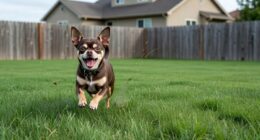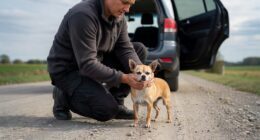


I need to tell you about a chihuahua named Beans. She weighs four pounds, sleeps exclusively on her owner’s chest, and does not particularly enjoy car rides. She also detected her owner’s cancer before any doctor did. This chihuahua detected cancer story is one of those stories that makes you reconsider everything you thought you knew about what small dogs are capable of.
How a Chihuahua Named Beans Detected Cancer Nobody Knew Was There
Beans’ owner, a woman in her early forties, noticed that her chihuahua started behaving differently one fall. Beans would not stop sniffing and pawing at her owner’s left side, specifically around the rib cage area. She had never done this before. She would press her nose against that same spot, whine, and then look up with an expression that her owner described as urgent. Not playful. Not attention-seeking. Urgent.
At first her owner assumed it was a new quirk. Chihuahuas develop quirks the way other dogs develop appetites. But Beans did not stop. For three weeks straight, she returned to that same spot on her owner’s body multiple times a day. She would wake up from a nap, walk directly to her owner, and press her nose into that exact area. The AKC has documented the growing evidence that dogs can detect certain cancers through scent, and Beans was adding herself to that body of research one persistent sniff at a time.
The Diagnosis That Proved the Chihuahua Right
Her owner finally mentioned the behavior to her doctor during an unrelated appointment. She felt silly saying it. She prefaced it with I know this sounds crazy, but my chihuahua detected something in my side. The doctor, to her credit, did not dismiss it. She ordered imaging. The scan revealed a mass near the left rib cage that turned out to be an early-stage cancer. Early enough to treat. Early enough that the prognosis was excellent.
The oncologist later told her that if they had caught it six months later, the outcome would have been significantly different. Six months. That is the gap Beans closed. A four-pound chihuahua who has never been trained in medical detection, who has no credentials beyond an excellent nose and an unbreakable bond with her person, sensed something that a full panel of routine bloodwork had not revealed. com/walking-your-chihuahua-safely-guide/” title=”Walking Your Chihuahua: A Guide That Goes”>Walking Your Chihuahua: A Guide That Goes.
What This Chihuahua Cancer Detection Story Teaches Us
I have thought about this story every day since I first heard it. Not because it is extraordinary, though it is. But because of what it says about the bond between chihuahuas and their people. Beans did not detect a stranger’s cancer. She detected her owner’s cancer. The person she sleeps on. The person whose heartbeat she hears every night. She knew that body better than any medical instrument could, because she had spent years studying it with a sensory system that evolution had fine-tuned over thousands of generations.
This is not an isolated case. Stories of dogs alerting to cancer, seizures, blood sugar crashes, and other medical events are increasingly well-documented. But what makes this chihuahua detected cancer story special to me is the breed. People underestimate chihuahuas constantly. They are too small. Too noisy. Too dramatic. Too much. And then a four-pound chihuahua saves a life and suddenly nobody is laughing about the breed anymore.
If your chihuahua starts showing persistent, focused attention to a specific part of your body, do not ignore it. It might be nothing. It might be everything. The cost of asking your doctor about it is zero. The cost of dismissing it could be much higher. For more on the remarkable capabilities of this breed, read our twenty-five chihuahua facts. According to the ASPCA, this is an important consideration for small breed dogs.
Signs Your Chihuahua Might Be Alerting You to a Health Issue
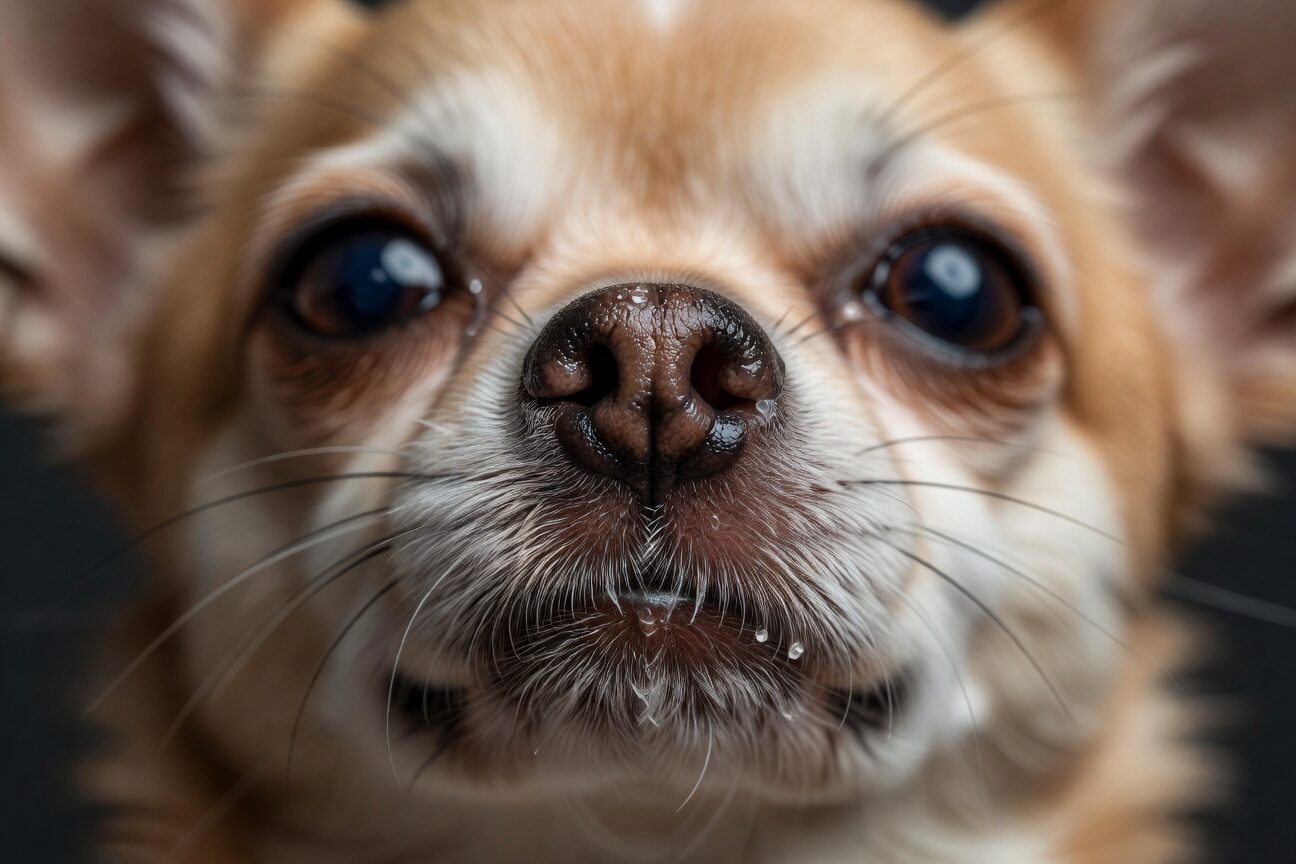
Not every chihuahua who sniffs you has detected cancer. I want to be clear about that so nobody panics every time their dog noses at their armpit. But there are behavioral patterns worth paying attention to. Persistent, focused sniffing of the same body part. Whining or pawing combined with the sniffing. A change in behavior that does not resolve within a few days. Increased clinginess that goes beyond normal chihuahua attachment.
The key word is persistent. A one-time sniff session means nothing. A daily ritual of returning to the same spot for weeks means something. Trust your chihuahua’s nose. It is, quite literally, millions of times more sensitive than yours. Learn to read the rest of their signals in our chihuahua body language guide.

Beans Changed How I See Every Chihuahua
Beans is still with her owner. The cancer was treated successfully, and the woman credits her chihuahua with the early detection that made treatment possible. She told me that she will never again dismiss any behavior from Beans as just being a chihuahua. Every sniff, every whine, every moment of intense focus gets her full attention now.
I feel the same way about my own chihuahua since hearing this story. When she stares at me with that look, the one that feels like she is reading something inside me that I cannot see, I do not brush it off anymore. I pay attention. Because somewhere in that tiny body is a nose that can detect things our most advanced technology might miss, a heart that is utterly devoted to my wellbeing, and an instinct that might someday save my life. That is not a small dog. That is a miracle with legs. For more on chihuahua health awareness, check our guide to spotting hidden illness.
Can chihuahuas really detect cancer?
There is growing scientific evidence that dogs, including chihuahuas, can detect certain cancers through their sense of smell. Dogs have up to 300 million olfactory receptors and can detect volatile organic compounds produced by cancer cells at extremely low concentrations. While chihuahuas are not specifically trained for medical detection, their close physical proximity to their owners and strong bond may increase the likelihood of noticing changes in body chemistry.
What does it mean when my chihuahua keeps sniffing the same spot on my body?
Persistent, focused sniffing of one specific area could indicate your chihuahua is detecting a change in your body chemistry. While this does not necessarily mean cancer, it is worth mentioning to your doctor if the behavior continues for more than a few days. Dogs can detect infections, hormonal changes, and other medical conditions through scent. A single sniffing session is likely nothing, but a repeated daily pattern warrants attention.
How sensitive is a chihuahua's sense of smell?
A chihuahua’s sense of smell is approximately 10,000 to 100,000 times more sensitive than a human’s. They possess up to 300 million olfactory receptors compared to our 6 million, and the part of their brain devoted to analyzing scent is proportionally 40 times larger than ours. Despite their small size, chihuahuas have the same basic olfactory capability as larger breeds, making them capable of detecting subtle chemical changes in their environment and the people around them.
Should I take my chihuahua's behavior changes seriously?
Yes. Persistent behavioral changes in your chihuahua, especially focused attention on a specific body part, increased clinginess, whining, or pawing, can be meaningful signals. While not every behavior change indicates a medical issue, dogs are known to detect cancer, seizures, and blood sugar changes before they become clinically apparent. If your chihuahua’s behavior shifts noticeably and does not resolve within a week, it is worth discussing with both your vet and your own doctor.
Can dogs be trained to detect cancer?
Yes, several research programs have successfully trained dogs to detect specific cancers including lung, breast, ovarian, and prostate cancer with accuracy rates sometimes exceeding 90 percent. These trained detection dogs use their natural olfactory abilities to identify volatile organic compounds associated with cancer cells. While most cancer-detecting dogs are larger breeds trained specifically for this purpose, untrained pet dogs including chihuahuas have also been documented alerting their owners to undiagnosed cancers.