
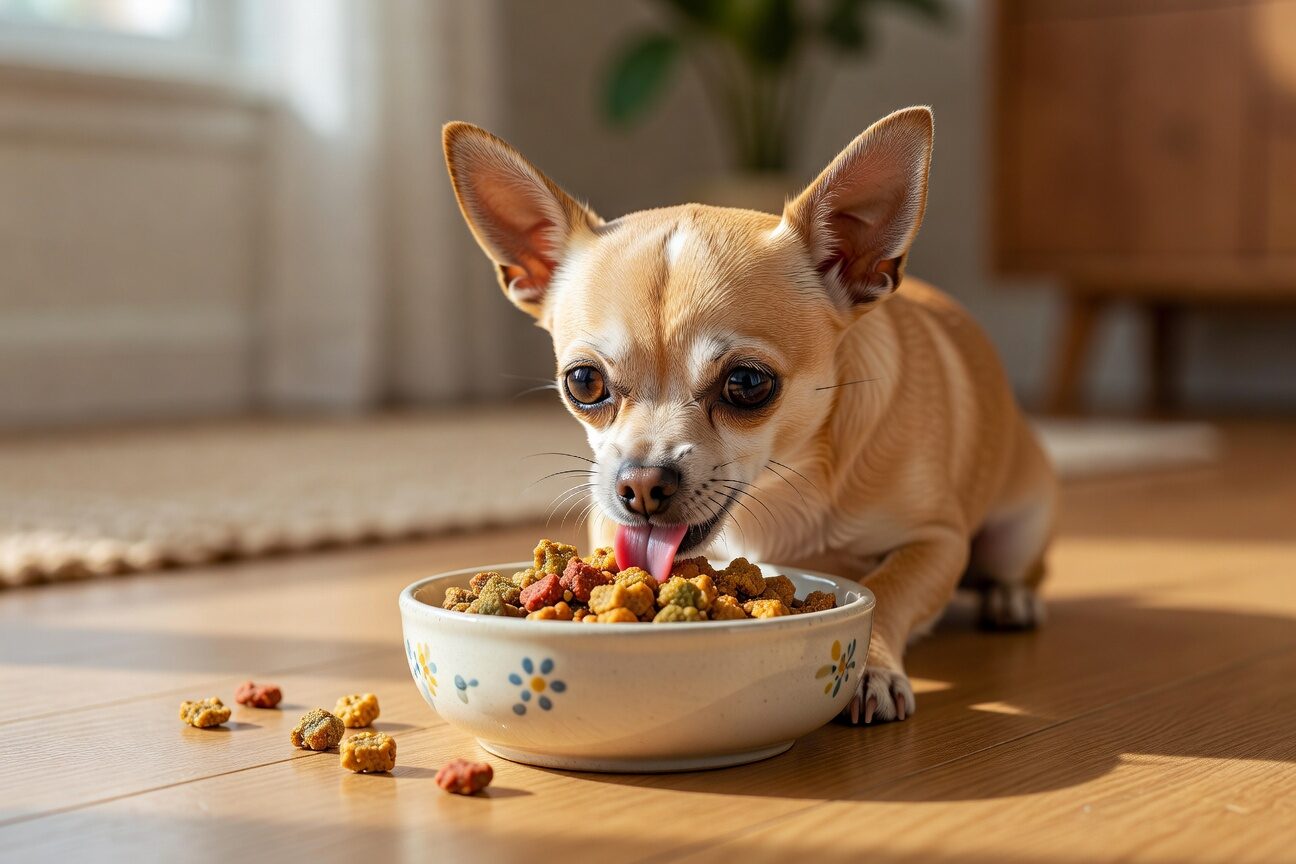

The Kibble Wake-Up Call
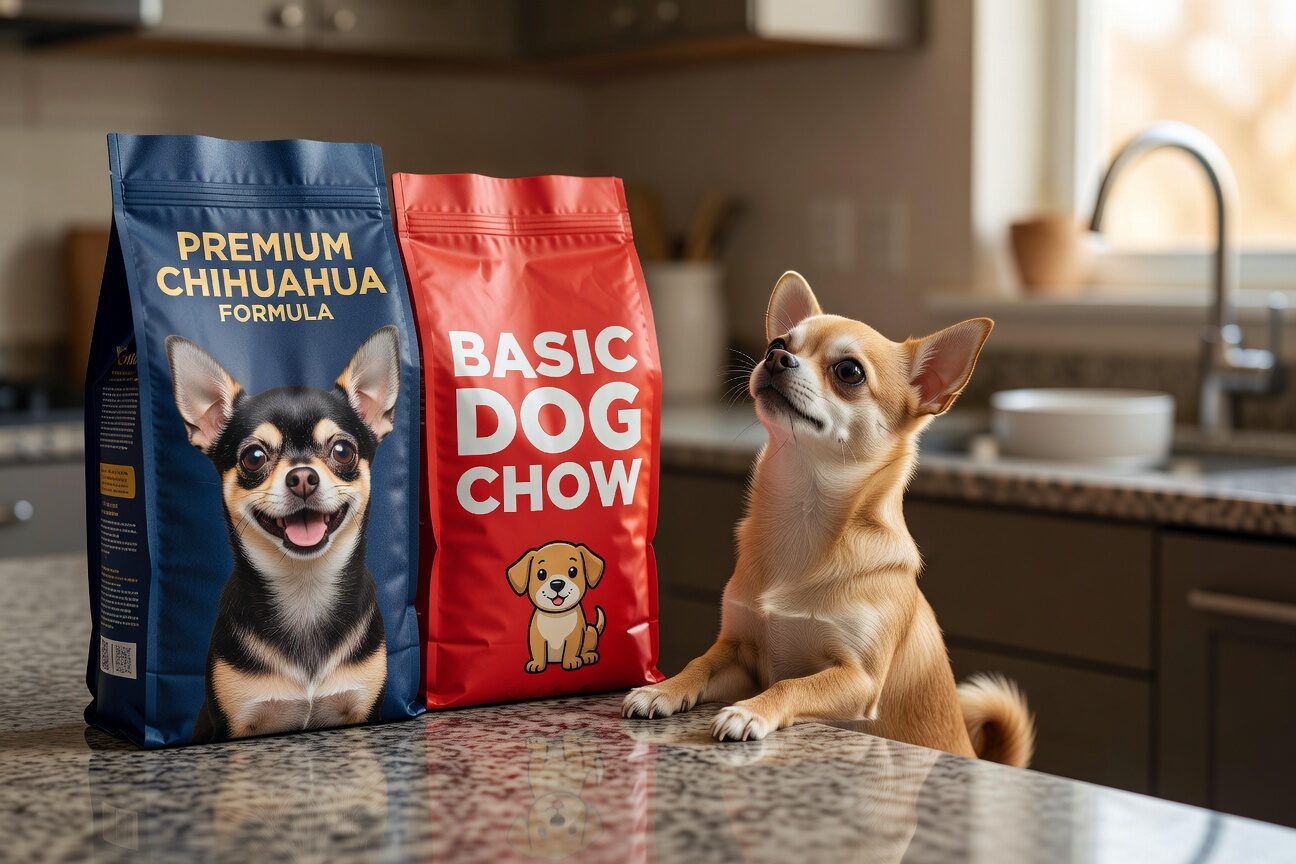
For the first three months after I got Luna, I fed her whatever was cheapest at the grocery store. Bright colored bag. Cartoon dog on the front. She ate it. I assumed that meant it was fine. for chihuahua food, this is what I learned.
Then her coat went dull. She started scratching constantly. Her energy dropped. The vet took one look at the ingredient list on her food bag and said something I will never forget. The food was the problem the entire time.
I switched her food that day. Within six weeks, her coat was glossy, the scratching stopped, and she was back to zooming around the apartment like a tiny tornado with a purpose.
Related: Chihuahua body language.
Why Chihuahuas Need Better Food Than Most Dogs
Chihuahuas have the fastest metabolism of any dog breed relative to their size. Their tiny bodies burn through calories at an astonishing rate. A five-pound chihuahua needs roughly 40 calories per pound per day. That is more per pound than a Great Dane.
This means every bite counts. A large dog eating mediocre food has margin for error. A chihuahua eating mediocre food will show the consequences quickly. Dull coat. Low energy. Digestive problems. Weight issues in either direction.
Chihuahuas are also prone to hypoglycemia, especially as puppies and small adults. Their blood sugar can drop dangerously fast if they miss a meal or if their food does not provide sustained energy. This is not a quirk. It is a medical reality that makes nutrition genuinely critical.
Reading the Label
The ingredient list is everything. Ingredients are listed in order of weight. The first ingredient should be a named meat protein. Chicken. Beef. Turkey. Salmon. Not “meat meal.” Not “animal by-products.” Named protein. If the bag cannot tell you what animal the protein came from, that is a red flag.
Corn, wheat, and soy are cheap fillers. They pad out the kibble without providing much nutritional value. Some dogs tolerate them fine. Many chihuahuas do not. These fillers are the most common culprits behind food allergies that show up as itching, ear infections, and stomach problems.
Look for whole grains like brown rice or oatmeal if you want a grain-inclusive food. Or go grain-free if your chi does better without. There is no universal answer. There is only what works for your specific dog.
Artificial colors serve no purpose. Your chihuahua does not care if their kibble is red, green, or brown. Colors exist to appeal to humans, not dogs. Same with artificial flavors and preservatives like BHA, BHT, and ethoxyquin. Skip them.
Kibble, Wet Food, or Raw
Dry Kibble
Convenient. Affordable per serving. Good for dental health because the crunch helps reduce tartar. The downside is that cheap kibble is often packed with fillers and lacks moisture. A premium small-breed kibble with named protein, limited fillers, and added omega fatty acids is a solid baseline for most chihuahuas.
Wet or Canned Food
Higher moisture content, which is good for chihuahuas who do not drink enough water. Usually more palatable for picky eaters, and chihuahuas are famously picky. The downside is cost and shorter shelf life once opened. Mixing a spoonful of quality wet food into kibble gives you the best of both worlds.
Raw Diet
How Often to Feed
Adult chihuahuas do best with two to three meals per day rather than one large meal. Their small stomachs cannot handle big portions, and spacing meals out helps prevent the blood sugar crashes that chihuahuas are prone to. com/things-chihuahua-owners-say-that-would-alarm-anyone-else/” title=”Things Only a Would Understand”>Things Only a Would Understand.
Puppies under six months need three to four meals daily. Their bodies are growing fast and burning fuel constantly. Missing a meal for a chihuahua puppy can become a medical situation quickly. The American Kennel Club provides detailed guidance on health considerations for small breeds.
Free feeding, where you leave food out all day, does not work well for most chihuahuas. Some will overeat. Others will graze without consuming enough at any one sitting. Scheduled meals let you monitor exactly how much your chi is eating.
The Treat Trap
Treats should make up no more than 10% of your chihuahua’s daily calories. For a five-pound chihuahua eating roughly 200 calories a day, 10% is 20 calories. That is one small training treat. Maybe two.
People hand their chihuahuas treats constantly without realizing the caloric impact. A single Milk-Bone for a chihuahua is the equivalent of you eating an entire candy bar between meals. Scale matters. Understanding chihuahua food makes a real difference.
Use tiny training treats. Break larger treats into pieces. Or use bits of their regular kibble as rewards. Luna now works for individual pieces of her dinner kibble during training sessions.
Table Scraps: The Honest Answer
Every chihuahua owner slips their dog something from the plate occasionally. A piece of plain chicken. A bit of scrambled egg. This is not the end of the world. The problem starts when “occasionally” becomes “every meal” and the scraps include garlic, onion, salt, butter, or anything processed.
Plain cooked meat is fine as an occasional supplement. Cheese in tiny amounts is fine for chihuahuas who tolerate dairy. But human food should never replace a balanced dog food as the primary diet.
When to Talk to Your Vet
If your chihuahua has persistent digestive issues, chronic skin problems, unexplained weight loss or gain, or just seems off, the food should be the first thing you examine. Finding the right food sometimes takes trial and error. Your vet can help identify allergies or sensitivities.
Luna is on her third brand of food now. The first was garbage. The second was fine but disagreed with her. The third is the one. She eats every meal with enthusiasm, her coat shines, her energy is steady, and she stays ahead of the health issues that chihuahuas are known for. Finding that food took effort. It was worth every minute.
The Allergy Connection Most Owners Miss
I spent eight months and over a thousand dollars trying to figure out why my chihuahua was constantly scratching, had recurring ear infections, and would get these angry red patches on her belly. The vet tested for fleas, mites, and environmental allergies. Everything came back normal. It was not until we did a food elimination trial that we found the answer. She was allergic to chicken, which happened to be the primary protein in the premium food I had been proudly feeding her for two years.
Food allergies in chihuahuas are more common than most owners realize, and they do not always present as digestive problems. Itchy skin, chronic ear infections, watery eyes, and excessive paw licking can all be signs that something in the food is triggering an immune response. The only reliable way to identify a food allergy is an elimination diet supervised by your vet. You strip the diet down to a single novel protein and a single carbohydrate source for eight to twelve weeks, then reintroduce ingredients one at a time. It is tedious and it requires serious discipline because one table scrap can reset the entire trial. But finding the culprit changed my dog life overnight. Within three weeks of switching to a fish-based food, her skin cleared up and the scratching stopped completely.
For more detailed guidance on this topic, the PetMD offers excellent resources backed by veterinary professionals.
I have been through this with my own chihuahua. It is one of those things that looks simple on paper but gets complicated fast when you are actually dealing with a four-pound dog who has opinions about everything.
The truth about chihuahua food is that there is no single right answer. What works for one chihuahua might be completely wrong for another. Mine took weeks to adjust. Some dogs figure it out in days. The size of your chihuahua matters. Their age matters. Their personality matters most of all.
Here is what I wish someone had told me earlier. Start small. Do not try to change everything at once. Chihuahuas are stubborn but they are also sensitive. Push too hard and they shut down. Go too slow and nothing changes. The sweet spot is somewhere in the middle and you have to find it yourself.
I talked to other chihuahua owners about chihuahua food and heard the same thing over and over. Patience. Consistency. And a willingness to look a little silly in public because chihuahuas do not care about your dignity.
If you are just getting started with chihuahua food, give yourself grace. You will make mistakes. Your chihuahua will make more of them. That is the whole process. And honestly, once you get through the hard part, it is worth it.
What are the most common health issues in chihuahuas?
Dental disease, luxating patellas, hypoglycemia, tracheal collapse, and heart murmurs are the most frequent. Regular veterinary checkups catch most conditions early when they are easiest to manage.
How often should a chihuahua see the vet?
Annual checkups for adults, bi-annual for seniors over eight years old. Puppies need visits every three to four weeks until their vaccination series is complete at around 16 weeks.
When should I worry about my chihuahua's health?
Seek veterinary care for lethargy lasting more than 24 hours, refusal to eat for two or more meals, difficulty breathing, persistent vomiting or diarrhea, and any sudden behavior change. With small dogs, early intervention is always safer than waiting.
What should I know about chihuahua food?
Understanding chihuahua food requires attention to breed-specific needs. Chihuahuas are small dogs with unique health, behavioral, and care requirements. Consulting your veterinarian and learning from experienced owners provides the most reliable guidance for your specific situation.