
I have been doing this long enough to know that the worst stories sometimes end the best way. This one starts in a dumpster behind a Pet Supplies Plus in Taylor, Michigan, and it ends with a blind chihuahua named Tonto sleeping on a heated bed in someone’s living room. I still think about the gap between those two places and how a single person walking past a dumpster on the right afternoon changed everything.
On January 2nd, a man walked into the store carrying a cardboard box. Inside was a chihuahua, maybe ten or twelve years old, blind in both eyes, his corneas cloudy and dry. The man said he found the box in the dumpster out back. Nobody knows how long Tonto had been in there, but the temperature that week in Taylor was hovering around twenty degrees.
Chihuahua Found In Box: What the Shelter Team Found
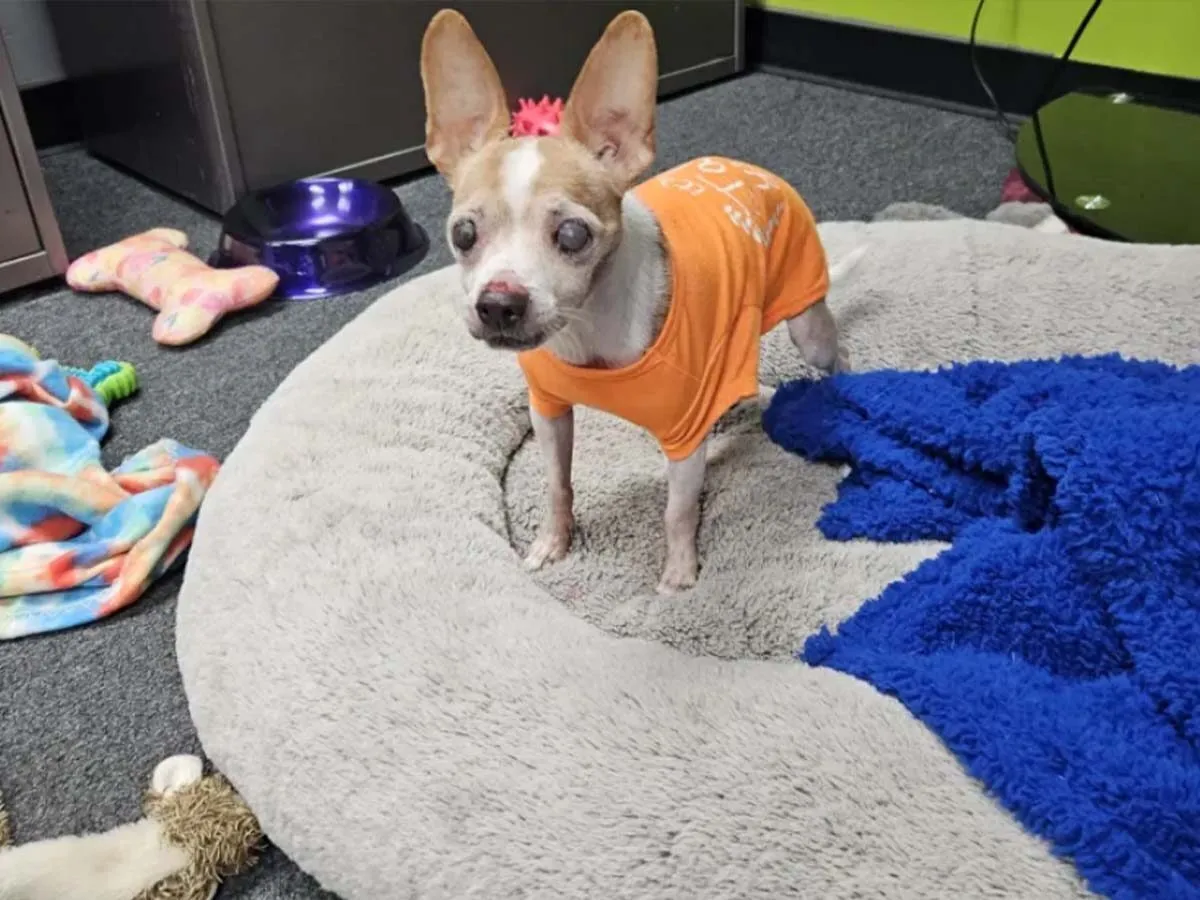
Shawn Donovan, the supervisor at the Taylor Animal Shelter, got the call around 5 PM and contacted Taylor police right away. When he examined Tonto, the news was surprisingly decent. Despite everything, the little dog was in relatively good health. He was not underweight. He did not have any open wounds. His biggest medical issue was his eyes, both completely clouded over, dry enough to need immediate drops. Donovan estimated he was somewhere between ten and twelve years old, which meant someone had cared for this dog for a decade before deciding a dumpster was the right goodbye.
One of the store employees named him Tonto, and it stuck. Within an hour of arriving at the shelter, he was walking around the front office like he had been there for years, navigating by smell and memory, bumping into chair legs and then adjusting his path without any fuss. I have noticed that about blind dogs in general. They adapt faster than most people expect, and they rarely feel sorry for themselves.
How the Investigation Unfolded
Taylor Police Lt. Frank Canning said the hardest part of the case was figuring out where Tonto actually came from. The man who brought him into the store could have been the one who put him in the dumpster, or he could have genuinely been a passerby who heard something. There was no security camera footage that showed the box being placed in the dumpster, so the trail went cold quickly.
Canning used the opportunity to remind people in the area that you can surrender an animal at the shelter or even at the police department without facing any penalties. No questions asked. It does not matter if the dog has behavioral issues or health problems or if you simply cannot afford to keep them anymore. Shelters exist for exactly this reason, and the alternative, leaving a blind senior dog in a cardboard box in freezing temperatures, is something that stays with the people who find them long after the dog has moved on to a better situation.
The Part That Surprised Everyone
Donovan told me that the shelter started getting calls about Tonto before they even posted his photo online. Someone at the store had shared what happened on Facebook, and by Friday morning the post had been shared thousands of times. A chihuahua rescue group reached out first thing that morning wanting to take him. Several families called asking about adoption. The shelter had to start a list.
What struck me about the response was how fast it happened. There are senior chihuahuas sitting in shelters for months without a single inquiry, and here was Tonto with a waiting list before his first full day was over. Part of it was the story itself, but part of it was that people saw a photo of this little dog with cloudy eyes and a calm expression and recognized something. He was not panicking. He was not shaking. He was just sitting there, waiting, like he knew it would work out.

Why Blind Chihuahuas Do Better Than You Think
I have met a lot of blind chihuahuas over the years, and the ones who end up in loving homes almost always thrive. Their world is already small. A chihuahua does not need to see a hiking trail or a dog park to be happy. They need a warm lap, a consistent routine, and a few familiar scents. Blindness in an older chihuahua is often less of a disability and more of a minor inconvenience, especially once they learn the layout of a room.
Tonto figured out the shelter office in about forty minutes. He knew where the water bowl was, where the bed was, and where the door opened. The staff said he would lift his nose when someone new walked in, sniff twice, and then either approach or go back to sleep depending on whether the person smelled interesting enough. That is a dog who has been paying attention to the world his entire life, eyes or no eyes.
What Happened to Tonto
The chihuahua rescue group that contacted the shelter on Friday morning followed through. They arranged transport, covered his vet bills, and placed him with an experienced foster family that had worked with blind senior dogs before. Donovan said the handoff was smooth. Tonto walked into the foster home, did his usual sniff-and-map routine, found the couch, and climbed up. The foster family sent a photo that evening of him curled up on a blanket with his eyes closed, which, as Donovan pointed out, looked the same whether he was blind or not.
Last I heard, Tonto had been adopted permanently by the foster family. They had planned to keep him temporarily, but he made himself so comfortable that the idea of moving him again felt wrong. He sleeps on a heated bed, gets his eye drops twice a day, and has a senior chihuahua companion who guides him around the yard by walking slightly ahead of him. It is the kind of ending that makes you forget, at least for a moment, that it started in a dumpster.
Surrendering a Pet the Right Way
If you are in a situation where you cannot keep your dog, I want to be honest about this because judgment does not help anyone. Life changes. Finances collapse. Health fails. The right thing to do is contact your local animal shelter or rescue organization and ask about surrender options. Most shelters will take your animal without charging you and without asking why. Some rescues will even help with temporary fostering if your situation might improve.
What you should never do is leave a dog in a box in a dumpster. I know that sounds obvious, but Donovan told me this was not the first time they had found an animal abandoned near a business. People tie dogs to shelter doors at night. They leave cats in carriers in parking lots. The intention might be that someone will find them, but the gap between being left and being found is where animals get hurt, or worse. Tonto was lucky. The next one might not be.
If you are reading this and you know someone struggling with pet ownership, share resources with them. Point them toward rescue groups, breed-specific organizations, or even just your local shelter’s website. Sometimes the difference between a dog ending up in a dumpster and a dog ending up in a foster home is one conversation that happens at the right time.
For more detailed guidance on this topic, the PetMD offers excellent resources backed by veterinary professionals.
How Blind Dogs Navigate the World
What amazed the rescue workers most about this little chihuahua was how quickly she adapted to her blindness. Within days of being in foster care, she had memorized the layout of her foster home. She knew where the water bowl was, where her bed was, and which doorways led where. She navigated by scent and by the feel of different floor surfaces under her paws, moving from tile to carpet to hardwood with a confidence that made visitors forget she could not see.
Blind chihuahuas compensate with their other senses in ways that are genuinely remarkable. Their hearing becomes sharper. Their sense of smell, already powerful, becomes their primary way of mapping the world. The foster family learned to talk to her constantly so she always knew where people were in the room. They avoided rearranging furniture and kept her food and water in the same spot every day. Consistency became the foundation of her confidence. She was not a dog who happened to be blind. She was a dog who happened to navigate differently. And honestly, watching her trot through the house with her tail up and her ears forward, you would never guess she was living in total darkness. She did not seem to consider it a limitation at all.