


My chihuahua sneezed seven times in a row last winter and I immediately convinced myself she had the flu. Not a mild sniffle. The flu. I called my vet in what I can only describe as a state of informed panic and asked the question every chihuahua owner eventually asks: can my chihuahua catch the flu from me? The answer was more complicated than I expected.
Can Your Chihuahua Actually Catch the Flu From You?
The short answer is: probably not, but it depends on which flu we are talking about. Human influenza strains do not typically infect dogs. The AKC’s guide to canine influenza explains that dogs have their own flu viruses, specifically H3N8 and H3N2, that are distinct from human strains. Your seasonal cold or flu is unlikely to jump species.
However, the word unlikely is doing heavy lifting in that sentence. Some respiratory viruses have been shown to pass between species in rare cases. And while your chihuahua probably will not catch your exact flu strain, they can develop respiratory infections from their own set of pathogens that produce symptoms eerily similar to what you are experiencing. A sneezing chihuahua owner and a sneezing chihuahua in the same household is usually a coincidence, not a transmission event.
What worries me more than the flu itself is how quickly respiratory issues can escalate in a dog this small. A chihuahua flu or respiratory infection that might be mild in a fifty-pound dog can become serious in a five-pound chihuahua because their airways are already narrow and their bodies have fewer reserves to fight infection. Learn the early warning signs in our hidden illness guide.
Canine Influenza: The Chihuahua Flu You Should Worry About
Canine influenza is real and it is contagious between dogs. The H3N2 strain spread rapidly through several US cities in recent years, and chihuahuas are just as susceptible as any other breed. Symptoms include coughing, sneezing, nasal discharge, lethargy, reduced appetite, and fever. Sound familiar? It should. It looks almost identical to what you experience when you get the flu yourself.
The difference is severity. Most healthy adult dogs recover from canine influenza within two to three weeks. But chihuahuas, with their small airways and predisposition to tracheal collapse, can develop secondary bacterial pneumonia that turns a manageable illness into an emergency. According to PetMD’s canine influenza guide, the mortality rate is low but complications are more common in brachycephalic and toy breeds.
There is a vaccine available for canine influenza. I had my chihuahua vaccinated after our local dog park had a small outbreak, and I sleep better knowing she has that layer of protection. Ask your vet whether the chihuahua flu vaccine makes sense for your dog’s lifestyle and exposure risk. For complete vaccine information, read our vaccination schedule guide.
How to Care for a Chihuahua With Flu-Like Symptoms
If your chihuahua develops coughing, sneezing, or nasal discharge, start by isolating them from any other dogs in your household. Canine respiratory infections spread through direct contact, shared water bowls, and airborne droplets. Keep the sick dog in a warm, quiet room with easy access to water and food.
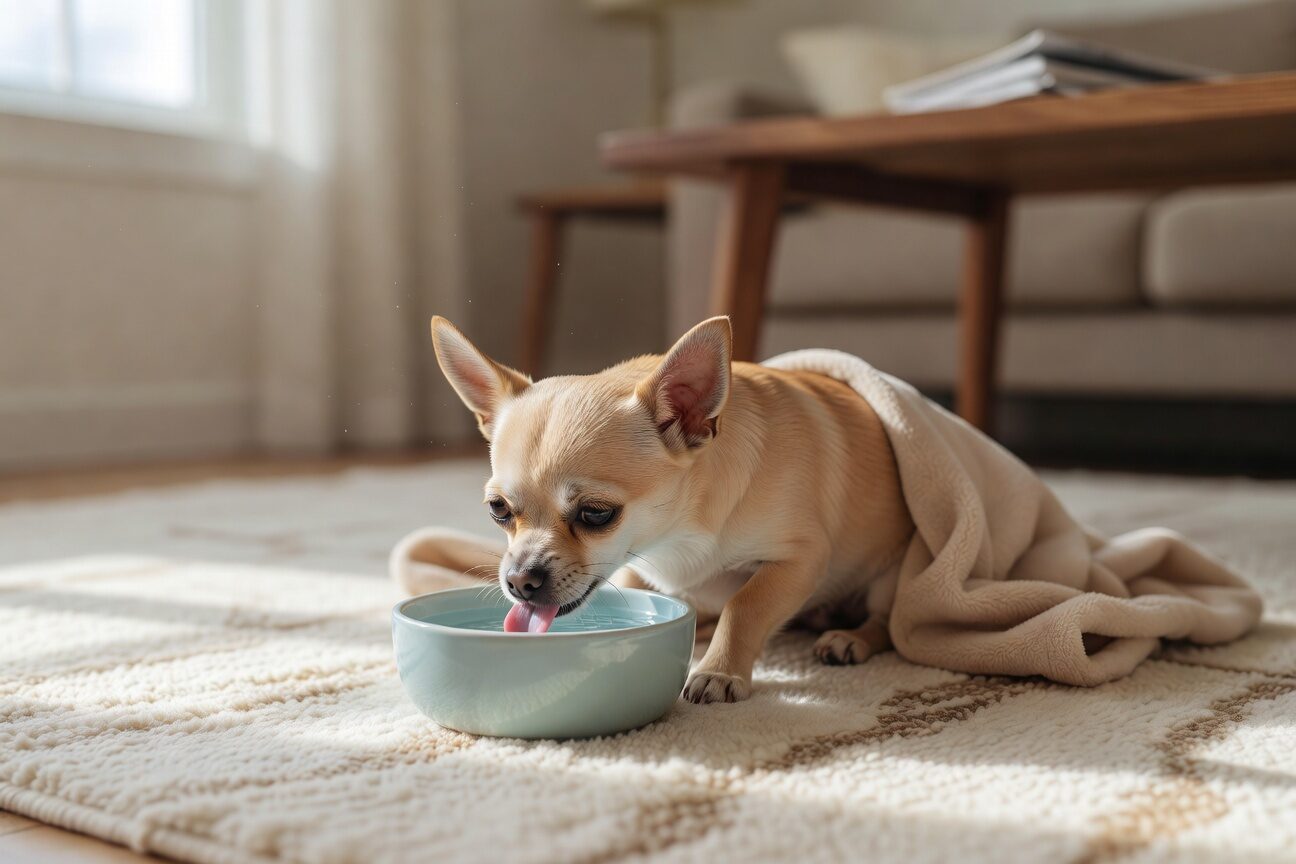
Hydration is critical. A chihuahua with the flu may not feel like drinking, but dehydration in a dog this small can become dangerous within hours. Offer water frequently. If they refuse, try low-sodium chicken broth warmed slightly to make it more appealing. Monitor their temperature with a digital pet thermometer. Normal is 101 to 102.5 degrees. Anything above 103.5 means a vet visit is needed.
Run a humidifier in the room if possible. Moist air helps loosen nasal congestion and makes breathing easier for a chihuahua whose airways are already working harder than most dogs. I keep a small humidifier in my chihuahua’s sick care kit specifically for respiratory episodes. For more home care tips, see our complete sick chihuahua care guide.
Preventing Chihuahua Flu and Respiratory Infections
The best prevention is awareness. Avoid dog parks and boarding facilities during local outbreaks. Wash your hands after petting other dogs before touching your chihuahua. Keep your chihuahua’s vaccinations current and discuss the canine influenza vaccine with your vet. Maintain a strong immune system through proper nutrition, regular exercise, and consistent veterinary care.
I also became more cautious about where I take my chihuahua during cold and flu season. High-traffic pet stores, grooming facilities with shared spaces, and busy dog events are all potential exposure points. That does not mean you should keep your chihuahua in a bubble, but it does mean being thoughtful about risk. A chihuahua flu is manageable when caught early, but prevention is always easier than treatment. For more on keeping your chihuahua healthy, explore our chihuahua lifespan guide.

When a Chihuahua Flu Becomes an Emergency
Call your vet immediately if your chihuahua shows any of these signs: difficulty breathing, blue or pale gums, persistent high fever above 104 degrees, complete refusal of food and water for more than twelve hours, or lethargy so severe they do not respond to their name. These signs indicate the infection may have progressed to pneumonia or another serious complication that requires professional treatment.
My chihuahua’s sneezing episode last winter turned out to be a mild allergic reaction to a new cleaning product I had used on the floors. Not the flu at all. But the panic it triggered taught me to have a plan for respiratory emergencies. Now I know the signs, I have the supplies, and I know exactly when home care stops and the vet takes over. That knowledge is worth every minute of research. It might save your chihuahua’s life someday.
Can dogs catch human flu or colds?
Standard human influenza strains do not typically infect dogs. However, dogs have their own influenza viruses, specifically H3N8 and H3N2, that cause similar symptoms. In rare cases, certain respiratory viruses may cross species barriers, but this is uncommon. If you and your chihuahua are both sick at the same time, it is most likely a coincidence rather than a shared infection.
Should I vaccinate my chihuahua against canine influenza?
The canine influenza vaccine is recommended for dogs that frequently visit dog parks, boarding facilities, grooming salons, or other high-contact environments. Discuss your chihuahua’s specific risk factors with your veterinarian. The vaccine does not prevent infection entirely but significantly reduces severity and duration of illness. For chihuahuas with narrow airways, the reduced severity can mean the difference between a mild illness and a dangerous complication.
How long does canine flu last in chihuahuas?
Most chihuahuas recover from canine influenza within two to three weeks with proper supportive care. Symptoms typically peak around days three to five and gradually improve after that. However, coughing may persist for up to three weeks even after other symptoms resolve. If symptoms worsen after the first week or new symptoms appear, contact your veterinarian as this may indicate a secondary bacterial infection.
Is canine flu dangerous for chihuahuas?
Canine influenza can be more dangerous for chihuahuas than for larger breeds due to their small airways and limited respiratory reserves. While the mortality rate from canine flu itself is low, chihuahuas are at higher risk for developing secondary bacterial pneumonia, which can be life-threatening. Prompt veterinary care at the first sign of difficulty breathing, high fever, or severe lethargy is critical for small breeds.
How can I tell if my chihuahua has the flu or just a cold?
Canine flu typically presents with a persistent cough, nasal discharge, lethargy, reduced appetite, and fever above 103 degrees Fahrenheit. A simple cold usually involves mild sneezing and clear nasal discharge without fever or significant lethargy. The key difference is severity and duration. If symptoms last more than a few days or include fever, loss of appetite, or labored breathing, assume it could be influenza and consult your vet for proper diagnosis and treatment.