


I spent the first two years with my chihuahua completely misreading her. She would flatten her ears and I thought she was being cute. She would wag her tail stiffly and I assumed she was happy. Then one day she bit my neighbor and I realized I had been ignoring every warning she gave me. Understanding chihuahua body language changed everything about how we communicate. Once I learned to actually read the signals, our entire relationship shifted. I had finally decoded what she had been saying all along.
Chihuahuas are some of the most expressive dogs alive. They communicate constantly through their ears, tail, eyes, posture, and voice. The problem is that most owners never learn the language. Here is what I have figured out after years of paying attention.
Reading the Ears
The ears are the fastest indicator of how your chihuahua feels in any given moment. They shift position before anything else changes, which makes them the first thing I look at now.
Forward and Perked Up
When those satellite dishes point straight up and slightly forward, your chihuahua is alert and curious. Something has their full attention. It could be a squirrel outside the window, a treat bag crinkling in the kitchen, or a sound you cannot even hear. This is confidence and engagement. This particular chihuahua body language signal tells you they are interested, not threatened.
Pinned Back and Flat
Ears pressed tight against the skull means fear or submission. My chihuahua does this at the vet every single time without fail. If you see pinned ears combined with a tucked tail and lowered body, your chihuahua is scared. Do not force interaction. Give them space. This is often the first sign of anxiety in chihuahuas and ignoring it makes things worse.
One Ear Up, One Ear Down
This is confusion. Your chihuahua is processing something and has not decided how to feel about it yet. I see this when I open a new bag of treats they have never smelled before. It is adorable but it is also genuine chihuahua body language telling you they are uncertain and gathering information.
What Chihuahua Tail Positions Really Mean
The tail is the part of chihuahua body language that most people think they understand but actually get wrong. A wagging tail does not always mean a happy dog. I learned this the hard way when my chihuahua wagged her tail stiffly at a stranger and then lunged two seconds later.
High and Wagging Loosely
This is genuine happiness. The tail is up, the wag is wide and relaxed, and usually the whole back end wiggles too. You will see this when you come home from work, when dinner appears, or when their favorite person walks through the door. It is the chihuahua body language equivalent of pure joy.
Tucked Between the Legs
Fear and anxiety. When my chihuahua tucks her tail I immediately scan the environment for whatever is making her uncomfortable. This is one of the most important chihuahua body language signals and you should never ignore it. A tucked tail combined with pinned ears means your dog needs you to remove them from the situation. If this happens often, read about signs of nervous aggression in chihuahuas.
Stiff and Vibrating
This is the danger zone. A chihuahua holding their tail rigid and quivering is overstimulated and potentially about to react. I have seen this at dog parks when a bigger dog gets too close too fast. Recognizing this chihuahua body language signal correctly has prevented bites more than once in my experience.
The Eyes Tell Everything
Chihuahua eyes are enormous relative to their head, which actually makes them easier to read than most breeds. The eyes will tell you things the rest of the body has not caught up to yet.

Soft relaxed eyes with slow blinking mean your chihuahua is calm and content. This is trust. Hard wide eyes with visible whites, sometimes called whale eyes, mean stress or fear. If you see the whites of your chihuahua eyes when they are looking sideways at something, back off. They are telling you they feel threatened.
Direct prolonged staring from a chihuahua can mean two completely different things depending on context. A soft stare at you while relaxed is affection. A hard unblinking stare at another dog or person is a challenge. Learning to tell the difference is one of the most important parts of reading chihuahua body language accurately.
Posture and Movement
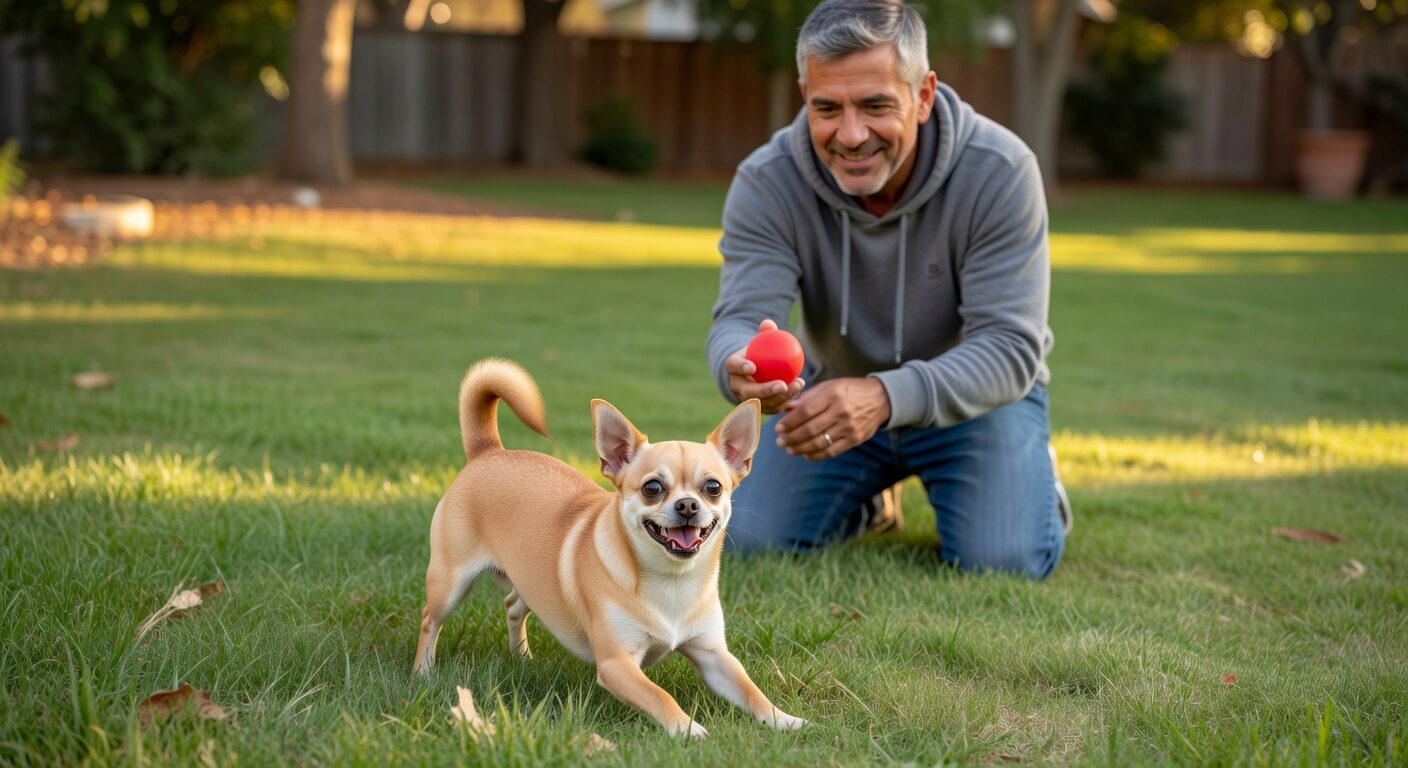
The way a chihuahua carries their whole body tells you their emotional state before they make a sound. A loose wiggly body means relaxation and happiness. A stiff rigid body means tension and potential reactivity. My chihuahua goes completely rigid about half a second before she decides to lose her mind at the mailman. Once I learned to read that shift in posture I could redirect her with obedience training before the explosion happened.
The play bow is one of the best chihuahua body language signals to see. Front legs stretched forward, chest low, rear end up in the air. This is a universal dog invitation to play and when your chihuahua does it they are telling you they feel safe and happy enough to be silly.
Shaking and trembling is extremely common in chihuahuas. Sometimes it means they are cold because they have almost no body fat. Sometimes it means they are excited. Sometimes it means they are terrified. The rest of their body language will tell you which one. A shaking chihuahua with a wagging tail is excited. A shaking chihuahua with pinned ears and a tucked tail is scared. Learn more in our guide about why chihuahuas shiver.
Chihuahua Body Language vs Other Small Breeds
One thing that surprised me is how different chihuahua body language is from other small breeds I have been around. My friend has a Pomeranian and that dog communicates in a completely different way. The Pom spins in circles when excited. My chihuahua vibrates like a tiny motor. The Pom barks at everything with the same pitch. My chihuahua has about fifteen different barks and each one means something specific.
Chihuahuas are also far more deliberate with eye contact than most small breeds. They will lock eyes with you and hold it in a way that feels almost human. Other small dogs glance and move on. A chihuahua stares into your soul and waits for you to respond. This kind of chihuahua body language intensity is part of what makes the breed so uniquely bonded to their owners.
The biggest difference is how physical chihuahuas are with their communication. They lean against you when they feel safe. They climb onto your chest when they want closeness. They position themselves between you and anything they consider a threat. Every movement is intentional and once you understand chihuahua body language at that level you realize they have been having full conversations with you the entire time. You were just not fluent yet.
Sounds Your Chihuahua Makes and What They Mean
Chihuahuas are vocal dogs. Extremely vocal. But each sound means something specific if you learn to listen. A high pitched rapid bark at the door is alert mode. A low growl with a stiff body is a genuine warning. That weird reverse sneeze thing that sounds like they are dying is usually completely harmless.
Whining typically means your chihuahua wants something. Food, attention, to go outside, or just acknowledgment that you are still in the room. My chihuahua whines when I have been on my laptop too long without looking at her. It is manipulative and it works every time.
Howling is less common in chihuahuas than in larger breeds but some of them do it. If your chihuahua howls at sirens or certain sounds it is an instinctive response. If they howl when left alone it could be a sign of separation anxiety and worth addressing with your vet. If excessive barking is a problem, we have a guide for that too.
The most important thing I have learned about chihuahua body language is that every signal exists in context. One signal by itself might not tell you much. But ears plus tail plus eyes plus posture together paint a complete picture. Once you start reading all of them at the same time you will wonder how you ever missed what your chihuahua was telling you. According to the AKC, chihuahuas are known for their alert and expressive nature, and that expressiveness is exactly what makes their body language so rich. The Dogster breed profile also notes that understanding these signals is key to building a strong bond with this spirited little breed.
Pay attention. They are always talking. You just have to learn how to listen. For more on understanding your chihuahua, check out our articles on how to know your chihuahua loves you and surprising things chihuahuas love.
What is the average size of a chihuahua?
Adult chihuahuas typically weigh between two and six pounds and stand five to eight inches tall at the shoulder. The AKC breed standard sets the maximum weight at six pounds for show dogs.
How long do chihuahuas live?
The average chihuahua lifespan is 14 to 16 years, making them one of the longest-lived dog breeds. Some chihuahuas live to 18 or 20 with excellent care.
Are there different types of chihuahuas?
The AKC recognizes two coat varieties: smooth coat and long coat. Head shape varies between apple head and deer head, though only the apple head conformation meets the official breed standard.
What should I know about chihuahua body language?
Understanding chihuahua body language requires attention to breed-specific needs. Chihuahuas are small dogs with unique health, behavioral, and care requirements. Consulting your veterinarian and learning from experienced owners provides the most reliable guidance for your specific situation.