
I am going to be completely honest. I did not take chihuahua dental care seriously enough in the beginning. I figured if my chihuahua was eating fine, her teeth were fine too. That turned out to be a very expensive mistake. By the time I noticed a problem, she needed multiple extractions and a full dental cleaning under anesthesia. I do not want that for your chihuahua, so let me share what I have learned since then.
Why Chihuahuas Have So Many Dental Issues
It comes down to anatomy. Chihuahuas have the same number of teeth as a Labrador, all crammed into a mouth the size of a walnut. That crowding means plaque builds up faster and in harder to reach spots. Their teeth can also come in at odd angles, creating even more pockets where bacteria love to hang out. For more detail, see the ASPCA dog dental care guide. For more detail, see the AKC Chihuahua breed health guide.
On top of that, some Chihuahuas retain their baby teeth. Those extra teeth take up space and push against the adult teeth, making the crowding worse. If your puppy still has baby teeth hanging around past six months, talk to your vet about having them removed.
Related: common Chihuahua health issues.
Brushing Your Chihuahua’s Teeth at Home
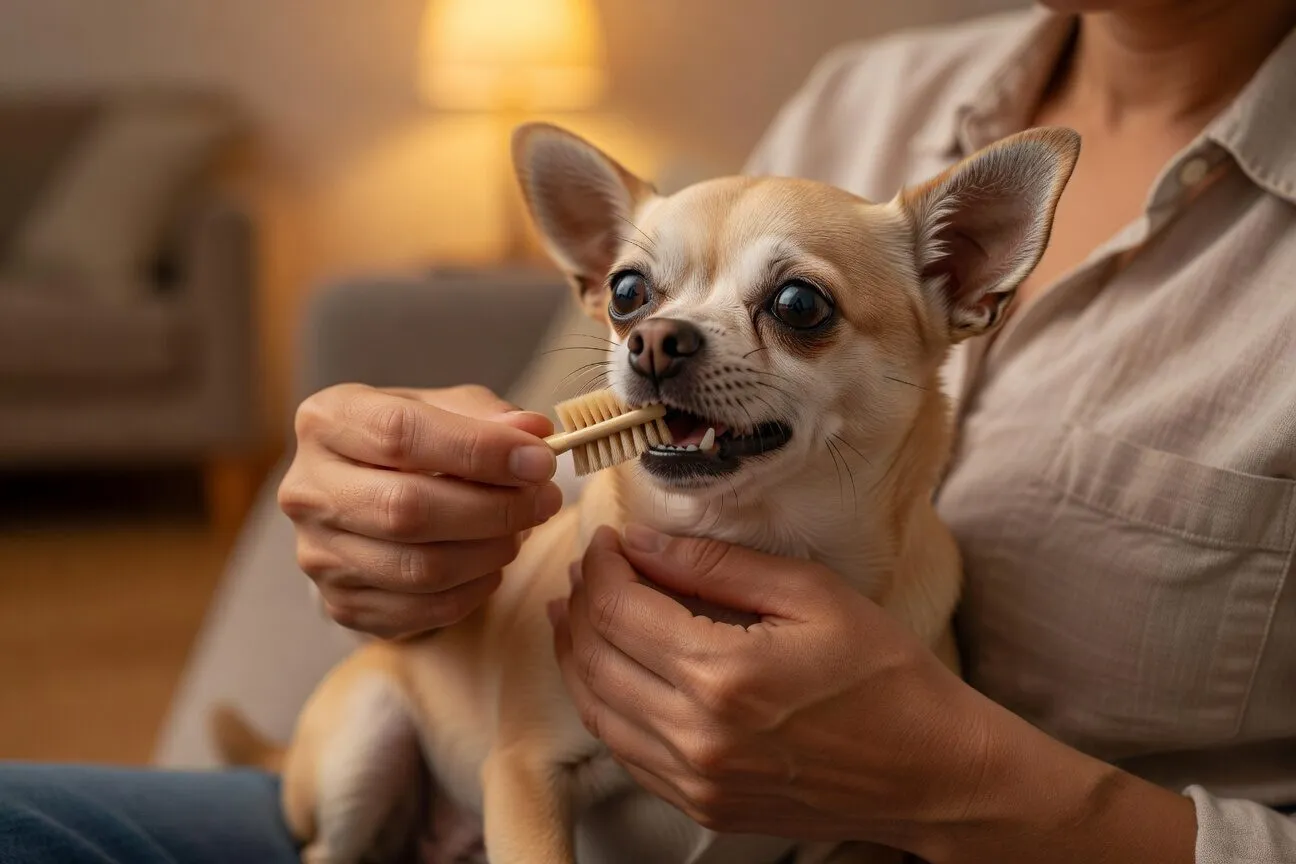
I know it sounds ridiculous to brush a chihuahua’s teeth, especially a dog this small. But it is the single most effective thing you can do. I use a finger brush because it gives me more control in that tiny mouth. Regular toothbrushes feel too clumsy for me at this size.
Start slow. Let your chihuahua taste the enzymatic toothpaste first. Then just rub it on the front teeth for a few seconds. Build up gradually over a couple of weeks. My Chihuahua now sits still for about thirty seconds of brushing, which is plenty. You do not need to make it a ten minute ordeal. Even a few times a week makes a noticeable difference compared to not brushing at all.
I learned the hard way that a chihuahua pawing at their mouth is not being cute. It means something hurts. If your Chihuahua suddenly stops chewing on one side or refuses hard food they used to love, dental pain is the likely cause. com/senior-chihuahua-care-golden-years/” title=”Your Chihuahua’s Golden Years: A Guide to Senior Care”>Your Chihuahua’s Golden Years: A Guide to Senior Care.
Professional Cleanings and What to Expect
Even with good home care, most Chihuahuas need a professional dental cleaning every year or two. This requires anesthesia, which understandably makes a lot of Chi owners nervous. I was terrified the first time. But modern anesthesia protocols for small breeds are very safe, and the benefits far outweigh the risks of letting dental disease go untreated. com/my-chihuahua-was-diagnosed-with-hip-dysplasia-and-i-had-no-idea-it-could-happen/” title=”My Chihuahua Was Diagnosed With Hip”>My Chihuahua Was Diagnosed With Hip.
Your vet will do a full exam, scale the teeth, polish them, and take X rays to check below the gumline. Sometimes teeth need to come out, and that is okay. A Chihuahua with a few missing teeth is much happier than one living with chronic mouth pain.
The Real Cost of Ignoring Dental Care
I want to share the numbers because they are the thing that finally made me take dental care seriously after years of putting it off. My chihuahua’s first dental cleaning with three extractions cost just over eight hundred dollars. That included the pre-anesthesia bloodwork, the anesthesia itself, the cleaning, the extractions, the pain medication, and the follow up visit. Eight hundred dollars because I did not spend five minutes a few times a week brushing her teeth. When I did the math on what regular brushing and an annual cleaning without extractions would have cost over the same period, the difference was staggering. Prevention runs about two hundred dollars a year between toothpaste, brushes, dental chews, and a routine cleaning. Treatment after years of neglect cost four times that in a single visit, and that was with only three teeth removed. I have talked to chihuahua owners whose dogs needed ten or more extractions, and those bills easily reached fifteen hundred dollars or more.
Beyond the financial cost, there is the health cost that most people do not think about until their vet explains it. Dental disease does not stay in the mouth. The bacteria that build up around infected teeth and gums can enter the bloodstream and travel to the heart, the kidneys, and the liver. Chronic dental infection has been linked to organ damage in dogs, and in a breed as small as a chihuahua, those organs are already working hard to keep up with a high metabolism and a fast heart rate. My vet told me that maintaining good dental health is one of the most impactful things I can do to extend my chihuahua’s lifespan, and after going through the experience of watching my girl recover from extractions, I believe it completely.
Signs of Dental Disease You Might Be Missing
Most chihuahua owners do not realize their dog has dental problems until the disease is fairly advanced, because the early signs are easy to miss or explain away. Bad breath is the one people notice first, but they often dismiss it as normal doggy breath. Here is the thing though: persistent bad breath in a chihuahua is not normal. It is almost always a sign that bacteria are thriving in the mouth, and the worse the breath smells, the more advanced the problem usually is. If your chihuahua’s breath has gotten noticeably worse over the past few months, that alone is worth a dental exam.
Other signs I have learned to watch for include red or swollen gums along the gumline, visible tartar buildup that looks like brown or yellow crust on the teeth, drooling more than usual, dropping food while eating, and that pawing at the mouth behavior I mentioned earlier. Some chihuahuas will also start chewing only on one side of their mouth, or they will suddenly become head shy and flinch when you try to touch their face or muzzle. Any of these signs should prompt a call to your vet, because dental disease in chihuahuas progresses faster than in larger breeds due to the crowding issue, and catching it early means less invasive treatment and a much better outcome for your dog.
My Daily Dental Routine and What Finally Worked
After my chihuahua’s first expensive dental procedure, I committed to a daily routine that I have now stuck with for over two years, and the results have been remarkable. Every evening after her last meal, I sit on the couch and she climbs into my lap. I use a silicone finger brush with an enzymatic poultry flavored toothpaste, and I work my way around her mouth in a specific order that she has come to expect. I start with the outer surfaces of the back molars on the right side, then move to the left, then do the front teeth last. The whole process takes about forty five seconds, and she tolerates it because the routine is predictable and the toothpaste tastes like chicken to her.
On days when she is especially uncooperative, which happens maybe once a week, I skip the brush and just wrap a piece of dental gauze around my finger, apply the toothpaste, and do a quick wipe of the gumline. It is not as thorough as brushing, but it is vastly better than skipping the session entirely. Consistency matters more than perfection with dental care, and missing one day is not a problem as long as you get back to it the next day. Since I started this routine, her vet has noted a significant improvement in her gum health at every checkup, and her last professional cleaning required zero extractions for the first time in her life. That alone made every slightly annoying evening brushing session worth it ten times over.
You Might Also Enjoy
Extra Support Between Cleanings
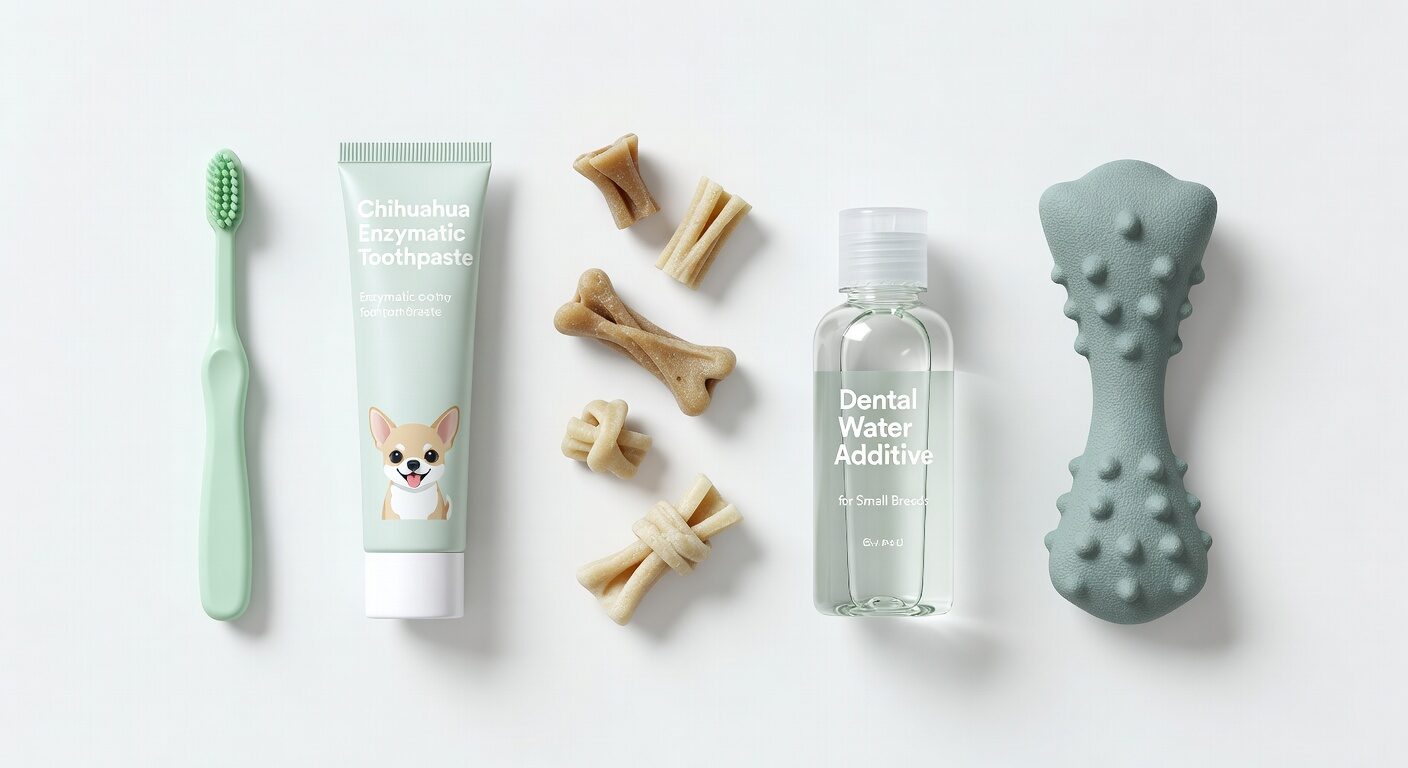
Dental chews designed for small breeds can help scrape off some plaque between brushings. Water additives are another option, though results vary. I have found that a combination of regular brushing and the right dental chews keeps my chihuahuas in good shape between professional cleanings.
Taking care of your Chihuahua’s teeth is not glamorous work, but it matters more than most people realize. A few minutes of brushing each week can literally add years to your chihuahua’s life. Start today if you have not already. Your Chihuahua’s teeth are counting on you. You might also find Simple Health Fixes You Can Do at Home worth reading.
Understanding this starts with recognizing the specific needs and behaviors of the breed. Chihuahuas are unique in their sensitivity, size, and temperament, and what works for larger breeds often needs adjustment for these tiny dogs.
Living with a chihuahua means adapting to their personality and physical requirements. This affects everything from your schedule to your home environment, and being prepared makes a significant difference in both your quality of life and your dog’s.
If you notice persistent changes in your chihuahua’s behavior, appetite, energy level, or physical condition related to chihuahua dental care, schedule a vet visit. Early intervention is always better than waiting, especially with a breed as small as a chihuahua.
What should every chihuahua owner know about this?
Understanding this starts with recognizing the specific needs and behaviors of the breed. Chihuahuas are unique in their sensitivity, size, and temperament, and what works for larger breeds often needs adjustment for these tiny dogs.
How does this affect your daily life with a chihuahua?
Living with a chihuahua means adapting to their personality and physical requirements. This affects everything from your schedule to your home environment, and being prepared makes a significant difference in both your quality of life and your dog’s.
When should I talk to a vet about this?
If you notice persistent changes in your chihuahua’s behavior, appetite, energy level, or physical condition related to chihuahua dental care, schedule a vet visit. Early intervention is always better than waiting, especially with a breed as small as a chihuahua.