
The First Time I Left the House
I adopted Gigi on a Saturday. By Monday I had to go to work. I left her in her crate with a chew toy, a blanket, and a radio playing soft music because the internet told me that helps. If you’re reading about chihuahua separation anxiety, you’re in the right place.
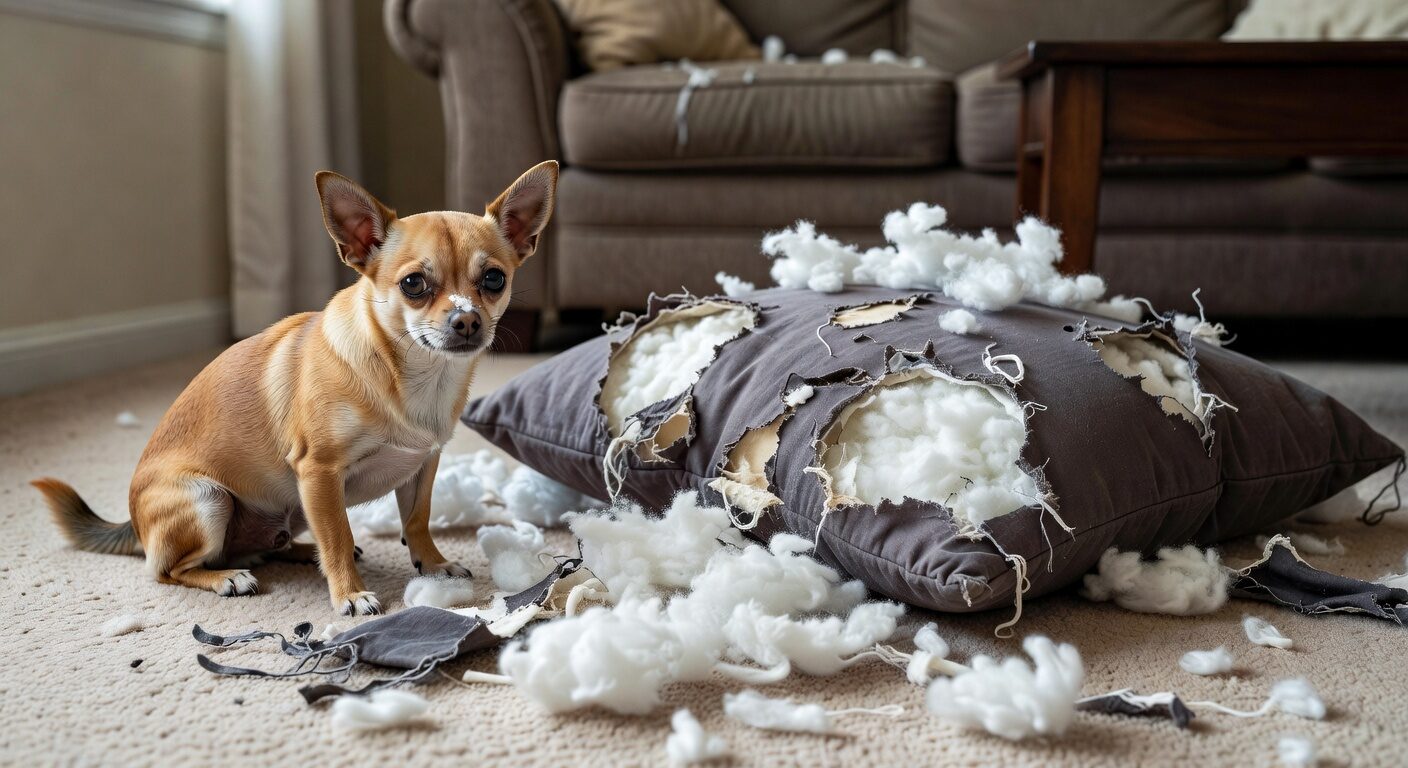
I came home to a crate covered in drool. The blanket had been shredded. The chew toy was untouched. Gigi was shaking, panting, and had scratched at the crate door until her paw was raw. She had also destroyed a pillow I left within reach of the crate, pulling it through the bars piece by piece.
This was not boredom. This was not misbehavior. This was separation anxiety. And it is one of the most common, most misunderstood, and most heartbreaking behavioral issues in chihuahuas.
Related: Chihuahua separation anxiety.
What Separation Anxiety Actually Is
Separation anxiety is a panic response triggered by being left alone. It is not your dog being difficult or spiteful. It is genuine distress. The same way a human with claustrophobia panics in an elevator, a dog with separation anxiety panics when their primary attachment figure disappears.
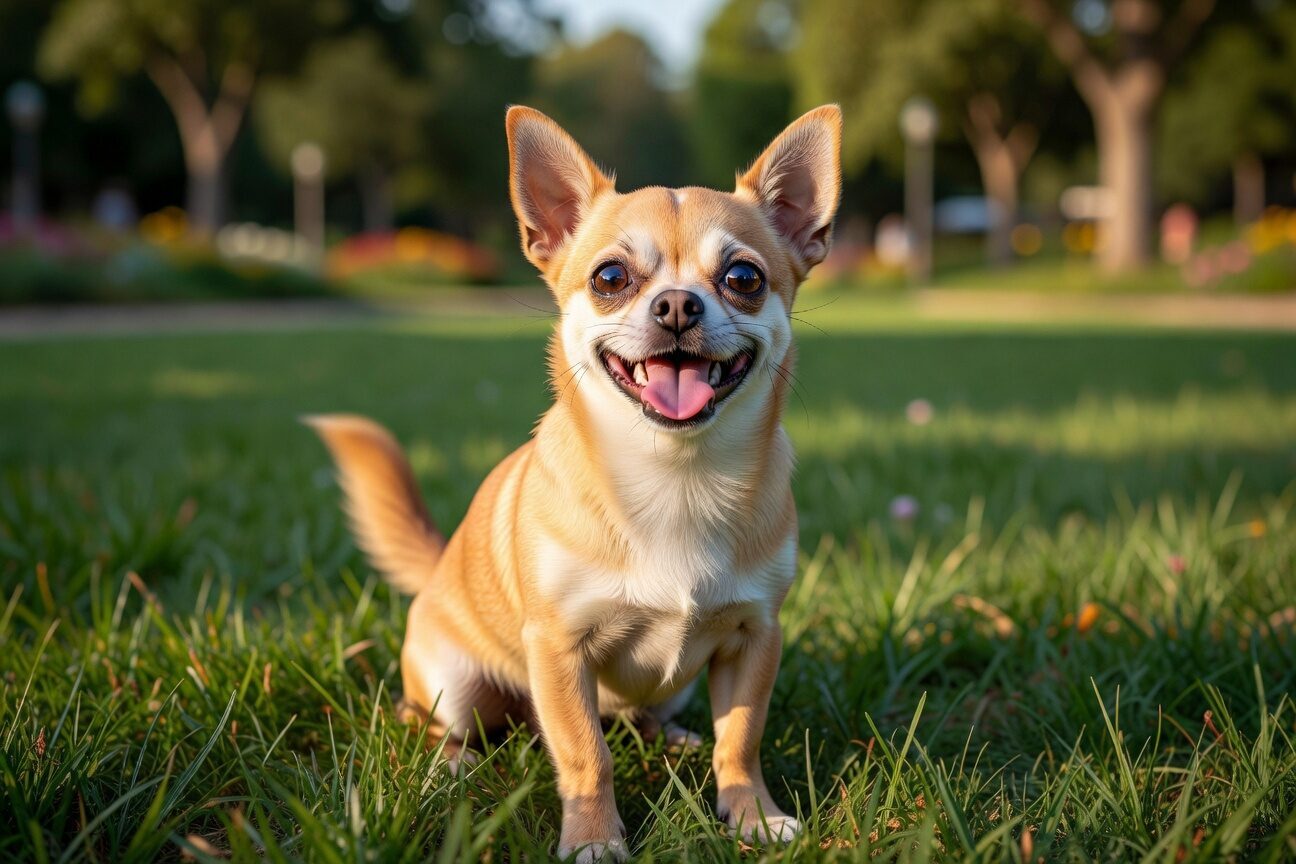
Chihuahuas are especially prone to it. They bond intensely to one person. Their entire emotional world revolves around that person’,s presence. When you leave, their world collapses. They do not know you are coming back. Every departure feels permanent.
The Signs
Destructive behavior in your absence. Chewing furniture, shredding pillows, scratching at doors. This is not revenge for being left. It is a dog trying to escape a situation that feels unbearable.
Excessive barking or howling. Your neighbors might mention this before you realize it is happening. A chihuahua with separation anxiety will vocalize continuously, not in the way a bored dog barks intermittently.
House soiling despite being fully housetrained. Anxiety triggers the digestive system. A dog who has not had an accident in years will suddenly urinate or defecate indoors when panic sets in.
Pacing, drooling, or refusing to eat. If your chihuahua will not touch their food when you are gone but eats normally when you are present, anxiety is likely the cause.
Following you obsessively when you are home. A chihuahua who shadows you from room to room, who panics when you close the bathroom door, who watches you with worried eyes as you pick up your keys. These are precursor behaviors that signal separation anxiety is present.
Why Chihuahuas Are Especially Vulnerable
The breed’,s intense bonding nature is the primary factor. Chihuahuas attach to their person with a depth that other breeds rarely match. That attachment is beautiful when you are home. It becomes a liability when you leave.
Dogs who have been rehomed, surrendered, or shuffled between households are at higher risk. They have experienced the loss of an attachment figure before. Every departure triggers the fear that it is happening again.
Dogs who were not properly socialized or gradually acclimated to alone time as puppies are also more vulnerable. If your chihuahua was never taught that being alone is safe, they have no framework for coping with it.
What Actually Helps
Desensitization Training
This is the gold standard treatment. Start by leaving for very short periods. Thirty seconds. Come back. No drama on departure or arrival. Gradually increase the duration. The goal is teaching your chihuahua that you always come back and that being alone is not dangerous.
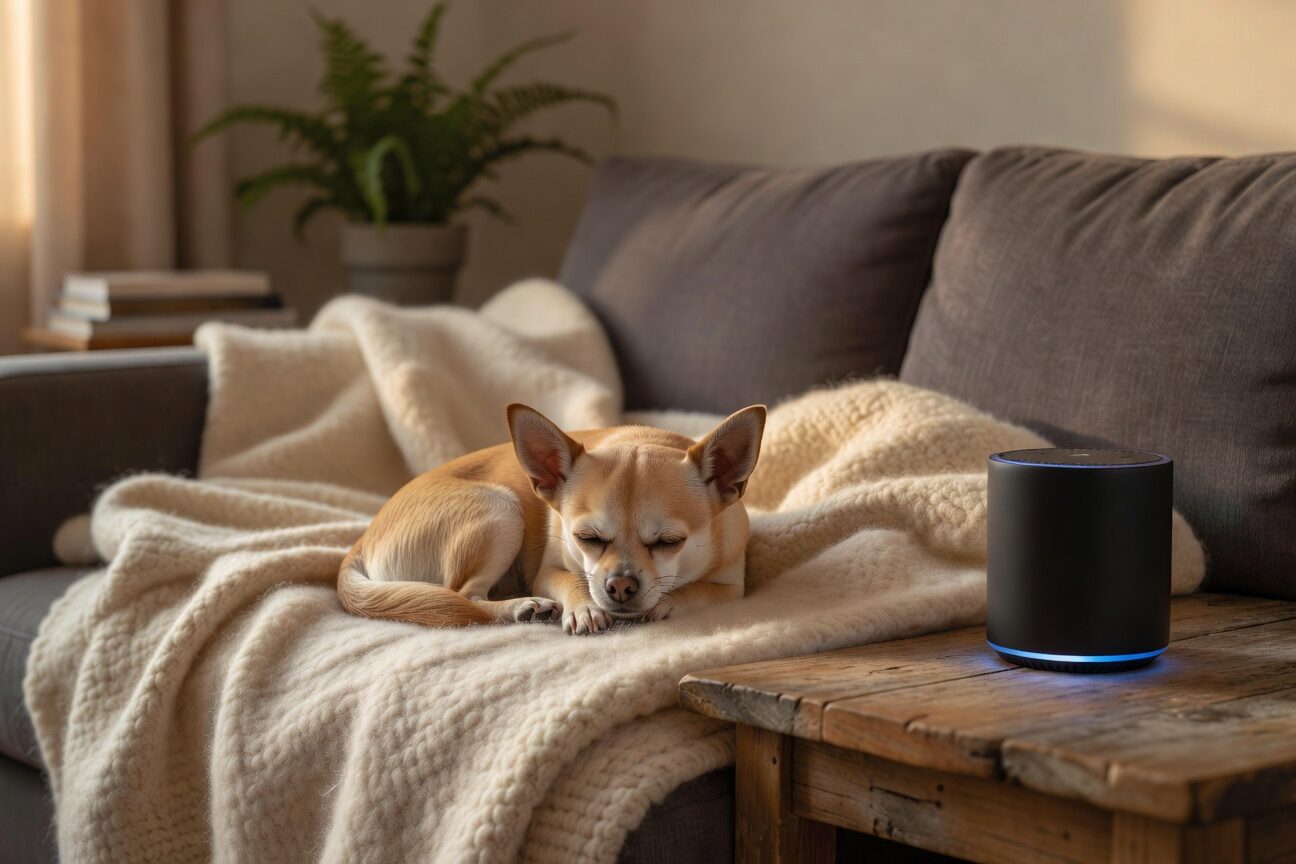
This process takes weeks to months. There are no shortcuts. Rushing it reinforces the anxiety instead of resolving it. com/how-often-should-you-feed-your-chihuahua-and-why-the-answer-changes-as-they-grow/” title=”How Often Should You Feed Your Chihuahua and”>How Often Should You Feed Your Chihuahua and.
No Dramatic Goodbyes
This one is hard. You want to hug your chihuahua and tell them you will be back soon. Do not. A big emotional goodbye tells your dog that something significant is happening. It escalates their anxiety before you even close the door.
Leave quietly. Return quietly. Make departures and arrivals unremarkable. The less energy you put into the transition, the less significant it becomes to your dog.
Environmental Enrichment
Puzzle toys, treat-dispensing toys, and frozen Kongs give your chihuahua something to focus on. Background noise from a TV or radio provides ambient companionship. A worn piece of your clothing near their bed provides a scent anchor.
These are management tools, not cures. They reduce the intensity of the anxiety but do not eliminate the underlying issue.
Veterinary Support
This is not admitting failure. This is using every available tool to help a dog who is suffering.
What Does Not Help
Punishment. Punishing a dog for destruction or accidents that happened during a separation anxiety episode is cruel and counterproductive. The dog was in a state of panic. Punishing them after the fact teaches them nothing about the anxiety and adds fear of you to their list of problems.
Getting a second dog as a companion. Sometimes this helps. Often it does not. If your chihuahua is bonded to you specifically, another dog is not a replacement. Now you have two dogs, one of which has separation anxiety, and the other is learning anxious behavior from the first.
Crate training as a solution. Crates can provide security for some dogs. For dogs with severe separation anxiety, a crate can become a trap that amplifies the panic. Recognizing where your chi falls on the anxiety spectrum determines whether crating helps or hurts.
Where Gigi Is Now
It took six months of desensitization work and three months of medication support. Gigi can now be alone for up to five hours without distress. Not all day. Not overnight. But five hours. That is enough for me to work, grocery shop, and have a life outside the house.
She still checks the window when I leave. She still greets me at the door like I have been gone for years when it has been two hours. But the shaking stopped. The destruction stopped. The raw paws healed.
Separation anxiety is not a quirk. It is not brattiness. It is a dog in pain who needs your patience, your consistency, and sometimes professional help. Your chihuahua loves you more than anything in this world. That love should not hurt them when you walk out the door.
Building Independence to Reduce Chihuahua Separation Anxiety
The mistake I made early on was trying to fix my chihuahua separation anxiety all at once. I read an article that said to just leave and let them cry it out, that they would eventually self-soothe. So I left for four hours on a Saturday afternoon. When I came home, she had scratched the paint off the bottom of the front door, chewed through the zipper on a couch cushion, and was trembling in the corner of the bathroom. That approach does not work for chihuahuas. Their anxiety is real and flooding them with the thing they fear most only makes it worse.
What worked was breaking independence into absurdly small steps. I started by walking to the front door, touching the handle, and walking back. That was it. I did that ten times a day for three days. Then I opened the door and closed it without leaving. Then I stepped outside for five seconds. Then ten. Then thirty. It felt painfully slow, but each step built on the last one without triggering a panic response. After about six weeks, I could leave for two hours without coming home to destruction. After three months, she could handle a full workday. The key was never pushing past the point where she started to panic. Every setback erased about a week of progress, so I learned to be patient even when it felt like we were barely moving forward.
For more detailed guidance on this topic, the American Kennel Club offers excellent resources backed by veterinary professionals.
I have been through this with my own chihuahua. It is one of those things that looks simple on paper but gets complicated fast when you are actually dealing with a four-pound dog who has opinions about everything.
The truth about chihuahua separation anxiety is that there is no single right answer. What works for one chihuahua might be completely wrong for another. Mine took weeks to adjust. Some dogs figure it out in days. The size of your chihuahua matters. Their age matters. Their personality matters most of all.
Here is what I wish someone had told me earlier. Start small. Do not try to change everything at once. Chihuahuas are stubborn but they are also sensitive. Push too hard and they shut down. Go too slow and nothing changes. The sweet spot is somewhere in the middle and you have to find it yourself.
I talked to other chihuahua owners about chihuahua separation anxiety and heard the same thing over and over. Patience. Consistency. And a willingness to look a little silly in public because chihuahuas do not care about your dignity.
If you are just getting started with chihuahua separation anxiety, give yourself grace. You will make mistakes. Your chihuahua will make more of them. That is the whole process. And honestly, once you get through the hard part, it is worth it.
No, but the breed is prone to it because they bond so intensely with their owners. Some chihuahuas handle alone time fine. Others panic the moment you reach for your keys. Early training, crate conditioning, and gradual departures help prevent separation anxiety from developing in the first place.
Classic signs include barking or howling when left alone, destructive behavior focused on doors and windows, house training accidents only when you are gone, and excessive drooling or panting. Set up a camera to see what happens after you leave. Many owners are surprised by how quickly their chihuahua escalates.
It can be managed and significantly reduced. A full cure depends on the severity and how long the behavior has been reinforced. Mild cases often respond to desensitization training within a few weeks. Severe cases may need medication combined with behavior modification. Progress is real but it requires consistency.
A second dog is not a reliable fix for separation anxiety. The anxiety is about being separated from you specifically, not about being alone in general. Some chihuahuas do better with a companion, but others ignore the second dog entirely and still panic when you leave. Address the root behavior before adding another pet.
Adult chihuahuas can handle 4 to 6 hours alone once they are properly conditioned. Puppies need bathroom breaks every 2 to 3 hours. Build up gradually, starting with 15-minute departures and increasing over weeks. Provide puzzle toys and a comfortable safe space. Anything over 8 hours is too long for any chihuahua.
Do all chihuahuas have separation anxiety?
No, but the breed is prone to it because they bond so intensely with their owners. Some chihuahuas handle alone time fine. Others panic the moment you reach for your keys. Early training, crate conditioning, and gradual departures help prevent separation anxiety from developing in the first place.
How do I know if my chihuahua has separation anxiety?
Classic signs include barking or howling when left alone, destructive behavior focused on doors and windows, house training accidents only when you are gone, and excessive drooling or panting. Set up a camera to see what happens after you leave. Many owners are surprised by how quickly their chihuahua escalates.
Can separation anxiety in chihuahuas be cured?
It can be managed and significantly reduced. A full cure depends on the severity and how long the behavior has been reinforced. Mild cases often respond to desensitization training within a few weeks. Severe cases may need medication combined with behavior modification. Progress is real but it requires consistency.
Should I get a second dog to fix my chihuahua's separation anxiety?
A second dog is not a reliable fix for separation anxiety. The anxiety is about being separated from you specifically, not about being alone in general. Some chihuahuas do better with a companion, but others ignore the second dog entirely and still panic when you leave. Address the root behavior before adding another pet.
How long can I leave my chihuahua alone?
Adult chihuahuas can handle 4 to 6 hours alone once they are properly conditioned. Puppies need bathroom breaks every 2 to 3 hours. Build up gradually, starting with 15-minute departures and increasing over weeks. Provide puzzle toys and a comfortable safe space. Anything over 8 hours is too long for any chihuahua.