

The first time I left my chihuahua alone for more than an hour, I came home to a shredded pillow, a puddle by the door, and a dog who acted like I had been gone for three years. She was shaking, whining, and would not let go of my lap for the rest of the night. That was my introduction to chihuahua separation anxiety, and it took me months to figure out how to help her.
If your chihuahua loses it every time you leave the house, you are not alone. This is one of the most common behavioral issues in the breed, and it makes sense when you think about it. Chihuahuas were literally bred to be companions. Being alone goes against everything in their DNA.
What Chihuahua Separation Anxiety Looks Like
It is not just a dog that misses you. Chihuahua separation anxiety is a genuine stress response that can include destructive chewing, excessive barking or howling, pacing, urinating or defecating indoors despite being house trained, and in severe cases, self-harm like licking paws raw.
Related: common Chihuahua health issues.
According to ASPCA general dog care, proper care and attention to breed-specific needs makes the biggest difference in outcomes.
Some chihuahuas start showing symptoms the moment they sense you are about to leave. Mine learned to recognize the sound of my keys, and the panic would start before I even reached the door. Others seem fine when you leave but are discovered later to have spent the entire time stressed, which shows up in neighbor complaints about nonstop barking.
Why Chihuahuas Are Prone to This
Chihuahuas bond intensely to their primary person. That is one of the things people love about the breed. But that intense bond creates an intense dependency. When you are gone, their entire sense of security disappears.
This gets worse if your chihuahua follows you from room to room when you are home, sleeps on your body every night, and gets picked up the moment they show any distress. I did all of those things with my first chihuahua because I thought I was being a good owner. What I was actually doing was teaching her that she could never be okay without me physically present.
What I Wish I Knew Earlier

Start by leaving the room for 30 seconds and coming back. Do not make a fuss when you leave or return. Just walk out, wait, walk back in. Do this multiple times a day until your chihuahua barely reacts. Then extend to a minute. Then five. Then step outside the front door and come right back. Build up to ten minutes, then thirty, then an hour.
This sounds tedious and it is. It took me about three weeks of daily practice before my chihuahua could handle me being gone for an hour without panicking. But it works because you are rewriting the pattern in their brain. Leaving does not mean gone forever. It means you come back.
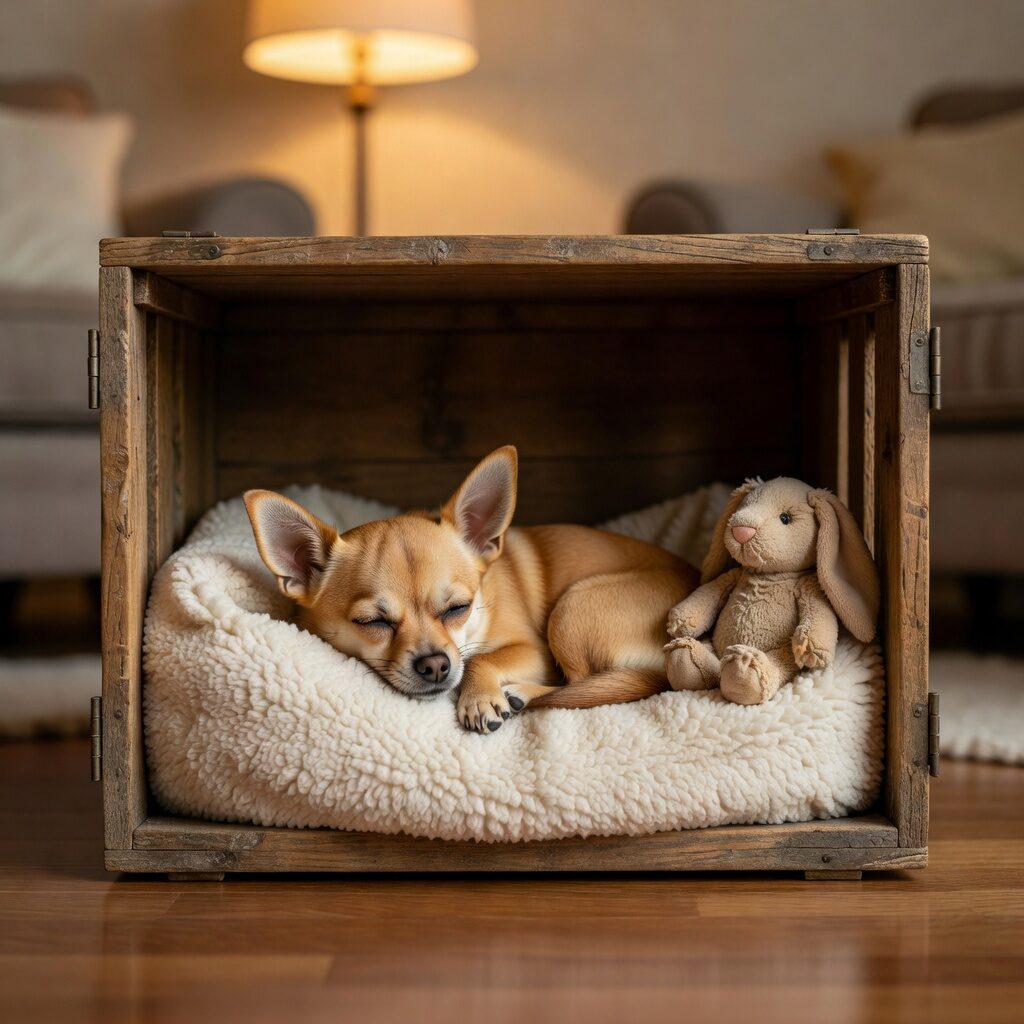
Create a safe space for your chihuahua with a properly introduced crate or a specific area with their bed, a blanket that smells like you, and a stuffed Kong or puzzle toy. This gives them something to focus on and a place that feels secure.
When to Talk to Your Vet
Some chihuahuas have separation anxiety severe enough that behavioral training alone is not enough. If your chihuahua is injuring themselves, refusing to eat when you are gone, or showing extreme distress despite weeks of desensitization work, talk to your veterinarian.
There are supplements and medications that can take the edge off while you work on the behavioral side. Melatonin has shown some promise for anxiety in dogs, and your vet may recommend anti-anxiety medication for severe cases. These are not magic pills. They are tools that make training possible for dogs whose anxiety is too high to learn through desensitization alone.
Chihuahua separation anxiety is treatable. It takes patience, consistency, and a willingness to change some of your own habits. But the goal is a chihuahua that can relax when you are gone, not one that spends every absence in a state of panic. Your chihuahua deserves to feel safe even when you are not in the room, and with the right approach, they will.
You might also enjoy our signs your chihuahua is hiding an illness.
How I First Realized Something Was Wrong
I did not recognize my chihuahua’s separation anxiety for what it was until a neighbor mentioned that she could hear barking for hours after I left for work. I had no idea. From my perspective, I would leave the house and come home to a dog who was thrilled to see me, and I assumed everything in between was fine. But when I set up a camera to see what was actually happening, the footage was difficult. Within seconds of the door closing, my chihuahua would start pacing. Then the barking would begin, escalating into a frantic, rhythmic bark that did not stop for the entire time I was gone. She would scratch at the door, circle the room, and refuse to eat or drink.
What struck me most was how different her behavior was from what I expected. I thought separation anxiety meant a dog that destroys furniture or has accidents on the floor. My chihuahua did neither. She just barked and paced and waited, which looked less dramatic on the surface but was actually a sign of profound distress. Chihuahuas bond so intensely with their primary person that being separated from them can trigger a genuine panic response, and the fact that she was not destructive did not mean she was not suffering. She absolutely was, and I had been oblivious to it for months.
Small Steps That Made a Real Difference
The protocol that finally helped my chihuahua’s separation anxiety was painfully gradual, and I want to be upfront about that because the internet is full of quick-fix promises that do not work for this condition. I started by leaving the house for thirty seconds, coming back in calmly without making a fuss, and repeating that several times a day. Then I extended it to one minute. Then two. Then five. The progression was so slow that there were days when I felt like we were getting nowhere, but the camera footage told a different story. The pacing was decreasing. The barking onset was delaying. She was starting to lie down between my departure and return instead of standing at the door the entire time.
I also made changes to my departure routine that reduced the anxiety triggers. I stopped making a big production of leaving, no dramatic goodbyes, no “mommy will be back soon” speeches. I picked up my keys at random times throughout the day so that the sound of keys no longer meant I was about to disappear. I put my shoes on and sat back down on the couch. Every element of the departure sequence that had become a stress trigger needed to be neutralized through repetition without the actual departure. It took about six weeks before I could leave for a full workday without the barking starting, and I consider that timeline a success.
I have been through this with my own chihuahua. It is one of those things that looks simple on paper but gets complicated fast when you are actually dealing with a four-pound dog who has opinions about everything. com/why-chihuahuas-bark-at-everything/” title=”Why Your Chihuahua Barks at Everything (and What”>Why Your Chihuahua Barks at Everything (and What.
The truth about chihuahua separation anxiety is that there is no single right answer. What works for one chihuahua might be completely wrong for another. Mine took weeks to adjust. Some dogs figure it out in days. The size of your chihuahua matters. Their age matters. Their personality matters most of all.
Here is what I wish someone had told me earlier. Start small. Do not try to change everything at once. Chihuahuas are stubborn but they are also sensitive. Push too hard and they shut down. Go too slow and nothing changes. The sweet spot is somewhere in the middle and you have to find it yourself.
I talked to other chihuahua owners about chihuahua separation anxiety and heard the same thing over and over. Patience. Consistency. And a willingness to look a little silly in public because chihuahuas do not care about your dignity.
If you are just getting started with chihuahua separation anxiety, give yourself grace. You will make mistakes. Your chihuahua will make more of them. That is the whole process. And honestly, once you get through the hard part, it is worth it.
Are chihuahuas hard to train?
Chihuahuas are intelligent but independent. They respond well to positive reinforcement with high-value treats. Harsh corrections are counterproductive. Short, consistent training sessions of five minutes produce better results than longer ones.
How long does it take to train a chihuahua?
Basic commands can be learned in two to four weeks with daily practice. Behavior modification for established issues like barking or biting typically takes six to twelve weeks of consistent work. Patience is more important than intensity.
What is the best training method for chihuahuas?
Positive reinforcement using food rewards works best. Chihuahuas are food-motivated and respond to clear, consistent cues paired with immediate rewards. Punishment-based methods increase fear and worsen most chihuahua behavior problems.
What should I know about chihuahua separation anxiety?
Understanding chihuahua separation anxiety requires attention to breed-specific needs. Chihuahuas are small dogs with unique health, behavioral, and care requirements. Consulting your veterinarian and learning from experienced owners provides the most reliable guidance for your specific situation.