

Crate Training Chihuahua: Choosing the Right Crate
Size matters a lot here. A crate that is too big defeats the purpose because your Chihuahua will use one end as a bedroom and the other as a bathroom. You want a crate just big enough for them to stand up, turn around, and lie down comfortably. For most Chihuahuas, that means an extra small or small crate.
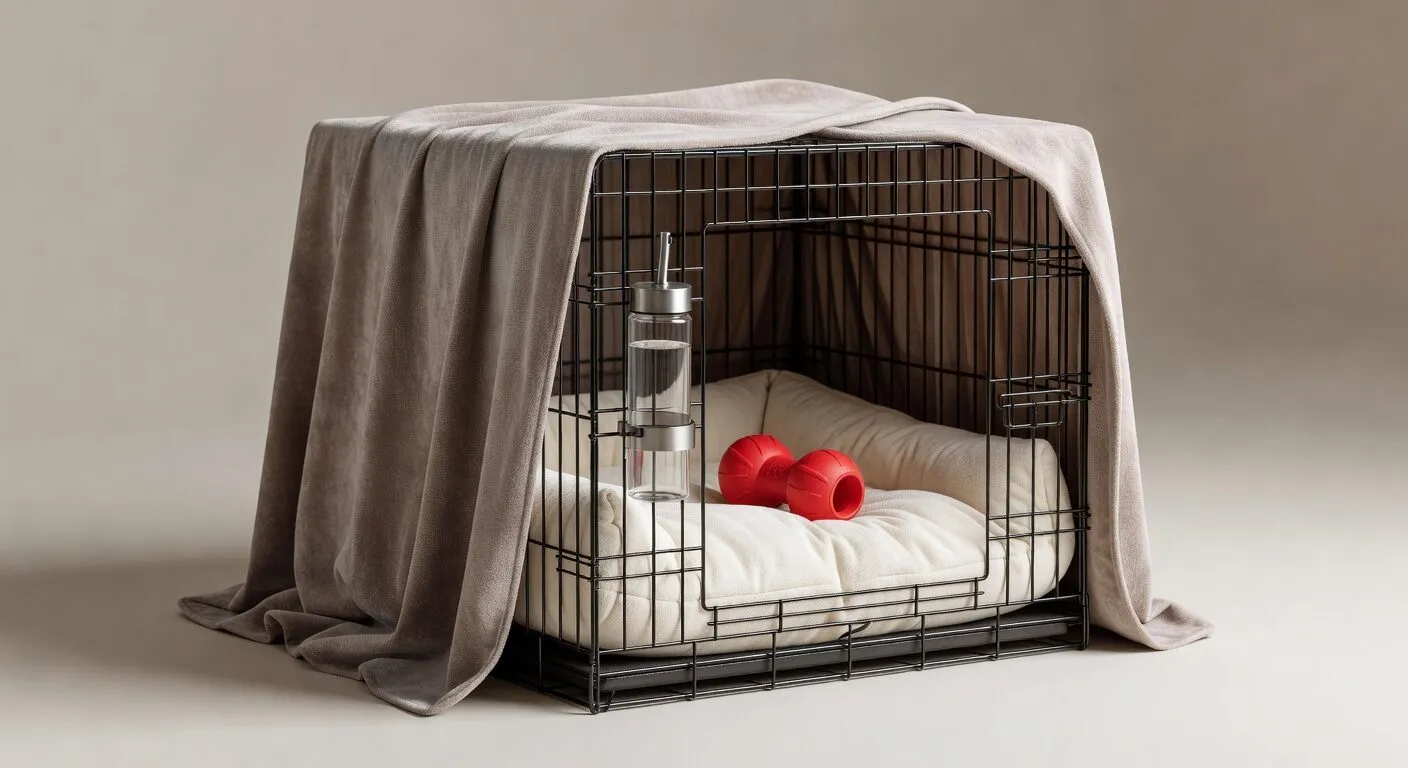
I prefer plastic crates over wire ones for Chihuahuas. They feel more den like and enclosed, which most Chis seem to prefer. Wire crates can work too if you drape a blanket over three sides to create that cozy, cave like feeling. For more detail, see the AKC dog training advice. For more detail, see the PetMD dog behavior resources.
Put a soft blanket or pad inside. Chihuahuas get cold easily, so comfort matters. I toss in an old t shirt that smells like me during the early days of training. That familiar scent goes a long way in making the crate feel safe.
Related: Chihuahua training tips.
The Introduction Phase
Never just shove your Chihuahua in the crate and close the door. Forcing it will backfire every single time. You will end up with a chihuahua who screams the moment they see the crate.
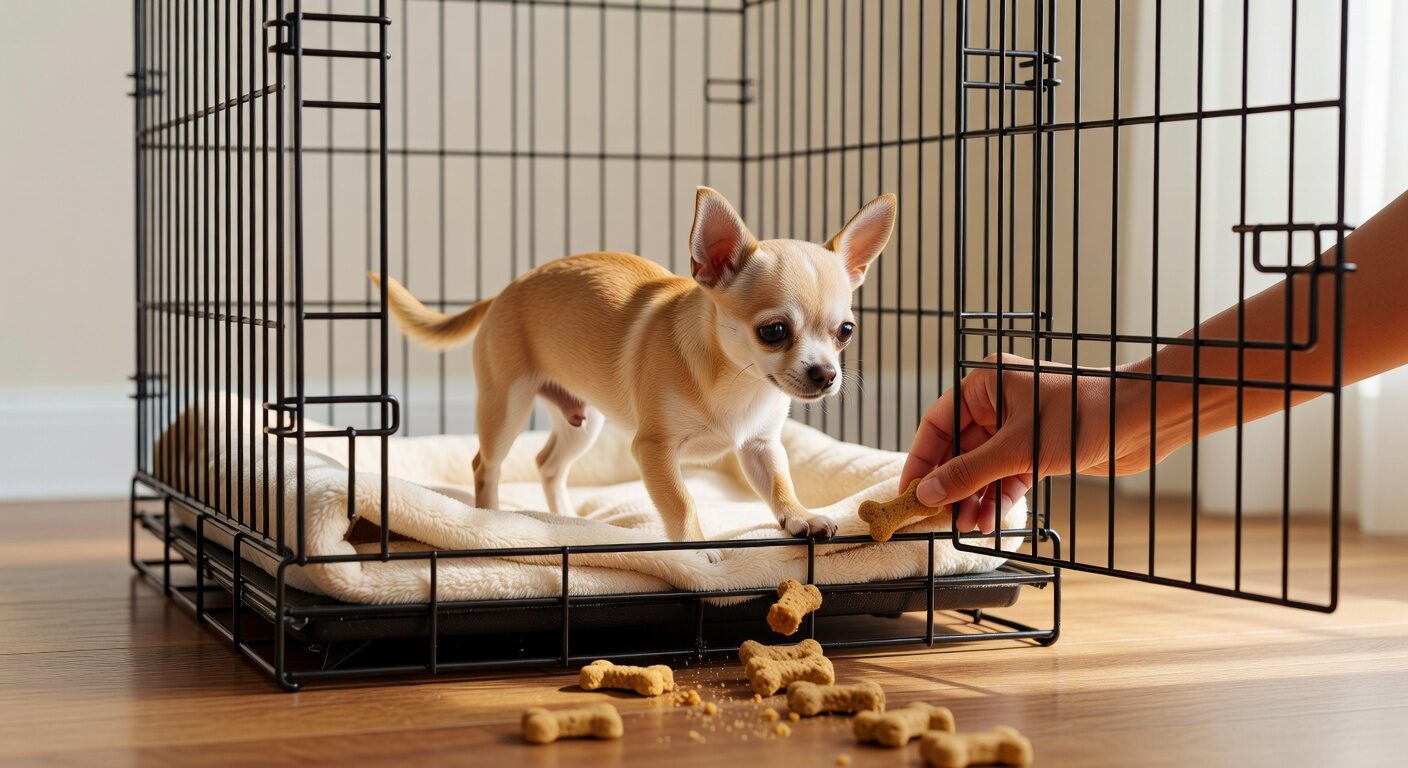
Start by placing the crate in a room where your family spends time. Leave the door open and toss a few treats inside. Let your Chihuahua investigate on their own terms. some chihuahuas walk right in. Others circle it for days like it might bite them. Both reactions are normal.
I spent the first three days just feeding meals near the crate, then inside the crate with the door open. By day four, my Chihuahua was walking in on her own to check for treats.
What I Wish I Knew Earlier
Gradually increase the time with the door closed. Go from thirty seconds to a minute, then five minutes, then ten. This process took me about two weeks before my Chihuahua was comfortable being in the crate for thirty minutes while I was in the next room.
The biggest mistake I made early on was moving too fast. I jumped from five minutes to an hour because I had to run an errand. My Chihuahua panicked, and we had to dial back several steps. Slow and steady wins this one. com/chihuahua-puppy-accessories-you-actually-need/” title=”Everything You Actually Need Before Bringing a Home”>Everything You Actually Need Before Bringing a Home.
Dealing With Crying and Whining
Your Chihuahua will probably cry at some point during crate training. It is hard to listen to, and your instinct will be to let them out immediately. But opening the door while they are crying teaches them that crying equals freedom. That is a lesson you do not want them to learn.
Wait for a pause in the noise, even if it is just a few seconds of quiet. Then open the door. You are rewarding the silence, not the screaming. I used to stand outside the door holding my breath waiting for that tiny moment of calm.
If the crying is intense and does not stop after fifteen minutes, you may have pushed too fast. Go back a few steps and rebuild.
Making the Crate a Happy Place
The crate should always be associated with good things. Treats go in the crate. Favorite toys go in the crate. Sometimes I would hide a small piece of chicken in there for my chihuahuas to find. They started running to their crates on their own because they never knew what surprise might be waiting.
Never use the crate as punishment. The moment you use it that way, all your positive work unravels. The crate is their happy den, their safe retreat where only good things happen.
Crate training changed our daily routine completely. My Chihuahuas now go to their crates voluntarily when they want a nap or when the house gets too busy. It took some time and plenty of treats to get there, but seeing them choose the crate on their own made every bit of effort worth it.
The Mistakes I Made the First Week
When I first tried crate training my chihuahua, I made every mistake in the book and then invented a few new ones. I bought a crate that was way too big because I thought she would appreciate the extra room. She did not. She used one corner as a bed, one corner as a bathroom, and the rest as a space to bark at me with maximum echo. The oversized crate defeated the entire purpose because dogs naturally avoid soiling their sleeping area, but only when the space is small enough that they cannot separate the two zones.
My second mistake was rushing the process. I put her in the crate on night one, closed the door, walked to my bedroom, and listened to forty-five minutes of the most heartbreaking crying I have ever heard from a four-pound animal. I caved. I opened the door. She bolted out, jumped on the couch, and looked at me like I had just released her from prison. That taught her that crying equals freedom, and it took me three weeks to undo that association. If I could go back, I would spend the first few days just letting her explore the crate with the door open, tossing treats inside, and making it the most positive place in the house before ever closing that door.
Building a Crate Routine That Sticks
The turning point for us came when I stopped treating the crate as a punishment tool and started treating it as part of our daily rhythm. Every morning after breakfast, my chihuahua goes into her crate with a small chew toy for about thirty minutes while I get ready for work. She does not cry anymore. She does not scratch at the door. She walks in, circles twice, lies down, and starts working on her chew. That did not happen overnight, and it did not happen because of any magic technique. It happened because I was consistent every single day for weeks until the routine became so predictable that she stopped fighting it.
I also learned that the crate needs to be in a room where the family spends time. Putting it in a back bedroom or a garage makes your chihuahua feel isolated, and chihuahuas are pack animals who need to feel connected to their people even when they are resting. I moved the crate next to the couch in the living room, draped a light blanket over the top and sides to create a den-like feeling, and the difference was immediate. She started going in voluntarily during the day, which is the ultimate sign that crate training has actually worked.
You Might Also Enjoy
I have been through this with my own chihuahua. It is one of those things that looks simple on paper but gets complicated fast when you are actually dealing with a four-pound dog who has opinions about everything. You might also find Is Doggie Daycare Right for Your Chihuahua? worth reading.
The truth about crate training chihuahua is that there is no single right answer. What works for one chihuahua might be completely wrong for another. Mine took weeks to adjust. Some dogs figure it out in days. The size of your chihuahua matters. Their age matters. Their personality matters most of all.
Here is what I wish someone had told me earlier. Start small. Do not try to change everything at once. Chihuahuas are stubborn but they are also sensitive. Push too hard and they shut down. Go too slow and nothing changes. The sweet spot is somewhere in the middle and you have to find it yourself.
I talked to other chihuahua owners about crate training chihuahua and heard the same thing over and over. Patience. Consistency. And a willingness to look a little silly in public because chihuahuas do not care about your dignity.
If you are just getting started with crate training chihuahua, give yourself grace. You will make mistakes. Your chihuahua will make more of them. That is the whole process. And honestly, once you get through the hard part, it is worth it.
How long does it take to crate train a chihuahua?
Most chihuahuas adjust to their crate within one to three weeks when introduced gradually. Some take longer and that is perfectly fine. Rushing the process can create negative associations.
What size crate does a chihuahua need?
A crate that is 24 inches long is typically the right size. It should be large enough for your dog to stand, turn around, and lie down comfortably but not so large that they can eliminate in one corner.
Should I leave my chihuahua in a crate all day?
No. Adult chihuahuas should not be crated for more than four to six hours at a time. Puppies need even more frequent breaks. Consider a pet sitter or playpen for longer periods.
My chihuahua cries in the crate. What should I do?
Make sure their basic needs are met first. Then work on building positive crate associations with treats, meals, and comfort items. Gradual duration increases are essential.