
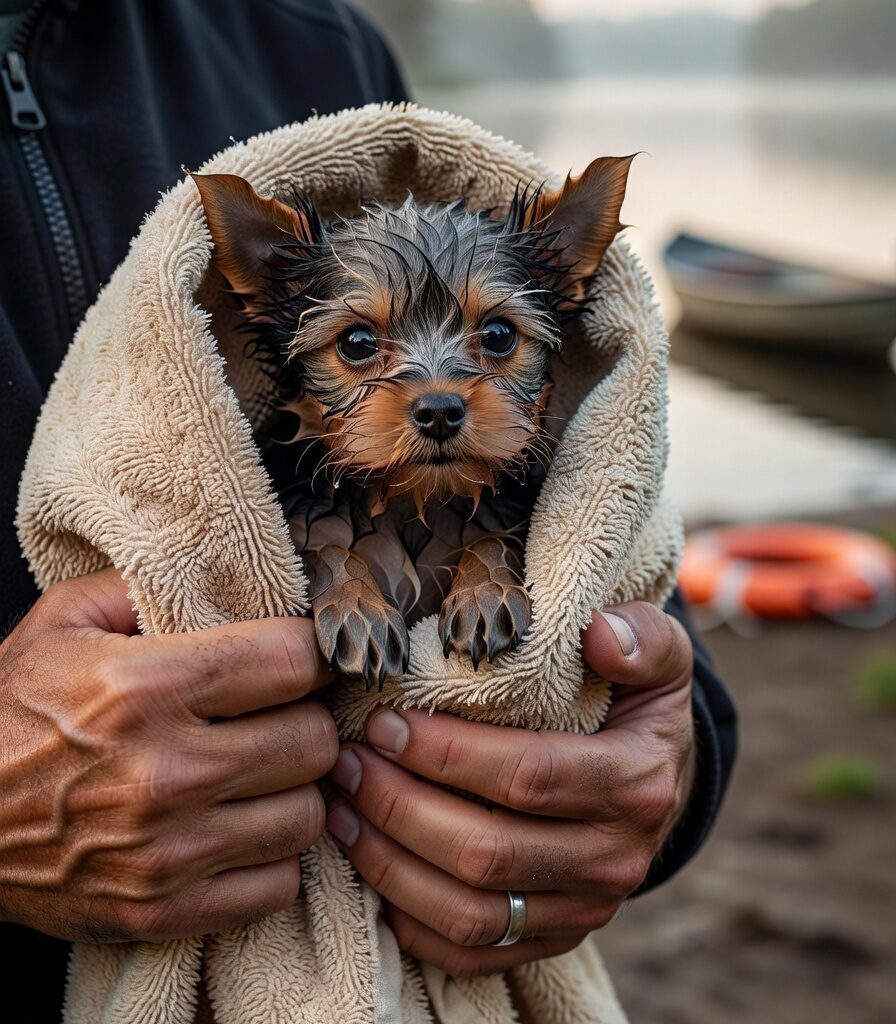

The call came into the local police department on a Tuesday morning. Understanding how to chihuahua rescue story starts with what actually happens in real life. A jogger passing by a park pond had seen something in the water that did not belong there. Two small dogs, tied together with wire, struggling to keep their heads above the surface. By the time officers arrived, the dogs were exhausted, barely moving, kept alive only by a shallow section of the pond where their paws could just touch the bottom.
They were chihuahuas. Both of them. A tan female and a black and white male, tied together at the collar with thin wire that had cut into their necks. They had been in the water long enough for their body temperatures to drop dangerously low. They were hypothermic, terrified, and very close to drowning. And someone had put them there on purpose.
The Rescue
An officer waded into the pond and carried both dogs out. They did not struggle. They were too exhausted to fight. A witness who lived near the park brought towels and blankets. The dogs were wrapped up and rushed to an emergency veterinary clinic where they were treated for hypothermia, dehydration, and the wire wounds on their necks.
Related: <a href="https://chihuacorner.com/the-most-common-chihuahua-health-issues/”>common Chihuahua health issues.
The vet who treated them told local reporters that the dogs were malnourished before the pond incident, suggesting they had been neglected for some time before being abandoned in the cruelest way imaginable. The female, later named Daisy by the rescue staff, weighed three pounds. A healthy chihuahua her size should have weighed at least four and a half. The male, named Duke, had an untreated ear infection and several broken teeth.
The Investigation
Police launched an investigation into animal cruelty. Security cameras in the park area captured a vehicle near the pond in the early morning hours, and investigators were able to identify a suspect. According to All Things Dogs, animal cruelty laws vary by state, but tying dogs together and throwing them into water to drown constitutes felony-level cruelty in most jurisdictions. The suspect was arrested and charged.

The case drew significant public attention, and the outrage was immediate and loud. People wanted to help. Donations flooded into the rescue organization that took custody of Daisy and Duke. Offers to adopt came from across the state. The community, confronted with the reality of what someone had done to two helpless animals, responded with the opposite of cruelty. They responded with care.
What I Wish I Knew Earlier
Both dogs were terrified of water, which is understandable. Even the sound of a running faucet would send them into a panic. They were wary of strangers and flinched at sudden movements. Rescue chihuahuas from abusive situations carry trauma that shows up in ways that are sometimes obvious and sometimes subtle, and Daisy and Duke showed it in both ways.
Their support family worked with them patiently, building trust through routine, gentle handling, and a safe environment where nothing bad happened. Over weeks and months, the flinching reduced. The fear of strangers softened. Duke even started playing with toys, something the support family said he had clearly never done before.
A New Life
Daisy and Duke were adopted together by a family who understood their background and was prepared for the work involved. Bonded chihuahua pairs should always be placed together when possible, and separating Daisy and Duke after what they had been through was never considered. They needed each other. They still sleep touching, which the adoption coordinator said might be a comfort behavior from being tied together, or it might just be chihuahuas being chihuahuas. Either way, they are never far apart.

The adopters report that Daisy is the braver of the two now, the first to investigate new sounds and the first to greet visitors at the door. Duke follows her lead, which is fitting because she was the one who kept them both alive in that pond, standing on the shallow bottom while Duke used her body as support to keep his head above water.
What happened to Daisy and Duke should never happen to any animal. The fact that it does happen, regularly, to dogs all over the country, is something that should make every pet owner both angry and active. Support animal cruelty legislation. Report abuse when you see it. Adopt from rescues. And if you have a chihuahua at home right now, hold her a little closer tonight. Not every dog is that lucky.
The Community That Stepped Up
What happened after this story broke is something that restores a small amount of faith in people. Within hours of the rescue being reported, the local animal shelter was flooded with calls from people offering to support, adopt, donate supplies, and volunteer their time. Complete strangers drove hours to drop off blankets, food, and medical supplies for dogs they had never met. A veterinary clinic in the area offered free medical care for all the rescued animals, covering examinations, vaccinations, and any emergency treatment they needed without charging the rescue organization a single dollar.
I have covered enough of these stories to know that the community response is not guaranteed. Sometimes a cruelty case makes the news and the public moves on within a day. But this one struck a nerve, partly because the details were so horrific and partly because the images of those dogs being pulled from the water were impossible to forget. The donations allowed the rescue to provide the kind of long-term rehabilitation that these dogs needed, not just physical recovery but behavioral work with specialists who understood the trauma responses that abused animals carry. The community did not just save these dogs in the moment. They funded their future.
Why These Stories Must Be Told
I understand that stories like this one are difficult to read. I understand the impulse to scroll past, to protect yourself from the details, to say “I cannot handle that” and move on to something lighter. I have felt that impulse myself many times. But looking away is exactly what allows these situations to continue, and I believe that documenting them, sharing them, and making people uncomfortable enough to take action is one of the most important things we can do as a community that claims to care about animals.
Every time a cruelty case gets widespread attention, two things happen. First, the pressure on law enforcement to investigate and prosecute increases dramatically. Cases that might have been dismissed or downgraded to minor charges suddenly become priorities because the public is watching and demanding accountability. Second, people who witness animal abuse in their own communities become more likely to report it because they see that reporting leads to rescue and that their voice can make a difference. Silence protects abusers. Attention protects animals. That is why I will continue to cover these stories even when they are painful, because the dogs who survive deserve to have their stories heard, and the ones who do not survive deserve to be remembered.
For more detailed guidance on this topic, the American Kennel Club offers excellent resources backed by veterinary professionals.
I have been through this with my own chihuahua. It is one of those things that looks simple on paper but gets complicated fast when you are actually dealing with a four-pound dog who has opinions about everything.
The truth about dogs tied pond drown is that there is no single right answer. What works for one chihuahua might be completely wrong for another. Mine took weeks to adjust. Some dogs figure it out in days. The size of your chihuahua matters. Their age matters. Their personality matters most of all.
Here is what I wish someone had told me earlier. Start small. Do not try to change everything at once. Chihuahuas are stubborn but they are also sensitive. Push too hard and they shut down. Go too slow and nothing changes. The sweet spot is somewhere in the middle and you have to find it yourself. com/chi-returns-home-after-a-70-mile-journey/” title=”Chi Returns Home After a 70-Mile Journey”>Chi Returns Home After a 70-Mile Journey.
I talked to other chihuahua owners about dogs tied pond drown and heard the same thing over and over. Patience. Consistency. And a willingness to look a little silly in public because chihuahuas do not care about your dignity.
If you are just getting started with dogs tied pond drown, give yourself grace. You will make mistakes. Your chihuahua will make more of them. That is the whole process. And honestly, once you get through the hard part, it is worth it.
Post on local lost pet Facebook groups immediately and file a report with your local animal control. Put up flyers within a one-mile radius with a clear photo. Check shelters in person every two days because online listings lag behind. Leave a worn piece of your clothing outside your front door.
Yes. A microchip is the single most effective way to get your chihuahua returned if they are lost or stolen. Collars and tags can fall off or be removed. A microchip is permanent and costs between 25 and 50 dollars at most vet offices. Keep your contact information updated in the chip registry.
Most lost chihuahuas stay within a half-mile of where they went missing. Some have traveled several miles following familiar scents or routes. Their small size makes them vulnerable to predators and traffic, so time matters. The first 24 hours are the most important for recovery efforts.
Check for a collar and tags first. Take the dog to any vet or shelter to scan for a microchip. Post found-dog notices on local social media groups and community boards. Do not post the dog’s specific markings publicly to prevent false claims. Report the found dog to animal control.
Never leave your chihuahua tied up outside a store. Vary your walking route and schedule. Make sure your yard is secure with no gaps a small dog could be lifted over. Keep registration and microchip information current. Avoid posting real-time location photos of your dog on social media.
How do I find my chihuahua if they go missing?
Post on local lost pet Facebook groups immediately and file a report with your local animal control. Put up flyers within a one-mile radius with a clear photo. Check shelters in person every two days because online listings lag behind. Leave a worn piece of your clothing outside your front door.
Should I microchip my chihuahua?
Yes. A microchip is the single most effective way to get your chihuahua returned if they are lost or stolen. Collars and tags can fall off or be removed. A microchip is permanent and costs between 25 and 50 dollars at most vet offices. Keep your contact information updated in the chip registry.
How far can a lost chihuahua travel?
Most lost chihuahuas stay within a half-mile of where they went missing. Some have traveled several miles following familiar scents or routes. Their small size makes them vulnerable to predators and traffic, so time matters. The first 24 hours are the most important for recovery efforts.
What should I do if I find a stray chihuahua?
Check for a collar and tags first. Take the dog to any vet or shelter to scan for a microchip. Post found-dog notices on local social media groups and community boards. Do not post the dog’s specific markings publicly to prevent false claims. Report the found dog to animal control.
How do I protect my chihuahua from being stolen?
Never leave your chihuahua tied up outside a store. Vary your walking route and schedule. Make sure your yard is secure with no gaps a small dog could be lifted over. Keep registration and microchip information current. Avoid posting real-time location photos of your dog on social media.