
When Hurricane Harvey hit Houston in 2017, a friend of mine evacuated with thirty minutes notice. Understanding how to emergency preparedness chihuahua starts with what actually happens in real life. She grabbed her phone, her wallet, her medication, and her chihuahua. She forgot the dog food. She forgot the leash. She forgot the vaccination records she would need to get into an emergency shelter that accepted pets. She spent the next three days scrambling to find chihuahua-sized supplies in a city that was underwater.
She told me later that the worst part was not the storm. It was the helplessness of realizing she had not prepared for the most basic scenario – leaving her house quickly with a dog who depended on her for everything.
I live in earthquake country. After hearing her story, I built an emergency kit for my chihuahua Ziggy the same week. It took an afternoon and cost less than a hundred dollars. It has been sitting in my hall closet for six years. I have never needed it. I hope I never do. But if I do, Ziggy and I are ready to walk out the door in under five minutes.
Related: common Chihuahua health issues.
The Chihuahua Emergency Kit
Your chihuahua needs her own emergency supplies, separate from yours and ready to grab. Here is what should be in it.
Three days of food in a waterproof container. I use a small dry bag from a camping supply store. It keeps the kibble fresh and dry regardless of conditions. Three days of water – about a quart for a chihuahua, though I pack two quarts because water weighs little compared to the regret of not having enough. A collapsible bowl.
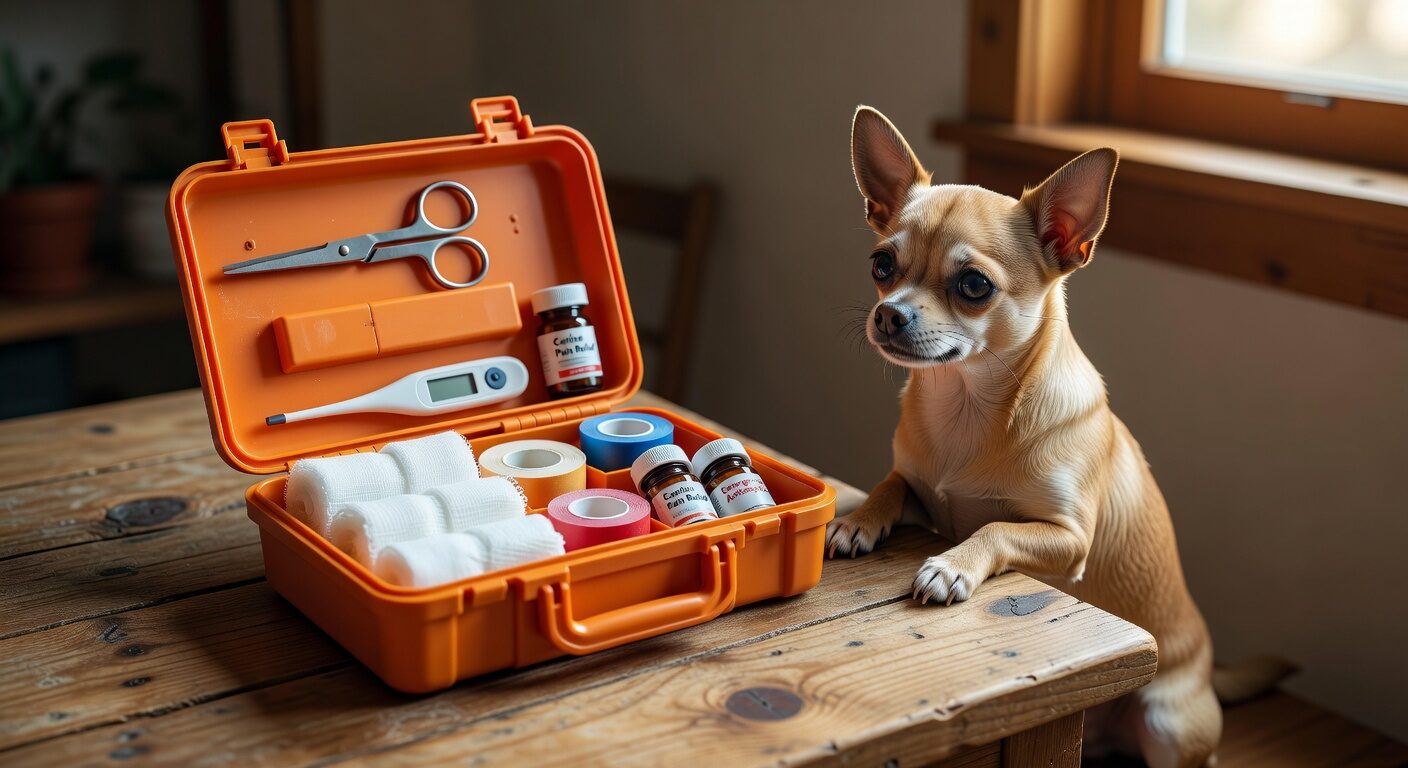
A basic pet first aid kit. Gauze, adhesive tape, antiseptic wipes, tweezers, a styptic pencil for nail injuries, and a small pair of blunt scissors. If your chihuahua takes daily medication, pack a two-week supply and rotate it regularly so it does not expire in the kit.
A collar with current ID tags. Even if your chihuahua normally wears a harness, the emergency kit should include a lightweight collar with your name, phone number, and an out-of-area contact number on the tag. If you get separated from your dog during an evacuation, that tag might be the only thing that brings her back to you.
A harness and a four-foot leash. Not a retractable leash – those are unreliable in chaotic situations. A standard fixed-length leash gives you control when everything around you is unpredictable.
Copies of vaccination records and a current photo of your chihuahua. Many emergency shelters require proof of rabies vaccination before they will accept a pet. A photo helps rescue workers identify and reunite you with your dog if you get separated. Keep these in a ziplock bag to protect them from water.
Sanitation supplies. Poop bags, paper towels, a small bottle of enzyme cleaner. Emergencies are stressful for dogs and stress causes accidents. Being prepared for cleanup keeps you welcome in whatever space you end up in.
Chihuahua Emergency Preparedness: Microchipping Is Not Optional
Collars get lost. Tags fall off. In the chaos of a natural disaster, a panicked chihuahua can wriggle out of a collar or harness faster than you would believe possible. A microchip is permanent identification that cannot be lost, removed, or damaged.

If your chihuahua is not microchipped, make an appointment. If she is microchipped, verify that your contact information is current in the registry database. I know people who moved two years ago and never updated their microchip registration. That chip is useless if it points to a phone number that no longer works.
Rescue pet decals for your windows are another layer of protection. These stickers alert rescue workers that there are pets inside your home who need to be saved. Include the number and type of pets on the decal. Emergency responders look for these. com/tips-for-taking-care-of-chihuahua-puppies/” title=”Tips for Taking Care of Chihuahua Puppies”>Tips for Taking Care of Chihuahua Puppies.
What I Wish I Knew Earlier
Know where your chihuahua goes when she is frightened. In the first moments of a disaster, before the situation escalates, consider confining her to one room where you can easily reach her. A crate-trained chihuahua has a massive advantage here – the crate is both a familiar safe space and a portable containment system. You can grab the crate and go.
The Evacuation Plan
Every household with a chihuahua should have answers to these questions before an emergency happens. Not during. Before.
Where will you go? Not every shelter accepts pets. Research your local emergency shelters now and find out which ones allow animals. Check with nearby veterinary hospitals about emergency boarding. Call pet-friendly hotels along your evacuation route and save their numbers in your phone.
Who is your backup? Develop a buddy system with a friend, neighbor, or family member who can take your chihuahua if you cannot evacuate together. Make sure your backup person knows where the emergency kit is, what medications your dog takes, and any behavioral quirks that matter – like the fact that Ziggy bites when he is scared, which is information a stranger handling him absolutely needs to know. Understanding chihuahua emergency preparedness makes a real difference.
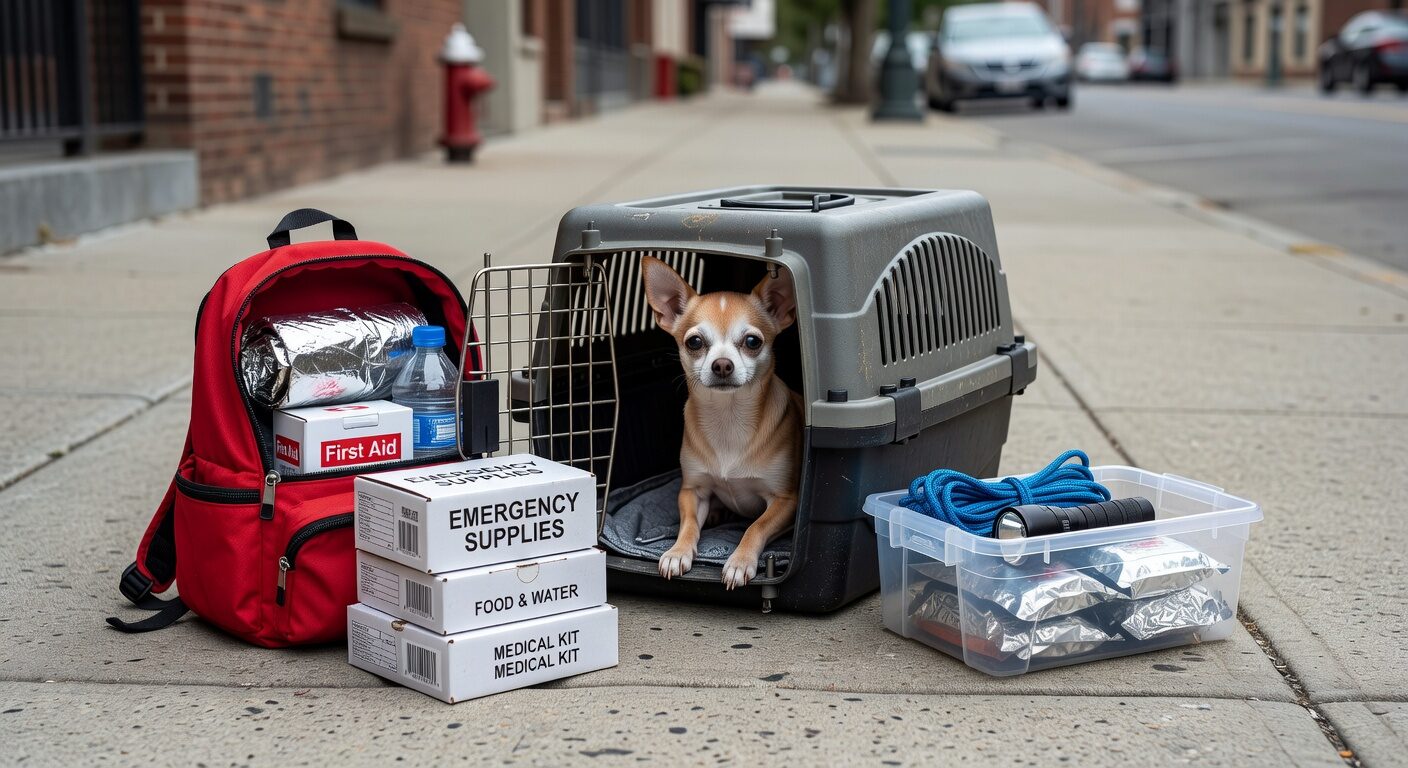
How will you transport your chihuahua? A carrier or crate should be part of your evacuation gear. In a chaotic situation, a loose chihuahua can bolt, get stepped on, or get lost in a crowd. Contained is safe.
Why Chihuahuas Are Both Easier and Harder in Emergencies
The good news about evacuating with a chihuahua is logistical. They are small. Their supplies are light. Their carrier fits in a car, on a bus, or under an airplane seat. You can physically carry your dog and all her supplies simultaneously. Try that with a German Shepherd.
The hard part is emotional. Chihuahuas are sensitive to environmental changes. Noise, crowds, unfamiliar places, disrupted routines – all of these trigger anxiety in a breed that is already predisposed to it. A stressed chihuahua may refuse to eat, develop diarrhea, tremble uncontrollably, or become defensively aggressive toward strangers trying to help.
This is why the comfort items in your emergency kit matter. This is why maintaining routine – same feeding times, same bedtime, same familiar blanket – matters even when everything else has gone sideways. Your chihuahua’s world is small by design. When that small world gets disrupted, she needs anchors. You are the biggest one. The blanket that smells like home is the second.
The FEMA pet preparedness guide recommends that all pet owners include animals in their household emergency plans. For chihuahua owners, I would add that the time to prepare is now – on a calm Sunday afternoon, not at 2 AM when the evacuation order comes through. Build the kit. Make the plan. Know the hiding spots. And hope you never need any of it.
I have been through this with my own chihuahua. It is one of those things that looks simple on paper but gets complicated fast when you are actually dealing with a four-pound dog who has opinions about everything.
The truth about chihuahua emergency preparedness is that there is no single right answer. What works for one chihuahua might be completely wrong for another. Mine took weeks to adjust. Some dogs figure it out in days. The size of your chihuahua matters. Their age matters. Their personality matters most of all.
Here is what I wish someone had told me earlier. Start small. Do not try to change everything at once. Chihuahuas are stubborn but they are also sensitive. Push too hard and they shut down. Go too slow and nothing changes. The sweet spot is somewhere in the middle and you have to find it yourself.
I talked to other chihuahua owners about chihuahua emergency preparedness and heard the same thing over and over. Patience. Consistency. And a willingness to look a little silly in public because chihuahuas do not care about your dignity.
If you are just getting started with chihuahua emergency preparedness, give yourself grace. You will make mistakes. Your chihuahua will make more of them. That is the whole process. And honestly, once you get through the hard part, it is worth it.
Your kit should include a 5-day supply of food and water, medications, vaccination records, a leash and harness, a carrier, poop bags, a first aid kit, a recent photo of your chihuahua, and a blanket that smells like home. Store everything in a waterproof bag near your own emergency kit.
Put your chihuahua in their carrier before you do anything else. Grab the emergency kit. Chihuahuas are small enough that they can ride in an airline-approved carrier in your car. Never leave your chihuahua behind thinking you will come back later. Most disasters do not give you a second chance.
Not all emergency shelters accept pets. Check your local emergency management website for pet-friendly shelters before a disaster hits. The Red Cross typically does not allow pets in human shelters. Many communities have separate pet sheltering arrangements. Know your options ahead of time.
Create a safe space in an interior room away from windows. Play white noise or calming music to mask thunder. A Thundershirt or tight-fitting t-shirt provides some calming pressure. Stay calm yourself because your chihuahua reads your body language. Do not over-coddle, which reinforces the fear.
Every chihuahua should wear a collar with an ID tag that has your current phone number. A microchip is the permanent backup in case the collar comes off. Keep registration current with the microchip company. A small GPS tracker on the collar adds an extra layer of protection for this escape-prone breed.
What should be in a pet emergency kit for chihuahuas?
Your kit should include a 5-day supply of food and water, medications, vaccination records, a leash and harness, a carrier, poop bags, a first aid kit, a recent photo of your chihuahua, and a blanket that smells like home. Store everything in a waterproof bag near your own emergency kit.
How do I evacuate with a chihuahua?
Put your chihuahua in their carrier before you do anything else. Grab the emergency kit. Chihuahuas are small enough that they can ride in an airline-approved carrier in your car. Never leave your chihuahua behind thinking you will come back later. Most disasters do not give you a second chance.
Can I take my chihuahua to an emergency shelter?
Not all emergency shelters accept pets. Check your local emergency management website for pet-friendly shelters before a disaster hits. The Red Cross typically does not allow pets in human shelters. Many communities have separate pet sheltering arrangements. Know your options ahead of time.
How do I keep my chihuahua calm during a storm?
Create a safe space in an interior room away from windows. Play white noise or calming music to mask thunder. A Thundershirt or tight-fitting t-shirt provides some calming pressure. Stay calm yourself because your chihuahua reads your body language. Do not over-coddle, which reinforces the fear.
What identification should my chihuahua always have?
Every chihuahua should wear a collar with an ID tag that has your current phone number. A microchip is the permanent backup in case the collar comes off. Keep registration current with the microchip company. A small GPS tracker on the collar adds an extra layer of protection for this escape-prone breed.