
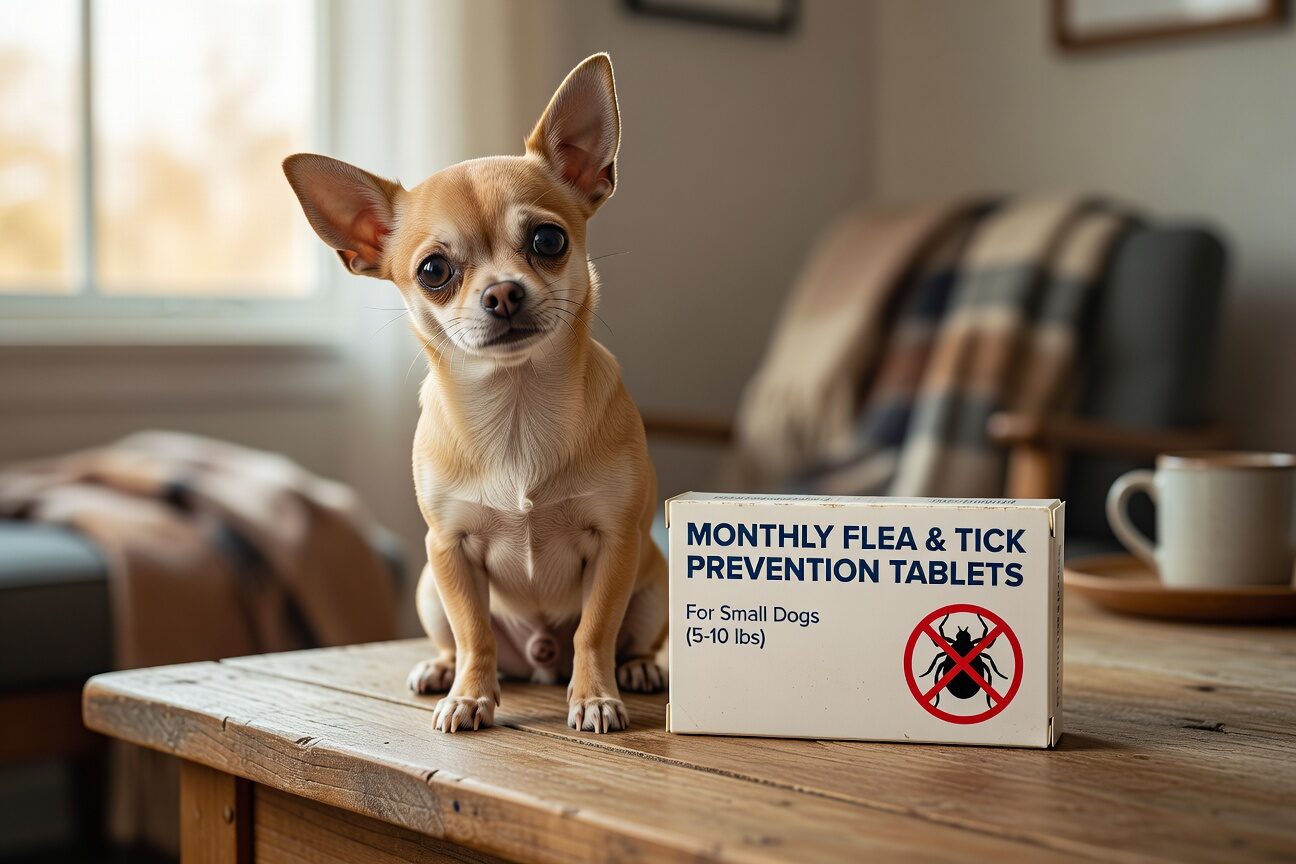

, Iif you want to know about chihuahua flea treatment, you are in the right place. Nobody tells you about the worms when you get a chihuahua. They tell you about the cuteness. They tell you about the big personality in a tiny body. They do not tell you that one day you will be staring at your chihuahua’s stool with a flashlight, trying to determine if what you are seeing is a piece of rice or a tapeworm segment. This is dog ownership. This is reality. And for chihuahua owners, parasites are a bigger deal than for owners of larger breeds because everything is more dangerous when your dog weighs less than a house cat.
Looking back, iI learned this the hard way with my chihuahua Bean. She came home from a playdate at the dog park scratching like something was living on her. Because something was. Multiple somethings, as it turned out.
External Parasites: The Ones You Can See
Fleas
Flea bite allergy is one of the most common skin conditions in dogs, and chihuahuas seem to get it worse than most. A single flea bite can trigger an allergic reaction that causes intense itching, hair loss, and inflamed red skin. Bean would scratch the area behind her ears until it was raw and bleeding from what turned out to be two flea bites. Two.
Related: common Chihuahua health issues.
According to ASPCA general dog care, proper care and attention to breed-specific needs makes the biggest difference in outcomes. According to AKC official chihuahua breed profile, proper care and attention to breed-specific needs makes the biggest difference in outcomes.
The bigger concern with fleas on chihuahuas is anemia. Fleas feed on blood. On a four-pound dog, a significant flea infestation can consume enough blood to cause visible symptoms – pale gums, lethargy, weakness. Puppies and elderly chihuahuas are most vulnerable. Severe flea-related anemia in tiny dogs can be life-threatening without treatment.
Prevention is a year-round commitment. Monthly preventatives prescribed by your vet and dosed for your chihuahua’s exact weight are the gold standard. Medicated collars from your vet – not the grocery store versions – provide additional protection. Regular flea combing catches infestations early before they become medical problems.
Ticks
Ticks are harder to detect on chihuahuas than you might expect, especially on long-haired varieties. They attach with barbed mouthparts and a sticky secretion, anchoring themselves into the skin to feed. They prefer warm, hidden areas – the base of the ears, between the toes, around the tail base, in the groin area.
Beyond the immediate irritation, ticks transmit diseases. Lyme disease, ehrlichiosis, and anaplasmosis are all tick-borne illnesses that affect dogs. For a chihuahua, any systemic infection is more serious simply because of her size. The fever, joint pain, and organ damage associated with tick-borne diseases can overwhelm a tiny body faster than a larger one.
Check your chihuahua for ticks after every outdoor excursion. Run your hands systematically through the coat, feeling for small bumps. Part the fur around the ears, face, and feet. A tick on a chihuahua looks like a small, dark, rounded bump – easy to mistake for a skin tag if you are not looking carefully.
Lice
Dog lice are less common than fleas and ticks but worth knowing about. They are species-specific – your chihuahua’s lice cannot infest you, and your lice cannot infest her. Symptoms include excessive scratching, a rough or dry coat, and visible nits on the hair shafts near the skin. Treatment usually involves medicated shampoos or the same preventatives used for fleas.
Internal Parasites: The Ones You Cannot See
Hookworms
Hookworms are blood feeders that attach to the intestinal wall. In chihuahuas, hookworm infestation causes anemia – sometimes severe anemia. The larvae can also penetrate directly through the skin, causing dermatitis on the paws and belly. Signs include dark or bloody stool, weight loss, weakness, and pale gums. If your chihuahua seems tired for no reason and her gums look lighter than usual, hookworms should be on the list of possibilities.
Roundworms
Roundworms are the most common internal parasite in puppies. A chihuahua puppy with a heavy roundworm burden will develop a classic potbellied appearance – a swollen abdomen on a thin body. You might see actual worms in the stool or vomit. They look like spaghetti. The image stays with you.
Roundworms steal nutrition from your growing puppy. In a breed that already has small margins for nutritional shortfall, this can cause developmental problems, failure to thrive, and immune system suppression.
Whipworms
Whipworms live in the large intestine and cause chronic diarrhea, sometimes with mucus or blood. They are harder to detect because they shed eggs intermittently – a single stool sample might miss them. Persistent intermittent diarrhea in a chihuahua, especially if it does not respond to dietary changes, should prompt a conversation with your vet about whipworm testing. com/why-my-chihuahua-would-not-stop-licking-and-what-it-took-to-figure-it-out/” title=”Why My Chihuahua Would Not Stop Licking and”>Why My Chihuahua Would Not Stop Licking and.
Prevention That Actually Works
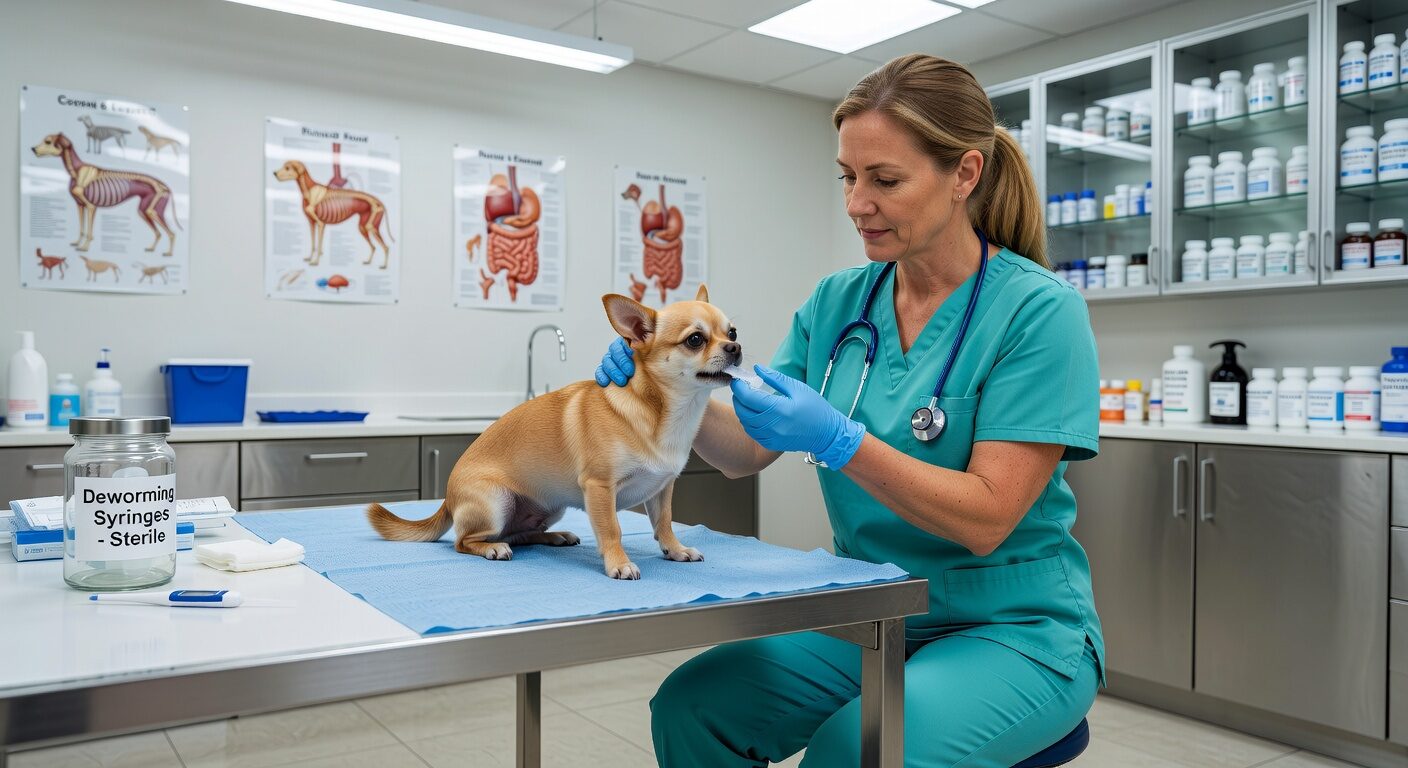
Modern preventative medications have made parasite control dramatically easier than it was even ten years ago. Many monthly treatments now combine flea, tick, and intestinal worm prevention in a single product. For chihuahuas, oral preventatives are generally preferred over topical treatments because topicals can be difficult to apply correctly on such a small body – too much product concentrated in one spot can cause skin irritation.

Ivermectin-based products are widely used for broad-spectrum parasite prevention. They are effective against multiple types of internal parasites and some external ones. Your vet will prescribe the appropriate product and dose for your chihuahua’s weight. Do not use large-dog formulations and try to calculate a smaller dose. The concentrations are different. The math does not work the way you think it does.
Regular fecal testing – at least once a year, twice for puppies – catches internal parasites before they cause visible symptoms. This is especially important for chihuahuas because by the time you notice signs of illness, the parasite burden may already be significant enough to cause real harm in a dog this small.
Environmental Control
Treating your chihuahua is half the battle. The environment matters too. Eliminate standing water near your home where mosquitoes breed – mosquitoes transmit heartworm. Keep your yard clean of dog waste, which harbors intestinal parasite eggs. Wash bedding regularly in hot water. Vacuum carpets and furniture where flea eggs and larvae hide.
If you have a yard or garden, be aware that certain areas are hotspots for parasite transmission. Shaded, moist areas with organic debris are where flea larvae thrive. Tall grass harbors ticks waiting for a host to brush past. Keep grass trimmed. Remove leaf litter. These simple landscaping habits reduce your chihuahua’s parasite exposure significantly.
The Companion Animal Parasite Council recommends year-round broad-spectrum parasite prevention for all dogs. Parasites do not take winter off in most climates, and a chihuahua who is unprotected for even a few months can develop an infestation that takes weeks to resolve.
Bean has been on consistent parasite prevention for three years now. No fleas. No ticks. Clean fecal tests. The peace of mind is worth every penny of the monthly preventative. And I have not had to inspect her stool with a flashlight since, which is a quality-of-life improvement I did not know I needed until I had it.
You might also enjoy our chihuahua obedience training guide.
I have been through this with my own chihuahua. It is one of those things that looks simple on paper but gets complicated fast when you are actually dealing with a four-pound dog who has opinions about everything.
The truth about chihuahua flea treatment is that there is no single right answer. What works for one chihuahua might be completely wrong for another. Mine took weeks to adjust. Some dogs figure it out in days. The size of your chihuahua matters. Their age matters. Their personality matters most of all.
Here is what I wish someone had told me earlier. Start small. Do not try to change everything at once. Chihuahuas are stubborn but they are also sensitive. Push too hard and they shut down. Go too slow and nothing changes. The sweet spot is somewhere in the middle and you have to find it yourself.
I talked to other chihuahua owners about chihuahua flea treatment and heard the same thing over and over. Patience. Consistency. And a willingness to look a little silly in public because chihuahuas do not care about your dignity.
If you are just getting started with chihuahua flea treatment, give yourself grace. You will make mistakes. Your chihuahua will make more of them. That is the whole process. And honestly, once you get through the hard part, it is worth it.
What are the most common health issues in chihuahuas?
Dental disease, luxating patellas, hypoglycemia, tracheal collapse, and heart murmurs are the most frequent. Regular veterinary checkups catch most conditions early when they are easiest to manage.
How often should a chihuahua see the vet?
Annual checkups for adults, bi-annual for seniors over eight years old. Puppies need visits every three to four weeks until their vaccination series is complete at around 16 weeks.
When should I worry about my chihuahua's health?
Seek veterinary care for lethargy lasting more than 24 hours, refusal to eat for two or more meals, difficulty breathing, persistent vomiting or diarrhea, and any sudden behavior change. With small dogs, early intervention is always safer than waiting.
What should I know about chihuahua parasite prevention?
Understanding chihuahua parasite prevention requires attention to breed-specific needs. Chihuahuas are small dogs with unique health, behavioral, and care requirements. Consulting your veterinarian and learning from experienced owners provides the most reliable guidance for your specific situation.