
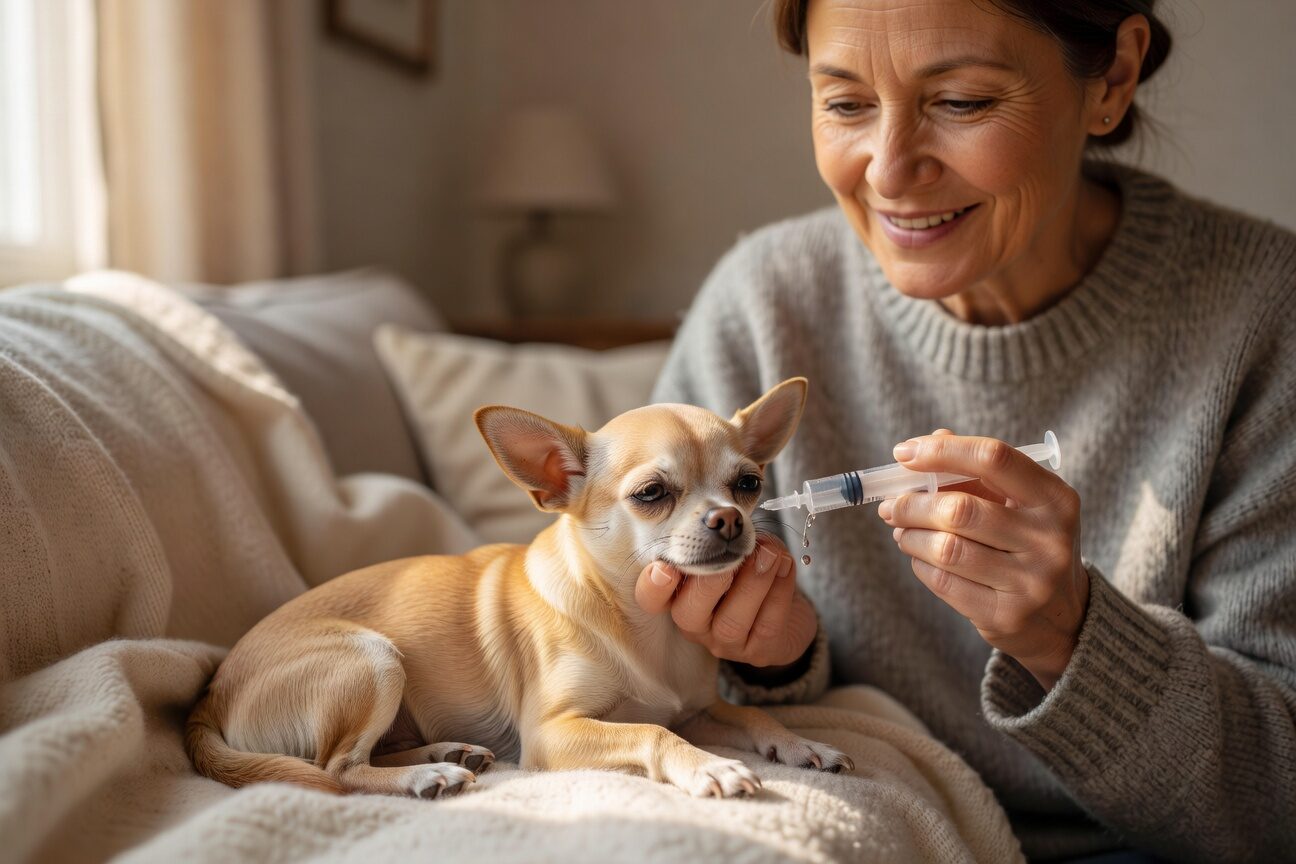

The first time my chihuahua got sick, really sick, I called the emergency vet three times in one hour. I Googled symptoms until two in the morning. I slept on the floor next to her bed because I was afraid she would stop breathing if I was not watching. Caring for a sick chihuahua at home is something nobody teaches you until you are already in the middle of it, panicking and second-guessing every decision.
When to Treat a Sick Chihuahua at Home vs Going to the Vet
Not every illness requires an emergency visit, but with chihuahuas, the margin for error is smaller than with larger dogs. Their tiny bodies dehydrate faster, lose heat faster, and crash harder when something goes wrong. The rule I follow now is simple: if my chihuahua is still eating, drinking, and responsive, I can usually manage mild symptoms at home for twenty-four hours. If any of those three things stop, we go to the vet immediately.
The VCA Hospitals vomiting guide notes that a single episode of vomiting in a dog is usually not an emergency. But for a chihuahua who weighs five pounds, even one episode can represent a significant loss of fluid and electrolytes. If vomiting happens more than twice in twelve hours, do not wait. Caring for a sick chihuahua means knowing when home care stops and professional help starts.
Hydration: The Most Critical Part of Caring for a Sick Chihuahua
When my chihuahua is sick, hydration is my obsession. A five-pound dog who stops drinking for even half a day can become dangerously dehydrated. I offer water frequently, sometimes using a syringe to deliver small amounts if she is refusing to drink on her own. Pedialyte diluted with water, half and half, can replace electrolytes faster than plain water. Check with your vet before giving any oral electrolyte solution to make sure it is safe for your dog’s specific condition.
The pinch test is your best friend when caring for a sick chihuahua. Gently pinch the skin on the back of their neck and release. If it snaps back immediately, hydration is adequate. If it takes more than two seconds to settle, your dog is dehydrated and needs veterinary attention. I do this test every few hours when my chihuahua is ill. It takes five seconds and it has saved me from missing early dehydration twice. com/the-chihuahua-who-walked-three-miles-home-after-being-dumped-on-the-highway/” title=”The Chihuahua Who Walked Three Miles Home After Being Dumped”>The Chihuahua Who Walked Three Miles Home After Being Dumped.
Do not force large amounts of water at once. Small, frequent offerings are safer and easier on a nauseous stomach. Ice chips can be helpful for a chihuahua who is vomiting because they provide hydration in tiny amounts that are less likely to trigger another episode. For more on recognizing when your chihuahua is hiding symptoms, read our guide to hidden illness signs.
Temperature, Comfort, and Monitoring at Home
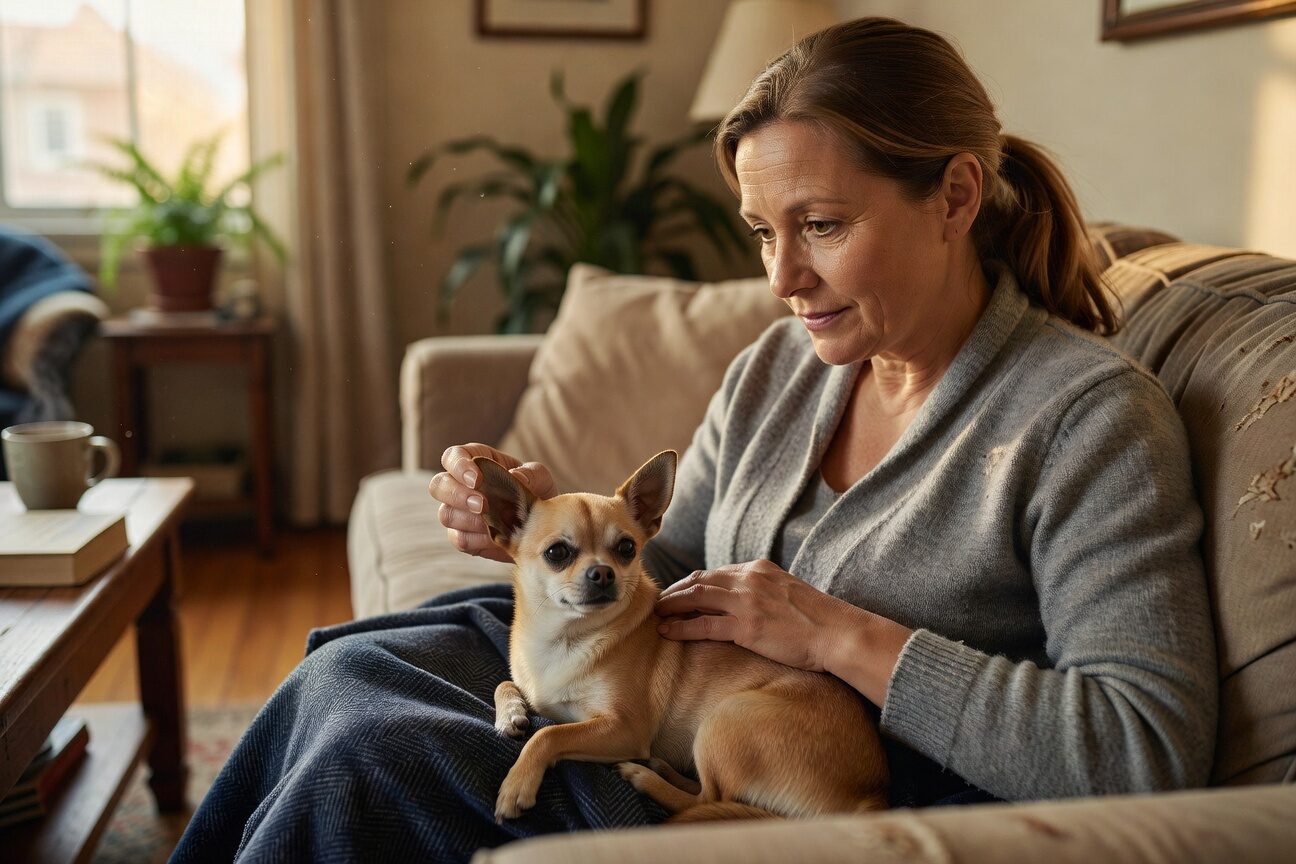
Chihuahuas lose body heat rapidly, and a sick chihuahua loses it even faster. Keep the room warm. Provide extra blankets. A heating pad on the lowest setting under half the bed gives them the option to warm up without overheating. I keep a digital pet thermometer in my first aid kit because caring for a sick chihuahua responsibly means knowing their actual temperature, not guessing.
Normal body temperature for a chihuahua is between 101 and 102.5 degrees Fahrenheit. Anything above 103.5 is a fever that likely needs veterinary attention. Anything below 99 is hypothermia and requires immediate warming and a vet call. I have used this thermometer more times than I would like to admit, and every time it has given me either the reassurance or the urgency I needed in the moment. The PetMD fever guide walks you through the process clearly.
Feeding a Sick Chihuahua Without Making Things Worse
If your chihuahua is vomiting, withhold food for six to eight hours to let the stomach settle. After that, offer a bland diet of boiled chicken and white rice in very small portions, a tablespoon at a time. Wait thirty minutes between offerings to see if it stays down. If it does, offer a little more. If it comes back up, go back to fluids only and call your vet.
Chihuahuas are prone to hypoglycemia, especially when they are sick and not eating. Watch for trembling, lethargy, glassy eyes, or disorientation. If you see any of these signs, rub a small amount of honey or Karo syrup on their gums and call your vet immediately. Caring for a sick chihuahua means being ready for blood sugar crashes that can happen fast in a dog this small.
Once your chihuahua is holding down the bland diet, gradually transition back to their regular food over two to three days. Do not rush it. A stomach that has been irritated needs time to heal, and reintroducing rich food too quickly can restart the whole cycle. For related reading, see the chihuahua emergencies I survived.
Building Your Chihuahua Sick Care Kit
Every chihuahua owner should have a sick care kit ready before they need it. Mine includes a digital pet thermometer, a small oral syringe for fluids, unflavored Pedialyte, Karo syrup for hypoglycemia emergencies, a heating pad, extra blankets, canned plain pumpkin for digestive support, and my vet’s phone number plus the after-hours emergency clinic number written on a card taped to the inside of the kit.
Being prepared is the difference between caring for a sick chihuahua calmly and caring for one in a state of complete panic. The first time my chihuahua got sick, I had nothing ready and wasted an hour searching for supplies while she was miserable. The second time, I had the kit. The difference in my ability to help her was enormous, and the difference in my own stress level was even bigger. Learn more about what your chihuahua’s symptoms might mean in our chihuahua health indicator guide.

How do I know if my chihuahua is seriously ill or just has an upset stomach?
An upset stomach typically resolves within 24 hours and involves one or two episodes of vomiting or loose stool while the dog remains alert and responsive. Signs of serious illness include repeated vomiting, bloody stool, lethargy lasting more than a few hours, refusal to drink water, a temperature above 103.5 or below 99 degrees, and any signs of pain such as whimpering or guarding the abdomen. When in doubt, call your vet.
Can I give my chihuahua human medicine when they are sick?
Never give your chihuahua human medication without explicit veterinary approval. Many common over-the-counter drugs including ibuprofen, acetaminophen, and cold medicines are toxic to dogs, especially small breeds like chihuahuas where even a fraction of a human dose can cause organ damage or death. Always call your vet before administering any medication, including seemingly harmless supplements.
How long can a chihuahua go without eating when sick?
An adult chihuahua should not go more than 24 hours without eating due to their risk of hypoglycemia. Puppies and senior chihuahuas should not go more than 12 hours. If your chihuahua refuses food, try offering a small amount of boiled chicken or bone broth to stimulate appetite. If they refuse all food for more than a day, contact your veterinarian, as prolonged fasting in chihuahuas can trigger dangerous blood sugar drops.
What should I feed my chihuahua when they have an upset stomach?
After withholding food for six to eight hours to let the stomach settle, offer a bland diet of boiled boneless skinless chicken mixed with plain white rice in a ratio of one part chicken to two parts rice. Serve one tablespoon at a time and wait thirty minutes between servings. Plain canned pumpkin, not pumpkin pie filling, can also help settle digestion. Transition back to regular food gradually over two to three days once symptoms resolve.
What supplies do I need for a chihuahua sick care kit?
A complete chihuahua sick care kit should include a digital rectal pet thermometer, a small oral syringe for administering fluids, unflavored Pedialyte, Karo syrup or honey for hypoglycemia emergencies, a low-setting heating pad, extra blankets, canned plain pumpkin, bland food ingredients such as chicken and rice, and a card with your regular vet and emergency vet contact information.