
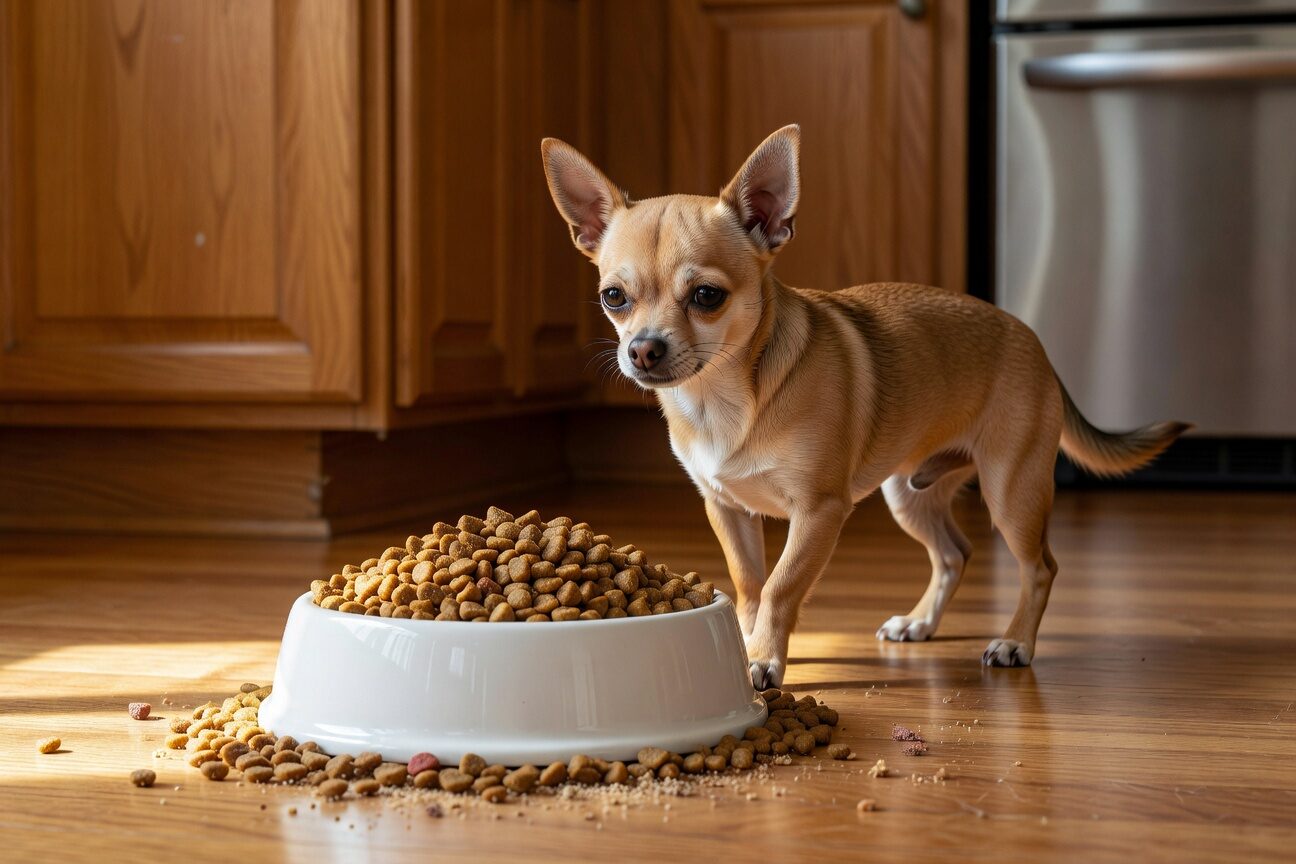

My chihuahua Olive hid a urinary infection from me for almost two weeks. Two weeks. She ate normally. She played normally. She greeted me at the door with the same manic energy she always had. The only clue was that she was asking to go outside slightly more often than usual –, maybe one extra trip per day. I chalked it up to her being dramatic about the squirrel that had moved into the oak tree. If you’re reading about chihuahua is sick, you’re in the right place.
By the time I noticed the blood-tinged urine on the patio, the infection had progressed to the point where she needed antibiotics and a week of monitoring. My vet was not surprised. Chihuahuas, she said, are world-class illness hiders. Their ancestors survived by not showing weakness. Your modern chihuahua still carries that instinct, and it means you cannot wait for obvious symptoms to tell you something is wrong. You need to learn the subtle ones.
The Subtle Signs Most Owners Miss
Changes in Appetite
A chihuahua who suddenly becomes picky about food she previously devoured is telling you something. This is different from the chihuahua who has always been fussy. I am talking about a change –, a dog who ate enthusiastically yesterday and is hesitating today. Even slight appetite reduction in a chihuahua is worth noting because their caloric needs are so small that skipping even one meal represents a significant percentage of daily intake.
Dental pain is one of the most common hidden causes of appetite change in chihuahuas. The breed is prone to dental disease and tooth decay. A chihuahua with a sore tooth may approach the food bowl eagerly, take a bite, then back away. She wants to eat. It hurts to eat. She cannot explain the distinction.
Changes in Movement
Watch how your chihuahua walks, sits, and lies down. A healthy chihuahua moves fluidly. A chihuahua in pain may hesitate before jumping onto the couch. She may take the stairs more slowly. She may shift her weight when sitting, favoring one side. She may resist being picked up –, stiffening instead of relaxing into your hands.
Limping is obvious. The subtle stuff is not. A chihuahua who was jumping onto the bed last week and is now waiting to be lifted is not being lazy. She is telling you that the jump hurts. Luxating patella, joint inflammation, spinal issues –, all common in the breed, all start with small changes in movement patterns.
If your older chihuahua becomes reluctant to walk, eats less, and vomits occasionally, do not assume it is just aging. These symptoms together can indicate kidney problems, which are common in senior chihuahuas and need early intervention for the best outcome.
Changes in Elimination
Pay attention to your chihuahua’,s bathroom habits. I know this is not glamorous. It is necessary. Changes in stool consistency, color, or frequency are early indicators of digestive problems, parasites, or more serious conditions. Diarrhea that happens once might be nothing. Diarrhea that persists for more than two days, especially if mixed with mucus or blood, is a vet visit.
Constipation –, no stool for two to three days –, should not be ignored either. In a chihuahua, digestive blockages from swallowed objects, dehydration, or underlying conditions can manifest as constipation before other symptoms appear.
Urination changes are equally important. More frequent urination, straining, or changes in urine color can indicate urinary tract infections, bladder stones, or metabolic disorders. These are surprisingly common in small breeds.
Changes in Skin and Coat
Your chihuahua’,s coat and skin are a visible health report card. Excessive scratching, especially localized scratching in one area, often indicates parasites, allergies, or skin infections. Part the fur and look at the skin underneath. Red, inflamed, or flaky skin is not normal.
Hair loss in patches is always significant. It can indicate mange, fungal infections, allergic reactions, or hormonal imbalances. A chihuahua with a suddenly dull, dry coat when it was previously shiny may be dealing with nutritional deficiencies or internal illness affecting coat quality.
Changes in Eyes and Nose
Chihuahuas have large, prominent eyes that are both one of their most endearing features and one of their most vulnerable health points. Cloudiness, redness, excessive tearing, or a visible third eyelid are all signs that something is wrong. Corneal scratches are common in chihuahuas because their eyes protrude slightly and they are low to the ground where dust and debris collect.
Nasal discharge is a more obvious sign. Clear discharge might be nothing –, allergies, dust, dry air. Thick, colored, or persistent discharge suggests infection. A chihuahua with ongoing nasal congestion, especially with coughing or difficulty breathing, may have pneumonia or an upper respiratory infection that needs treatment.
Pale mucous membranes around the eyes and gums indicate anemia, which in chihuahuas can result from flea infestations, internal parasites, or more serious conditions. Healthy gum color is pink. White or very pale gums are an emergency.
Signs Chihuahua Is Sick: Behavioral Changes That Signal Illness
Sometimes the only sign of illness is a change in behavior. A normally social chihuahua who starts hiding. A normally confident chihuahua who becomes clingy. A normally calm chihuahua who becomes irritable or snappy. These behavioral shifts are not personality changes. They are communication. Your chihuahua is telling you something is wrong in the only language she has.

Increased aggression in a previously gentle chihuahua is often pain-related. A dog who snaps when you touch her back may have a spinal issue. A dog who growls when picked up may have abdominal pain. Do not punish the aggression. Investigate it.
Excessive licking of a specific body part often indicates localized pain or discomfort. If your chihuahua is constantly licking her paws, check for cuts, foreign bodies, or allergic dermatitis. If she is licking her abdomen, consider internal discomfort –, nausea, bladder pain, or gastrointestinal distress.
When to Call the Vet
With chihuahuas, the threshold for calling the vet should be lower than for larger breeds. Their small size means less physiological reserve. A condition that a fifty-pound dog can compensate for may overwhelm a four-pound chihuahua.
Call immediately for vomiting more than twice in 24 hours. Diarrhea with blood. Refusal to eat or drink for more than twelve hours. Difficulty breathing. Collapse or extreme lethargy. Seizures. Any sign of acute pain –, yelping, trembling, inability to settle.
Schedule a visit within 24 to 48 hours for persistent appetite changes. Gradual weight loss. Increased thirst and urination. Recurring skin problems. Behavioral changes that persist more than a few days. Limping or movement changes.
Olive is nine now. I read her like a book. Every slight hesitation in her step, every change in her eating pattern, every extra trip to the yard –, I notice because I learned what to watch for. She still hides things from me. That is her nature. But I have gotten better at looking, and looking closely is the best thing any chihuahua owner can do for the tiny dog who depends on them for everything.
What Every Chihuahua Owner Should Know
Living with a chihuahua teaches you things no book can. These little dogs have opinions. Strong ones. And they are not shy about sharing them. The more time you spend understanding signs chihuahua is sick, the easier everything gets.
For more detailed guidance on this topic, the American Kennel Club offers excellent resources backed by veterinary professionals.
Trusting Your Gut When Something Seems Off
I want to emphasize something that no symptom checklist can replace: your instinct. You live with your chihuahua every day. You know their patterns, their energy levels, their weird little habits better than anyone. If something feels wrong even though you cannot point to a specific symptom, take that seriously. I have taken my chihuahua to the vet twice based on nothing more than a feeling that she was not quite herself, and both times the vet found something that needed attention.
The first time, she was eating normally and playing normally but she just seemed slightly off to me. The vet found an early urinary tract infection. The second time, she was a little quieter than usual for two days straight. Turned out she had a cracked tooth that was causing low-grade pain she was hiding. Chihuahuas are experts at masking discomfort because showing weakness is not in their nature. By the time symptoms become obvious, the problem has often been building for days or weeks. Do not wait for your chihuahua to prove they are sick before you act. If your gut says something is off, make the appointment. A fifty-dollar vet visit for peace of mind is always worth it.
Chihuahuas are one of the longest-lived dog breeds with an average lifespan of 14 to 16 years. Some reach 20 years with proper care. Regular vet checkups, dental care, a healthy diet, and maintaining proper weight all contribute to longevity. The oldest recorded chihuahua lived to be 22.
Chihuahuas can be good family dogs in homes with older children who understand gentle handling. They are too fragile for rough play with toddlers. Chihuahuas bond deeply with their family but may be wary of strangers. Proper socialization from a young age helps them be more accepting of new people.
Two 15 to 20 minute walks per day plus some indoor playtime meets most chihuahuas’ needs. They have more energy than people expect but tire out faster than larger breeds. Mental stimulation through puzzle toys and training sessions is just as important as physical exercise for this intelligent breed.
The most common health issues include dental disease, patellar luxation, heart murmurs, hypoglycemia in puppies, tracheal collapse, and hydrocephalus. Regular vet visits catch many of these early. Dental care is especially important because chihuahuas are prone to tooth loss and gum disease throughout their lives.
Chihuahuas bark because they are alert, protective, anxious, or bored. Their hearing is sharp and they react to sounds other dogs ignore. Training a reliable quiet command helps. Ignore demand barking completely. Address the underlying cause rather than just the noise. A tired chihuahua barks less than a bored one.
How long do chihuahuas live on average?
Chihuahuas are one of the longest-lived dog breeds with an average lifespan of 14 to 16 years. Some reach 20 years with proper care. Regular vet checkups, dental care, a healthy diet, and maintaining proper weight all contribute to longevity. The oldest recorded chihuahua lived to be 22.
Are chihuahuas good family dogs?
Chihuahuas can be good family dogs in homes with older children who understand gentle handling. They are too fragile for rough play with toddlers. Chihuahuas bond deeply with their family but may be wary of strangers. Proper socialization from a young age helps them be more accepting of new people.
How much exercise does a chihuahua need?
Two 15 to 20 minute walks per day plus some indoor playtime meets most chihuahuas’ needs. They have more energy than people expect but tire out faster than larger breeds. Mental stimulation through puzzle toys and training sessions is just as important as physical exercise for this intelligent breed.
What health problems are common in chihuahuas?
The most common health issues include dental disease, patellar luxation, heart murmurs, hypoglycemia in puppies, tracheal collapse, and hydrocephalus. Regular vet visits catch many of these early. Dental care is especially important because chihuahuas are prone to tooth loss and gum disease throughout their lives.
Why do chihuahuas bark so much?
Chihuahuas bark because they are alert, protective, anxious, or bored. Their hearing is sharp and they react to sounds other dogs ignore. Training a reliable quiet command helps. Ignore demand barking completely. Address the underlying cause rather than just the noise. A tired chihuahua barks less than a bored one.