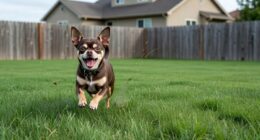
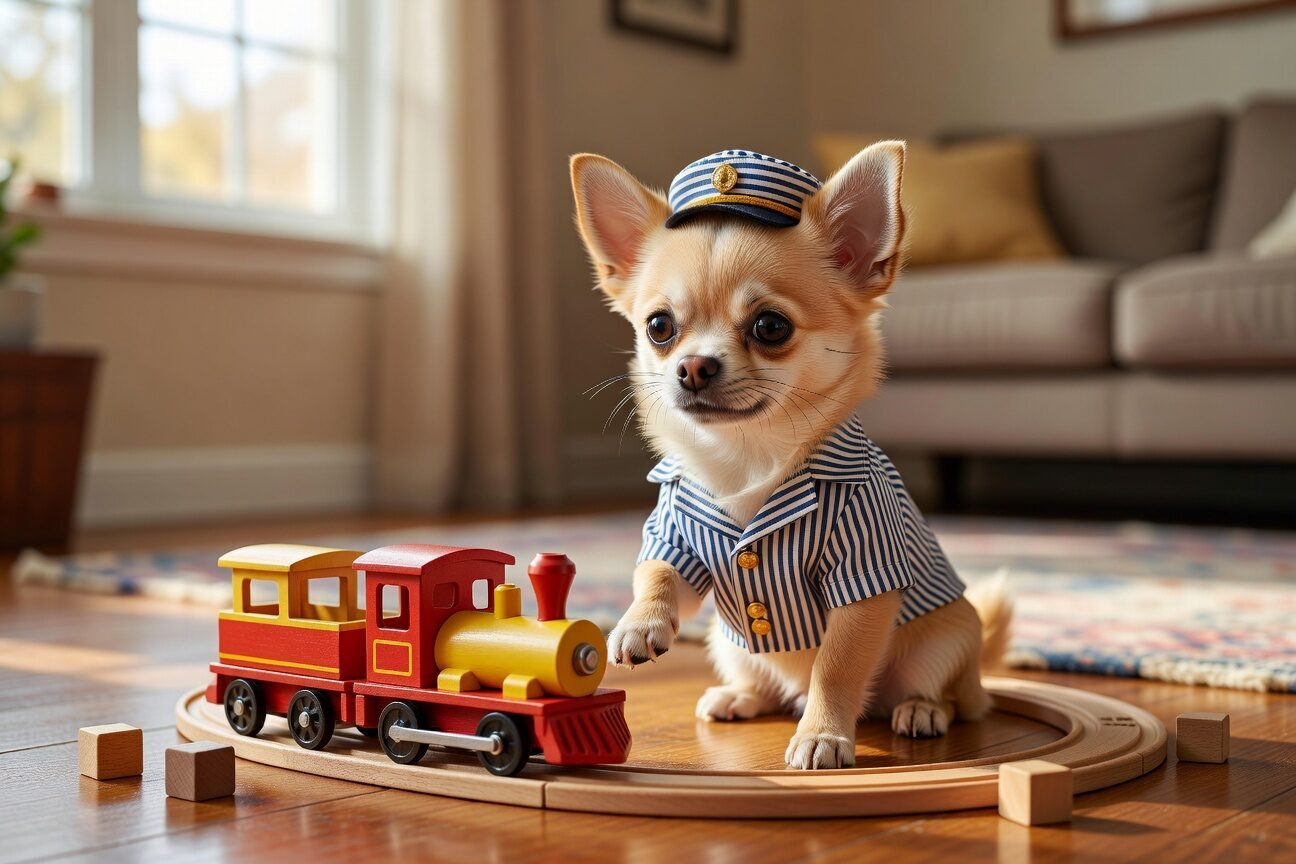
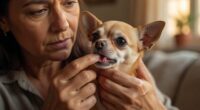
I brought home a chihuahua puppy named Gus on a Friday afternoon and by Saturday morning I had already questioned every decision that led to that moment. Understanding how to train a chihuahua puppy starts with what actually happens in real life. He peed on the rug four times, chewed through a phone charger, and screamed, genuinely screamed, when I put him in his crate for the first time. Training a chihuahua puppy is not like training other dogs. They are smaller, louder, more opinionated, and absolutely certain they are in charge. This is the step-by-step guide I wish existed when Gus arrived.
Start with Potty Training on Day One
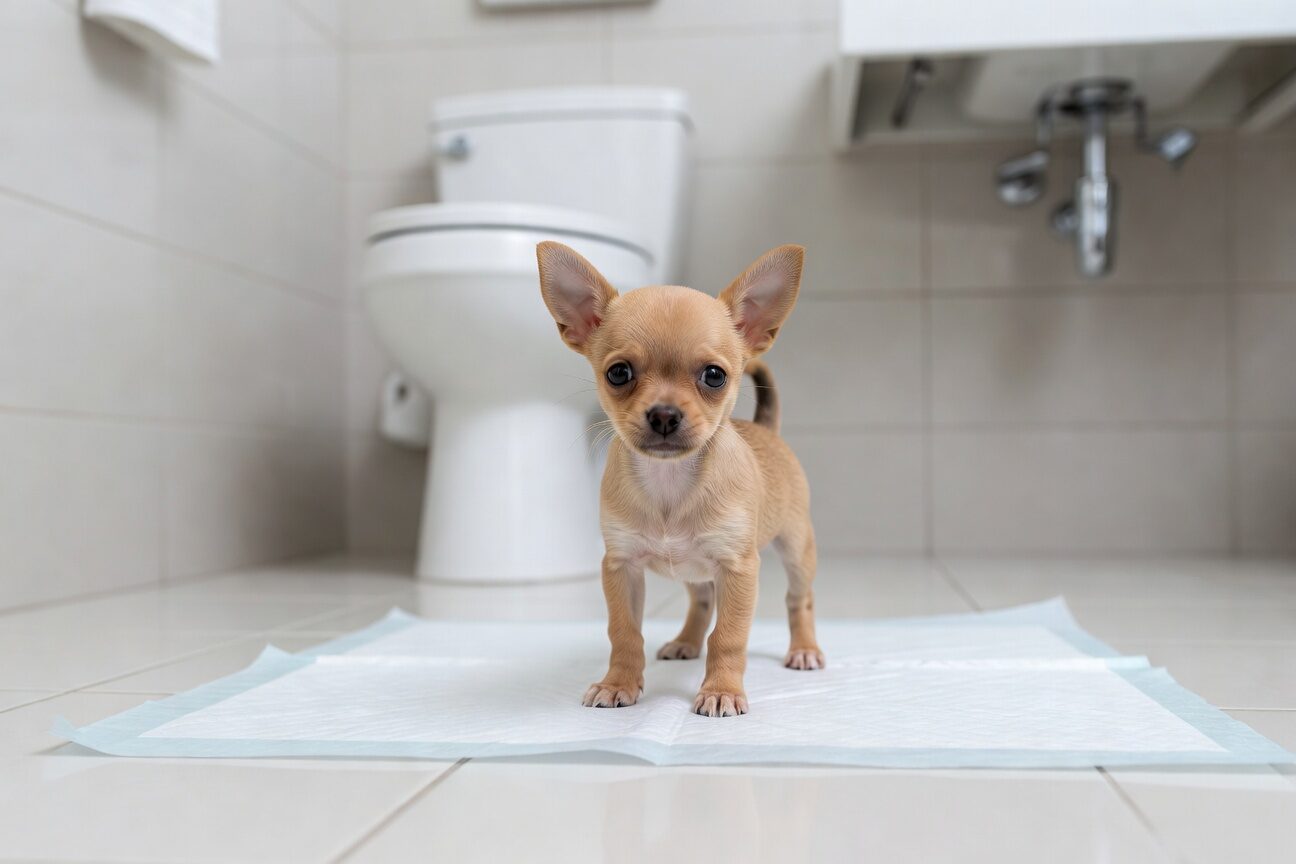
Chihuahua puppies have tiny bladders and almost no ability to hold it. At eight weeks old, Gus needed to go out every thirty to forty-five minutes during waking hours. I set a timer on my phone because I knew myself well enough to know I would forget, and every accident that happened indoors was a setback. Consistency is everything here. Same door, same spot in the yard, same verbal cue every single time.
I used a combination of outdoor potty breaks and indoor pee pads as backup during the night and when I could not get to him fast enough. Some trainers will tell you pads are a crutch, but the American Kennel Club acknowledges that for toy breeds with limited bladder capacity, pads serve a legitimate purpose during early training. The key is reducing pad dependence gradually, not eliminating them cold turkey. Our full housebreaking guide covers the transition in detail.
Crate Training Saves Your Sanity
Gus hated his crate for the first three days. Hated it. He cried, he barked, he scratched at the door. I almost gave in and let him sleep in the bed, but our trainer warned me that a chihuahua who never learns to be alone in a crate becomes a chihuahua who cannot be left alone anywhere. So I stuck with it.
The approach that worked was making the crate the best place in the house. Every meal happened inside the crate. High-value treats appeared only inside the crate. A worn t-shirt of mine went in the crate for comfort. I started with the door open, then closed for thirty seconds, then a minute, then five. By week two, Gus walked into the crate on his own when he was tired. By month two, he slept through the night in it without a sound. For the specific method I used, check out our crate training breakthrough article.
Bite Inhibition Matters More Than Sit
Chihuahua puppies bite. A lot. And because they are small and their bites do not hurt much at eight weeks old, owners tend to laugh it off or ignore it. This is a mistake that becomes a real problem when your now-adult chihuahua sinks those needle teeth into someone’,s hand and draws blood. Bite inhibition, teaching your puppy that teeth on skin is never acceptable, should be your top training priority.
When Gus bit me during play, I made a high-pitched yelp and immediately stopped all interaction. Turned away. Went still. Ignored him for thirty seconds. Then resumed. If he bit again, play ended completely for five minutes. It took about two weeks of absolute consistency before he started mouthing gently instead of chomping, and another month before he stopped putting his teeth on my hands entirely.
Socialization Cannot Wait
The socialization window for puppies closes around sixteen weeks, and everything your chihuahua does not experience positively during that window becomes something they will likely fear forever. I carried Gus to grocery store parking lots, sat with him outside cafes, let friends of all ages hold him, played recordings of thunderstorms and fireworks at low volume during feeding time, and introduced him to dogs of different sizes in controlled, safe environments.
The puppy socialization guidelines from Daily Paws stress that quality matters more than quantity. One positive interaction with a calm, well-mannered large dog is worth more than ten chaotic encounters that scare your puppy. I never forced Gus into situations that overwhelmed him. I let him observe from safety, rewarded curiosity, and gradually decreased distance as his confidence grew. Our detailed chihuahua puppy socialization guide has the full timeline.
Basic Commands in Order of Importance
Forget the Instagram-worthy trick routines. For a chihuahua puppy, the commands that matter most are the ones that keep them safe and make daily life manageable. I taught Gus in this order: name recognition first, then sit, then come, then leave it, then stay. Each command was taught using positive reinforcement only, meaning treats and praise for correct behavior and complete ignoring of incorrect behavior. No yelling, no physical corrections, no alpha-roll nonsense.
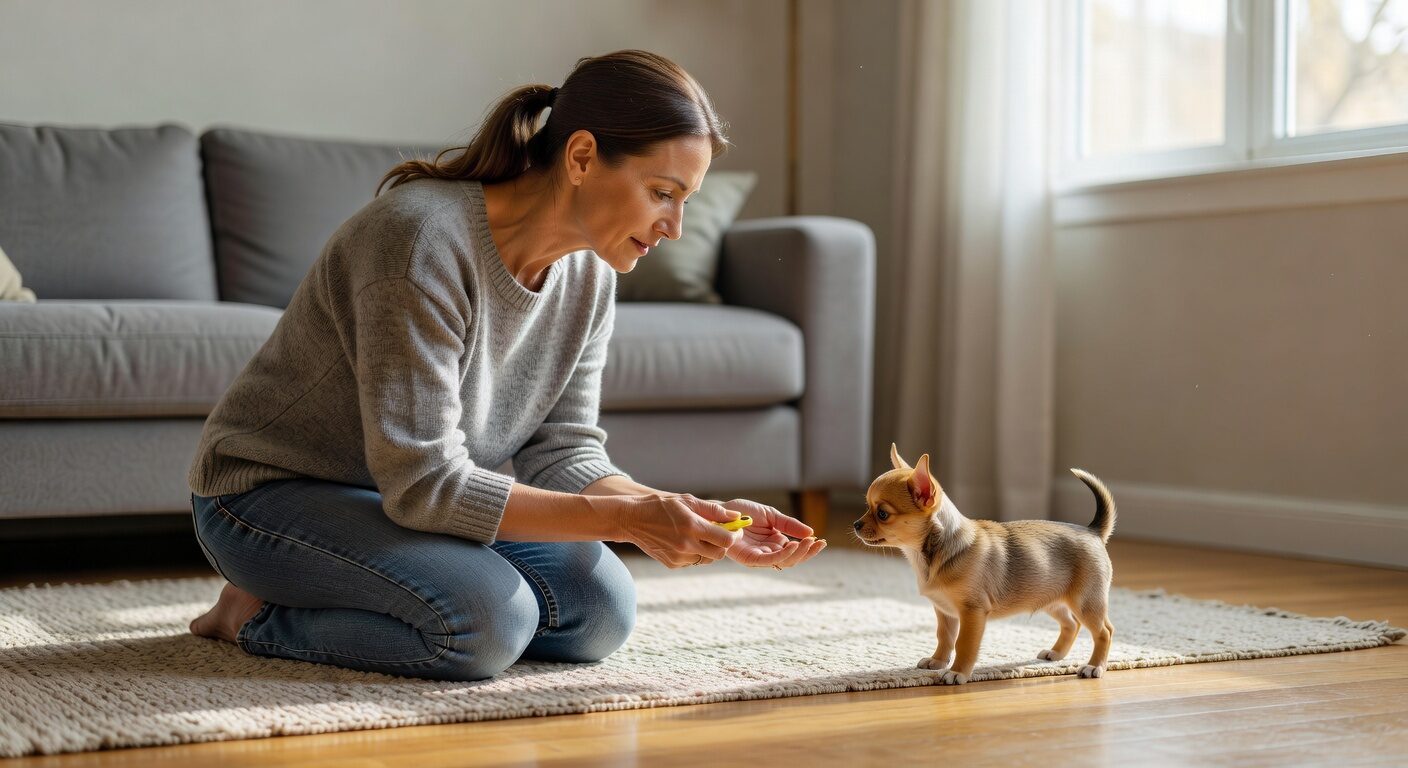
Chihuahuas respond terribly to punishment-based training. They shut down. They become fearful. They associate the training session with stress and start avoiding it entirely. Positive reinforcement takes patience, but it produces a chihuahua who wants to train because training means good things happen. I use tiny pieces of boiled chicken as training treats because they are high-value, low-calorie, and Gus would do backflips for them if I asked.
Leash Training for a Dog Who Thinks Walks Are Optional
Gus sat down the first time I put a harness on him and refused to move. He looked at me like I had put him in a straitjacket. Leash training a chihuahua puppy requires starting indoors with just the harness, no leash, letting them wear it during meals and play until they forget it is there. Then add the leash and let them drag it around the house under supervision. Then hold the leash loosely and follow where they go. Then gradually begin directing the walk.
This process took us three weeks before Gus would walk on a leash outdoors without planting himself like a furry little protest sign. Now he walks beautifully, mostly, except when he sees a squirrel, at which point all training evaporates and we start from scratch.
Handling and Grooming Desensitization
Touch your puppy everywhere, every day, from the very beginning. Ears, paws, mouth, tail, belly. Not roughly, but consistently. This is how you build a chihuahua who tolerates vet exams, nail trims, tooth brushing, and grooming without turning into a tiny tornado of teeth and fury.
I handle Gus’,s paws for a few seconds during every petting session. I lift his lips and touch his gums. I gently hold his ears. He gets a treat after each handling exercise. Because of this daily practice, our vet can examine him without sedation, our groomer can clip his nails without a second person holding him down, and I can brush his teeth every morning without a wrestling match. Understanding train chihuahua puppy makes a real difference.
The Biggest Mistake New Chihuahua Owners Make
Carrying the puppy everywhere. I get it. They are small. They are cute. It is easier to scoop them up than to let them walk. But a chihuahua puppy who is carried through the world instead of walking through it never learns confidence. They never learn to navigate new surfaces, new environments, new situations on their own four feet. And a chihuahua without confidence is a chihuahua who bites, barks, and panics at every unfamiliar stimulus.
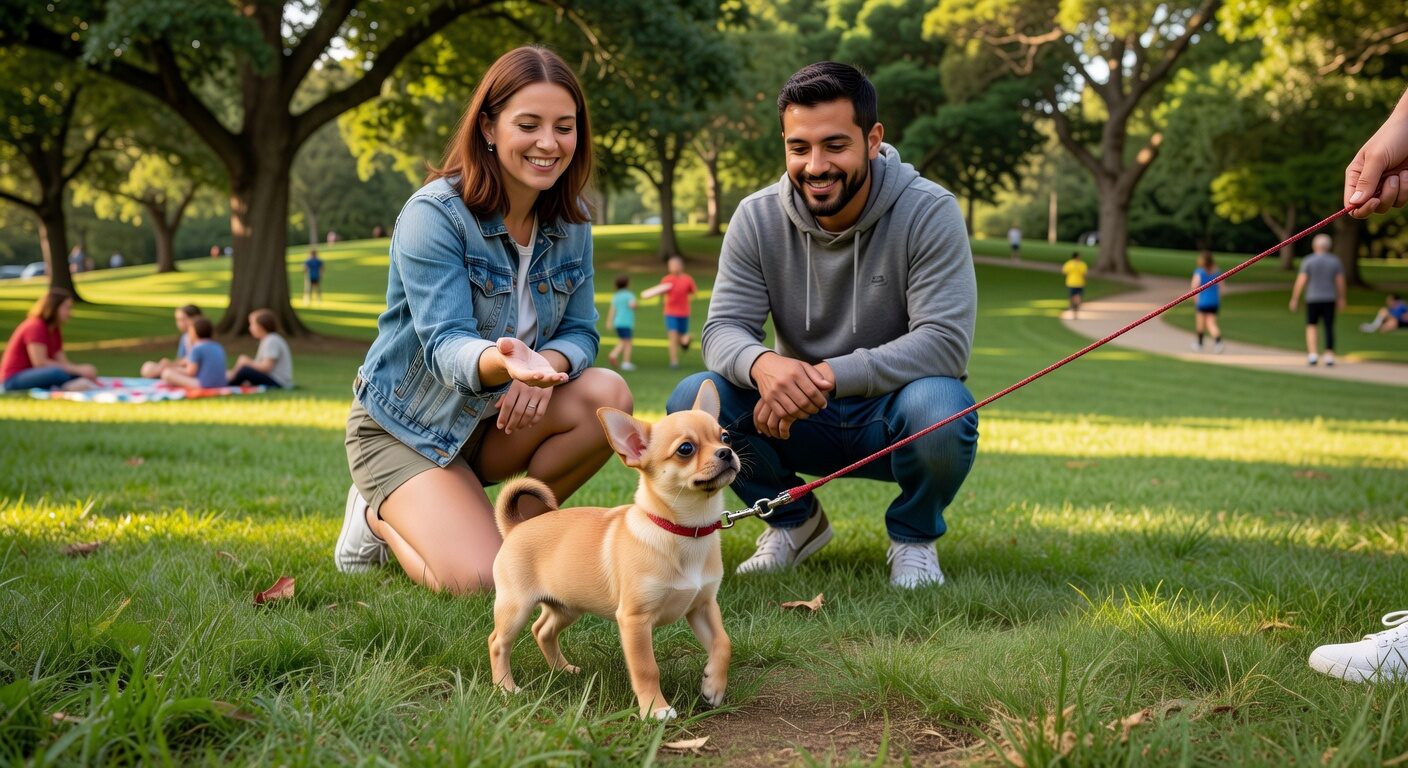
Let them walk. Let them sniff. Let them figure things out. Pick them up when there is a genuine safety concern, like a large off-leash dog approaching or a crowded street, but otherwise, let your chihuahua puppy be a dog. They are small, but they are still dogs, and they deserve the chance to develop the skills and confidence that every dog needs to thrive in a human world.
Gus is two years old now. He sits, stays, comes when called, walks on a leash, sleeps in his crate, and has not bitten anyone since puppyhood. None of this happened by accident. It happened because I committed to training from day one and refused to let his size excuse him from the structure every dog needs. Start early. Stay consistent. And buy extra phone chargers, because you will lose at least one before the teething phase ends.
Potty Training Setbacks Are Normal
I need to address this because it is the number one reason chihuahua owners contact me in frustration. Your chihuahua puppy was doing great with potty training for two weeks and then suddenly started having accidents again. You feel like all your progress has been erased and you are starting from scratch. This is completely normal and it does not mean you or your puppy have failed.
Chihuahua puppies have tiny bladders that are still developing, and their ability to hold it improves gradually, not in a straight line. Setbacks happen during growth spurts, changes in routine, new environments, cold weather when they do not want to go outside, and periods of excitement or stress. My chihuahua was nearly fully housetrained at four months, then regressed for almost three weeks when we moved the furniture around in the living room. The change in her environment disrupted her routine enough that she forgot where the door was, or at least that is what it seemed like. I went back to basics, taking her out every hour, praising heavily when she went outside, and cleaning accidents with enzyme cleaner so the scent did not draw her back to the same spot. Within two weeks she was back on track. The key is responding to setbacks with patience instead of frustration, because a chihuahua who gets yelled at for an accident will start hiding to do their business, which is a much harder problem to fix.
Start basic training as soon as your chihuahua puppy comes home, usually around 8 weeks old. Begin with their name, sit, and potty training. Keep sessions under 5 minutes because puppy attention spans are short. Formal obedience classes work best starting around 12 to 16 weeks after vaccinations are complete.
Chihuahuas have a reputation for being difficult to house train. Their small bladders mean more frequent trips outside. Cold or rainy weather makes them reluctant to go outdoors. Indoor potty pads can help bridge the gap. Consistency and a strict schedule are more important than any other factor.
Most chihuahuas take between 4 and 8 months to be fully house trained. Some take up to a year. Males tend to take slightly longer than females. The key factors are consistent scheduling, immediate rewards, and never punishing accidents after the fact.
Puppies bite because they are teething, exploring the world with their mouths, and learning bite inhibition. Redirect biting to appropriate chew toys every single time. Yelp and withdraw attention when they bite too hard. Never use your hands as play toys. Most chihuahuas outgrow excessive biting by 6 months.
Tiny, soft treats work best because chihuahuas can eat them quickly without losing focus. Break regular treats into pea-sized pieces. Freeze-dried liver, small bits of cooked chicken, and commercial training treats all work well. Keep training treats to less than 10 percent of daily calories.
At what age should you start training a chihuahua puppy?
Start basic training as soon as your chihuahua puppy comes home, usually around 8 weeks old. Begin with their name, sit, and potty training. Keep sessions under 5 minutes because puppy attention spans are short. Formal obedience classes work best starting around 12 to 16 weeks after vaccinations are complete.
Are chihuahuas hard to house train?
Chihuahuas have a reputation for being difficult to house train. Their small bladders mean more frequent trips outside. Cold or rainy weather makes them reluctant to go outdoors. Indoor potty pads can help bridge the gap. Consistency and a strict schedule are more important than any other factor.
How long does it take to potty train a chihuahua?
Most chihuahuas take between 4 and 8 months to be fully house trained. Some take up to a year. Males tend to take slightly longer than females. The key factors are consistent scheduling, immediate rewards, and never punishing accidents after the fact.
Why does my chihuahua puppy bite so much?
Puppies bite because they are teething, exploring the world with their mouths, and learning bite inhibition. Redirect biting to appropriate chew toys every single time. Yelp and withdraw attention when they bite too hard. Never use your hands as play toys. Most chihuahuas outgrow excessive biting by 6 months.
What treats work best for training chihuahuas?
Tiny, soft treats work best because chihuahuas can eat them quickly without losing focus. Break regular treats into pea-sized pieces. Freeze-dried liver, small bits of cooked chicken, and commercial training treats all work well. Keep training treats to less than 10 percent of daily calories.