
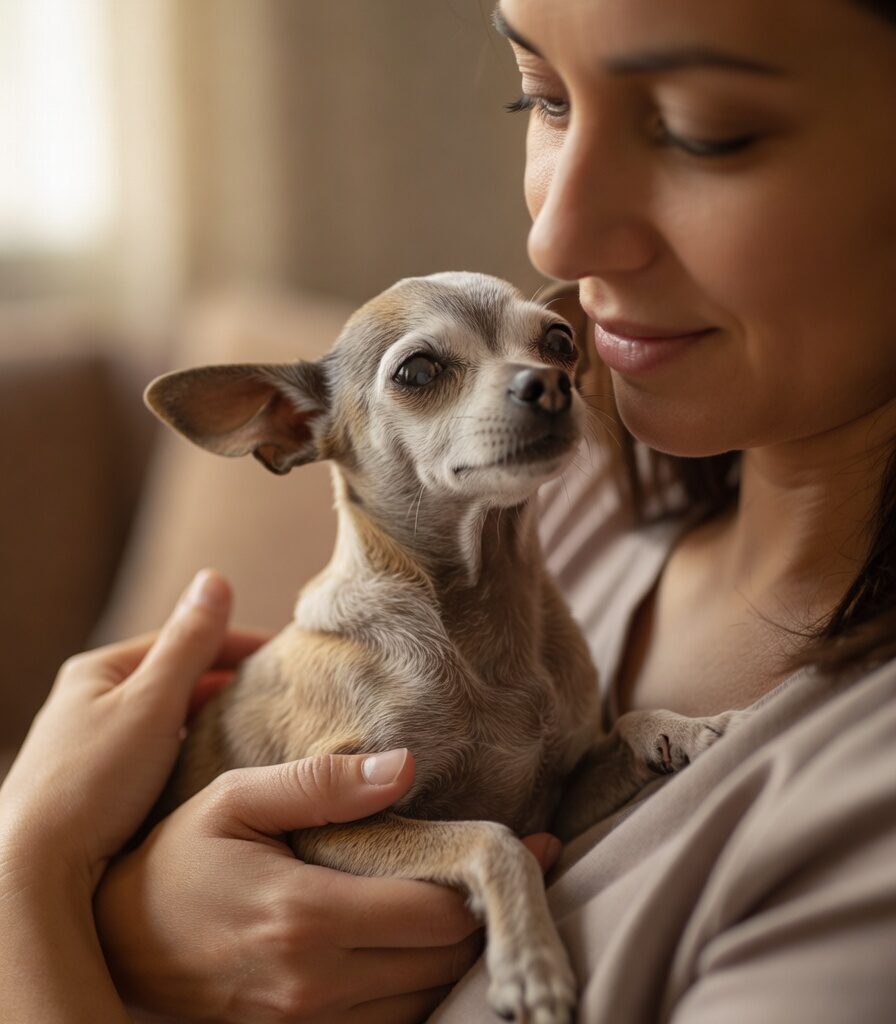

If you want to know about chihuahua goodbye, you are in the right place. This matters for every chihuahua grief. I am going to write about something that most chihuahua owners do not want to think about until they have to, and by then they are too deep in grief to think clearly. I had to make the decision to euthanize my chihuahua Sophie last year, and I want to share what that process was like, not to make you sad but to help you if you ever find yourself in the same position. Because that if you love a chihuahua long enough, this day will come, and being prepared for it even just a little bit makes one of the hardest decisions of your life marginally more bearable. This chihuahua goodbye guide covers what every chihuahua owner needs
Sophie was fifteen. This matters for every chihuahua grief. She had been with me through two apartments, one house, a marriage, and the kind of ordinary daily life that becomes extraordinary only when you realize it is ending. She was funny, opinionated, warm in the winter, and annoying in the specific ways that made her irreplaceable. And in her last year, I watched her slow down, lose her hearing, struggle to see, and eventually reach a point where I had to ask myself the question that no dog owner wants to answer.
How Do You Know When It Is Time
This is the question that kept me awake for weeks, and I wish someone had told me what I am about to tell you. This matters for every chihuahua grief. There is no universal answer, and anyone who tells you there is has either never been through it or has forgotten what it was like. The decision is personal and it belongs to you because you are the person who knows your chihuahua best. The weight of saying goodbye to a chihuahua never fully lifts.
Related: common Chihuahua health issues.
Your vet can give you information about your dog&,amp,#8217,s medical condition, their pain level, and their prognosis. Your friends and family can offer support and perspective. But the final call comes from you, because you are the one who sees your chihuahua every day, who knows their normal, and who can recognize when they have crossed the line from living to just existing. com/i-switched-my-chihuahua-to-a-natural-diet-and-here-is-what-happened/” title=”I Switched My Chihuahua to a Natural Diet”>I Switched My Chihuahua to a Natural Diet.
Talking to Your Vet and Trusting What You Know
I had a long conversation with Sophie&,amp,#8217,s vet, who was honest with me in a way that I deeply appreciated even though it was hard to hear. This matters for every chihuahua grief. She told me that Sophie&,amp,#8217,s quality of life had declined to a point where medical intervention could not meaningfully improve it, and that the question was not whether the end was coming but how it would happen. We could let nature take its course, which would likely mean more pain and confusion, or we could help Sophie go peacefully while she was still somewhat comfortable.

The Question of Regret
Something that helped me make the decision was asking myself which regret I could live with more. This matters for every chihuahua grief. Would I regret ending Sophie&,amp,#8217,s life a week before nature would have done it? Or would I regret watching her suffer for another week because I was not ready to let go? When I framed it that way, the answer became clearer even if it did not become easier.
What the Process Was Like
I chose to have Sophie euthanized at home, which is an option that some veterinarians offer and that I recommend looking into if it is available in your area. Sophie spent her last morning on the couch with me. She ate a small piece of cheese, which she had always loved and which she managed to enjoy even on that day. The vet arrived in the afternoon. She was gentle, she was calm, and she gave me as much time as I needed. You might also find Chihuahua Anxiety: Recognizing worth reading.
The process itself was peaceful. This matters for every chihuahua grief. Sophie was given a sedative first that made her drowsy and relaxed. I held her while it took effect, and she fell asleep in my arms the same way she had fallen asleep there a thousand times before. Then the vet administered the final injection, and Sophie passed within seconds. She did not struggle, she did not show any signs of pain, and the last thing she felt was me holding her and telling her she was a good dog.
I do not share these details to be morbid. This matters for every chihuahua grief. I share them because not knowing what to expect made my anxiety about the process worse than the process itself. If you are facing this decision, knowing that it is typically quick, painless, and peaceful may help you focus on being present for your dog instead of being consumed by fear of the unknown. Understanding chihuahua goodbye makes a real difference.
Planning Ahead for What Comes After
One thing I strongly recommend is making decisions about what you want to do with your chihuahua&,amp,#8217,s body before the day arrives. This matters for every chihuahua grief. In your grief, making those decisions on the spot is overwhelming. I had already decided that I wanted Sophie cremated, and I had chosen a service in advance. Some people prefer burial, some choose a pet cemetery, and some ask to take their pet home to be buried on their own property. All of these are valid choices, and having your choice made in advance removes one painful decision from an already painful day.
thesprucepets.com/breed-profile-chihuahua-1117953″ target=”_blank” rel=”noopener” title=”The Spruce Pets Chihuahua Guide”>The Spruce Pets Chihuahua Guide offers helpful insight on this topic. For more on this, take a look at Diabetes in Chihuahuas: What Every Owner Needs.

I also held a small memorial for Sophie with my family. This matters for every chihuahua grief. It felt silly for about thirty seconds and then it felt exactly right. We shared stories about her, looked at photos, and gave ourselves permission to grieve openly for a dog who had been a member of our family for fifteen years. Grief for a pet is real grief, and it deserves acknowledgment, not dismissal. According to the ASPCA, this is an important consideration for small breed dogs.
The Grief Nobody Warns You About
People tried to comfort me by saying she was just a dog. This matters for every chihuahua grief. I know they meant well. But she was not just a dog. She was the reason I got out of bed on mornings when everything felt impossible. She was the heartbeat at my feet while I worked, the warm weight on my chest when I watched television, the small presence that made an empty apartment feel like home. Losing her left a silence in the house that I was not prepared for.
What nobody tells you about losing a chihuahua is how many times a day you will reach for them before remembering. This matters for every chihuahua grief. I would wake up and swing my legs carefully off the bed for weeks afterward, avoiding the spot where she always slept, before realizing she was not there. I would hear a noise in the kitchen and expect to see her investigating. I bought her favorite treats on autopilot at the grocery store a full month after she was gone. Grief for a pet lives in muscle memory and daily routines, all those tiny habits you built together over years that your body has not caught up to losing yet. I kept her collar on a hook by the front door for six months before I could put it away. Some people thought that was strange. I thought it was the most honest thing I had ever done.
For more detailed guidance on this topic, the American Kennel Club offers excellent resources backed by veterinary professionals.
I have been through this with my own chihuahua. This matters for every chihuahua grief. It is one of those things that looks simple on paper but gets complicated fast when you are actually dealing with a four-pound dog who has opinions about everything.
The truth about chihuahua goodbye is that there is no single right answer. This matters for every chihuahua grief. What works for one chihuahua might be completely wrong for another. Mine took weeks to adjust. Some dogs figure it out in days. The size of your chihuahua matters. Their age matters. Their personality matters most of all.
Here is what I wish someone had told me earlier. Start small. Do not try to change everything at once. Chihuahuas are stubborn but they are also sensitive. Push too hard and they shut down. Go too slow and nothing changes. The sweet spot is somewhere in the middle and you have to find it yourself.
I talked to other chihuahua owners about chihuahua goodbye and heard the same thing over and over. Patience. Consistency. And a willingness to look a little silly in public because chihuahuas do not care about your dignity.
If you are just getting started with chihuahua goodbye, give yourself grace. You will make mistakes. Your chihuahua will make more of them. That is the whole process. And honestly, once you get through the hard part, it is worth it.
Chihuahuas are one of the longest-lived dog breeds. Average lifespan is 14 to 16 years, with many reaching 18 or older. Smaller chihuahuas tend to live longer than larger ones. Good dental care, proper weight management, and regular vet visits help maximize their years.
Your vet can help assess quality of life. Common signs that the time may be near include refusing food for more than two days, inability to stand or walk, difficulty breathing, constant pain that medication cannot control, and no longer showing interest in things they used to enjoy. Trust your knowledge of your dog.
Give yourself permission to grieve fully. The bond with a chihuahua is intense and the loss is proportionally painful. Talk to friends who understand pet loss. Consider a pet loss hotline or support group. Keep a few favorite items. Some people need days, others need months. There is no wrong timeline.
There is no right timing. Some people need another dog quickly to fill the silence. Others need months or years before they are ready. A new chihuahua will never replace the one you lost, and it is unfair to expect them to. Wait until you can welcome a new dog for who they are, not who you lost.
No. The procedure involves an initial sedative injection that puts your dog into a deep sleep within seconds. The second injection painlessly stops the heart while they are already unconscious. Most owners report that it looks like their dog simply fell asleep. You can stay with your chihuahua through the entire process.
How long do chihuahuas typically live?
Chihuahuas are one of the longest-lived dog breeds. Average lifespan is 14 to 16 years, with many reaching 18 or older. Smaller chihuahuas tend to live longer than larger ones. Good dental care, proper weight management, and regular vet visits help maximize their years.
How do you know when it is time to say goodbye to your dog?
Your vet can help assess quality of life. Common signs that the time may be near include refusing food for more than two days, inability to stand or walk, difficulty breathing, constant pain that medication cannot control, and no longer showing interest in things they used to enjoy. Trust your knowledge of your dog.
How do I cope with losing my chihuahua?
Give yourself permission to grieve fully. The bond with a chihuahua is intense and the loss is proportionally painful. Talk to friends who understand pet loss. Consider a pet loss hotline or support group. Keep a few favorite items. Some people need days, others need months. There is no wrong timeline.
Should I get another chihuahua after losing one?
There is no right timing. Some people need another dog quickly to fill the silence. Others need months or years before they are ready. A new chihuahua will never replace the one you lost, and it is unfair to expect them to. Wait until you can welcome a new dog for who they are, not who you lost.
Is pet euthanasia painful for dogs?
No. The procedure involves an initial sedative injection that puts your dog into a deep sleep within seconds. The second injection painlessly stops the heart while they are already unconscious. Most owners report that it looks like their dog simply fell asleep. You can stay with your chihuahua through the entire process.