
Six months ago I looked at my chihuahua’s kibble and thought: I would not eat this. I do not even know what half of these ingredients are. That thought sent me down a rabbit hole that ended with me standing in my kitchen at eleven at night, batch-cooking organic chicken and sweet potatoes for a five-pound dog. My chihuahua natural diet experiment changed everything I thought I knew about feeding small dogs.
Why I Switched to a Chihuahua Natural Diet
Miso had been on the same premium kibble since she was a puppy. Her coat was dull. She had chronic ear infections. Her energy levels swung between manic and comatose with nothing in between. The vet kept saying everything was within normal range, but normal did not feel right to me. Mothers know. Even dog mothers.
I started researching chihuahua natural diet options after a friend mentioned that her dog’s skin issues cleared up within weeks of switching to fresh food. The AKC’s guide to natural diets cautioned that the transition requires careful nutritional planning, especially for small breeds with fast metabolisms. I was not deterred. I was motivated. If I was going to do this, I was going to do it right.
How I Planned My Chihuahua’s Natural Diet Transition
I did not go cold turkey. The transition took two full weeks. I started by replacing twenty-five percent of Miso’s kibble with cooked chicken and steamed vegetables on day one. By the end of the first week, she was at fifty percent fresh food. By day fourteen, she was fully on a chihuahua natural diet.
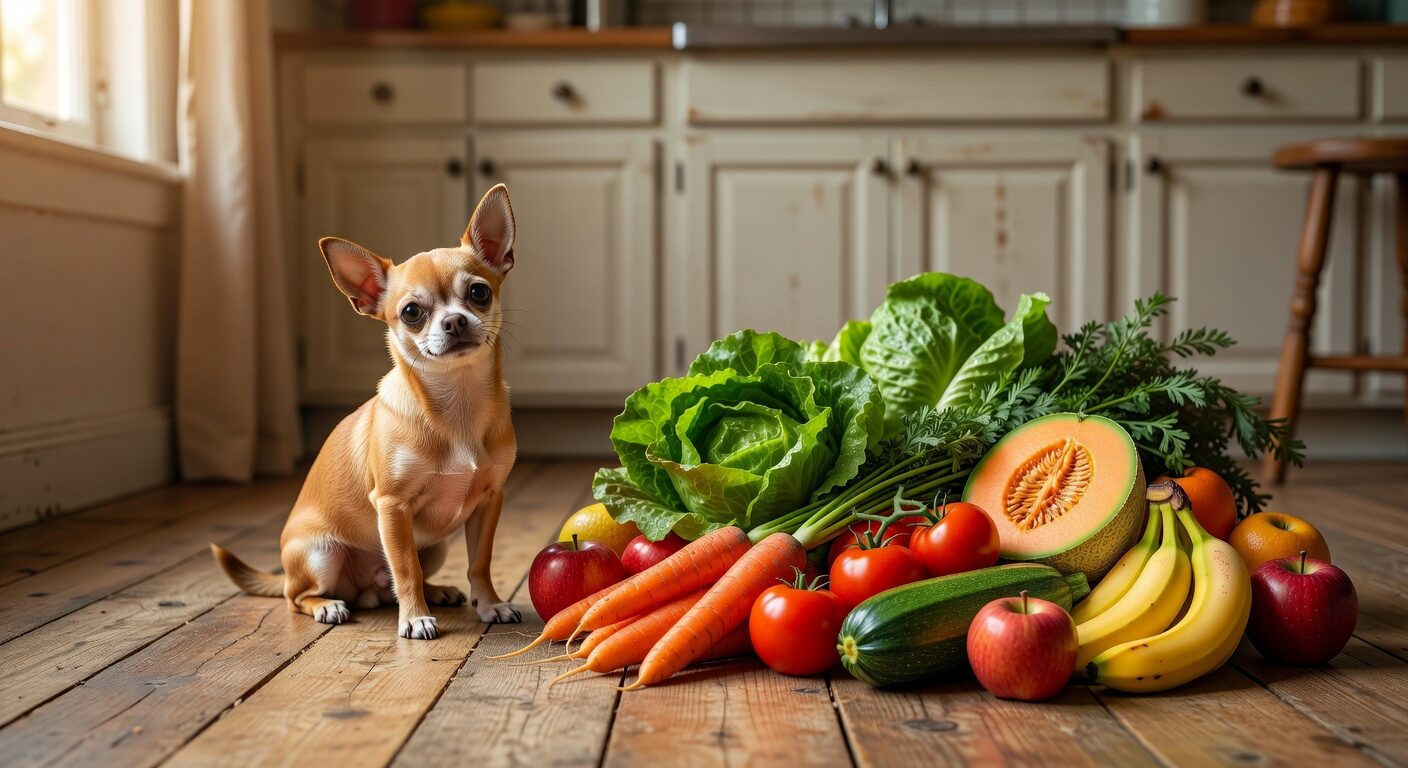
Her meals now consist of a lean protein, usually chicken, turkey, or occasionally beef, mixed with a starch like sweet potato or brown rice, and a vegetable like green beans, carrots, or pumpkin. I add a small amount of fish oil for omega-3s and a calcium supplement because homemade diets can fall short on minerals. According to PetMD’s homemade diet guide, getting the calcium-to-phosphorus ratio right is critical, especially for small breeds. I consulted with a veterinary nutritionist before finalizing Miso’s meal plan.
Portion control matters enormously. A chihuahua eating fresh food needs significantly less volume than kibble because the caloric density is different. I weigh Miso’s food on a kitchen scale every single meal. She gets roughly two ounces of food twice a day, which looks like almost nothing in the bowl but provides everything she needs. Overfeeding a chihuahua on a natural diet leads to weight gain just as fast as overfeeding kibble, maybe faster because the food is more palatable.
What Changed After Three Months on a Natural Diet
The coat change came first. By week three, Miso’s fur was softer and shinier than it had ever been. The chronic ear infections stopped completely by month two. Her energy stabilized into something that actually made sense, alert and playful during the day, calm and rested at night. The manic swings disappeared. com/the-chihuahua-who-chased-a-coyote-out-of-a-backyard-and-became-a-neighborhood-legend/” title=”The Chihuahua Who Chased a Coyote Out of a Backyard”>The Chihuahua Who Chased a Coyote Out of a Backyard.
Her stools changed too, and I know that is not glamorous to talk about, but it matters. Smaller, firmer, less frequent. Her digestive system was working more efficiently because it was processing real food instead of processed fillers. The vet noticed the difference at her next checkup and asked what I had changed. When I told her about the chihuahua natural diet, she said she was not surprised by the results but wanted to see regular bloodwork to make sure nothing was falling out of balance. Fair enough.
The only downside is the time commitment. I batch cook every Sunday, portioning meals into containers for the week. It takes about an hour. That is more effort than scooping kibble, and I understand why most people do not want to do it. But watching Miso thrive on food I made with my own hands gives me a satisfaction that a bag of kibble never did. For more on chihuahua nutrition, read our complete feeding guide.

The Honest Challenges of Feeding a Chihuahua Natural Diet
It is more expensive than kibble. I spend roughly forty dollars a month on Miso’s food now compared to about twenty on premium kibble. It requires planning. You cannot just leave fresh food out all day the way you can with dry food. Traveling with a chihuahua on a natural diet means packing cooler bags and pre-portioned meals, which adds a layer of complexity that kibble does not have.
There is also the worry factor. Am I providing enough nutrients? Is the balance right? Did I cook the chicken thoroughly enough? These concerns never fully go away, which is why regular vet checkups and occasional bloodwork are non-negotiable on a chihuahua natural diet. You cannot wing it. You need a plan, a nutritionist’s input, and the discipline to follow through consistently. If your chihuahua has food sensitivities, my allergy experience might help.

Would I Recommend a Chihuahua Natural Diet to Every Owner?
Honestly, no. Not everyone has the time, budget, or willingness to commit to cooking for their dog every week. A high-quality commercial food can be perfectly adequate, and there is no shame in choosing convenience if the nutrition is solid. But if you are dealing with chronic health issues that are not responding to conventional approaches, if your chihuahua’s coat is dull, their energy is off, or their digestion is a constant battle, then a chihuahua natural diet is worth exploring.
Miso is a different dog now. Literally. People who met her a year ago and see her today comment on the change. She is brighter, calmer, healthier, and she actually looks forward to mealtime instead of picking at her bowl with indifference. That alone tells me everything I need to know. Her body was asking for real food, and it took me too long to listen. For those starting with vegetables specifically, check our safe vegetables guide.
Is a natural diet safe for chihuahuas?
A properly planned natural diet can be safe and beneficial for chihuahuas, but it requires careful nutritional balancing. Consult a veterinary nutritionist to ensure your chihuahua receives adequate calcium, phosphorus, and other essential micronutrients. Small breeds like chihuahuas have fast metabolisms and are prone to hypoglycemia, so meal frequency and portion accuracy are critical. Never switch to a homemade diet without professional guidance.
How much does it cost to feed a chihuahua a natural diet?
Expect to spend thirty to fifty dollars per month feeding a chihuahua a homemade natural diet, compared to fifteen to twenty-five dollars for premium kibble. The cost varies based on protein sources and whether you buy organic ingredients. Batch cooking once a week helps control costs and ensures consistency. The potential savings on veterinary bills from improved health may offset the increased food cost over time.
What proteins are best for a chihuahua natural diet?
Lean chicken, turkey, and lean ground beef are the most commonly recommended proteins for chihuahuas on a natural diet. Fish such as salmon provides excellent omega-3 fatty acids for coat and skin health. Avoid fatty meats as chihuahuas are prone to pancreatitis. Always cook proteins thoroughly and never feed raw meat without veterinary guidance, as small dogs are more vulnerable to foodborne pathogens due to their size.
How do I transition my chihuahua to a natural diet?
Transition gradually over ten to fourteen days. Start by replacing twenty-five percent of your chihuahua’s current food with the new diet. Increase to fifty percent by day seven and seventy-five percent by day ten. By day fourteen, your chihuahua should be fully on the new diet. Monitor stools closely during the transition for signs of digestive upset. If diarrhea or vomiting occurs, slow down the transition and consult your veterinarian.
Can I mix natural food with kibble for my chihuahua?
Yes, mixing fresh food with kibble is a practical middle-ground approach. Many chihuahua owners add a spoonful of cooked chicken, steamed vegetables, or pumpkin puree to their dog’s regular kibble for added nutrition and palatability. This provides some benefits of fresh food without the full commitment of a completely homemade diet. Adjust kibble portions down slightly to account for the added calories from fresh food.