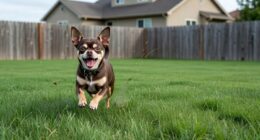

Leash training Chihuahua owners will tell you it sounds simple until you actually try it. My first attempt at walking Pepper on a leash looked more like a wrestling match than a pleasant stroll. She pulled, she planted her feet, she tried to chew through the leash, and at one point she just lay flat on the ground and refused to move. If you are going through something similar right now, I want you to know it gets better. It really does.
Leash Training a Chihuahua Who Thinks the Walk Is Entirely Optional
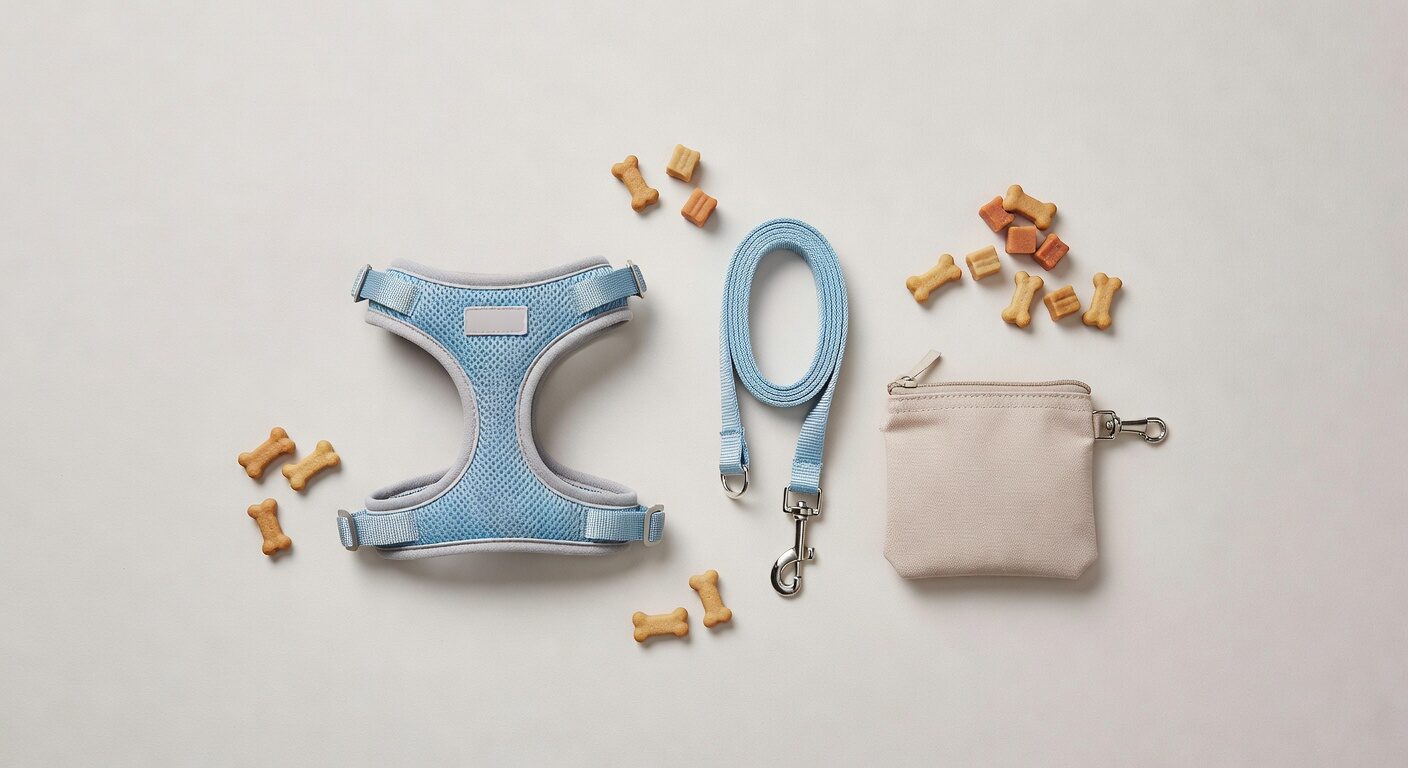
Choose a lightweight harness that fits snugly but does not pinch. You should be able to fit two fingers between the harness and your chihuahua’s body. For the leash, a standard four to six foot leash works best. Stay away from retractable leashes during training because they teach your Chihuahua that pulling creates more freedom.
I spent a small fortune trying different harnesses before I found one Pepper tolerated. Give your Chihuahua time to wear the harness around the house for a few days before you attach a leash.
Related: Chihuahua training tips.
Getting Comfortable Indoors First
I learned the hard way that jumping straight to outdoor walks was a mistake. The outside world is full of distractions, smells, other animals, cars, people. That is way too much stimulation for a Chihuahua who has never walked on a leash before.
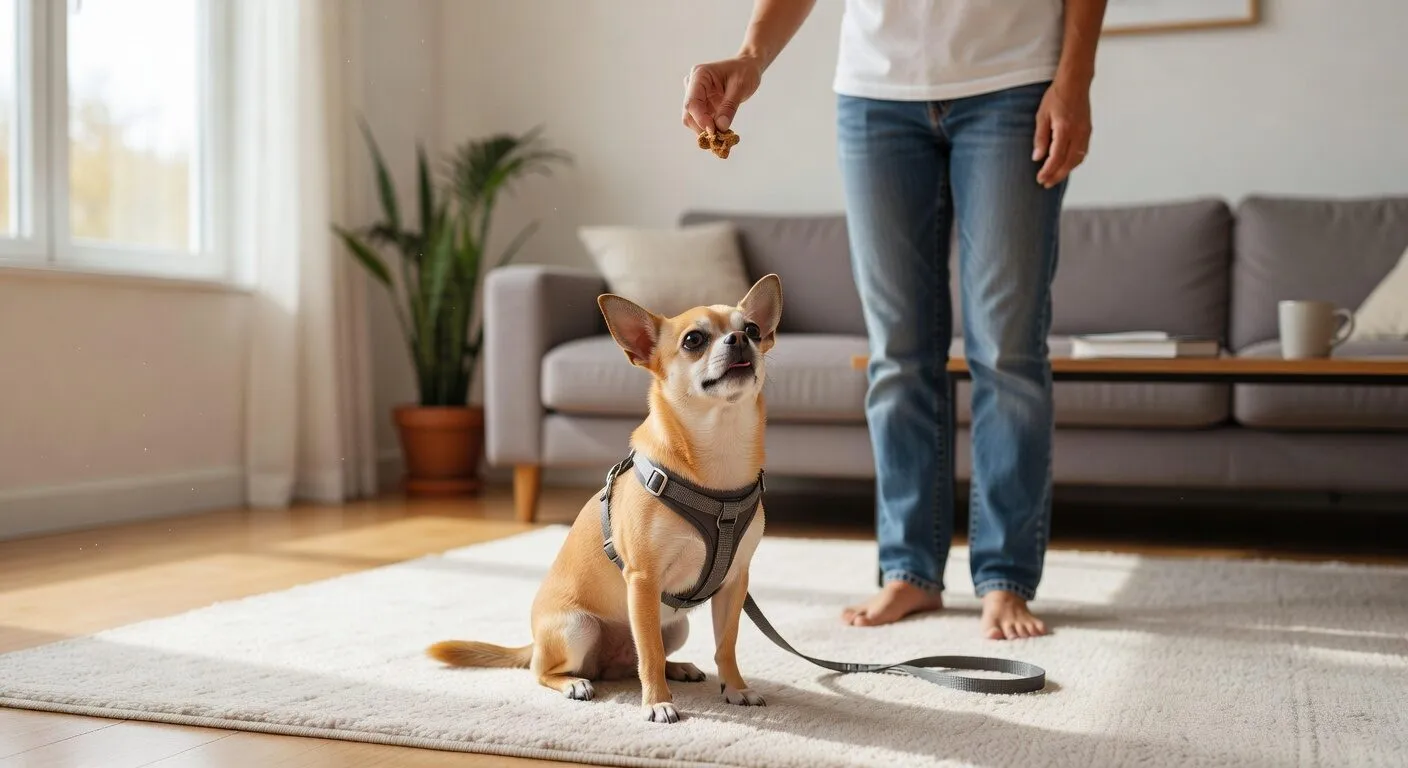
Start inside your home. Clip the leash on and just let your Chihuahua drag it around for a few minutes while supervised. Once they seem comfortable, pick up your end and follow them around the house. Do not pull or guide them yet. Just hold the leash loosely and let them lead. Reward them with treats for walking with the leash on without fussing.
After a day or two of indoor practice, start gently guiding them with you. Take a few steps and encourage them to follow with a treat in your hand. Keep sessions to five minutes or less. You want them associating the leash with treats and positive experiences, not frustration.
Pick a quiet time of day and a calm location. A deserted sidewalk or a quiet corner of your yard works perfectly. Busy streets with lots of foot traffic will overwhelm a beginner. My first outdoor sessions with Pepper happened in my backyard at 7 AM when the neighborhood was still asleep.
Every time your Chihuahua walks beside you on a loose leash, mark that moment with praise and a treat. You are building the habit of walking politely, and repetition is what makes it stick. If they pull ahead, stop walking completely. Just stop and wait. When the leash goes slack again, start walking. They learn quickly that pulling makes the walk stop. com/housebreaking-my-chihuahua-nearly-broke-me-first/” title=”Housebreaking My Chihuahua Nearly Broke”>Housebreaking My Chihuahua Nearly Broke.
Dealing With Common Problems
The statue move, where your Chihuahua plants their feet and refuses to budge, is incredibly common. Do not drag them. Crouch down, show them a treat, and encourage them to come to you. Sometimes they are scared. Sometimes they are being stubborn. Either way, patience works better than force.
Lunging at other animals or people is another challenge. If your Chihuahua reacts to something, create distance. Turn and walk the other direction. Reward them when they refocus on you instead of the trigger.
Leash biting is usually a sign of frustration or excitement. If your Chihuahua chews the leash, stop walking and redirect their attention with a command they know. A quick “sit” followed by a treat usually breaks the cycle.
Building Up to Real Walks
Once your Chihuahua can handle short, calm walks without major issues, you can start increasing the distance and adding more interesting routes. This took me about a month of consistent daily practice. some chihuahuas get there faster and some take longer. com/chihuahua-owner-needs-training-too/” title=”Maybe the Chihuahua Is Not the One Who Needs Training”>Maybe the Chihuahua Is Not the One Who Needs Training.
I now walk Pepper for about twenty minutes each morning and she trots along beside me like a pro. There are still moments when a squirrel catches her attention, but those pass quickly.
Leash training transforms your daily life with a Chihuahua. Instead of dreading walks, you start looking forward to them. Watching your tiny chihuahua strut confidently down the sidewalk on a loose leash is honestly one of the most satisfying parts of owning a Chihuahua.
The Harness Debate That Every Owner Faces
Before you even think about leash training, you need to get the equipment right, and for chihuahuas this means a harness, not a collar. I cannot stress this enough. Chihuahuas are prone to tracheal collapse, which is a condition where the cartilage rings in the windpipe weaken and the airway partially closes. Attaching a leash to a collar and having any amount of pulling or tension puts direct pressure on the trachea and can either cause or worsen this condition. A well-fitted harness distributes that pressure across the chest and shoulders instead, which is safer for the dog’s delicate throat.
Finding the right harness for a chihuahua is its own adventure because most harnesses marketed as “extra small” are still too big. I went through four different harnesses before finding one that actually fit my chihuahua without her being able to back out of it, which is a common problem. Chihuahuas are escape artists, and if a harness has any slack around the neck or chest, they will reverse out of it in seconds, usually in the middle of a parking lot while you are having a heart attack. Measure your chihuahua’s girth carefully, read the sizing charts, and when in doubt, go smaller rather than larger.
Walking at Their Pace, Not Yours
One of the biggest adjustments I had to make when leash training my chihuahua was accepting that walks would be slow. Not just a little slow. Dramatically, fundamentally, redefine-your-expectations slow. A chihuahua’s stride is a fraction of a human’s, and expecting them to keep up with your normal walking pace is not only unfair, it is physically exhausting for them. What feels like a casual stroll to you is a full sprint for a dog with six-inch legs. I had to consciously slow myself down to about half my natural walking speed, and even then I would occasionally feel the leash tighten because she had stopped to investigate something.
And the investigating is important. Walks are not just exercise for chihuahuas. They are mental stimulation, and the sniffing is arguably more valuable than the walking itself. When your chihuahua stops to smell a fire hydrant for forty-five seconds, she is reading a neighborhood newsletter of scent information, processing data about which dogs have passed by, when they were there, and what they had for breakfast. Rushing her past those scent opportunities robs her of the primary benefit of the walk. I now budget thirty minutes for what is essentially a two-block walk, and both my chihuahua and I enjoy it infinitely more than the rushed power walks we used to attempt.
For more detailed guidance on this topic, the American Kennel Club offers excellent resources backed by veterinary professionals.
You Might Also Enjoy
I have been through this with my own chihuahua. It is one of those things that looks simple on paper but gets complicated fast when you are actually dealing with a four-pound dog who has opinions about everything. You might also find Finding Your Chihuahua’s Signature Toy and Why worthThe truth about leash training chihuahua is that there is no single right answer. What works for one chihuahua might be completely wrong for another. Mine took weeks to adjust. Some dogs figure it out in days. The size of your chihuahua matters. Their age matters. Their personality matters most of all.ters most of all.
Here is what I wish someone had told me earlier. Start small. Do not try to change everything at once. Chihuahuas are stubborn but they are also sensitive. Push too hard and they shut down. Go too slow and nothing changes. The sweet spot is somewhere in the middle and you have to find it yourself.
I talked to other chihuahua owners about leash training chihuahua and heard the same thing over and over. Patience. Consistency. And a willingness to look a little silly in public because chihuahuas do not care about your dignity.
If you are just getting started with leash training chihuahua, give yourself grace. You will make mistakes. Your chihuahua will make more of them. That is the whole process. And honestly, once you get through the hard part, it is worth it.
Understanding this starts with recognizing the specific needs and behaviors of the breed. Chihuahuas are unique in their sensitivity, size, and temperament, and what works for larger breeds often needs adjustment for these tiny dogs.
Living with a chihuahua means adapting to their personality and physical requirements. This affects everything from your schedule to your home environment, and being prepared makes a significant difference in both your quality of life and your dog’s.
If you notice persistent changes in your chihuahua’s behavior, appetite, energy level, or physical condition related to leash training chihuahua, schedule a vet visit. Early intervention is always better than waiting, especially with a breed as small as a chihuahua. The PetMD leash training guide offers additional guidance on leash training.
What should every chihuahua owner know about this?
Understanding this starts with recognizing the specific needs and behaviors of the breed. Chihuahuas are unique in their sensitivity, size, and temperament, and what works for larger breeds often needs adjustment for these tiny dogs.
How does this affect your daily life with a chihuahua?
Living with a chihuahua means adapting to their personality and physical requirements. This affects everything from your schedule to your home environment, and being prepared makes a significant difference in both your quality of life and your dog’s.
When should I talk to a vet about this?
If you notice persistent changes in your chihuahua’s behavior, appetite, energy level, or physical condition related to leash training chihuahua, schedule a vet visit. Early intervention is always better than waiting, especially with a breed as small as a chihuahua. The PetMD leash training guide offers additional guidance on leash training.