
If you want to know about polite chihuahuas, you are in the right place. My chihuahua, Baxter, was not what anyone would call polite. He barked at guests, lunged at other dogs on walks, growled when anyone came near his food bowl, and had once nipped a delivery driver through the screen door. I loved him but I was embarrassed by him, and I knew that if I did not address his behavior, his world would keep getting smaller as I avoided more and more situations to prevent incidents. Teaching a chihuahua good behavior is not about breaking their spirit. It is about giving them the skills to exist in a world that was not designed for a five-pound dog with the confidence of a heavyweight champion.polite chihuahuas, I have learned a few things the hard way.
Why Chihuahuas Get Away with Bad Behavior
The reason so many chihuahuas have terrible manners is simple. We let them. When a German shepherd lunges at someone, the owner panics. When a chihuahua lunges at someone, the owner laughs. When a rottweiler growls over food, it gets addressed immediately. When a chihuahua growls over food, someone films it for social media. We apply a completely different standard to small dogs, and the dogs pay the price because untrained behavior escalates regardless of the dog’s size.
The behavioral researchers at Rover have documented this pattern extensively. Small dog syndrome is not a personality trait. It is a training gap that owners create by treating their tiny dog’s aggression as entertainment rather than a problem worth solving.
Related: common Chihuahua health issues.
Start with the Basics: Sit, Wait, Leave It
Every polite behavior builds on impulse control, and impulse control starts with the simplest commands. Sit is not just a trick. It is the foundation of self-regulation. A chihuahua who knows how to sit on command has learned, at a fundamental level, that stopping and being still earns rewards. That concept transfers to every other behavior you want to teach.
Wait is different from stay. Stay means do not move until I release you. Wait means pause before proceeding. I use wait at doorways, before meals, and before getting out of the car. Baxter used to bolt through every open door like the house was on fire. Now he stops at the threshold and waits for my signal. It took two weeks of consistent practice, and it may have saved his life at least once when a car was passing as I opened the front door.
Leave it is the command that prevents ninety percent of problems on walks. Dead bird on the sidewalk? Leave it. Another dog’s food at the park? Leave it. That suspicious puddle of something unidentifiable? Leave it. I trained this using high-value treats in a closed fist, rewarding Baxter when he stopped trying to get the treat and looked at me instead. Now he responds to “leave it” with a head turn that looks almost dignified. Our eight chihuahua training tips article covers these foundations in more detail.
Guest Behavior: The Hardest Lesson
Baxter treated every person who entered our home like a home invader. Barking, lunging, nipping at ankles. I tried everything. I yelled at him. I picked him up. I locked him in another room. None of it worked because none of it taught him an alternative behavior. He knew what I did not want him to do, but he had no idea what I wanted him to do instead.
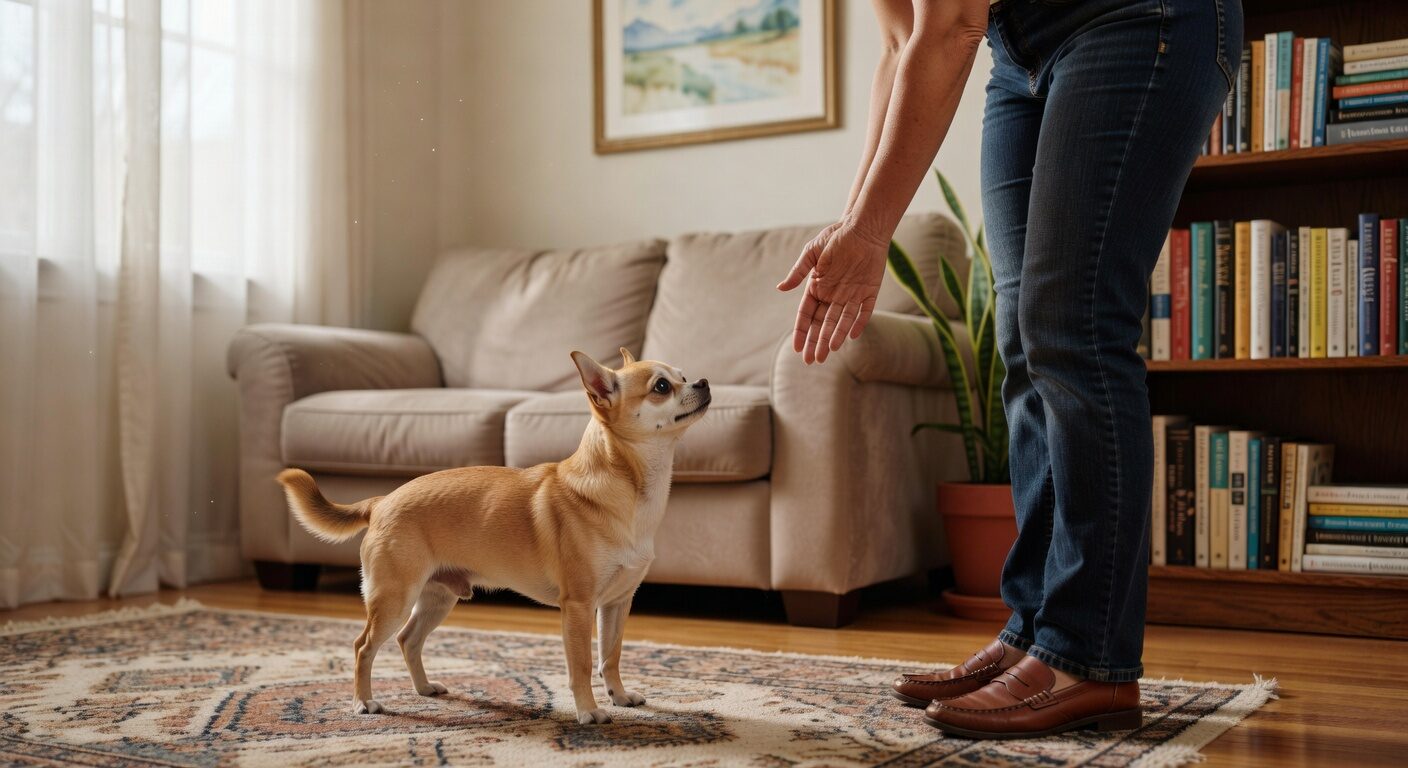
The approach that finally worked was place training. I taught Baxter to go to a specific spot, a small bed near the front door, and stay there when the doorbell rang. The command is “place,” and when he goes there and stays, he gets a continuous stream of small treats. The guest enters while Baxter is occupied on his place, the excitement passes, and within a few minutes he is calm enough to approach on his own terms. It is not perfect every time, but the difference between where we started and where we are now is night and day.
Leash Manners for a Dog Who Thinks They Lead the Pack
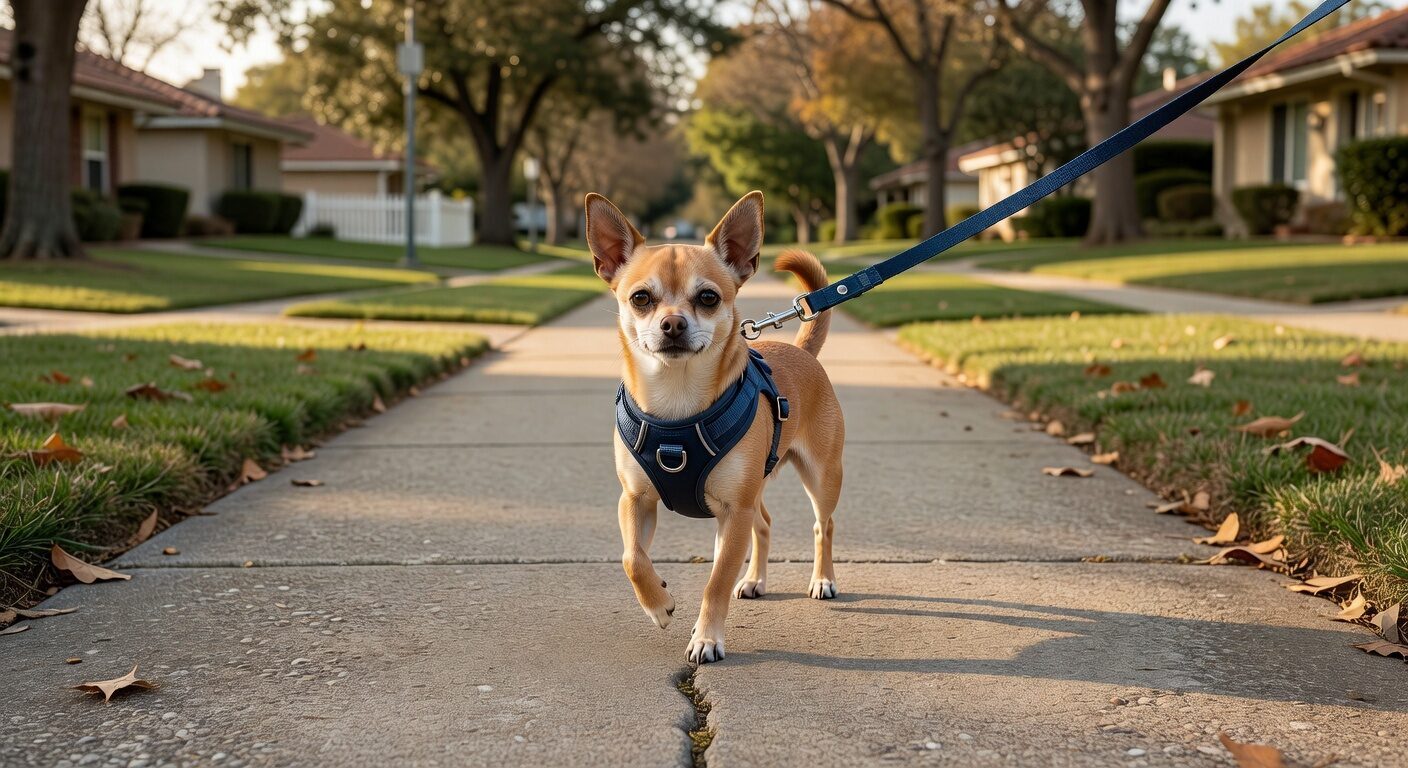
Chihuahuas pull on the leash with a determination that defies their size. Baxter used to walk me rather than the other way around, straining against his harness and hacking like a tiny emphysema patient. I fixed this by stopping every single time the leash went taut. Just stopped walking. Stood still. The moment the leash went slack, we moved forward. The moment it went taut again, we stopped. For more on this topic, check out our guide on chihuahua obedience training.
Our first walk using this method covered about fifty feet in twenty minutes. It was excruciating. But within a week, Baxter understood the concept: pulling means stopping, and loose leash means moving. The training specialists at K9 of Mine describe this as the penalty method, and it works because it gives the dog immediate, consistent feedback without any punishment.
Polite Greetings with Other Dogs
This one required professional help. Baxter’s reactivity toward other dogs was beyond what I could manage with YouTube videos and good intentions. We hired a trainer who specialized in small breed reactivity and learned a technique called look-at-that, where you reward the dog for noticing another dog without reacting. See dog, look at owner, get treat. The threshold is key. You start at whatever distance your chihuahua can see another dog without losing their mind, and you gradually decrease that distance over weeks. Understanding polite chihuahuas makes a real difference. com/walking-your-chihuahua-safely-guide/” title=”Walking Your Chihuahua: A Guide That Goes”>Walking Your Chihuahua: A Guide That Goes.
Baxter can now pass other dogs on the sidewalk at about six feet without erupting. That might not sound impressive, but six months ago, he would start barking at fifty feet. Progress is relative, and for a reactive chihuahua, six feet of calm is a major accomplishment.
Food Manners and Resource Guarding
Resource guarding, growling or snapping when someone approaches the food bowl, is common in chihuahuas and dangerous to ignore. I addressed it by hand-feeding Baxter’s meals for a week. Every piece of kibble came from my hand. Then I started putting the empty bowl down and dropping food into it one handful at a time while sitting next to him. Then I would walk past the bowl and toss a high-value treat into it. The message was simple: humans approaching your bowl means better things are coming, not that your food is being taken away.
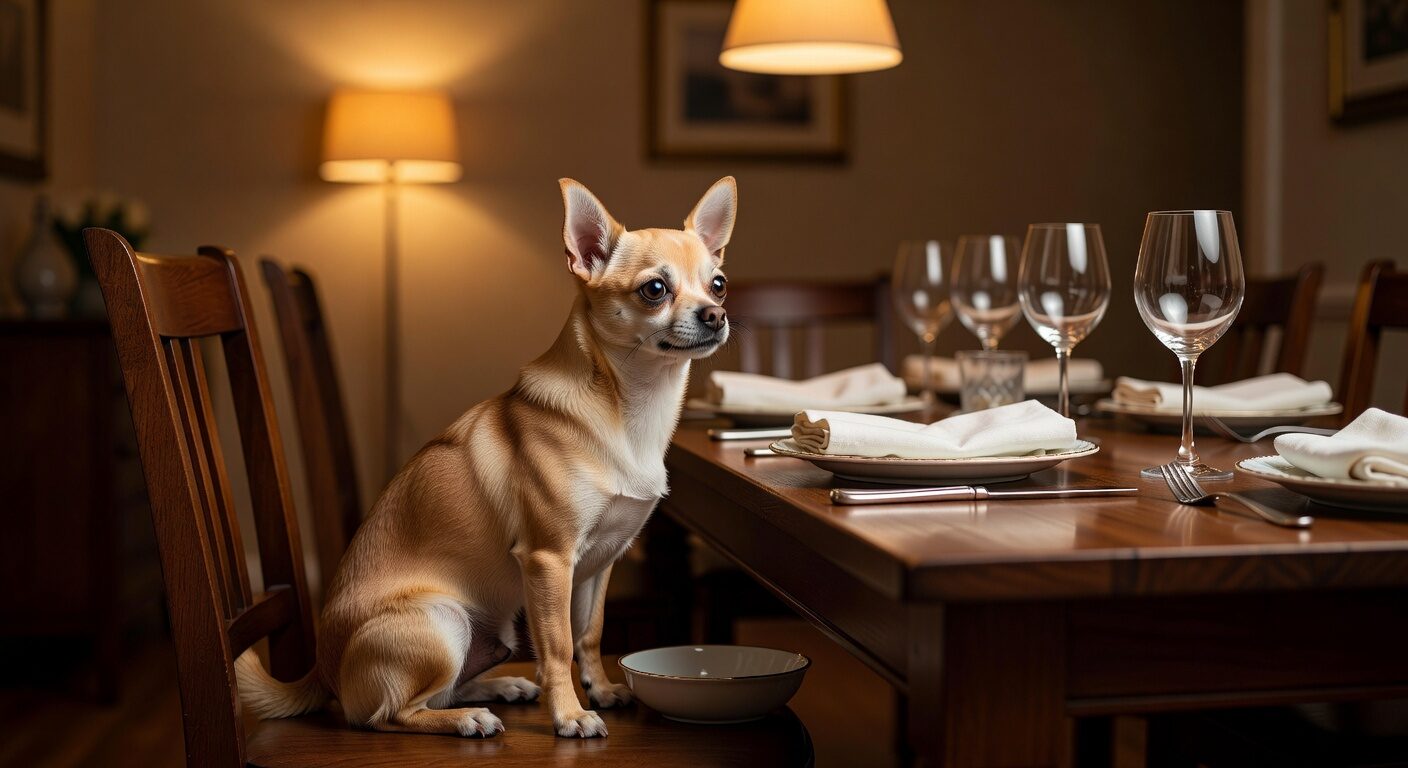
This took patience. It took weeks. But Baxter no longer tenses when I walk past him during meals, and I can pick up his bowl without risking my fingers. If your chihuahua is still working through behavior challenges, our <a href="https://chihuacorner.com/i-was-the-problem-with-my-chihuahuas-behavior-and-it-took-me-a-year-to-see-it/", title="honest look at chihuahua behavior problems”>honest look at chihuahua behavior problems might resonate with where you are right now.
Consistency Is the Whole Secret
Every person in the household has to enforce the same rules. If I require Baxter to sit before meals but my partner feeds him while he is jumping, the training unravels. If I do not allow him on the couch but guests let him up, the boundary dissolves. Chihuahuas are smart enough to learn which humans enforce rules and which ones do not, and they will exploit every loophole.
Write the rules down if you have to. Post them on the fridge. Make sure everyone who interacts with your chihuahua knows the expectations and follows them without exception. A polite chihuahua is not born. They are built, one consistent interaction at a time, by owners who decided that their small dog deserves the same training and structure that any dog needs to live a happy, well-adjusted life. That is the reality of polite chihuahuas.
For more detailed guidance on this topic, the ASPCA offers excellent resources backed by veterinary professionals.
I have been through this with my own chihuahua. It is one of those things that looks simple on paper but gets complicated fast when you are actually dealing with a four-pound dog who has opinions about everything.
The truth about polite chihuahuas is that there is no single right answer. What works for one chihuahua might be completely wrong for another. Mine took weeks to adjust. Some dogs figure it out in days. The size of your chihuahua matters. Their age matters. Their personality matters most of all.
Here is what I wish someone had told me earlier. Start small. Do not try to change everything at once. Chihuahuas are stubborn but they are also sensitive. Push too hard and they shut down. Go too slow and nothing changes. The sweet spot is somewhere in the middle and you have to find it yourself.
I talked to other chihuahua owners about polite chihuahuas and heard the same thing over and over. Patience. Consistency. And a willingness to look a little silly in public because chihuahuas do not care about your dignity.
If you are just getting started with polite chihuahuas, give yourself grace. You will make mistakes. Your chihuahua will make more of them. That is the whole process. And honestly, once you get through the hard part, it is worth it.