
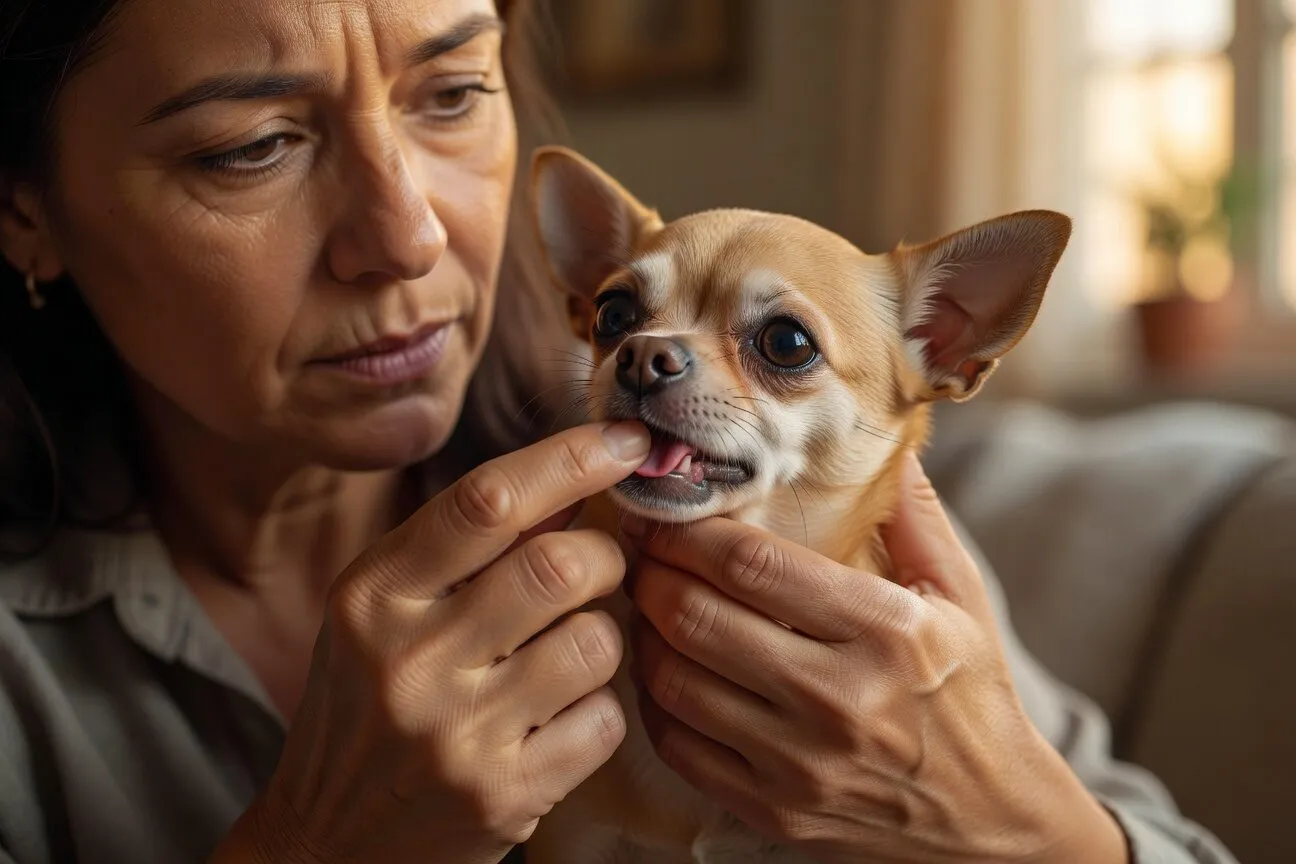

If you have lived with Chihuahuas long enough, you know they are masters of disguise. Understanding how to chihuahua hiding illness starts with what actually happens in real life. Not the cute Halloween costume kind. I mean the kind where they hide pain so well that you do not realize something is wrong until it gets serious. Learning to spot chihuahua sick signs early changed everything for me, and I want to share what I wish someone had told me years ago.
They Stop Eating or Get Picky Out of Nowhere
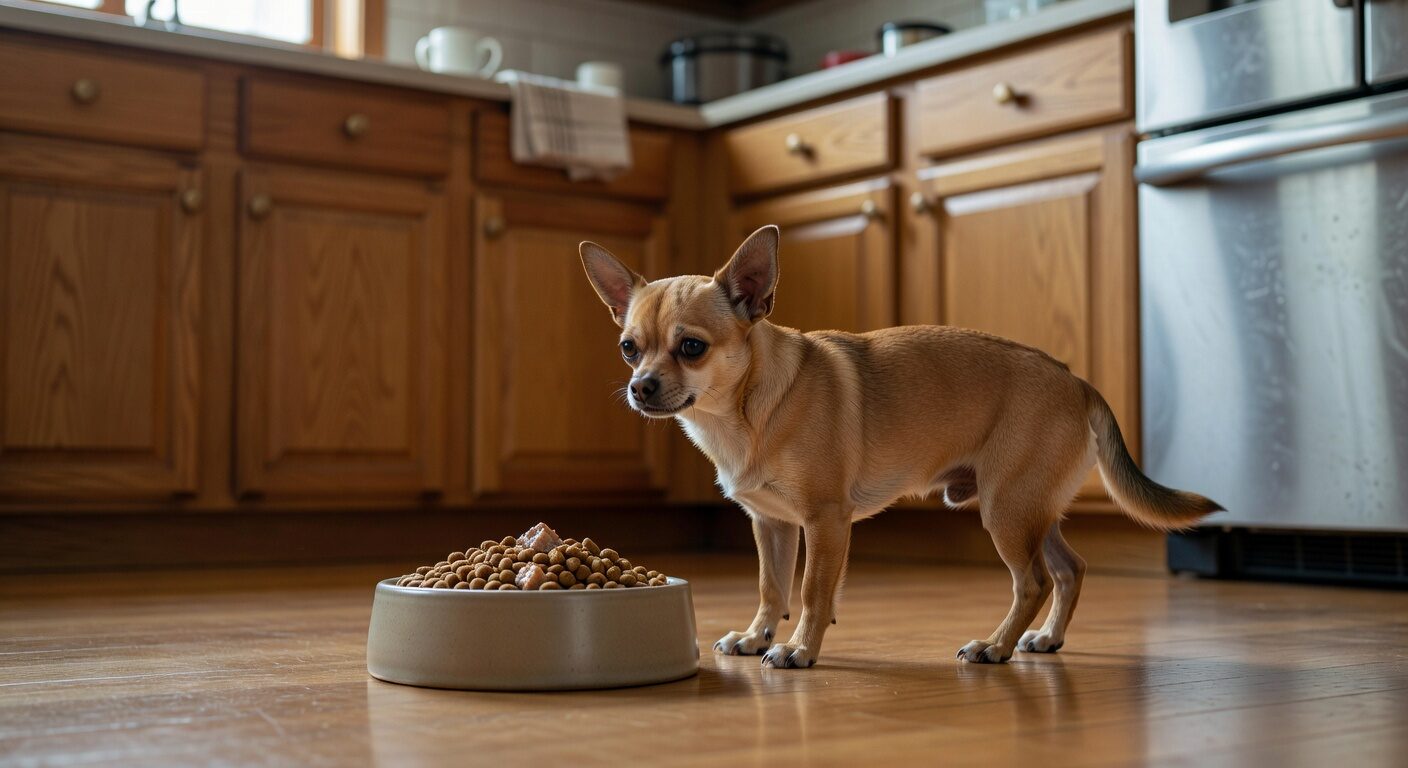
My Chihuahua has always been a little picky, but there is a difference between turning her nose up at a new brand and suddenly refusing food she normally loves. If your Chi skips more than one meal and acts uninterested in treats, something is going on. Loss of appetite is one of the earliest and easiest signs to catch. For more detail, see the AKC Chihuahua breed health guide. For more detail, see the PetMD dog behavior resources.
I learned the hard way that waiting “just one more day” can turn a small problem into a vet emergency. Trust your gut on this one.
Related: common Chihuahua health issues.
Changes in Energy and Behavior
Chihuahuas have a reputation for being little firecrackers. So when yours suddenly wants to sleep all day or hides under the blanket more than usual, pay attention. I remember noticing my girl was not greeting me at the door anymore. That was so unlike her. Turns out she had a mild infection that was making her feel lousy.

On the flip side, sudden restlessness or pacing can also signal pain. If your chihuahua cannot seem to get comfortable, that is worth noting too.
What I Wish I Knew Earlier
Keep a mental note of your chihuahua’s normal water habits. When those habits shift, it tells you something your chihuahua cannot say out loud.
Unusual Bathroom Habits
Nobody loves talking about this, but it matters. Diarrhea that lasts more than a day, straining to go, blood in the stool, or frequent accidents in a house trained dog are all red flags. I know it is not glamorous, but checking what comes out of your Chihuahua is one of the simplest health checks you can do. com/cooling-beds-for-chihuahuas-why-your-hot-dog-needs-one-this-summer/” title=”Cooling Beds for Chihuahuas: Why”>Cooling Beds for Chihuahuas: Why.
Changes in the color or frequency of urination matter just as much. Dark urine or going much more often than normal warrants a call to your vet.
Physical Signs You Can See and Feel
I make it a habit to run my hands over my chihuahuas every few days. You would be amazed at what you can find. Lumps, tender spots, swelling, or flinching when you touch a certain area all point to something that needs attention. Watch for watery eyes, a runny nose, or excessive head shaking too.
Weight loss is another big one. On a chihuahua this small, even half a pound can be significant. If your Chihuahua feels lighter when you pick them up, do not brush it off.
Bad breath that smells different from normal doggy breath can signal dental disease or even organ problems. Pale gums are another sign that something is off internally.
Why Chihuahuas Hide Pain Better Than Most Breeds
Understanding why chihuahuas are so good at hiding illness helps you take the subtle signs more seriously when you notice them. As a breed, chihuahuas have an instinct to mask vulnerability that runs deeper than what you see in many larger dogs. In the wild, small animals that show weakness become targets, and even though your chihuahua has never faced a predator more threatening than the vacuum cleaner, that survival instinct is still wired into their behavior. My vet explained it to me this way: a chihuahua in pain will often maintain their normal routine as long as they physically can, eating enough to not raise alarm and moving enough to seem fine, until the problem reaches a point where they simply cannot keep up the act anymore.
This is why the subtle signs matter so much with this breed. A larger dog might limp obviously or cry out when something hurts. A chihuahua might just become two percent quieter, eat a little slower, or take an extra beat before jumping onto the couch. These tiny changes are easy to dismiss as a mood or an off day, but strung together over a few days, they often tell a story that you need to pay attention to. I have learned to treat any sustained change in my chihuahua’s normal behavior as worth investigating, even when the change seems small enough to ignore. The times I followed that instinct and called the vet early were the times we caught problems before they became emergencies.
Building a Health Baseline for Your Chihuahua
The most practical advice I can give for catching illness early is to establish a baseline for what normal looks like for your specific chihuahua. Every dog is different, and what matters is the deviation from their personal normal, not some general standard. I started keeping a simple mental log of my chihuahua’s daily habits. How much water she drinks, roughly. How many times she goes to the bathroom and what it looks like. How active she is during her peak hours. What her breathing sounds like when she is resting. How quickly she responds when I call her name or shake the treat bag.
Once you have that baseline established in your mind, deviations jump out at you in ways they never would otherwise. When my chihuahua’s water intake doubled over the course of a week, I noticed immediately because I knew her normal pattern. That increase turned out to be an early sign of a urinary tract infection that we caught and treated before it progressed to something more serious. Without that baseline awareness, I might have noticed the extra water trips eventually, but probably not until she was showing more obvious symptoms like accidents in the house or visible discomfort. The earlier you catch something, the simpler and cheaper the treatment tends to be, and for a chihuahua who is actively trying to convince you that nothing is wrong, your powers of observation are the best diagnostic tool you have.
You Might Also Enjoy
When a Vet Visit Cannot Wait
While most of the signs I have described above warrant a vet appointment within a day or two, there are certain symptoms in chihuahuas that require immediate emergency attention, and I want to be very clear about what those are because timing matters enormously with a dog this small. If your chihuahua is having seizures, struggling to breathe, unable to stand or walk, vomiting repeatedly, has a distended or hard belly, or shows signs of extreme lethargy where they cannot be roused, you need to get to an emergency vet right away. Do not wait to see if it passes. Chihuahuas have so little body mass that conditions like hypoglycemia, toxin ingestion, or internal blockages can become life threatening within hours rather than days.
I had one scare where my chihuahua became suddenly lethargic on a Saturday afternoon, would not eat, and felt cold to the touch. My regular vet was closed, and I debated whether to drive thirty minutes to the emergency clinic or wait until Monday. I went to the emergency clinic, and it turned out she had a dangerously low blood sugar episode that needed immediate treatment with IV glucose. The vet told me that if I had waited until Monday, the outcome could have been very different. That experience permanently changed my threshold for what constitutes an emergency with a toy breed. When in doubt, go. The peace of mind alone is worth the emergency vet fee, and the times when it turns out to be something serious, you will be grateful you did not hesitate.
The most important thing I can tell you is to trust yourself. You know your Chihuahua better than anyone. When something feels off, it probably is. I would rather make an unnecessary vet visit than miss something serious. These little dogs depend on us to notice what they are trying so hard to hide. Keep watching, keep paying attention, and do not let their tough little attitude fool you into thinking everything is fine when your instincts say otherwise. You might also find Should You Spay or Neuter Your Chihuahua? worth reading.
Chihuahuas are one of the longest-lived dog breeds with an average lifespan of 14 to 16 years. Some reach 20 years with proper care. Regular vet checkups, dental care, a healthy diet, and maintaining proper weight all contribute to longevity. The oldest recorded chihuahua lived to be 22.
Chihuahuas can be good family dogs in homes with older children who understand gentle handling. They are too fragile for rough play with toddlers. Chihuahuas bond deeply with their family but may be wary of strangers. Proper socialization from a young age helps them be more accepting of new people.
Two 15 to 20 minute walks per day plus some indoor playtime meets most chihuahuas’ needs. They have more energy than people expect but tire out faster than larger breeds. Mental stimulation through puzzle toys and training sessions is just as important as physical exercise for this intelligent breed.
The most common health issues include dental disease, patellar luxation, heart murmurs, hypoglycemia in puppies, tracheal collapse, and hydrocephalus. Regular vet visits catch many of these early. Dental care is especially important because chihuahuas are prone to tooth loss and gum disease throughout their lives.
Chihuahuas bark because they are alert, protective, anxious, or bored. Their hearing is sharp and they react to sounds other dogs ignore. Training a reliable quiet command helps. Ignore demand barking completely. Address the underlying cause rather than just the noise. A tired chihuahua barks less than a bored one.
How long do chihuahuas live on average?
Chihuahuas are one of the longest-lived dog breeds with an average lifespan of 14 to 16 years. Some reach 20 years with proper care. Regular vet checkups, dental care, a healthy diet, and maintaining proper weight all contribute to longevity. The oldest recorded chihuahua lived to be 22.
Are chihuahuas good family dogs?
Chihuahuas can be good family dogs in homes with older children who understand gentle handling. They are too fragile for rough play with toddlers. Chihuahuas bond deeply with their family but may be wary of strangers. Proper socialization from a young age helps them be more accepting of new people.
How much exercise does a chihuahua need?
Two 15 to 20 minute walks per day plus some indoor playtime meets most chihuahuas’ needs. They have more energy than people expect but tire out faster than larger breeds. Mental stimulation through puzzle toys and training sessions is just as important as physical exercise for this intelligent breed.
What health problems are common in chihuahuas?
The most common health issues include dental disease, patellar luxation, heart murmurs, hypoglycemia in puppies, tracheal collapse, and hydrocephalus. Regular vet visits catch many of these early. Dental care is especially important because chihuahuas are prone to tooth loss and gum disease throughout their lives.
Why do chihuahuas bark so much?
Chihuahuas bark because they are alert, protective, anxious, or bored. Their hearing is sharp and they react to sounds other dogs ignore. Training a reliable quiet command helps. Ignore demand barking completely. Address the underlying cause rather than just the noise. A tired chihuahua barks less than a bored one.