
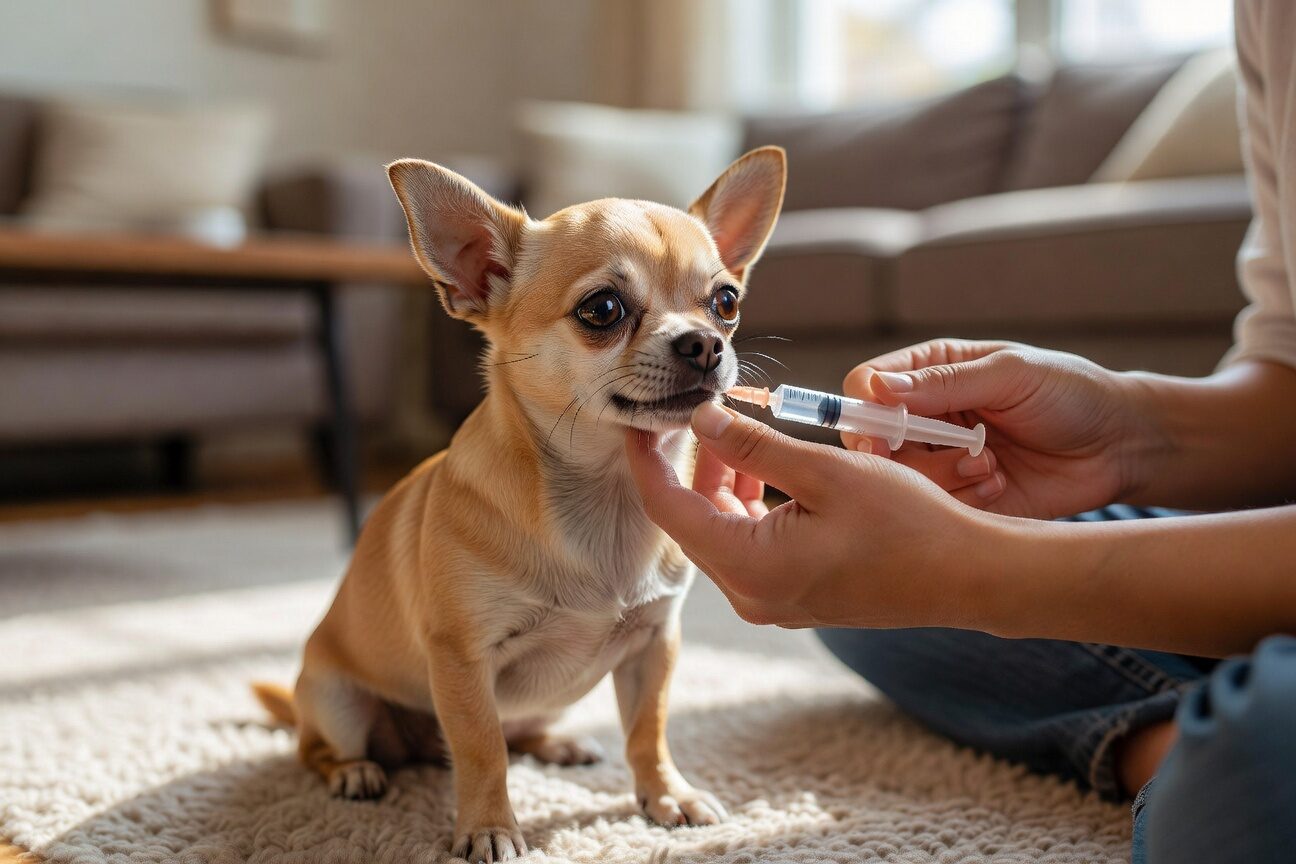

The first time my chihuahua Peanut had a tick, I drove to the emergency vet at 9 PM on a Sunday. They removed the tick with tweezers and petroleum jelly. They charged me two hundred and forty dollars. The vet was very kind about it. She also told me I could have done this at home in about three minutes. If you’re reading about chihuahua home health care, you’re in the right place.
That experience started me on a journey of learning which chihuahua health issues genuinely need a vet and which ones I can handle myself with basic supplies and a calm head. I want to be clear about something before we go any further – this is not about avoiding veterinary care. If your chihuahua is seriously ill, in pain, or behaving in ways that concern you, go to the vet. Always. But there are minor ailments that every chihuahua owner encounters, and knowing how to handle them at home saves money, reduces stress for your dog, and keeps the emergency clinic available for actual emergencies. For more detail, see the AKC Chihuahua breed health guide. For more detail, see the VCA Hospitals dog conditions library.
Getting Your Chihuahua Used to Being Handled
Before you can treat anything at home, your chihuahua needs to accept being examined. This is not a given. Many chihuahuas are defensive about being handled, especially around sensitive areas like paws, ears, and mouths. This should be part of your basic training from day one.
Related: common Chihuahua health issues.
Practice touching your chihuahua everywhere. Handle her paws. Look in her ears. Lift her lips to check her teeth. Do this regularly when nothing is wrong so that when something is wrong, she does not fight you on top of being uncomfortable. Pair the handling with treats. Make it positive. A chihuahua who trusts you to touch her belly is a chihuahua you can actually help when she needs it.
After-Walk Checks That Prevent Bigger Problems
Every time Peanut comes inside from a walk or yard time, she gets a quick once-over. It takes sixty seconds. I run my hands through her coat feeling for lumps, bumps, or anything that should not be there. I check between her toes for stickers, small stones, or cuts. I look at her belly and under her legs where ticks like to attach.
Chihuahuas, especially long-haired varieties, can pick up debris that mats into their coat quickly. Twigs, burrs, and grass seeds caught in the fur around the rear end or tail are common. Left unchecked, the fur mats around the debris, the dog worries at it and licks the area raw, and suddenly you have a skin infection that actually does need a vet visit. Two minutes of post-walk grooming prevents this entirely.
Apply a generous blob of petroleum jelly over the tick and the surrounding area. Wait ten to fifteen minutes. The petroleum jelly suffocates the tick and loosens its grip. After waiting, use fine-tipped tweezers to grasp the tick as close to the skin as possible and pull steadily upward without twisting. Clean the area with antiseptic. Watch the bite site for the next few days for signs of redness, swelling, or infection.
For chihuahuas with long coats, checking for ticks means parting the fur systematically, especially around the neck, ears, and between the toes. A tick on a chihuahua is proportionally more concerning than on a larger dog – these parasites can cause anemia in very small dogs if left undetected.
Ear Mites
If your chihuahua is scratching at her ears obsessively, shaking her head, or you notice dark crumbly debris inside the ear canal, ear mites are a likely culprit. Chihuahuas with their large, expressive ears are good hosts for these parasites. com/how-to-care-for-a-sick-chihuahua-at-home-without-making-things-worse/” title=”How to Care for a Sick Chihuahua at Home”>How to Care for a Sick Chihuahua at Home.
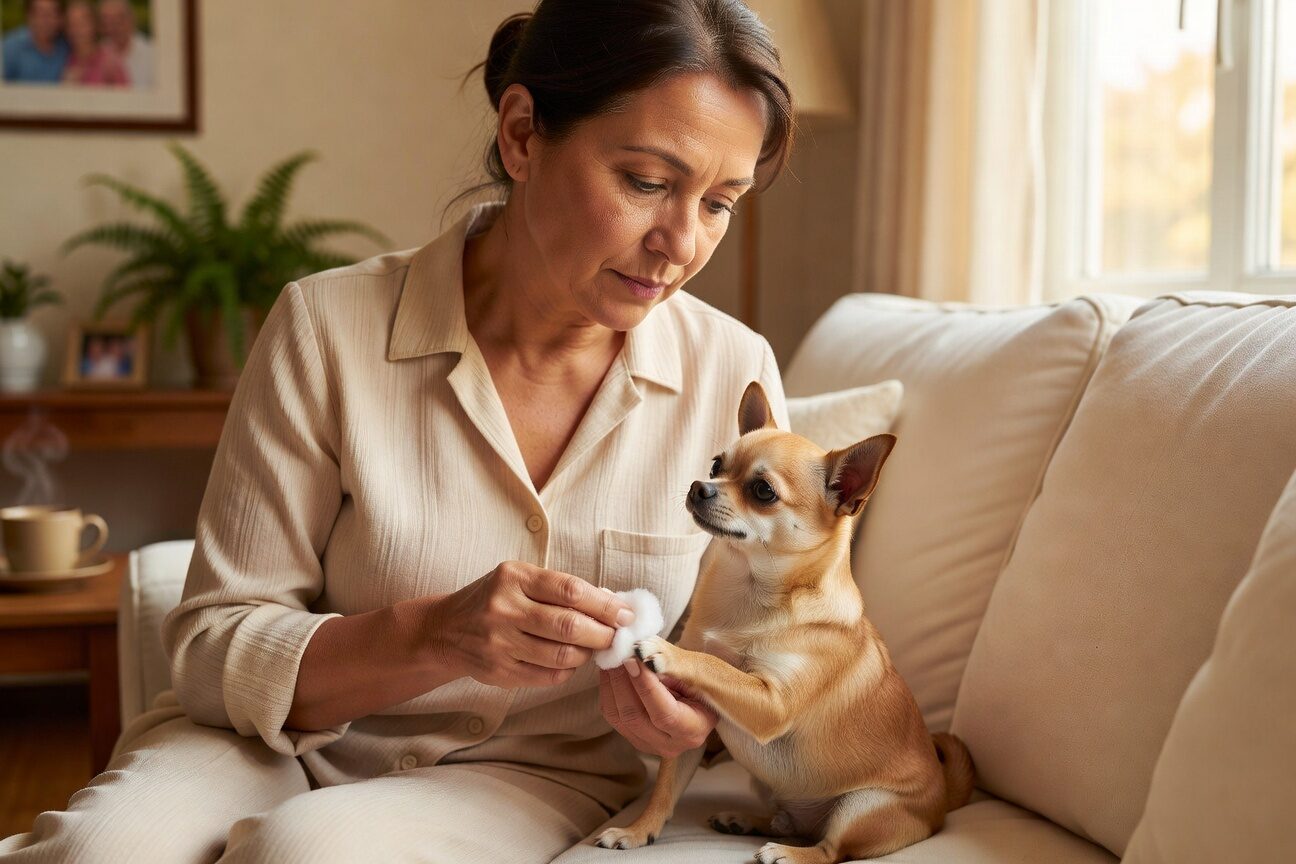
A home remedy that works – place two drops of corn oil into the affected ear using an eyedropper. Gently massage the base of the ear for about thirty seconds. Then clean the outer ear with a cotton ball. The oil suffocates the mites. Repeat this daily for three days. If symptoms persist beyond that, see your vet – the problem may be a bacterial infection rather than mites, and those need different treatment.
Regular ear cleaning with a gentle, dog-specific ear cleaner prevents mite infestations and wax buildup. For chihuahuas, making ear cleaning part of your grooming routine catches problems early.
Digestive Issues
Chihuahuas have notoriously sensitive stomachs. Minor digestive upset is something you will deal with regularly. Knowing when to treat at home and when to call the vet is essential. com/an-emergency-vet-visit-everything-you-need-to-know/” title=”An Emergency Vet Visit: Everything You Need to Know”>An Emergency Vet Visit: Everything You Need to Know.
For mild constipation, a small amount of mineral oil mixed into food can help. For a chihuahua under five pounds, half a teaspoon is sufficient. Do this for one to two days maximum. If constipation continues beyond that, or if your dog is straining and in visible discomfort, call the vet.
For mild diarrhea, a bland diet of boiled chicken and white rice in small frequent meals usually resolves things within 24 to 48 hours. Ensure your chihuahua stays hydrated – diarrhea causes dehydration rapidly in tiny dogs. If the diarrhea contains blood, lasts more than two days, or is accompanied by vomiting, that is a vet visit. In a chihuahua, dehydration can become dangerous much faster than in larger breeds.
For urinary tract discomfort, adding a small amount of unsweetened cranberry juice to your chihuahua’s water can help boost urinary acidity and reduce bacteria. This is a supportive measure, not a cure. If symptoms include frequent urination, straining, or blood in the urine, see your vet immediately.
When to Stop Home Treatment and Call the Vet
Home care has limits, especially for chihuahuas. Their small size means that conditions escalate faster. A large dog can tolerate mild dehydration for a day. A chihuahua cannot. Here are the red flags that mean stop home treatment and get professional help.
Vomiting more than twice in 24 hours. Diarrhea lasting more than 48 hours. Refusal to eat for more than one day. Lethargy that is noticeably worse than normal. Any difficulty breathing. Swelling anywhere on the body. Signs of pain – yelping when touched, reluctance to move, hunched posture. Behavioral changes that seem sudden or extreme.
Chihuahuas are masters at hiding discomfort. By the time they show obvious symptoms, the problem has often been developing for days. If something feels off, trust your instinct. You know your dog better than any article on the internet, including this one.
Building Your Home Care Kit
Keep a small first aid kit specifically for your chihuahua. Mine includes petroleum jelly, fine-tipped tweezers, antiseptic wipes, cotton balls, an ear cleaner formulated for dogs, mineral oil, corn oil, a digital thermometer, gauze, adhesive tape, blunt scissors, and a small bottle of saline eye wash. Everything fits in a shoebox-sized container in my bathroom closet.
Peanut is seven now. I have handled dozens of minor issues at home – ticks, mild stomach upset, ear cleaning, small cuts, debris in her coat. I have also rushed her to the vet three times for things that turned out to be serious. Both responses were correct for their circumstances. Knowing the difference is the most valuable health skill any chihuahua owner can develop. It comes with time, attention, and a willingness to learn. Start now. Your chihuahua already trusts you to figure it out.
I have been through this with my own chihuahua. It is one of those things that looks simple on paper but gets complicated fast when you are actually dealing with a four-pound dog who has opinions about evThe truth about chihuahua home health care is that there is no single right answer. What works for one chihuahua might be completely wrong for another. Mine took weeks to adjust. Some dogs figure it out in days. The size of your chihuahua matters. Their age matters. Their personality matters most of all.ters most of all.
Here is what I wish someone had told me earlier. Start small. Do not try to change everything at once. Chihuahuas are stubborn but they are also sensitive. Push too hard and they shut down. Go too slow and nothing changes. The sweet spot is somewhere in the middle and you have to find it yourself.
I talked to other chihuahua owners about chihuahua home health care and heard the same thing over and over. Patience. Consistency. And a willingness to look a little silly in public because chihuahuas do not care about your dignity.
If you are just getting started with chihuahua home health care, give yourself grace. You will make mistakes. Your chihuahua will make more of them. That is the whole process. And honestly, once you get through the hard part, it is worth it.
Understanding this starts with recognizing the specific needs and behaviors of the breed. Chihuahuas are unique in their sensitivity, size, and temperament, and what works for larger breeds often needs adjustment for these tiny dogs.
Living with a chihuahua means adapting to their personality and physical requirements. This affects everything from your schedule to your home environment, and being prepared makes a significant difference in both your quality of life and your dog’s.
If you notice persistent changes in your chihuahua’s behavior, appetite, energy level, or physical condition related to chihuahua home health care, schedule a vet visit. Early intervention is always better than waiting, especially with a breed as small as a chihuahua.
What should every chihuahua owner know about this?
Understanding this starts with recognizing the specific needs and behaviors of the breed. Chihuahuas are unique in their sensitivity, size, and temperament, and what works for larger breeds often needs adjustment for these tiny dogs.
How does this affect your daily life with a chihuahua?
Living with a chihuahua means adapting to their personality and physical requirements. This affects everything from your schedule to your home environment, and being prepared makes a significant difference in both your quality of life and your dog’s.
When should I talk to a vet about this?
If you notice persistent changes in your chihuahua’s behavior, appetite, energy level, or physical condition related to chihuahua home health care, schedule a vet visit. Early intervention is always better than waiting, especially with a breed as small as a chihuahua.