
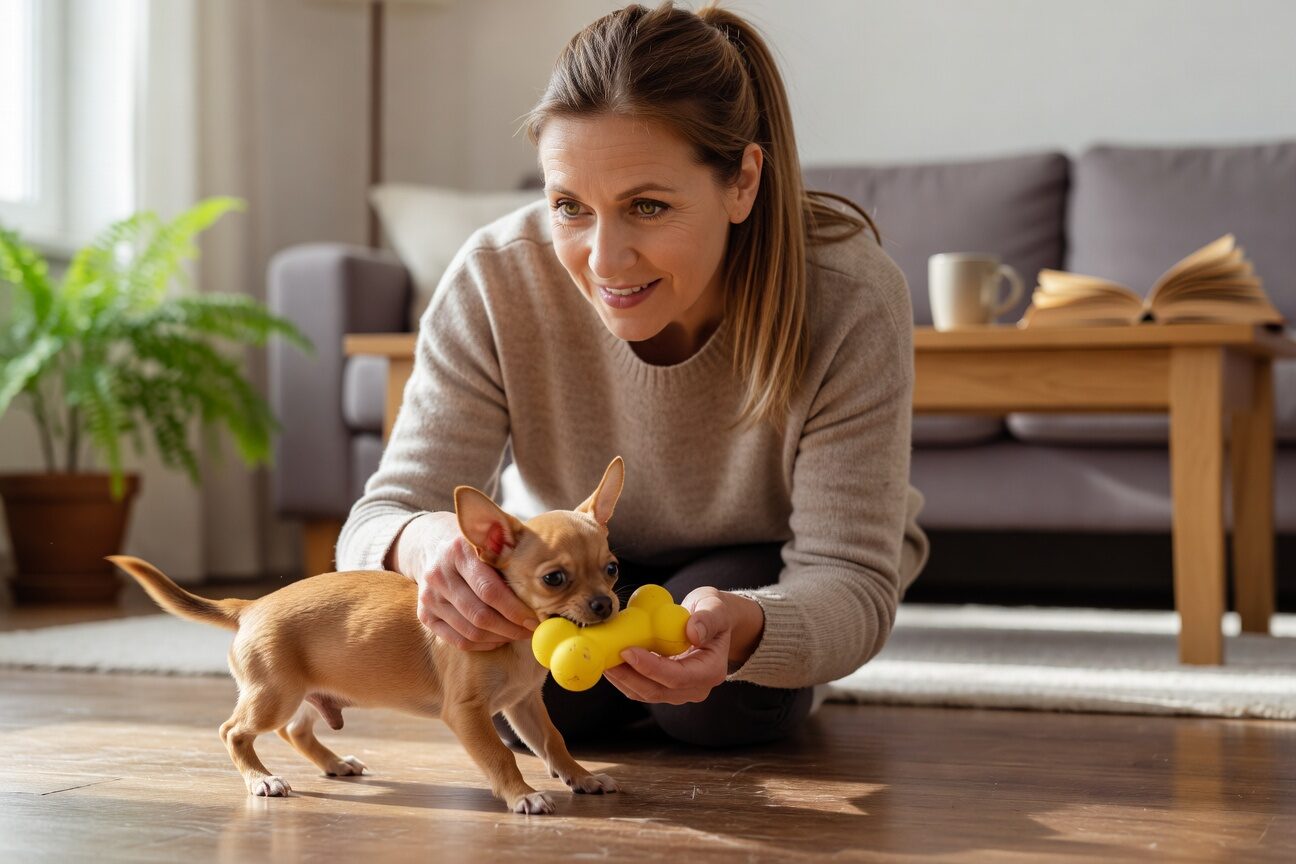

My chihuahua puppy drew blood on the third day I had her. She was ten weeks old and her teeth were like tiny needles. I laughed it off because she weighed two pounds and it seemed funny. It stopped being funny about a week later when she had bitten every person who tried to pet her and I realized I had a chihuahua puppy biting problem that was only going to get worse.
Why Chihuahua Puppy Biting Is More Serious Than It Looks
Every puppy bites. Every single one. It is how they explore the world, test boundaries, and communicate. The problem with chihuahua puppy biting specifically is that owners do not take it seriously because the bites are small. A golden retriever puppy who nips gets corrected immediately. A chihuahua puppy who nips gets picked up and cuddled because we think it is adorable. It is not adorable. It is training your dog that biting works.
According to the AKC’s guide to stopping puppy biting, the critical window for addressing mouth behavior is between eight and sixteen weeks. That is when puppies learn bite inhibition from their littermates and from you. If you miss that window with a chihuahua, you end up with an adult dog who thinks biting is an acceptable way to communicate displeasure, and an adult chihuahua bite, while small, can absolutely break skin and cause real injury.
The Redirect Method That Stopped My Chihuahua Puppy Biting
The technique that finally worked was deceptively simple. Every time my puppy put her teeth on my skin, I said “ouch” in a sharp, high-pitched voice, immediately stopped all interaction, and offered a chew toy instead. If she took the toy, she got praise and play continued. If she went back to my hand, I stood up and walked away for thirty seconds.
The first week was exhausting. I said ouch approximately four hundred times. I walked away so often that my puppy started looking confused every time I stood up, like she could not figure out why the fun kept stopping. That confusion is exactly what you want. You want your chihuahua puppy to connect biting with the end of play, because play is the most valuable currency they have. com/stop-chihuahua-puppy-nipping-before-real-problem/” title=”How to Stop Your Chihuahua Puppy From Nipping Before It Becomes a Real Problem”>How to Stop Your Chihuahua Puppy From Nipping Before It Becomes a Real Problem.
By week three, the chihuahua puppy biting had decreased dramatically. She was still mouthy, but she was choosing the toy instead of my fingers at least seventy percent of the time. By month two, the biting had essentially stopped. She still occasionally puts her mouth on my hand when she gets excited, but there is no pressure behind it. She learned bite inhibition, which is exactly what we were aiming for. The Dogster puppy biting guide confirms that consistency over two to three weeks is typically all it takes.
The Jumping Problem That Came With the Biting
Chihuahua puppy biting and jumping often come as a package deal. My puppy would launch herself at my face every time I bent down, teeth first. She was not being aggressive. She was excited and had no idea that her method of greeting was unacceptable. But a chihuahua who jumps at faces and bites while doing it is a dog that nobody wants to be around, no matter how small she is.
I addressed the jumping the same way I addressed the biting: by removing the reward. Every time she jumped, I turned my back. No eye contact, no touch, no words. When all four feet were on the ground, I immediately crouched down and gave her attention. She caught on faster with the jumping than the biting, probably because the reward cycle was more obvious. Jump equals nothing. Stand still equals everything.
If your chihuahua puppy’s biting seems to be intensifying rather than improving, or if it is accompanied by stiff body language and growling, that may indicate fear or early aggression rather than normal puppy play. In that case, consult a professional trainer before the pattern becomes entrenched. Read about common chihuahua behavior problems so you can distinguish normal puppy behavior from warning signs.
What Not to Do When Your Chihuahua Puppy Bites
Do not hit your chihuahua. Do not flick their nose. Do not hold their mouth shut. These methods might stop the biting in the moment, but they teach your puppy to fear your hands, which creates an entirely new set of problems that are harder to fix than the biting ever was. A chihuahua who is afraid of hands becomes a chihuahua who bites defensively, and defensive biting is more dangerous than puppy play biting.
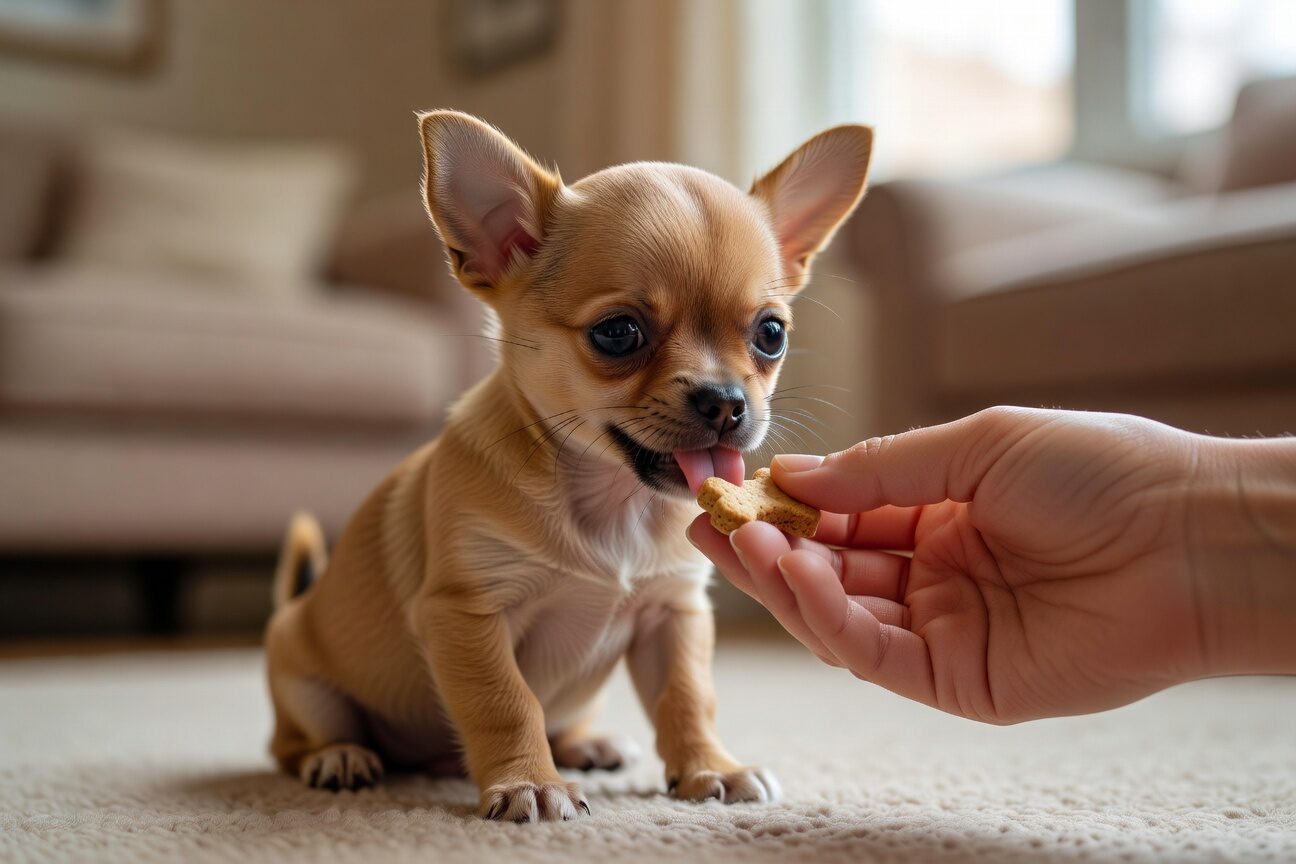
Do not use a spray bottle. Do not shake a can of pennies. These aversive techniques work on some breeds, but chihuahuas are sensitive enough that they can develop lasting anxiety from these approaches. The goal is not to scare your puppy into compliance. The goal is to teach them that biting ends the fun and offering a toy continues it. Positive association is the only training method I will ever recommend for chihuahua puppy biting. For more on raising your chihuahua puppy well, see what happens when you skip socialization.

The Long Game of Chihuahua Puppy Biting Prevention
My puppy is now a year old. She has not bitten anyone in months. She greets visitors by sitting and waiting to be picked up instead of launching at their faces. She plays with toys instead of hands. She still gets mouthy when she is overtired, which tells me it is bedtime, but there is never any pressure behind it.
Every bit of progress came from two things: consistency and patience. There was no magic trick. There was no secret tool. There was just me saying ouch four hundred times, walking away five hundred times, and offering a toy a thousand times until my chihuahua finally understood what I was asking. If you are in the middle of the biting phase right now, I know it feels endless. It is not. Stay the course. Your future self and your future dog will thank you. And if nipping is the main concern, also check our nipping-specific guide.
At what age do chihuahua puppies stop biting?
Most chihuahua puppies significantly reduce biting behavior by five to six months of age, coinciding with the end of the teething phase. However, without consistent training, some chihuahuas carry biting behavior into adulthood. The critical training window is between eight and sixteen weeks, when puppies are most receptive to learning bite inhibition. Consistent redirection and positive reinforcement during this period typically resolves biting within two to four weeks.
Why does my chihuahua puppy bite so much?
Chihuahua puppies bite for several reasons: teething pain, exploration, play, excitement, and testing boundaries. Their small size often leads owners to tolerate or encourage biting that would be corrected immediately in larger breeds. This tolerance teaches the puppy that biting is acceptable. If your chihuahua puppy bites excessively, it usually means they need more appropriate chew outlets, clearer boundaries, and consistent responses from every person who interacts with them.
How do I stop my chihuahua puppy from biting my hands?
When your puppy bites your hand, say ouch in a sharp high-pitched voice and immediately stop all interaction. Offer a chew toy as a replacement. If the puppy takes the toy, resume play and praise them. If they bite again, stand up and walk away for thirty seconds. Repeat this every single time without exception. Most chihuahua puppies learn within two to three weeks that biting hands ends play while using toys continues it.
Is it normal for chihuahua puppies to draw blood when biting?
Yes, it is normal for chihuahua puppies to draw blood because their baby teeth are extremely sharp. This does not indicate aggression. Puppy teeth are designed for learning bite pressure, and the sharpness actually helps the training process because littermates yelp and stop playing when bitten too hard. The fact that it hurts is what teaches bite inhibition. Treat any broken skin with soap, water, and antiseptic, and continue with consistent training.
Should I use a muzzle on a biting chihuahua puppy?
No, a muzzle is not appropriate for addressing puppy biting behavior. Muzzles are safety tools for specific situations, not training devices. Using a muzzle on a puppy can create fear and anxiety that worsen behavior problems long term. Focus instead on positive redirection, consistent responses, and teaching bite inhibition through play. If biting is severe enough that you are considering a muzzle, consult a professional trainer or veterinary behaviorist for guidance.