
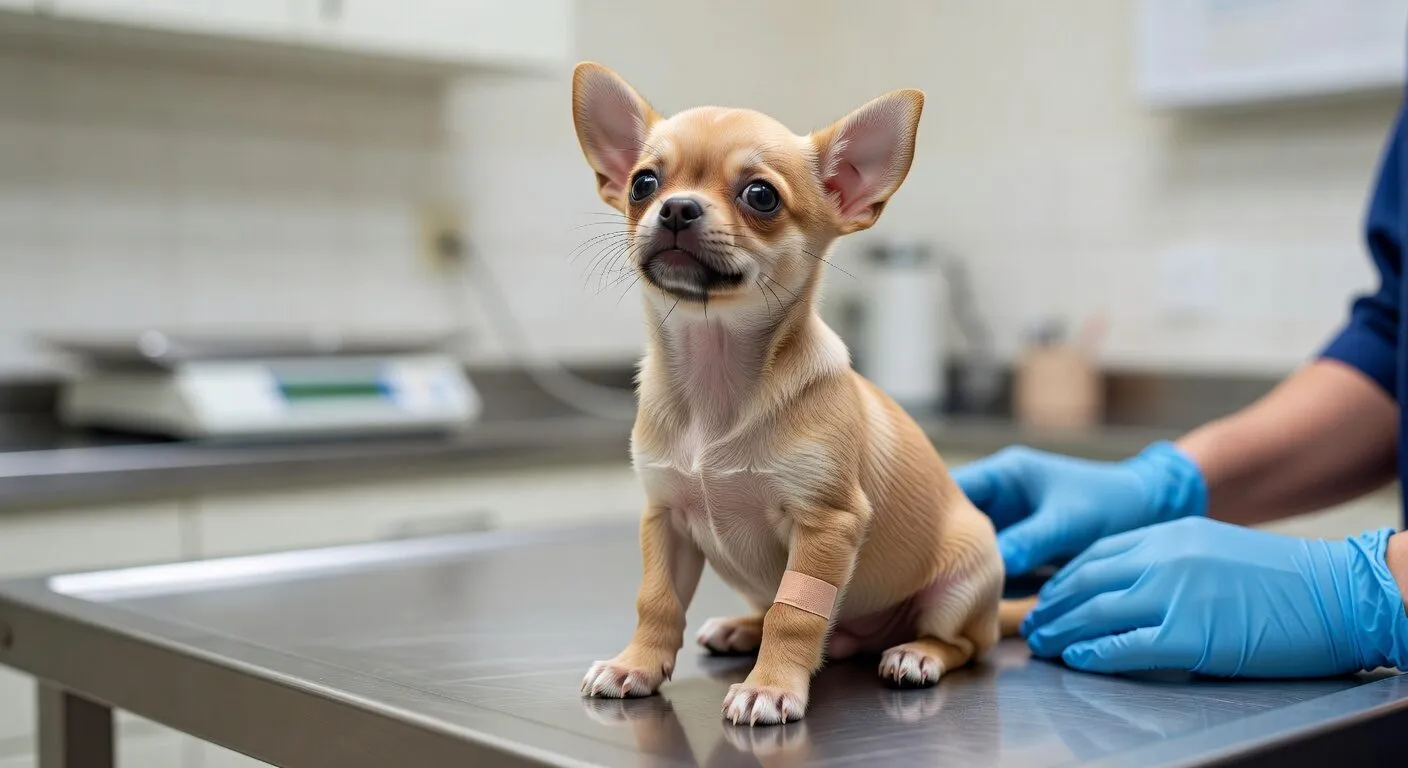

I took my chihuahua puppy to his first vet appointment feeling confident and prepared. I had read all the puppy books. I had a folder with his breeder health records. I even wrote down questions in advance. Then the vet started talking about the chihuahua vaccination schedule and I realized I knew absolutely nothing.
Why the Chihuahua Vaccination Schedule Matters More for Small Breeds
Vaccines work by exposing the immune system to a weakened or inactive form of a pathogen so the body learns to fight it. For a five-pound chihuahua, this process carries slightly different considerations than for a fifty-pound dog. Their small bodies can have stronger reactions to vaccines, and the timing of each dose matters more because their immune systems are developing in a compressed timeline.
The AKC’s complete puppy vaccination guide outlines the standard schedule that applies to all breeds, but your vet may adjust timing and combinations specifically for chihuahuas. My vet, for example, separates certain vaccines that are often given together in larger breeds because the combined load can overwhelm a tiny immune system. This means more appointments, but it also means a safer, more gradual chihuahua vaccination schedule.
The Core Chihuahua Vaccination Schedule From Puppy to Adult
At six to eight weeks, your chihuahua puppy should receive their first distemper and parvovirus combination vaccine, often called the DHPP. This is repeated every three to four weeks until the puppy is sixteen weeks old. The series typically involves three to four rounds total. Rabies vaccine is given between twelve and sixteen weeks depending on your state’s requirements and your vet’s preference for your chihuahua’s size.
Between twelve and sixteen weeks, your vet may also recommend bordetella, the kennel cough vaccine, especially if your chihuahua will attend dog parks, grooming facilities, or boarding. Leptospirosis is another consideration, though some vets are cautious about giving it to very small dogs due to reported reaction rates. My vet and I discussed this at length and decided the risk of exposure in our area warranted the vaccine, but your conversation may go differently. com/the-complete-guide-to-flea-control-for-chihuahuas-because-those-tiny-bodies-deserve-better/” title=”The Complete Guide to Flea Control for Chihuahuas”>The Complete Guide to Flea Control for Chihuahuas.
After the puppy series is complete, boosters are given at one year and then typically every three years for core vaccines. Rabies boosters follow your local legal requirements. The chihuahua vaccination schedule for adults is less intensive than the puppy phase, but it is not optional. According to PetMD’s vaccination schedule guide, skipping boosters leaves your dog vulnerable to diseases that are completely preventable.
Vaccine Reactions in Chihuahuas and What to Watch For
Chihuahuas can have vaccine reactions more frequently than larger breeds. Mild reactions include lethargy, mild fever, and reduced appetite for twelve to twenty-four hours after vaccination. These are normal and usually resolve on their own. Swelling at the injection site is also common and typically goes down within a day or two.
Serious reactions are rare but include facial swelling, hives, difficulty breathing, vomiting, and collapse. If you see any of these signs, get to a vet immediately. My vet keeps chihuahuas in the clinic for thirty minutes after vaccination to monitor for severe reactions, which I appreciate even though it makes for a longer appointment. Ask your vet about pre-treating with antihistamines before vaccination if your chihuahua has had reactions in the past. For general health monitoring, see our hidden illness guide.

Non-Core Vaccines Worth Discussing With Your Vet
Beyond the core chihuahua vaccination schedule, there are optional vaccines that may be appropriate depending on your dog’s lifestyle and location. The canine influenza vaccine is worth considering if your chihuahua visits dog parks or boarding facilities. Lyme disease vaccine is relevant if you live in an area with high tick populations. Rattlesnake vaccine exists for dogs in regions where encounters are possible.
I do not believe in vaccinating for everything just because a vaccine exists. But I also do not believe in skipping vaccines based on internet fear. Your vet knows your chihuahua, your region, and the current disease pressures in your area. Trust that expertise. Have the conversation. Make decisions together based on your specific dog’s risk profile, not based on a Facebook group’s opinion. For more on protecting your chihuahua, read our heartworm prevention guide.

Keeping Your Chihuahua Vaccination Schedule on Track
I keep a simple spreadsheet with my chihuahua’s vaccination dates, what was given, and when the next booster is due. My vet also sends reminders, but I have learned not to rely solely on automated systems. One missed booster notification and your chihuahua could go months past due without you realizing it. Set your own reminders. Keep the records accessible. And bring them to every vet appointment so both you and your vet can confirm the chihuahua vaccination schedule is current.
Vaccinations are one of those quiet, unglamorous aspects of chihuahua ownership that does not get the attention it deserves. Nobody posts about their dog’s booster appointment on social media. But it is the foundation that everything else is built on. A vaccinated chihuahua can safely visit parks, boarding facilities, and friends with dogs. An unvaccinated chihuahua is rolling the dice every time they leave the house. Make the appointments. Follow through. Your chihuahua is counting on you to do the boring stuff that keeps them alive. Also check our chihuahua lifespan guide.
What vaccines does a chihuahua puppy need?
Chihuahua puppies need a series of core vaccines starting at six to eight weeks of age. The core vaccines include distemper, parvovirus, adenovirus, and parainfluenza, typically given as a combination DHPP shot. This series is repeated every three to four weeks until the puppy is sixteen weeks old. Rabies vaccine is given between twelve and sixteen weeks. Your vet may also recommend bordetella and leptospirosis depending on your chihuahua’s lifestyle and risk factors.
Do chihuahuas react badly to vaccines?
Chihuahuas can experience vaccine reactions more frequently than larger breeds due to their small size. Mild reactions including lethargy, slight fever, and reduced appetite for 24 hours are normal. Serious reactions such as facial swelling, hives, vomiting, or difficulty breathing are rare but require immediate veterinary attention. Many vets separate vaccines for chihuahuas rather than giving multiple shots at once to reduce reaction risk.
How often do adult chihuahuas need booster vaccines?
After completing the puppy vaccination series, chihuahuas receive boosters at one year of age and then every three years for core vaccines like DHPP. Rabies boosters follow your local legal requirements, which may be annual or every three years. Non-core vaccines like bordetella may require annual boosters if your chihuahua frequents boarding facilities or dog parks. Your vet will customize the booster schedule based on your dog’s health and lifestyle.
Can I skip the leptospirosis vaccine for my chihuahua?
The leptospirosis vaccine is non-core and the decision depends on your chihuahua’s risk factors. Some veterinarians are cautious about giving it to very small dogs due to higher reported reaction rates. However, leptospirosis is a serious disease that can be fatal, and it is transmitted through water contaminated with infected animal urine. Discuss your specific environment, your chihuahua’s outdoor exposure, and the local prevalence of leptospirosis with your vet before deciding.
At what age should my chihuahua get the rabies vaccine?
Most chihuahuas receive their first rabies vaccine between twelve and sixteen weeks of age. Some vets prefer to wait until sixteen weeks for very small chihuahuas to reduce the chance of vaccine reaction. Rabies vaccination is required by law in all US states. After the initial vaccine, a booster is given at one year and then every one to three years depending on the vaccine type used and your local regulations.