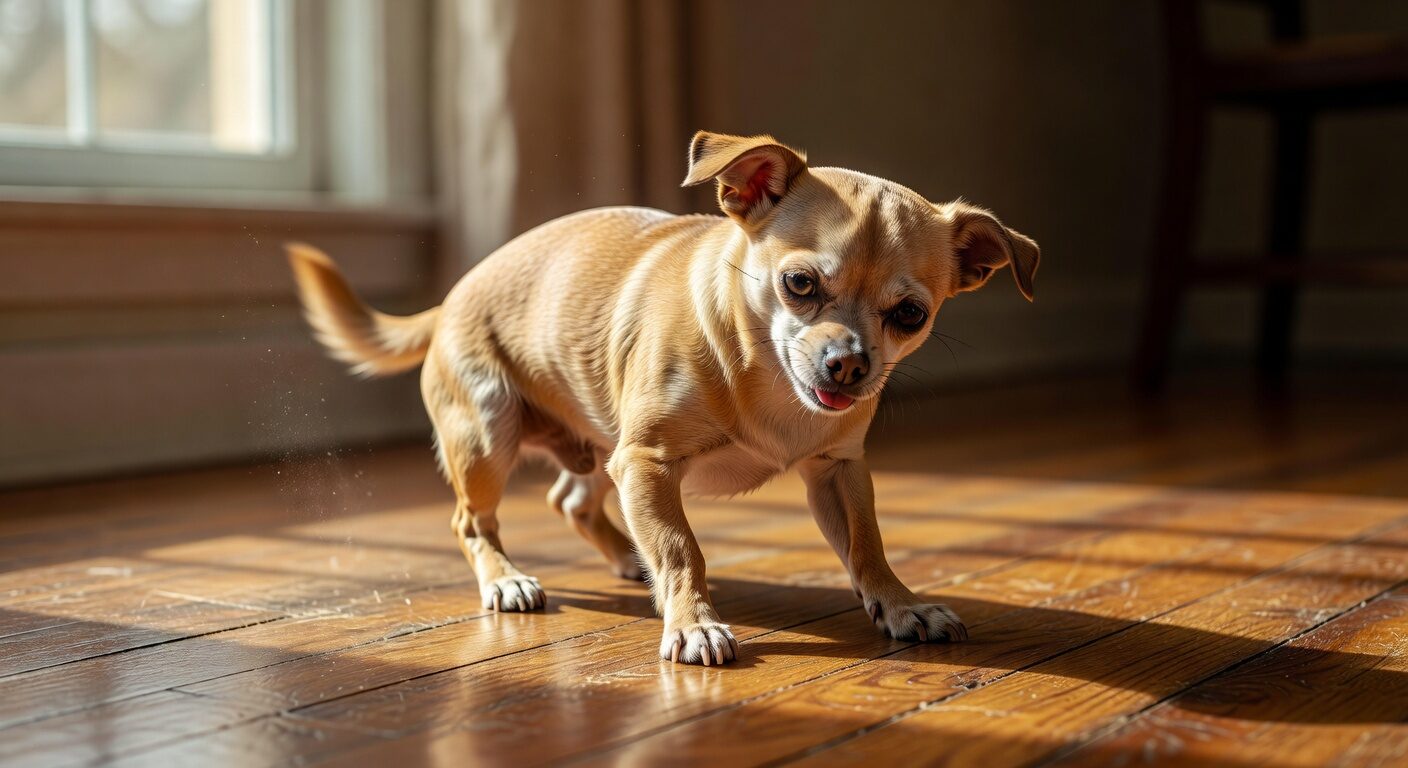

I found the first flea on a Tuesday. Understanding how to flea control for chihuahuas starts with what actually happens in real life. I remember because I was watching TV, absentmindedly scratching behind Luna’s ears, and something moved. Something small and dark and fast. It disappeared into her fur before I could even process what I had seen.
By Thursday I had found three more. By Saturday I was standing in the pet store aisle at 8 AM comparing the ingredient lists on seventeen different flea products, trying not to cry. My three-pound chihuahua had fleas. And everything on the shelf looked like it was designed for a dog ten times her size.
That was two years ago. What I learned during the following weeks fundamentally changed how I approach flea prevention. Because flea control for chihuahuas is not the same as flea control for bigger dogs. The margin between effective and dangerous is smaller than you think.
Related: common Chihuahua health issues.
Why Fleas Hit Chihuahuas Harder
Here is something most flea product labels do not tell you. A heavy flea infestation on a chihuahua can actually cause anemia. Not the mild kind. The kind that requires veterinary intervention. When a flea feeds, it consumes blood. On a seventy-pound Labrador, a hundred fleas are an annoyance. On a three-pound chihuahua, a hundred fleas represent a significant percentage of total blood volume.
Flea bite allergy is the other major concern. Many chihuahuas develop hypersensitivity to flea saliva. A single bite triggers intense itching, hair loss, and inflamed skin. Luna would scratch herself raw – literally raw – from one or two bites. The allergic reaction was worse than the fleas themselves.
And then there is the chemical sensitivity. Chihuahuas, because of their tiny body mass, are more susceptible to insecticide toxicity than larger breeds. What is a safe dose for a fifteen-pound dog can be a dangerous overdose for a four-pound chihuahua. This is not theoretical. Dogs die from improper flea product dosing every year.
Chihuahua Flea Control: The Two-Front War You Need to Fight
Effective flea control requires treating two things simultaneously – your chihuahua and your home. If you only treat the dog, the fleas in your carpet and furniture will reinfest her within days. If you only treat the house, the fleas on your dog will lay eggs that repopulate the environment. You have to hit both at the same time.

This is the part most people get wrong. They buy a flea collar or a topical treatment, put it on their dog, and consider the problem solved. Two weeks later they are confused about why the fleas are back. They were never gone. They were just waiting in the carpet.
Treating Your Chihuahua Safely
The first rule for chihuahuas is to never use a product without checking the weight minimum on the label. Many topical flea treatments have a minimum weight of five pounds. If your chihuahua weighs less than that, you need a product specifically formulated for very small dogs, or a prescription treatment from your vet.
Never split a dose intended for a larger dog. I know people do this. I know it seems logical. It is not. The concentration of active ingredients in these products is calibrated for specific weight ranges. Splitting doses creates unpredictable concentrations that can be either ineffective or toxic.
The safest options for chihuahuas include prescription oral flea preventatives from your vet, which are dosed by exact body weight. Topical treatments rated for toy breeds under five pounds also work. Flea combs are excellent for monitoring – they will not solve an infestation, but they help you detect one early. The Pet Poison Helpline is a resource worth bookmarking in case of any adverse reaction to flea products.
Treating Your Home
This is where the real battle happens. Adult fleas are only about five percent of the total flea population in your home. The other ninety-five percent are eggs, larvae, and pupae hiding in your carpet, furniture, and your chihuahua’s bedding.
Start with mechanical control. Vacuum everything. Use a vacuum with a beater bar if you have one – it can eliminate up to half the larvae and eggs in carpet. Vacuum under furniture, along baseboards, and in every crack and crevice your chihuahua frequents. Dispose of the vacuum bag immediately after each cleaning. The fleas inside the bag are still alive. com/the-chihuahua-grooming-kit-i-built-after-five-years-of-trial-and-error/” title=”The Chihuahua Grooming Kit I Built After”>The Chihuahua Grooming Kit I Built After.
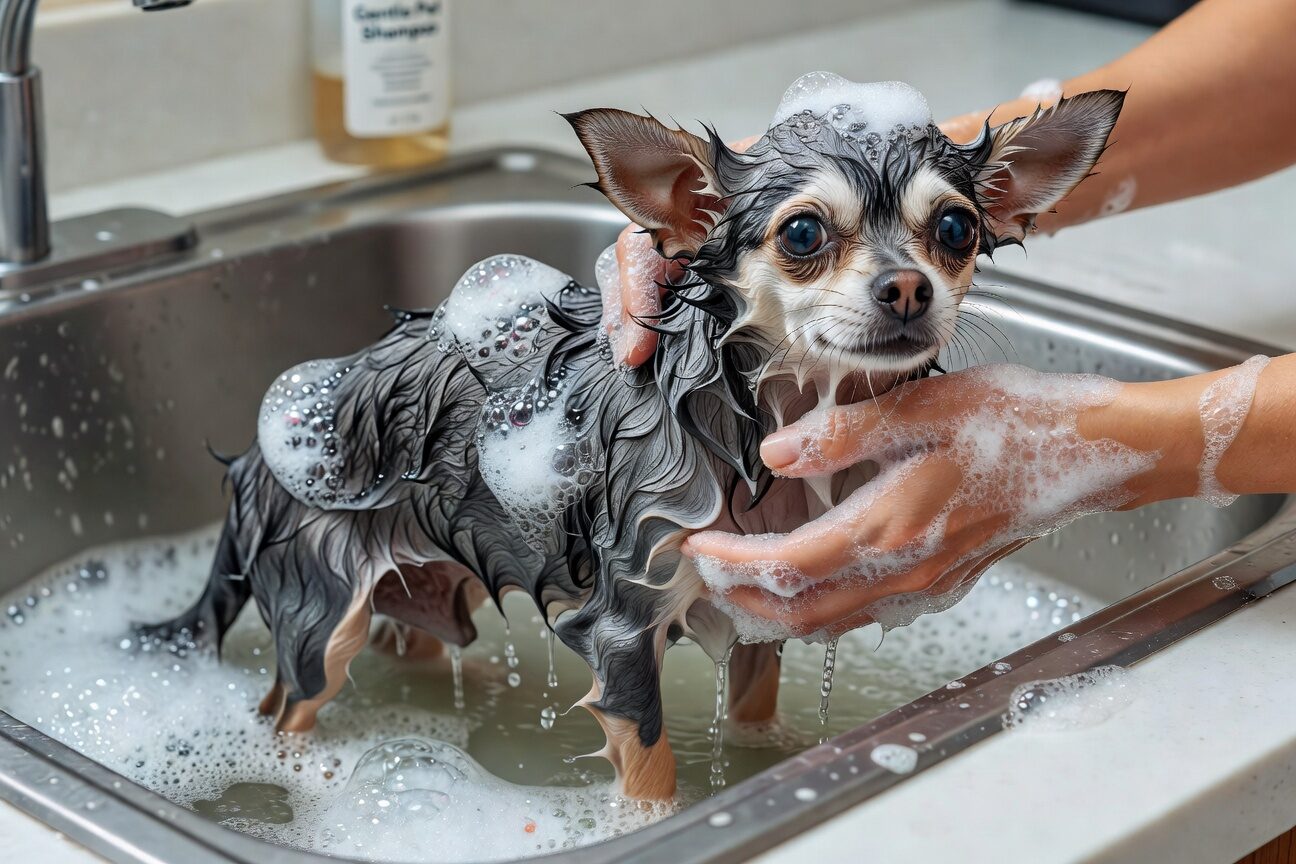
Launder all pet bedding in hot water. Steam clean carpets if possible – this kills eggs and larvae while removing the dried blood they feed on. In outdoor areas where your chihuahua rests, clean up debris and organic material where flea larvae thrive.
For chemical treatment of your home, insect growth regulators are your best friend. Unlike contact insecticides that only kill adult fleas, growth regulators prevent larvae from developing into adults and can inhibit egg hatching. A combination of contact treatment plus growth regulators provides the most effective and lasting results.
What I Learned About Flea Collars and Ultrasonic Devices
Flea collars can work for chihuahuas, but only the newer generation prescription collars. The cheap ones from the grocery store are mostly ineffective and can cause skin irritation on the sensitive necks of small dogs. Some contain chemicals that are not safe for toy breeds at all.
As for ultrasonic flea devices – those little gadgets that claim to repel fleas with sound waves – save your money. Multiple scientific studies have investigated these devices and found zero evidence that they control or repel fleas. None. They are marketing without medicine.
The Prevention Schedule That Works
After Luna’s infestation, I put her on a year-round prevention program. Monthly oral preventative from the vet, dosed for her exact weight. Weekly flea combing to monitor. Bedding washed in hot water every two weeks. Vacuuming the main rooms twice a week.
Is it more work than I expected when I got a chihuahua? Yes. But so is everything about owning a dog this small. You learn to calibrate your effort to their size. A flea problem that a big dog barely notices can make a chihuahua genuinely sick.
The Companion Animal Parasite Council recommends year-round flea prevention for all dogs regardless of size. com/chihuahua-food-allergies-how-to-spot-them-before-your-dog-scratches-through-the-floor/” title=”watching for allergic reactions”>watching for allergic reactions should be higher than for any other breed. Their small bodies amplify everything – both the problem and the solution.
Luna has been flea-free for over a year now. She still scratches sometimes and I still panic every time, dropping whatever I am doing to check her fur with a comb. Old habits. But that is what flea ownership trauma does to a person. You never fully relax. You just get better at managing it.
I have been through this with my own chihuahua. It is one of those things that looks simple on paper but gets complicated fast when you are actually dealing with a four-pound dog who has opinions about everything.
The truth about chihuahua flea control is that there is no single right answer. What works for one chihuahua might be completely wrong for another. Mine took weeks to adjust. Some dogs figure it out in days. The size of your chihuahua matters. Their age matters. Their personality matters most of all.
Here is what I wish someone had told me earlier. Start small. Do not try to change everything at once. Chihuahuas are stubborn but they are also sensitive. Push too hard and they shut down. Go too slow and nothing changes. The sweet spot is somewhere in the middle and you have to find it yourself.
I talked to other chihuahua owners about chihuahua flea control and heard the same thing over and over. Patience. Consistency. And a willingness to look a little silly in public because chihuahuas do not care about your dignity.
If you are just getting started with chihuahua flea control, give yourself grace. You will make mistakes. Your chihuahua will make more of them. That is the whole process. And honestly, once you get through the hard part, it is worth it.
Vet-prescribed oral flea preventatives like NexGard or Simparica are the safest options for chihuahuas. Many topical treatments are dosed for dogs starting at 5 pounds, which means some chihuahuas fall below the minimum weight. Always check with your vet before applying any flea product to a chihuahua.
Severe flea infestations can be life-threatening for chihuahuas because of their small blood volume. Heavy infestations cause anemia, which can be fatal in puppies and small adults. If your chihuahua’s gums look pale, they are lethargic, or they seem weak, get to the vet immediately.
Check for small dark specks in the fur, especially around the base of the tail and belly. These are flea droppings. Place some on a wet paper towel. If they turn reddish-brown, that is digested blood from fleas. Excessive scratching, biting at the skin, and restlessness are also signs.
Some natural options like food-grade diatomaceous earth and cedar oil have limited effectiveness. Apple cider vinegar in rinse water may help repel fleas but will not kill existing ones. Natural remedies should supplement veterinary treatment, not replace it. A chihuahua with an active infestation needs proven medication.
Monthly preventative treatment year-round is the standard recommendation. Fleas can survive indoors during winter, so stopping treatment in cold months leaves gaps in protection. Some newer products last up to three months per dose. Consistency matters more than which specific product you choose.
What is the best flea treatment for chihuahuas?
Vet-prescribed oral flea preventatives like NexGard or Simparica are the safest options for chihuahuas. Many topical treatments are dosed for dogs starting at 5 pounds, which means some chihuahuas fall below the minimum weight. Always check with your vet before applying any flea product to a chihuahua.
Can fleas kill a chihuahua?
Severe flea infestations can be life-threatening for chihuahuas because of their small blood volume. Heavy infestations cause anemia, which can be fatal in puppies and small adults. If your chihuahua’s gums look pale, they are lethargic, or they seem weak, get to the vet immediately.
How do I know if my chihuahua has fleas?
Check for small dark specks in the fur, especially around the base of the tail and belly. These are flea droppings. Place some on a wet paper towel. If they turn reddish-brown, that is digested blood from fleas. Excessive scratching, biting at the skin, and restlessness are also signs.
Can I use natural flea remedies on my chihuahua?
Some natural options like food-grade diatomaceous earth and cedar oil have limited effectiveness. Apple cider vinegar in rinse water may help repel fleas but will not kill existing ones. Natural remedies should supplement veterinary treatment, not replace it. A chihuahua with an active infestation needs proven medication.
How often should I treat my chihuahua for fleas?
Monthly preventative treatment year-round is the standard recommendation. Fleas can survive indoors during winter, so stopping treatment in cold months leaves gaps in protection. Some newer products last up to three months per dose. Consistency matters more than which specific product you choose.