


I have been through three genuine emergencies with my chihuahuas over the past five years, and each one taught me something I should have already known. The first time, I froze. The second time, I reacted but made mistakes. The third time, I was prepared and acted quickly enough that it mattered. I am going to tell you all three stories because I think the progression from clueless to competent is more useful than a list of first aid tips you will read once and forget. This chihuahua emergencies guide covers what every chihuahua owner needs.
Emergency One: The Bleeding Wound I Was Not Ready For
My chihuahua Ziggy was playing in the backyard when he cut his paw on a piece of broken glass that I did not know was there. The cut was deep enough to bleed steadily, and when I saw the blood on his paw and then the trail of red dots across the deck, my brain went completely blank. I did not know where my first aid supplies were. I did not know whether to wash it or press on it or elevate it. I picked Ziggy up and held him while blood dripped onto my shirt and I called the vet in a state of near-total panic. For more detail, see the AKC Chihuahua breed health guide. For more detail, see the PetMD dog behavior resources.
What I should have done was apply a clean cloth to the wound and hold it there with steady pressure for at least five minutes. That is the fundamental response to a bleeding wound, direct pressure to promote clotting. You do not remove the cloth to check progress because that disrupts the clot. If blood soaks through, you add another cloth on top. You do not use hydrogen peroxide on an actively bleeding wound because it slows clotting and makes the bleeding worse.
Related: common Chihuahua health issues.
By the time I got to the vet, the bleeding had mostly stopped on its own, but the cut needed two stitches and Ziggy needed antibiotics to prevent infection. The vet was kind about it, but she also told me very directly that every dog owner should know basic wound care and have supplies accessible. I bought a pet first aid kit the next day and learned how to use everything in it.
Emergency Two: Something Poisonous in the Mouth
The second emergency happened with my other chihuahua, Bean, who discovered a toad in the garden and decided it was a toy. I heard her yelping and found her pawing at her mouth, drooling heavily, and clearly in distress. Some toads and amphibians secrete toxins on their skin that can be dangerous if they get into a dog’s mouth, and for a chihuahua who weighs four pounds, even a small amount of toxin is a bigger deal proportionally than it would be for a larger dog.
This time I knew to act fast. I grabbed a water bottle and rinsed Bean’s mouth thoroughly, directing the water from the back of her mouth forward so she would spit it out rather than swallow it. I held her mouth open and continued rinsing for about two minutes until the drooling decreased and she seemed less panicked. Then I called the vet and brought her in as a precaution.
A Note on Inducing Vomiting
If your chihuahua eats something poisonous, making them vomit can be the right move in some situations but absolutely the wrong move in others. If they have swallowed a caustic substance like household cleaner, inducing vomiting will cause that substance to burn the esophagus on the way back up, making the damage worse. If they have swallowed something sharp, vomiting could cause internal injuries. Always call your vet or poison control before inducing vomiting, because the correct response depends entirely on what was swallowed.
Emergency Three: Choking
The third emergency was the scariest. Ziggy was chewing on a small toy that broke apart, and a piece lodged in his throat. He stopped breathing normally, his gums started turning blue, and he was pawing at his mouth in obvious distress. This was the emergency I was actually prepared for, and that preparation likely saved his life.
For a small dog like a chihuahua, the modified Heimlich maneuver involves supporting the dog’s back against your body and applying firm but gentle upward pressure just below the rib cage. I did this several times while checking Ziggy’s mouth between compressions. On the third compression, the piece dislodged and fell out. Ziggy coughed, took a shaky breath, and I sat on the floor holding him and shaking for about ten minutes while my heart rate returned to something resembling normal. com/how-to-care-for-a-chihuahua-with-a-stomach-ache/” title=”Chihuahua with a Stomach Ache: Care Tips”>Chihuahua with a Stomach Ache: Care Tips.
If compression does not work, you can try holding a small dog by the hind legs and gently shaking downward to use gravity to dislodge the object. If neither works and the dog is unconscious, you may need to carefully look into the throat with a light and attempt to remove the obstruction with blunt tweezers. And if all else fails, closing the dog’s mouth and breathing into their nose until the chest rises, then compressing again, is a last resort that can buy time until you reach a vet. Understanding chihuahua emergencies makes a real difference.
What Every Chihuahua Owner Should Have Ready
After these three experiences, I keep a pet first aid kit within arm’s reach that contains gauze pads and rolls, antiseptic wipes, blunt-tipped tweezers, a digital thermometer, styptic powder for nail bleeding, a small flashlight, disposable gloves, an emergency blanket, and a card with my vet’s number, the nearest 24-hour animal hospital number, and the ASPCA poison control number.
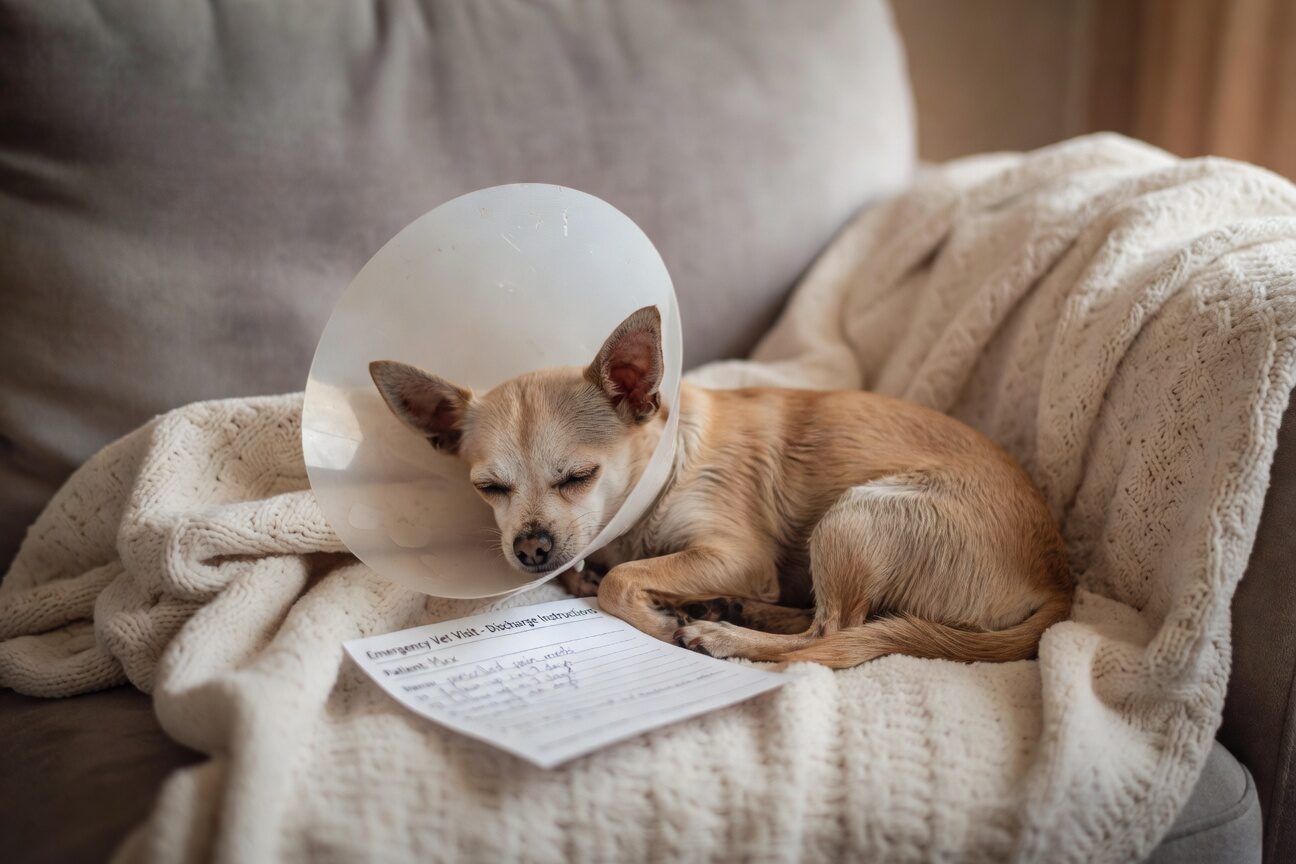
I also took a pet first aid course offered by the Red Cross, which I recommend to every pet owner. It cost less than a single vet visit and it gave me the confidence to act instead of freeze when seconds mattered. Chihuahuas are small enough that emergencies can escalate quickly because there is simply less body to absorb impact, process toxins, or survive blood loss. Being prepared is not optional. It is part of the job.
For more on keeping your chihuahua safe, read about the safe temperature for your chihuahua and learn about safe foods your chihuahua can eat to avoid accidental poisoning.
Building a Chihuahua Emergency Kit
After living through three emergencies with my chihuahua, I put together a kit that stays in the same spot by the front door at all times. It sounds paranoid until you need it at two in the morning and you are grateful everything is in one place. The kit includes a digital pet thermometer, a small bottle of hydrogen peroxide in case the vet instructs you to induce vomiting from a toxin ingestion, gauze pads and medical tape, a spare leash and collar, a list of emergency vet numbers including the ASPCA poison control hotline, and copies of my chihuahua vaccination records and medication list.
I also keep a small blanket in the kit because chihuahuas in distress lose body heat fast, and keeping them warm during transport to the vet can genuinely make a difference. There is a bottle of unflavored Pedialyte for mild dehydration and a syringe without a needle for administering liquid medication or fluids. The whole kit fits in a gallon zip-lock bag. I replace the hydrogen peroxide every six months because it loses potency, and I update the medication list whenever anything changes. Having this kit ready means that when an emergency happens, I am not wasting precious minutes searching through drawers while my dog is in distress. Those minutes matter more than people realize.
I have been through this with my own chihuahua. It is one of those things that looks simple on paper but gets complicated fast when you are actually dealing with a four-pound dog who has opinions about everything.
The truth about chihuahua emergencies is that there is no single right answer. What works for one chihuahua might be completely wrong for another. Mine took weeks to adjust. Some dogs figure it out in days. The size of your chihuahua matters. Their age matters. Their personality matters most of all.
Here is what I wish someone had told me earlier. Start small. Do not try to change everything at once. Chihuahuas are stubborn but they are also sensitive. Push too hard and they shut down. Go too slow and nothing changes. The sweet spot is somewhere in the middle and you have to find it yourself.
I talked to other chihuahua owners about chihuahua emergencies and heard the same thing over and over. Patience. Consistency. And a willingness to look a little silly in public because chihuahuas do not care about your dignity.
If you are just getting started with chihuahua emergencies, give yourself grace. You will make mistakes. Your chihuahua will make more of them. That is the whole process. And honestly, once you get through the hard part, it is worth it.