

It Is Not Just a Bathroom Trip for Your Chihuahua
I used to open the back door, let my chihuahua, Banjo, do his business in the yard, and call it done. Exercise accomplished. Walk complete. Checked that box.
Except it was not a walk. It was a bathroom trip. And Banjo was bored, understimulated, and increasingly restless because his entire world was the same 500 square feet of apartment and yard, day after day. For more detail, see the AKC Chihuahua breed health guide. For more detail, see the PetMD dog behavior resources.
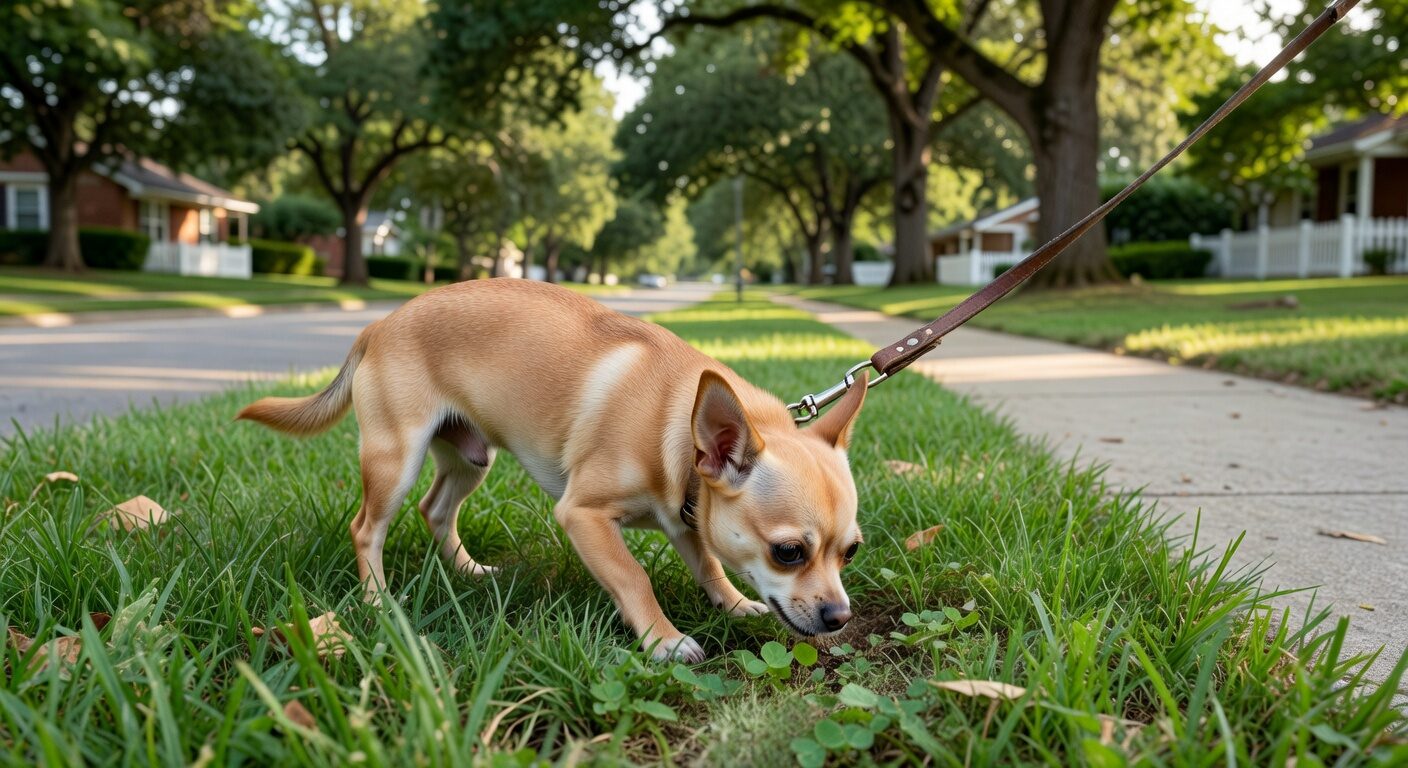
Walking a chihuahua matters. Not just for physical exercise. For mental stimulation. For socialization. For the sheer joy of being a dog in the world, sniffing things and encountering new smells and feeling grass under tiny paws. A chihuahua who never leaves the house is a chihuahua missing out on being a dog.
Related: common Chihuahua health issues.
Gear Matters More Than You Think for Your Chihuahua
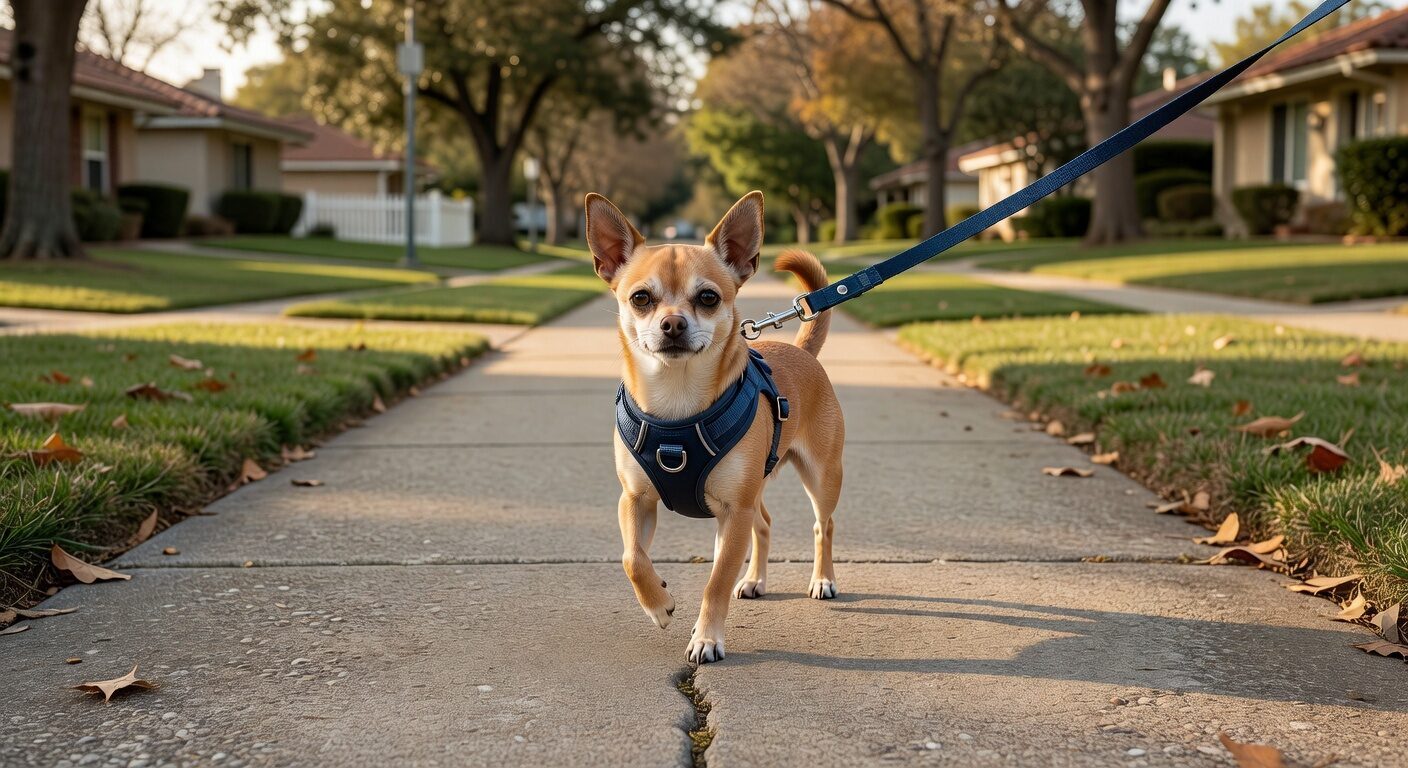
Collar or harness? Harness. Always. Chihuahuas have delicate tracheas. A collar attached to a leash puts direct pressure on the throat. One sudden pull, one lunge at a squirrel, and you risk tracheal collapse. This is a real medical condition that is common in small breeds and can be life-threatening.
A properly fitted harness distributes pressure across the chest and shoulders. It gives you control without risking injury. Step-in harnesses are easiest for chihuahuas who hate having things pulled over their head.
Leash length matters. A retractable leash on a chihuahua is an invitation for disaster. They get tangled. They snap back. And a chihuahua on a 20-foot retractable leash can reach the road before you can react. Use a standard four-to-six-foot leash. Close enough to protect them. Long enough to let them explore.
The Hazards No One Warns You About
Birds of Prey
Hawks, owls, and eagles can and do target small dogs. A three-pound chihuahua walking in an open area is the same size as a rabbit to a red-tailed hawk. This is not paranoia. It is documented. Walk in areas with tree cover when possible. Stay close to your dog. Pick them up if you see raptors circling overhead.
Larger Dogs
Not every dog you encounter on a walk is friendly. And even friendly large dogs can hurt a chihuahua accidentally through rough play. If a large off-leash dog approaches, pick up your chihuahua immediately. Worry about looking overprotective later. Your dog’s safety is not negotiable.
Temperature
Chihuahuas are close to the ground. In summer, pavement can burn their paw pads when air temperature is still tolerable for humans. If the sidewalk is too hot for your palm held flat for five seconds, it is too hot for your chihuahua’s feet. Walk early morning or evening.
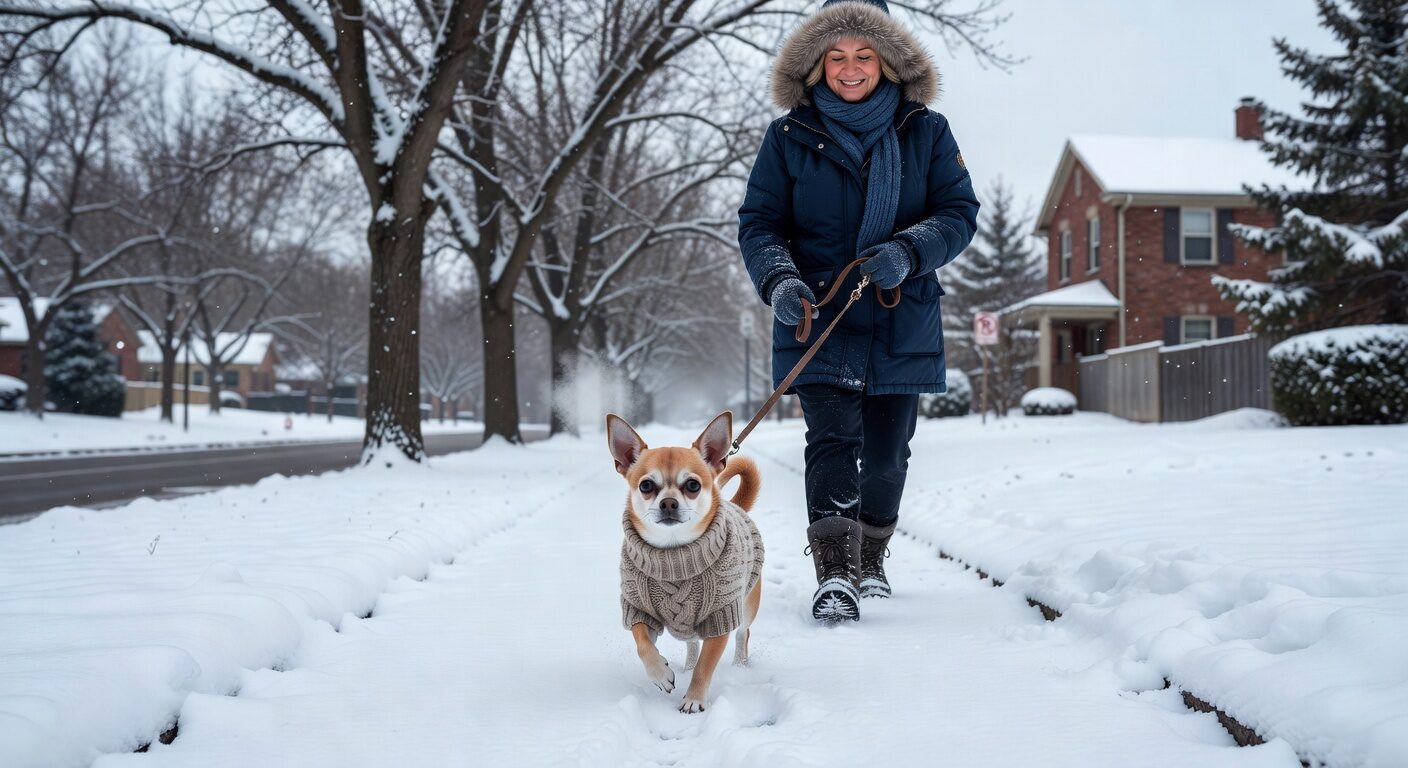
In winter, chihuahuas lose body heat fast. They have very little insulation. A coat or sweater is not a fashion statement. It is a medical necessity. Below 40 degrees Fahrenheit, limit outdoor time and watch for shivering or lifting paws off cold ground.
Debris and Toxins
Walking Etiquette for Tiny Dogs
Keep your chihuahua on the inside of the sidewalk, between you and the buildings, not on the curb side where they are closer to traffic. Your body becomes a barrier.
Do not let strangers approach and grab your chihuahua without permission. People see small dogs and assume they can just pick them up. Your chihuahua is not public property. If someone asks to pet them, let your chi approach on their own terms. If they hang back, the answer is no.
Carry bags. Always. No exceptions. Responsible chihuahua ownership means cleaning up after your dog everywhere, every time.
How Far and How Often
A healthy adult chihuahua benefits from two walks per day, 15 to 20 minutes each. That is enough for exercise and stimulation without overexertion. Adjust for age and health. Puppies have short bursts of energy followed by collapse. Senior chihuahuas prefer shorter, slower walks. com/8-chihuahua-training-tips-that-work/” title=”8 Training Tips That Actually Work for”>8 Training Tips That Actually Work for.
Watch for signs that your chi has had enough. Heavy panting, sitting down, refusing to move. Do not drag them. Carry them home if needed. They are telling you they are done.
Let them sniff. Sniffing is mental exercise. A walk where your chihuahua is not allowed to stop and investigate smells is physical exercise only. Both matter. Budget extra time for sniff stops. It is their walk too.
The Transformation
After I started walking Banjo properly, twice a day, with a harness and a route that included new smells and terrain, everything changed. The restlessness stopped. The anxious barking reduced. He slept better. He was calmer during the day. He was a happier dog because he was finally getting to be a dog.
Walking your chihuahua is the simplest, cheapest, most effective thing you can do for their physical and mental health. It costs nothing but time. It gives you both fresh air, exercise, and those quiet moments on a sidewalk where your chihuahua looks up at you with contentment and you realize this tiny ridiculous animal has made your life immeasurably better.
Grab the harness. Pick up the leash. Open the door. Your chihuahua has been waiting.
Walking Chihuahua Guide: Gear That Actually Works for Walking a Chihuahua
I have spent more money on chihuahua walking gear than I care to admit, and most of it ended up in a drawer because it was designed for dogs in general rather than for the specific realities of walking a four pound animal. The single most important piece of equipment is a properly fitted harness, not a collar. I will repeat that because it matters. Never walk a chihuahua on a collar. Their tracheas are delicate and even moderate pulling on a collar can cause or worsen tracheal collapse, which is already one of the most common health issues in the breed. A step in harness with a Y shaped front panel that distributes pressure across the chest is what I use and what I recommend to every chihuahua owner who asks. The leash should be lightweight, because a heavy leash creates drag that you can feel pulling on a larger dog’s harness but that a tiny chihuahua feels much more dramatically. I use a thin four foot leash rather than a retractable, because retractable leashes give you less control and the mechanism itself can weigh as much as the dog. For cold weather, which is most of the year in many places for a chihuahua who starts shivering at sixty five degrees, a fleece lined walking jacket is essential. I tried multiple brands and the ones that work best are the ones with a harness opening built in so you do not have to layer a coat over the harness or choose between warmth and safe attachment. Booties are worth having for extreme heat or salt treated winter sidewalks, though getting a chihuahua to accept booties is an exercise in patience that deserves its own article.
Dealing With Off Leash Dogs During Your Walk
This is the topic that generates the most anxiety among chihuahua owners who walk their dogs regularly, and for good reason. An off leash dog approaching your chihuahua, even a friendly one, can create a dangerous situation simply because of the size difference. A playful sixty pound Lab who bounds up to say hello could injure a five pound chihuahua without any malicious intent just through the force of the greeting. I have had more encounters with off leash dogs than I can count, and they range from mildly stressful to genuinely frightening. The approach that has worked best for me involves a combination of vigilance, body positioning, and verbal commands directed at the approaching dog. When I see an off leash dog heading our way, I pick up my chihuahua immediately. I do not wait to see if the dog is friendly. I do not give the other owner time to call their dog back. I scoop my chihuahua up and position myself between her and the approaching dog. Then I use a firm, low voice to tell the other dog no or go home. This works more often than you would expect because most dogs respond to a commanding voice even from a stranger. I have had owners yell at me that their dog is friendly, and my response is always the same. I am sure they are, but my dog is four pounds and I am not taking the chance. Do not apologize for protecting your chihuahua. It is not rude to prioritize your dog’s safety over a stranger’s feelings about their off leash dog.
Making Walks Enjoyable Instead of Stressful
I think a lot of chihuahua owners, myself included at one point, turn walks into a more stressful experience than they need to be because we are so focused on potential threats and problems that we forget the walk is supposed to be enjoyable for both us and the dog. The shift for me came when I started choosing walking routes based on what my chihuahua actually enjoys rather than what is most convenient for me. She loves sniffing, so I started incorporating what I call sniff walks where the goal is not distance or pace but exploration. I let her stop and sniff as many things as she wants, for as long as she wants, and I just stand there patiently and let her process the world through her nose. These walks are slower and cover less ground, but she comes home calmer and more satisfied than she does after a brisk walk around the block. I also discovered that my chihuahua has strong preferences about where she walks. She does not enjoy sidewalks next to busy roads, the noise and the wind from passing cars stress her out. But she loves quiet residential streets with grass strips and gardens to explore. Adjusting our route to avoid the stressful stretches and maximize the enjoyable ones transformed our walks from something I dreaded because of her pulling and barking into something we both genuinely look forward to. Walking a chihuahua well is not about covering the most ground or burning the most calories. It is about providing mental stimulation, fresh air, and bonding time in an environment where your dog feels safe enough to actually enjoy the experience.
How long should I walk my chihuahua?
Most adult chihuahuas do well with 20 to 30 minutes of walking per day, split into two shorter walks. Puppies and seniors may need shorter outings. Watch for signs of fatigue like lagging behind or sitting down.
What harness is best for a chihuahua?
A well-fitting step-in or vest-style harness is best for chihuahuas. Avoid collars for leash attachment as they can damage the trachea. Look for adjustable harnesses with padded chest plates designed for toy breeds.
Is it safe to walk a chihuahua in hot weather?
Walk early in the morning or after sunset to avoid hot pavement that can burn small paws. Test the ground with the back of your hand, and bring water for both of you. Watch for signs of overheating.
How do I walk a reactive chihuahua?
Use a front-clip harness for better control, increase distance from triggers, carry high-value treats for counter-conditioning, and practice the look at me cue. If overwhelmed, calmly move away and try again later.