

I came home to find my chihuahua Nacho standing in a crater. That is the only word for it. A crater. He had excavated a hole in the backyard that was wider than he was long and deep enough that he was standing in it up to his chest, looking at me with an expression that somehow combined pride and defiance in equal measure. What actually works is different from what most people try, and it took me a while to figure that out. If you’re reading about chihuahua digging behavior, you’re in the right place.
The hole was next to the fence. It had not been there when I left for work. The dirt was everywhere – on the patio, on the lawn furniture, in a trail leading back through the dog door and across the living room carpet. Nacho had managed to relocate approximately fifteen pounds of earth in what could not have been more than six hours. He weighs four pounds. The math does not make sense and yet the evidence was undeniable.
This is when I learned that chihuahuas dig. Not all of them. But the ones who dig are spectacularly committed to it.
Related: common Chihuahua health issues.
Why Chihuahuas Dig in the First Place
Yelling at a digging chihuahua accomplishes nothing except making you hoarse. The digging is a symptom. You need to figure out the cause. And with chihuahuas, the causes are surprisingly specific.
Boredom
This is the number one reason chihuahuas dig along fence lines and near gates. They are bored. They want out. They want stimulation. They want something to do. A chihuahua left in a yard with nothing to engage her mind will find her own entertainment, and that entertainment often involves rearranging your landscaping.
The solution is not punishment. It is exercise – both physical and mental. A tired chihuahua does not dig. She sleeps. Walk your dog before leaving her in the yard. Play with her. Give her puzzle toys. Provide enrichment. The more energy she burns constructively, the less she will burn destructively.
Temperature Regulation
If your chihuahua digs shallow pits along the side of the house or under the porch, especially in summer, she is probably hot. Dogs dig to reach cooler soil beneath the surface. The earth a few inches down is significantly cooler than the sun-baked surface, and a chihuahua who is overheating will instinctively create a cool spot to lie in.
Chihuahuas are especially prone to heat sensitivity. They overheat faster than larger breeds. Check that your yard has adequate shade, fresh cool water available at all times, and good air circulation. If the shaded areas are limited, consider adding a small canopy or planting bushes that provide shelter. A cheap elevated cooling bed on the patio can also redirect this behavior by giving your dog a cool surface without the digging.
Instinct
Chihuahuas are descended from the Techichi, an ancient Mesoamerican dog that lived in varied terrain. Digging is part of their ancestral toolkit. Some chihuahuas dig because it is simply what their DNA tells them to do. They are not misbehaving. They are being dogs. Very small dogs who are remarkably efficient at moving dirt.
If your chihuahua digs because she genuinely enjoys it – not because she is bored, hot, or anxious – the most effective solution is not to stop the digging. It is to redirect it.
The Designated Dig Zone
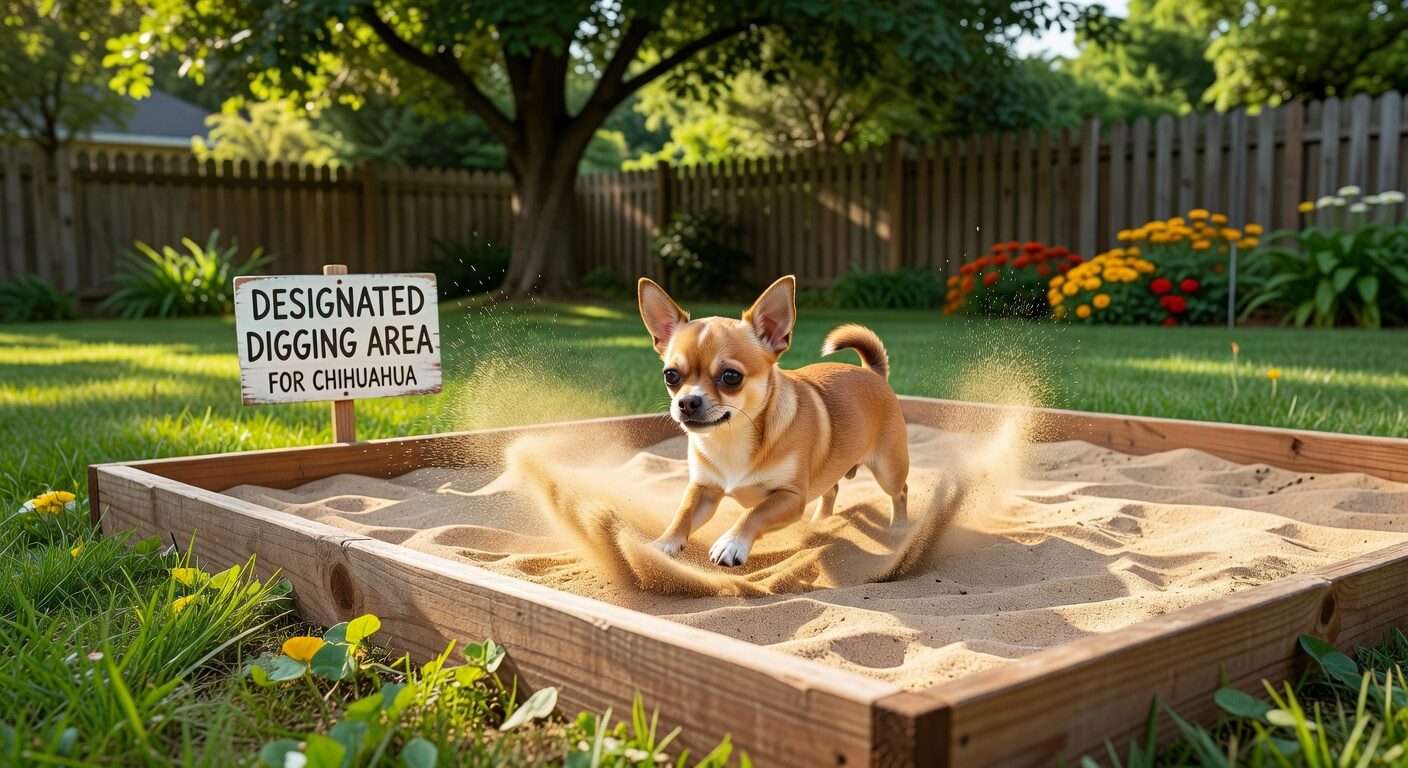
This is the solution that saved my yard and my sanity. Instead of fighting Nacho’s desire to dig, I gave him a place to do it.
I set up a small area in a back corner of the yard – about two feet by three feet – filled with a loose sandy soil mix. I buried treats and small toys just below the surface. Then I brought Nacho over, let him sniff around, and watched the magic happen. He found a treat. He dug more. He found another one. Within thirty minutes, he had accepted this as his personal excavation site.
I restock the dig zone every few days with new hidden treasures – a bully stick, a few kibble pieces, a toy he has not seen in a while. The zone stays interesting because it keeps rewarding him. The rest of the yard stays intact because there is no incentive to dig anywhere else.
You can camouflage the dig zone with a low border of rocks or plants so it does not look like a construction site. The key is making the designated area more rewarding than any other spot in the yard. The American Kennel Club recommends positive reinforcement methods for small breeds like chihuahuas.
How to Discourage Digging in the Wrong Spots
For holes that keep reappearing no matter what you do, there are two techniques that work reliably. com/how-to-find-pet-sitter-for-chihuahua-2/” title=”How to Find the Right Pet Sitter for Your”>How to Find the Right Pet Sitter for Your.
The first is simple. Fill the hole almost to the top with the original dirt. Then mix the last few inches with something unpleasant – pine cones, citrus peels, or a light layer of chicken wire just below the surface. When your chihuahua returns to her favorite excavation site, the experience has changed. Most dogs abandon the spot after one or two encounters with the new reality.
The second method is more involved but effective for persistent fence-line diggers. Cut a piece of chicken wire larger than the hole, bury it a few inches below the surface with the edges extending past the hole in all directions. When your chihuahua tries to dig, the wire blocks progress and the weight of the soil on the wire keeps it in place. She gives up. She moves on. Ideally, she moves on to the dig zone you set up for her.
What Not to Do
Do not yell at your chihuahua after the fact. If you come home to a hole, the digging happened hours ago. Your chihuahua does not connect your anger with the hole she dug this morning. She connects your anger with whatever she was doing when you walked in – probably greeting you at the door. Now she is confused and afraid, and you have accomplished nothing except eroding trust.
Do not stand at the window watching for the digging to happen so you can correct it in real time. You will go crazy. You will also only suppress the behavior when you are visible. The moment you leave, the digging resumes because you addressed the behavior without addressing the cause. Understanding chihuahua digging behavior makes a real difference.
Do not fill holes with anything toxic. No chemical deterrents, no pepper spray, nothing that could harm your dog if ingested. Chihuahuas put their faces in their holes. Whatever you put in there, your chihuahua will inhale it or lick it. Keep it natural and non-harmful.
The Connection Between Digging and Other Behaviors
A chihuahua who digs obsessively is often a chihuahua who needs more from her daily life. The digging is rarely the only issue. It usually comes alongside excessive barking, restlessness, or destructive behavior indoors. These are all symptoms of understimulation.
Chihuahuas need more exercise and mental engagement than most people give them credit for. Their small size fools people into thinking a walk around the block is sufficient. It is not. These dogs have big personalities and active minds. A fifteen-minute walk plus a ten-minute training session twice a day will do more to stop digging than any hole-filling technique.
Nacho still digs. He will always dig. But he digs in his zone, where the treasure is, and he leaves the rest of the yard alone. Some battles with a chihuahua are not about winning. They are about negotiating a peace both parties can live with. Give them a place to dig and they will give you a yard that does not look like a minefield. That is the deal. It is a good one.
You might also enjoy our signs your chihuahua is hiding an illness.
For more detailed guidance on this topic, the ASPCA offers excellent resources backed by veterinary professionals.
I have been through this with my own chihuahua. It is one of those things that looks simple on paper but gets complicated fast when you are actually dealing with a four-pound dog who has opinions about everything.
The truth about chihuahua digging behavior is that there is no single right answer. What works for one chihuahua might be completely wrong for another. Mine took weeks to adjust. Some dogs figure it out in days. The size of your chihuahua matters. Their age matters. Their personality matters most of all.
Here is what I wish someone had told me earlier. Start small. Do not try to change everything at once. Chihuahuas are stubborn but they are also sensitive. Push too hard and they shut down. Go too slow and nothing changes. The sweet spot is somewhere in the middle and you have to find it yourself.
I talked to other chihuahua owners about chihuahua digging behavior and heard the same thing over and over. Patience. Consistency. And a willingness to look a little silly in public because chihuahuas do not care about your dignity.
If you are just getting started with chihuahua digging behavior, give yourself grace. You will make mistakes. Your chihuahua will make more of them. That is the whole process. And honestly, once you get through the hard part, it is worth it.
Are chihuahuas hard to train?
Chihuahuas are intelligent but independent. They respond well to positive reinforcement with high-value treats. Harsh corrections are counterproductive. Short, consistent training sessions of five minutes produce better results than longer ones.
How long does it take to train a chihuahua?
Basic commands can be learned in two to four weeks with daily practice. Behavior modification for established issues like barking or biting typically takes six to twelve weeks of consistent work. Patience is more important than intensity.
What is the best training method for chihuahuas?
Positive reinforcement using food rewards works best. Chihuahuas are food-motivated and respond to clear, consistent cues paired with immediate rewards. Punishment-based methods increase fear and worsen most chihuahua behavior problems.
What should I know about chihuahua digging?
Understanding chihuahua digging requires attention to breed-specific needs. Chihuahuas are small dogs with unique health, behavioral, and care requirements. Consulting your veterinarian and learning from experienced owners provides the most reliable guidance for your specific situation.