
Are Chihuahuas Good with Cats? What I Have Learned from Having Both
The question of whether chihuahuas are good with cats came up for me in a very personal way when my partner moved in with her tabby cat, Olive, and my chihuahua, Duke, had to suddenly share his territory with a creature he had never encountered before. Duke had been an only pet for four years and had the classic chihuahua sense of ownership over everything in the house, from the couch cushions to the sunny patch on the living room floor. Adding a cat to that equation felt like a gamble, and I will be honest, the first two weeks were rough. When it comes to chihuahuas good with cats, I learned everything the hard way.

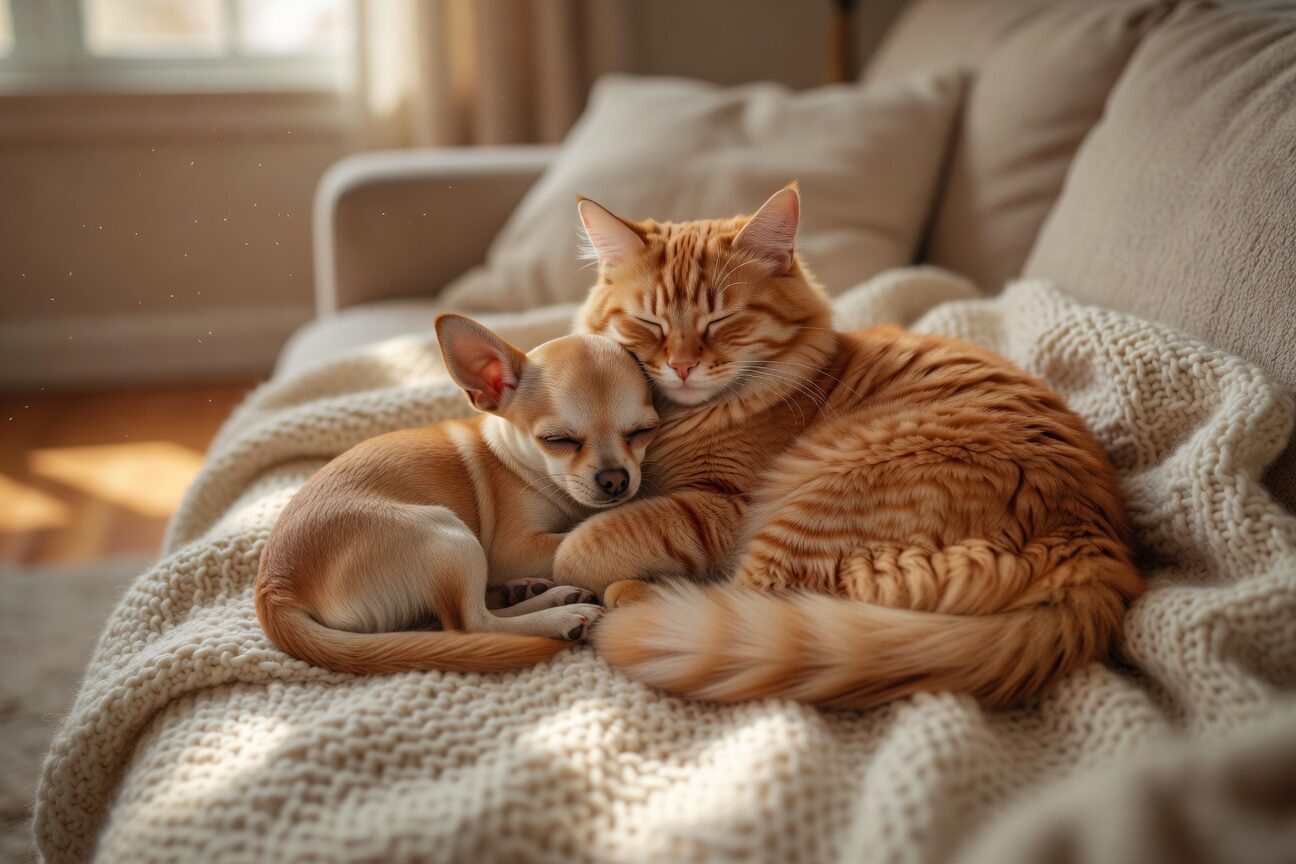
But here is the thing, they figured it out. Duke and Olive are not best friends who cuddle together for Instagram photos, but they coexist peacefully, share space without incident, and have even been caught napping on the same couch, on opposite ends, which in cat and chihuahua terms is practically a declaration of mutual respect.
Chihuahuas Good With Cats: The Short Answer: It Depends on the Individual
Chihuahuas as a breed are not inherently good or bad with cats. Some chihuahuas take to cats immediately while others need extensive, patient introductions and may never be fully comfortable. The outcome depends on the individual dog’s temperament, their socialization history, the cat’s personality, and how the owner manages the introduction process.
According to the American Kennel Club, chihuahuas are alert, spirited dogs who can be territorial, which means introducing a new animal into their space requires careful planning. A chihuahua who has been well socialized from a young age and has been exposed to different animals is much more likely to accept a cat than one who has lived in isolation and views anything unfamiliar as a threat.
Why Chihuahuas Can Work Well With Cats
There are actually several reasons why chihuahuas and cats can be a surprisingly good match. First, they are similar in size. A chihuahua is not going to physically intimidate a cat the way a Labrador might, and a cat is not going to see a chihuahua as a massive predator. That size parity removes some of the power dynamics that make dog and cat introductions tricky with larger breeds.

Second, chihuahuas and cats actually share some personality traits. Both can be independent, both are territorial, both enjoy warm laps and comfortable spots, and both have strong opinions about their personal space. In my experience, Duke and Olive understood each other on some fundamental level because they operate from a similar playbook, even if they would never admit it.
Third, chihuahuas bond deeply with their households, and once they accept a cat as part of that household, they can become surprisingly protective. Duke went from growling at Olive through a baby gate to positioning himself between her and the door when a delivery person knocked. It took three months, but the shift from adversary to reluctant housemate to accidental bodyguard was remarkable to watch.
Potential Challenges
Chihuahuas can be jealous, possessive, and reactive, and all of those traits can create problems when a cat enters the picture. Jealousy is the one I see most often. If your chihuahua is used to being the center of attention and suddenly has to share that attention with a cat, their response can range from sulking to outright aggression toward the cat. Duke pouted for a solid week when Olive first arrived, refusing to sit in my lap if she was visible anywhere in the room.
Some chihuahuas have a prey drive that can be triggered by a cat running across the room. This is more common in dogs who have not been socialized with cats, and it can be dangerous for the cat if the dog is persistent. Even though cats are typically faster and more agile than chihuahuas, a stressful chase situation is bad for everyone involved and needs to be prevented through proper management.
The cat’s personality matters just as much. A confident, dog experienced cat is going to handle a chihuahua much better than a nervous cat who runs at the first sign of a small barking dog. Olive is supremely unbothered by most things in life, which made the introduction process easier because she did not escalate Duke’s initial reactivity by panicking.
How to Introduce a Chihuahua and a Cat
The introduction process should be slow, controlled, and patient. Rushing it is the single biggest mistake people make, and it can create lasting negative associations that are very hard to undo. According to The Spruce Pets, the ideal introduction happens in stages over days or weeks, not hours. If you are curious about related topics, check out Why Do Chihuahuas Lick So Much? Explained.

Phase 1: Scent Introduction
Before the animals see each other, let them get used to each other’s scent. Swap blankets or bedding between them so each animal can investigate the other’s smell in a low pressure environment. I rubbed a cloth on Olive and left it near Duke’s bed, and vice versa. Duke sniffed Olive’s cloth obsessively for two days, which I took as a good sign because curiosity is better than indifference or aggression.
Phase 2: Visual Introduction Through a Barrier
A baby gate or a cracked door allows the animals to see each other without physical contact. Keep these visual sessions short and positive, with treats for calm behavior. Duke barked at Olive through the baby gate for the first few sessions, but by day four he was sitting quietly and watching her, which earned him treats and praise.
Phase 3: Supervised Face to Face
Once both animals are calm during barrier meetings, allow supervised interaction in a neutral space. Keep your chihuahua on a leash for the first few face to face meetings so you can control the situation. Do not force proximity, let both animals approach at their own pace and always have an exit route available for the cat. Our first leash meeting lasted about three minutes before I ended it on a positive note with Duke still calm.
You May Also Like
Phase 4: Unsupervised Coexistence
Only allow unsupervised time together once you are confident that both animals are safe and comfortable. This took about three weeks for Duke and Olive. I made sure Olive always had high escape routes like cat trees and shelves that Duke could not reach, giving her a safe zone if she ever needed space.
Making a Multi-Pet Household Work Long Term
Even after a successful introduction, ongoing management matters. Each animal should have their own food and water stations, their own resting spots, and their own access to your attention. Jealousy flare ups can happen months into an otherwise peaceful arrangement, so stay observant and address any tension before it escalates.
Duke and Olive have been living together for two years now. They eat in separate areas, they have their own beds, and they have learned to share the couch with a respectful buffer zone between them. It is not a fairy tale friendship, but it is a genuine, functional peace that works for everyone in the household. Chihuahuas can absolutely be good with cats when the introduction is done right and the ongoing management is thoughtful. For more on chihuahua behavior and temperament, read our guide on recognizing nervous aggression and bonding with your chihuahua.
What I Learned
I have been through this with my own chihuahua. It is one of those things that looks simple on paper but gets complicated fast when you are actually dealing with a four-pound dog who has opinions about everything.
The truth about chihuahuas good with cats is that there is no single right answer. What works for one chihuahua might be completely wrong for another. Mine took weeks to adjust. Some dogs figure it out in days. The size of your chihuahua matters. Their age matters. Their personality matters most of all.
Here is what I wish someone had told me earlier. Start small. Do not try to change everything at once. Chihuahuas are stubborn but they are also sensitive. Push too hard and they shut down. Go too slow and nothing changes. The sweet spot is somewhere in the middle and you have to find it yourself.
I talked to other chihuahua owners about chihuahuas good with cats and heard the same thing over and over. Patience. Consistency. And a willingness to look a little silly in public because chihuahuas do not care about your dignity.
If you are just getting started with chihuahuas good with cats, give yourself grace. You will make mistakes. Your chihuahua will make more of them. That is the whole process. And honestly, once you get through the hard part, it is worth it.
Frequently Asked Questions
Are Chihuahuas Good With Cats? What I Have Learned From Living With Both?
The question of whether chihuahuas are good with cats came up for me in a very personal way when my partner moved in with her tabby cat, Olive, and my chihuahua, Duke, had to suddenly share his territory with a creature he had never encountered before.
Why chihuahuas Can Work Well With Cats?
There are actually several reasons why chihuahuas and cats can be a surprisingly good match. First, they are similar in size.
What should I know about potential Challenges?
Chihuahuas can be jealous, possessive, and reactive, and all of those traits can create problems when a cat enters the picture. Jealousy is the one I see most often.
How do you introduce a Chihuahua and a Cat?
The introduction process should be slow, controlled, and patient. Rushing it is the single biggest mistake people make, and it can create lasting negative associations that are very hard to undo.
What should I know about phase 1: Scent Introduction?
Before the animals see each other, let them get used to each other's scent. Swap blankets or bedding between them so each animal can investigate the other's smell in a low pressure environment.
What should I know about phase 2: Visual Introduction Through a Barrier?
A baby gate or a cracked door allows the animals to see each other without physical contact. Keep these visual sessions short and positive, with treats for calm behavior.