Just a few weeks ago, my roommates and I found a stray Chihuahua in our yard. He was an adorable, sweet-tempered chihuahua with a cute, spiked collar. He was clearly someone’s beloved pet, but he didn’t have any tags. After going all around the neighborhood looking for an owner, my roommate took him to her vet to see if he had a chip. He did, and the chip company immediately contacted the owner.
But chips aren’t as technologically advanced as they sound, especially if owners don’t keep their information up to date, which the owner of the Chihuahua we found had not. It took more than 24 hours to get the pup back to his family, and some people might not hold onto a found Chihuahua that long. So it’s really important to make your Chihuahua as easy to identify as possible. And if you’re not convinced by that story, here are some other important reasons to make sure your Chihuahua has tags.
Pets get lost all the time.
The whole reason for having a collar or any identifying information on your pet is because you never know when or how they might get lost. If you think just because your Chihuahua is an inside Chihuahua that they’re safe, then think again. Accidents happen, doors get left open, and Chihuahuas escape.
Contact info on tags is the easiest way for someone to contact you. Make sure to put your pet’s name and your cell number, also your city and address (if you feel comfortable, and all that fits in the space). Or you could add an email address. Whatever info will help someone get in touch with you as fast as possible.
Chips aren’t always that helpful.
It used to be a major problem that there are MANY different microchip companies, so it was tough for shelters to know which brand was used on a found Chihuahua. These days, most shelters and vets have universal scanners that can read almost any chip. However, sometimes, the owners’ info is out of date.
When someone finds a missing Chihuahua, the chip manufacturer doesn’t hand out private information directly because of safety concerns. They’ll typically serve as an intermediary by contacting the owner on behalf of a found pet using a phone or email. If, however, attempts to reach an owner are unsuccessful after several days, the process is closed and needs to be started all over again. While the system is understandable, it’s not a very efficient way to make sure a Chihuahua returns its owner.
Your Chihuahua probably needs a license tag anyway.
Most states require you to license your Chihuahua, which involves proving proof of rabies vaccine and paying a fee, usually about $20. You will get a license number and a secondary tag that your Chihuahua is required to wear. It’s the law, but also it’s just another way to locate your Chihuahua’s home if they do get lost from you.
There are solutions to the noise.
Many pet owners site the noise dog tags make as a reason to avoid providing them for their pets. If the jangling of collars bothers you, know that there are solutions. You can get your info added directly to the collar itself. There are services that either embroider collars or engrave information onto the buckle of the collar. You can also get a slide tag that slips onto the collar. Tag silencers are an option that wraps around tags and keeps them from bumping into each other, creating that jangling sound.
Check your Chihuahua’s ID regularly.
Dog tags can wear or fade, so make sure to check their condition regularly. Even though it may seem annoying or unnecessary, you really shouldn’t shy away from updating your Chihuahua’s tags. Because even though our pups might be able to heroically find their way home like in the movies, it’s best to protect them, just in case.
How to Leash Train Your Chihuahua
From the tiniest Chihuahua to the biggest Great Dane, every dog needs exercise, which means that multiple times a day, it’s time to take them on a walk. But there’s a difference between a Chihuahua on a leash and a Chihuahua that is leash-trained. A well-trained Chihuahua will walk with a little bend in the leash at all times. They don’t bark or lunge at strange sights, humans, or other dogs. And they keep a good pace, not stopping to sniff at every little thing.
Most Chihuahuas don’t start out this well-trained, and each Chihuahua needs a little work to make them a good walker. Here are some simple steps that you can use as you start out leash training your pup into the perfect canine citizen.
Choose your equipment carefully.
One of the keys to starting your leash training out on the right paw is selecting the best equipment for your Chihuahua. The two things you need to walk your Chihuahua are a leash and a collar or harness.
Leashes – most experts agree that when you’re starting out with Chihuahua training, it’s important to choose a standard leash, about 6 feet long. Retractable leashes can be very convenient once your Chihuahua is trained, but it’s best to teach good leash behavior on a leash that gives your pup a limited range.
Collars and/or Harnesses – there are a LOT of options when choosing collars and harnesses. Harnesses work well for Chihuahuas that tend to pull on their leash because they cause discomfort for the Chihuahua when they pull, but not injury. Some collars are also specially designed for certain types of Chihuahuas and behaviors. For starting out, a good harness will get you a long way, but if you need a little more customized solution, talk to your vet or a local Chihuahua trainer for options that best fit your pup.
Make a leash time the most fun time.
Being strapped into a leash and collar for the first time can be a little bit stressful for your pup, so you want to make this process as pleasant and happy as possible. If you don’t, you might end up with a pup that resists putting on a leash or a harness. Our Chihuahua developed a love of playing a game with her harness. She knew that grabbing the harness meant we wanted her to do something, so she would run away, hide, and try to “play” to make the attention last as long as possible. We had to use a lot of treats and training time to change that reaction to make her easier to take on walks.
So that your Chihuahua doesn’t develop an odd association with or fear of their leash and harness, start your leash and harness time inside. Keeping unnecessary outside distractions at first helps to focus your pup. Reward your Chihuahua with lots of treats and praise as you put on their leash and harness and walk around the house. This will teach them that leash and harness time equals treats and love, which helps establish it as a positive experience. As you progress with your training, make sure not to abandon this entirely. Continue to give praise and the occasional treat when getting your Chihuahua walk-ready, so they keep associating walks with positivity, even when the walks start to become more challenging.
Try to stop pulling as early as possible.
One of the biggest complaints of anyone who’s ever walked a Chihuahua is pulling on the leash. Chihuahuas pull for all kinds of reasons – excitement, fear, curiosity, or because there’s a specific stimulus they want to get at. Pulling is a nuisance for owners of small Chihuahuas and can be a real challenge for anyone trying to control a larger Chihuahua. The best way to limit pulling is to start training your Chihuahua not to pull as early as possible and stay consistent with that training always.
Whenever your pup pulls on their leash, the American Kennel Club suggests that humans “become a tree.” Stand still in your spot until your Chihuahua stops pulling. Holding your ground helps teach your pup that they are not directing you where to go, you are directing them. Obviously, this is more difficult if you have a particularly large Chihuahua, but there are special harnesses created for those Chihuahuas so that they’re more likely to stop themselves when they pull.
If your Chihuahua lunges or barks redirect their attention.
With our small Chihuahua, our biggest struggle is that she likes to lunge and bark at other Chihuahuas on our walks. It can disturb both your walk and your neighbor’s walk with their Chihuahua, so we work hard to try and calm her and limit her barking. The best way to teach your Chihuahua not to bark or lunge is to redirect their attention and then reward them.
First, you want to train yourself not to pull or drag your Chihuahua away when they’re barking or lunging. The increased pressure on them from a pull can reinforce their fear and aggression. Also, that kind of reaction suggests that you are also nervous or worried about their behavior, which again, reinforces it.
Instead, remain as calm as possible and try to redirect their attention using treats. Try to get your Chihuahua to sit, and if they’ve learned the “watch me” command in training, that’s a great way to turn their attention as well. The key is to redirect and then reward because you don’t want to appear to be rewarding them for barking and lunging.
Also, you’ll want to do your best to maintain distance between your pup and things that make them react. Don’t pass too close or let your pup “greet” other Chihuahuas until they can remain calm as they approach them. Keeping a bit of distance can help your Chihuahua slowly learn that they don’t need to react or defend you. However, you also don’t need to avoid going on walks or exposing your pup to those things. It’s only by repetition that they’ll learn to chill, so keep taking them out, but try to slowly introduce them to things that seem scary.
Soon, you and your pup will be struttin’ your stuff all through the town! We know you’ll be champs!
Fruits and Vegetables Chihuahuas Can Eat
It’s hard to look at a tiny Chihuahua and imagine it evolved from a massive wolf, but man’s best friend is most certainly a wolf descendant. That means their diet, like a wolf’s diet, should be based mostly on the consumption of meat. However, there are some fruits and vegetables Chihuahuas can eat.
That being said, there are plenty of fruits and vegetables chihuahuas can eat. In fact, some fruits and vegetables can actually be great for your chihuahua, adding necessary vitamins, minerals, and fiber to his diet.
Fruits Chihuahuas Can Eat – Apples
An Apple a Day
Apples are the first fruits and vegetables Chihuahuas can eat. They are a great source of vitamins A and C as well as fiber. They are low in protein and fat, meaning they’re an ideal snack for overweight and senior chihuahuas. Plus, many chihuahuas actually enjoy the satisfying crunch of an apple. When giving them to your chihuahua, always core and seed the fruit first, and you may even want to freeze it for a great warm-weather treat.
Apricots are Pleasing
Apricots are Pleasing
Both cats and dogs can enjoy the sweet, fleshy fruit of apricot as long as the poisonous stem, leaves, and seeds are removed first. These small stone fruits are packed full of potassium and beta-carotene, which Trupanion says can help fight against cancer.
Fruits Chihuahuas Can Eat – Bananas
Go Bananas for Chihuahuas
High in potassium, vitamins, biotin, copper, and fiber, bananas are a great dessert for pups that can help heart and kidney functions. That being said, they should only be an occasional treat because while they are low in calories, cholesterol, and sodium, they are high in carbs and sugar. Because they should be fed in moderation, bananas for chihuahuas should only be served in small portions, so don’t ever give your pup a whole banana all at once.
Vegetables Chihuahuas Can Eat – Peppers
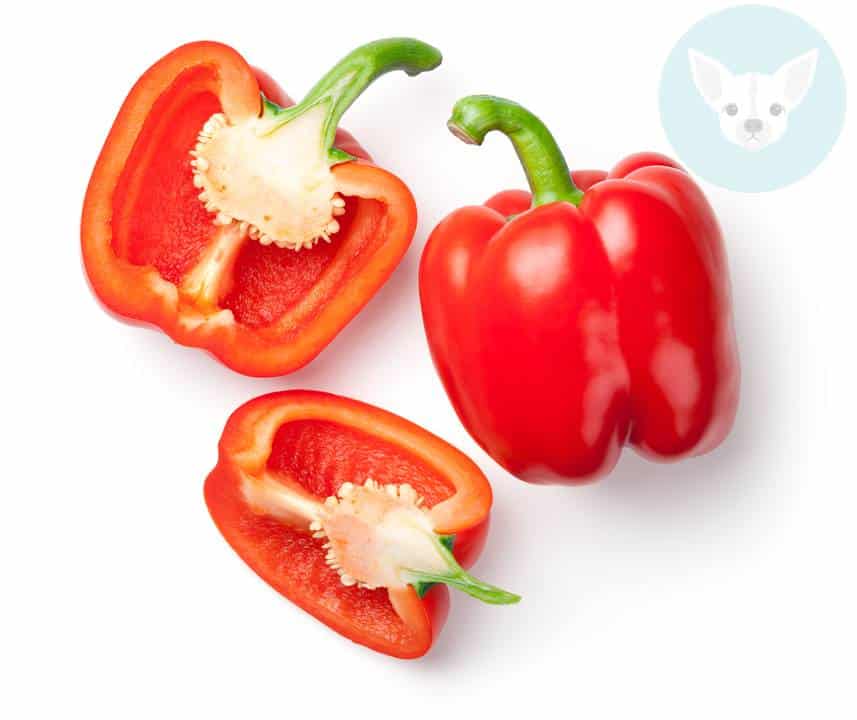
Better Love Bell Peppers
Red, green, yellow, or orange, any color of bell pepper is a good addition to your chihuahua’s diet because they are high in beta carotene, fiber, and antioxidants that will boost your chihuahua’s immune system. Always remove the stem and seeds and cut the peppers into manageable pieces before serving your pet.
Fruits Chihuahuas Can Eat – Blueberries
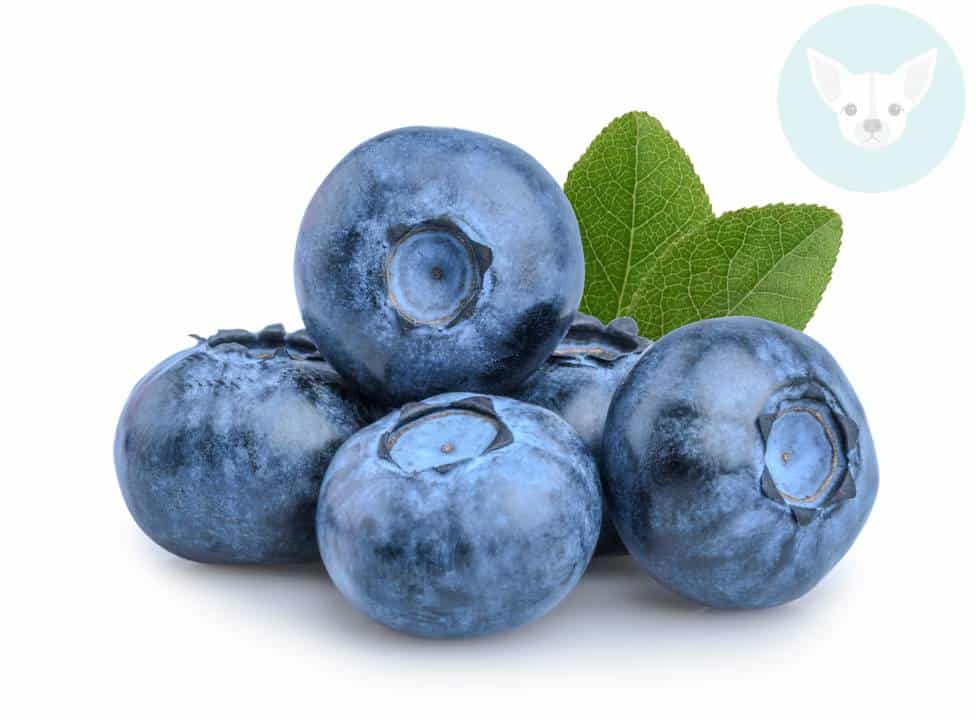
The Beauty of Blueberries
Of all fruits that are good for chihuahuas, you might have the easiest time giving your pup blueberries since many chihuahuas love to catch these in the air and gobble them down. These superfoods are high in antioxidants, vitamin C, fiber, and phytochemicals, and they have been shown to help lower the chances of urinary tract infections while also boosting night vision. Talk about a super snack!
Vegetables Chihuahuas Can Eat – Broccoli
Broccoli for Your Good Boy
Don’t go crazy giving your pup this veggie because the florets contain isothiocyanates, which can upset some chihuahuas’ stomachs. In small quantities, though, broccoli is a great treat that is high in fiber and vitamin C as well as low in fat. Always chop the broccoli in small pieces, as stalks can cause an obstruction in the esophagus when not broken down enough, according to the American Kennel Club.
Vegetables Chihuahuas Can Eat – Brussels Sprouts
Believe in Brussels Sprouts
While many chihuahuas will turn their nose up at these snacks, Brussels sprouts are very healthy food for man and beast alike, as they are loaded with vitamins C and K as well as antioxidants. Always cook until tender and chop into bite-sized pieces before you feed them to your chihuahua, or the healthy treat could be a choking hazard. If your pup does love them, don’t give her too many because Brussels sprouts do cause gas in chihuahuas just like in humans.
Cooked-up Cabbage
Cooked-up Cabbage
Like Brussels sprouts, few chihuahuas are overeager to eat cabbage. If you can get your pup to snack on it, though, you’ll be giving him something that can help digestion, fight cancer, and improve the condition of skin and fur. Always serve it cooked in order to aid in digestion, and don’t serve too much because it can harm the thyroid gland when served in excess.
Vegetables Chihuahuas Can Eat – Cantaloupe
Cheers to Cantaloupe
High in nutrients, fiber, and water while still low in calories, cantaloupe is a great summertime snack for chihuahuas. It may even have anti-inflammatory properties. It is still high in sugar, though, so always serve this one in moderation, especially if you have an overweight or diabetic pooch. When serving, always remove the skin and seeds first and then cut it into small bites before giving it to your chihuahua.
Vegetables Chihuahuas Can Eat – Carrots
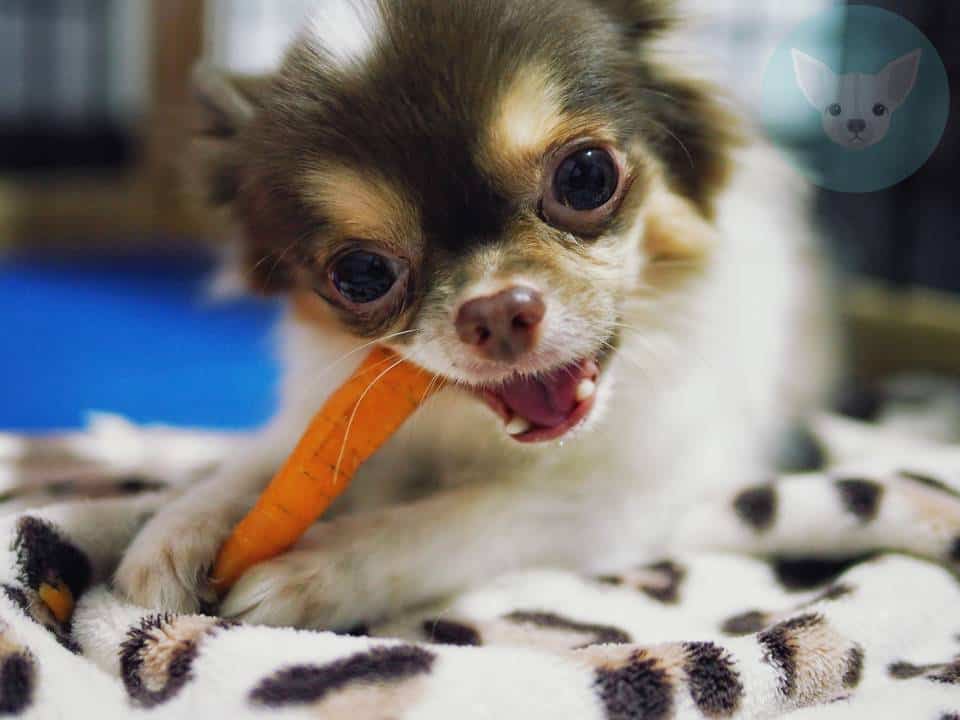
Crazy about Carrots
Here’s another veggie that many chihuahuas love right off the bat. You can feel good giving your pup carrots because they are high in fiber, low in calories, full of beta-carotene, great for the eyes, good for the fur, and crunching on them can even help your chihuahua’s teeth.
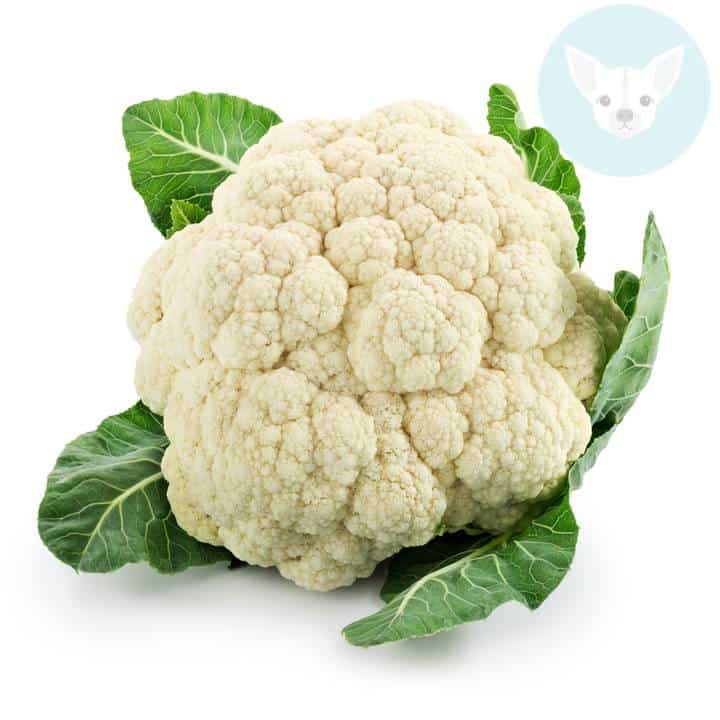
Share the Cauliflower
Share the Cauliflower
The vitamins and antioxidants in cauliflower may help reduce inflammation in arthritic pets, and its high fiber is great for digestive health. Serve it raw or cooked but always in small bites without the stem and leaves, as these can be choking hazards. Also, serve it in moderation because too much may upset your pooch’s tummy.
Vegetables Chihuahuas Can Eat – Celery
Crunch Some Celery
Chihuahuas don’t always like the taste of celery but many love its crunchy texture. That’s good news too because celery is high in vitamins A, B, and C, promotes heart health, fights cancer, and it even freshens doggy breath, which is something everyone can appreciate!
Fruits Chihuahuas Can Eat – Cranberry
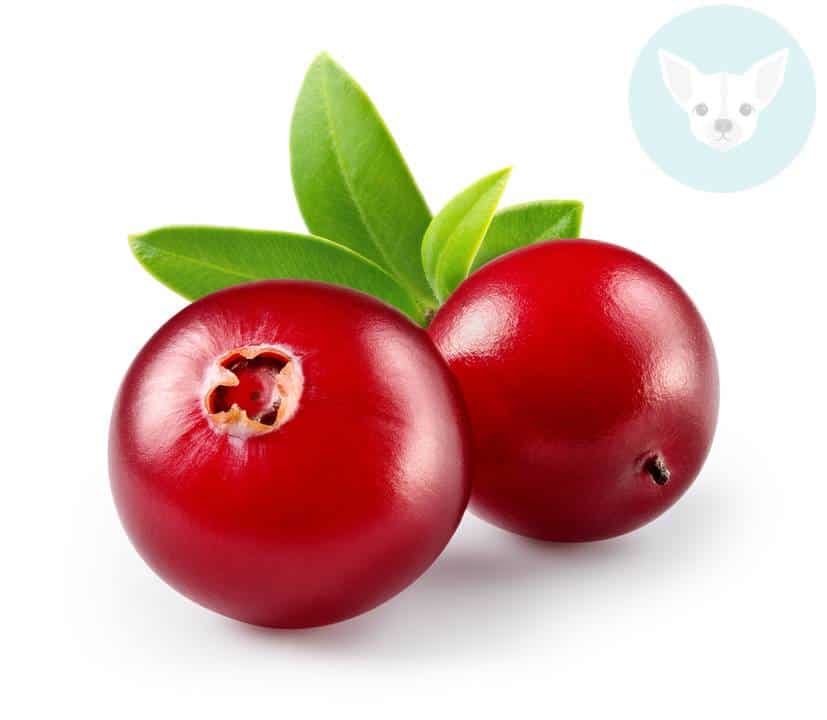
The Mighty Cranberry
Many chihuahua owners love feeding their pups cranberries since they can help fight urinary tract infections. As a bonus, these little berries also offer a good dose of fiber, vitamin C, and manganese. While dried, cooked, and raw cranberries are fine for chihuahuas, avoid giving them cranberry sauce or juice, as these are too high in sugar and will upset your chihuahua’s stomach.
Vegetables Chihuahuas Can Eat – Cucumber
Cool as a Cucumber
These treats are a great source of hydration for pets, and they contain little to no carbohydrates, oils, or fats, making them a great option for overweight animals. They can also boost energy levels, lower blood pressure, and even freshen your chihuahuas’ breath. Finally, they are loaded with vitamins K, C, and B1, as well as biotin, potassium, copper, and magnesium.
Green Beans are Great!
Green Beans are Great!
Raw, steamed, canned, frozen — it doesn’t matter as long as the green beans are plain and low in sodium. These healthy snacks are a good source of protein, iron, and fiber. They’re also low in calories, making them a good treat for pups who need to slim down a little. Maybe that’s why PetMD labeled them as one of the top 10 fruits and veggies to feed your chihuahua.
Fruits Chihuahuas Can Eat – Mangos
Munching Marvelous Mangos
Filled with vitamins A, B6, C, and E, mangos also have potassium, beta-carotene, fiber, and alpha-carotene. Don’t just toss your pup a full mango, though, as the seed needs to be removed first since it contains cyanide and can also be a choking hazard. Ideally, you’ll want to chop it into small pieces before serving to make digestion easier and so it won’t upset your chihuahua’s tummy.
Fruits Chihuahuas Can Eat – Oranges
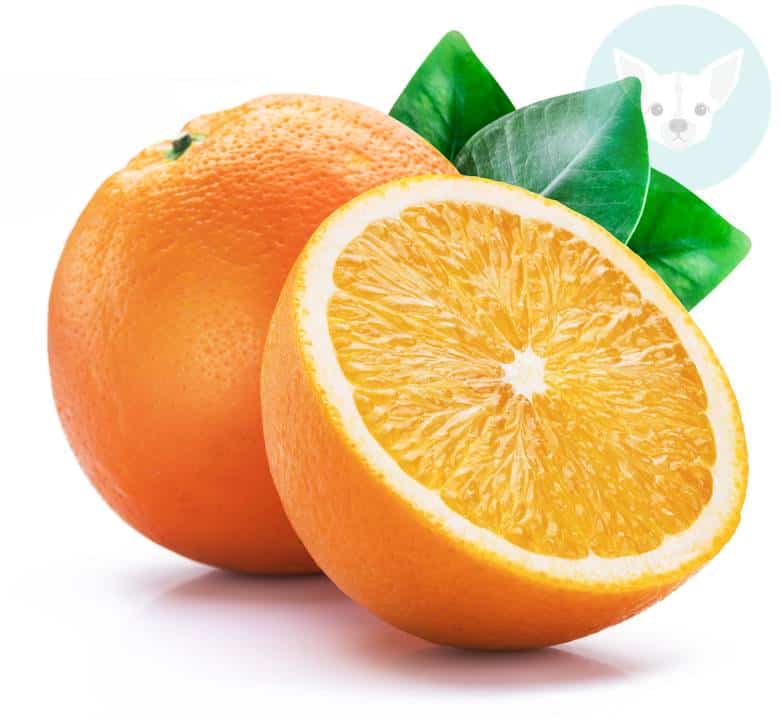
Orange you Glad about Oranges?
You probably know that oranges are high in vitamin C, but they also offer a good serving of potassium and fiber. That being said, it’s important to serve these treats carefully, discarding the peel, seeds, stems, and leaves because these can be poisonous to chihuahuas.
Fruits Chihuahuas Can Eat – Peaches
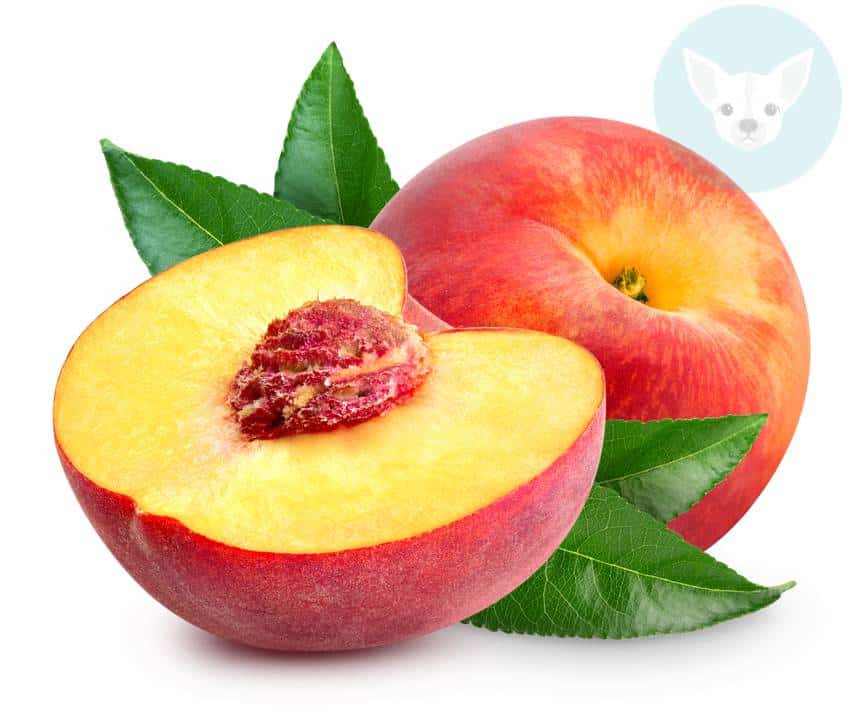
Peaches are just Peachy
Fresh peaches are a great treat for pups, as they contain a lot of fiber and vitamin A. They can even help fight infections. However, always keep your chihuahua away from the pit because these contain cyanide. Also, avoid serving your chihuahua canned peaches, as these are packed in sugary syrups that are not appropriate for pets.
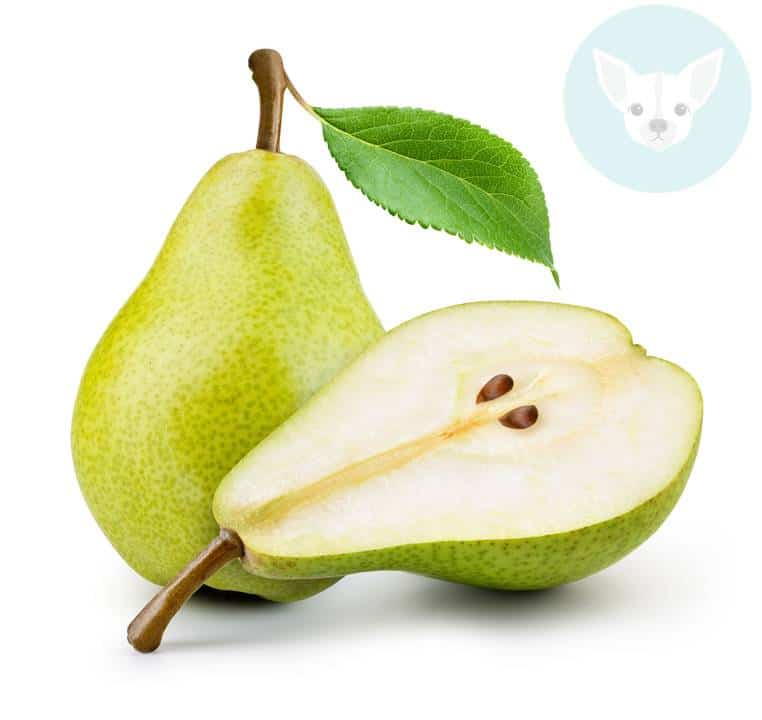
Perfectly Pleasant Pears
Perfectly Pleasant Pears
Petfeed says that eating pears may reduce the risk of stroke in humans by as much as 50 percent! While that may or may not apply to chihuahuas, it certainly won’t hurt to feed your pooch these healthy treats that are full of copper, vitamin C, vitamin A, vitamin K, and fiber. Plus, they even offer anti-cancer benefits. Always remove the core and seeds of the pear when serving, as the seeds contain traces of cyanide.
Vegetables Chihuahuas Can Eat – Peas
More Peas, Please
Like green beans, you can serve up frozen, mashed, thawed, fresh, steamed, or canned peas to your pup as long as they are plain and low in sodium. Practically any pea variety will be fine, too, including snow peas, sugar snap peas, and English peas. These tiny treats offer vitamin B, thiamin, potassium, protein, and fiber, which can, among other things, boost energy levels and improve bone health.
Fruits Chihuahuas Can Eat – Pineapple
Pineapple is so Pleasant
Fresh pineapple is a great treat for pups, but be sure to remove the prickly outside and hardcore in order to eliminate choking hazards. This tropical treat is loaded with vitamins, minerals, and fiber that can help your pup’s immune system and digestion. Keep servings small and infrequent since the fruit is very sugary.
Vegetables Chihuahuas Can Eat – Pumpkin
Pumpkin for Pups
Pumpkin is full of vitamins and minerals, but its biggest benefit is that it is full of water and fiber. Those last two benefits mean that pumpkin is fantastic for constipation, diarrhea, and anal gland problems. Never give your chihuahua premixed pumpkin pie filling, though, as this contains sugar and spices on top of the pumpkin puree.
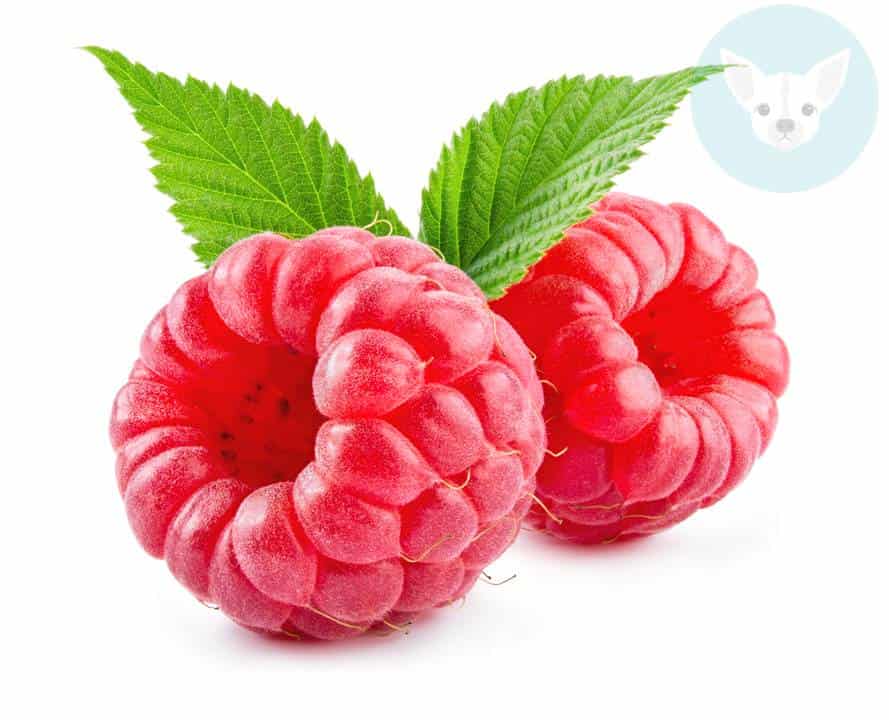
Red Raspberries, Really
Red Raspberries, Really
In moderation, raspberries can be a great addition to your chihuahua’s diet because they are low in sugar and calories but high in antioxidants, fiber, manganese, and vitamin C. They also have many anti-inflammatory properties, making them a good treat for older or arthritic chihuahuas. That being said, they contain slight amounts of Xylitol, which can be toxic to chihuahuas, so never feed more than a cup at a time.
Fruits Chihuahuas Can Eat – Strawberries
Sweet, Succulent Strawberries
Full of vitamin C and fiber, strawberries are fine for chihuahuas in moderation, but avoid giving too many to your furry friend, as they are high in sugar. They can be given fresh, frozen, or pureed and will help strengthen the immune system, slow age-related problems, and even help whiten your chihuahua’s teeth.
Vegetables Chihuahuas Can Eat – Spinach
Celebrate with Spinach
Spinach is a superfood and contains a whole rainbow of vitamins and minerals that can help all areas of a pet’s health. Unfortunately, you’ll only want to share a small amount with your chihuahua at a time because it contains a lot of oxalic acids, which makes it more difficult for the body to absorb calcium, something that can ultimately cause kidney damage. Your pup would have to eat a lot of spinach for this to happen, but it’s best to keep the servings small so you don’t risk it.
Savory Sweet Potato
Savory Sweet Potato
Sweet potato offers many of the same benefits as pumpkin, including those digestive benefits related to a high amount of fiber and water, but it also offers more vitamins, thiamine, niacin, and copper.
Fruits Chihuahuas Can Eat – Watermelon
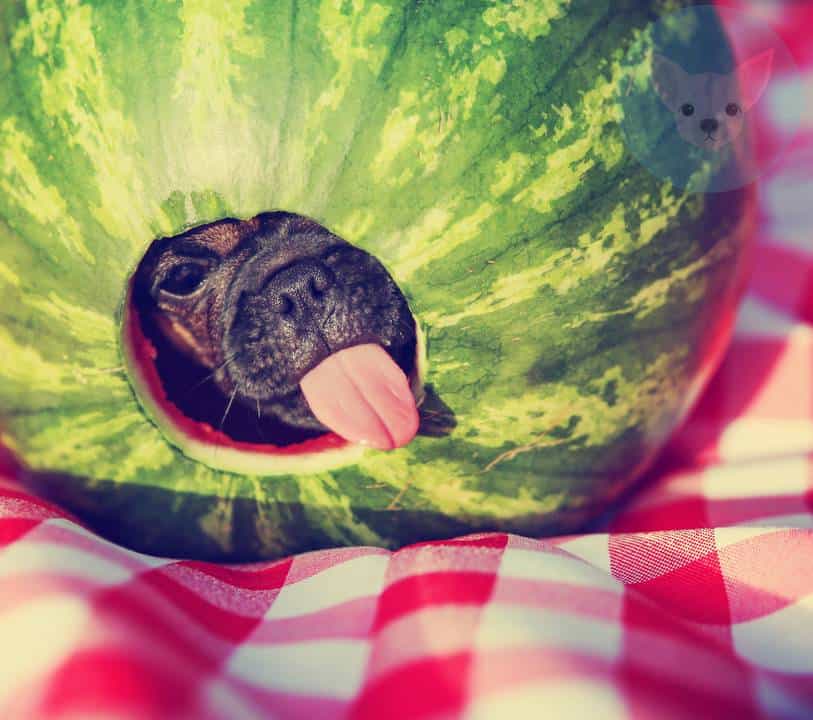
Wet, Wonderful Watermelon
With its 92 percent water content, watermelon is a fantastic way to help hydrate your chihuahua over the summer. It also contains vitamins A, B-6, and C as well as potassium, which can help maintain healthy function in your pup’s nerves and muscles. When serving, be sure to remove the rind and seeds, as these can cause intestinal blockage.
Sweet and Savory Zucchini
Sweet and Savory Zucchini
Zucchini has high levels of vitamin C, magnesium, and potassium and can help protect your chihuahua from infections, cancer, and cardiovascular disease. Try serving it shredded on your chihuahua’s regular food to give her meal a healthy boost.
We would be really happy if you can send us some photos of you feeding your Chi. The comment box is yours!
Why Do Chihuahuas Shake, Tremble and Shiver?
Chihuahuas can shake or shiver for a variety of reasons, from natural excitement or fear to cold temperatures or even illness. While some shivering is expected and normal, abnormal trembling or shaking can indicate health issues in these small dogs that require medical attention.
Understand Your Chihuahua’s Normal Behavior.
Knowing your Chihuahua’s normal behavior can make it easier to identify when trembling is out of the ordinary. Consider your pooch’s usual mannerisms so that you can recognize if they are shaking more than usual. Chihuahuas may sometimes shake due to fear, excitement or even anticipation of a reward. So pay attention to the context in which your pet is shaking and compare it with their general behavior. It may help you figure out what’s causing the trembling.
Be Aware of Anxiety-Related Shaking.
Anxiety-related shivering is fairly common in Chihuahuas, especially when they are acting scared or stressed. An anxious pet may show signs of trembling or shaking, as well as panting and pacing. If your pup is visibly frightened by something loud or different, these could be sign of an underlying condition such as separation anxiety or fear of thunderstorms. In these cases, it’s important to work closely with a vet to identify any anxiety-related problems and determine the best course of treatment.
Check for Illness-Induced Tremors.
Although uncommon, trembling can also be caused by a health problem. If your pet seems to tremble or shiver more than usual, they could have an underlying medical issue. Tremors and shaking could be due to low blood sugar, pain or organ failure. It’s important to speak with a vet right away if you suspect any illness-caused tremors in order to get a diagnosis and create the most effective treatment plan for your pup.
Consider if the Temperature is Too Cold.
It’s especially important to check the temperature if your sprightly Chihuahua is shaking or trembling. Even though they’re adorned in a fluffy coat, these small dogs aren’t the best in subzero weather. Any temperatures under 50 degrees Fahrenheit should be considered dangerous for Chihuahuas and require close monitoring by their humans. Consider using a sweater when it’s particularly chilly to keep your pup warm and safe.
Schedule a Veterinary Visit If Necessary.
If trembling in your Chihuahua persists even when they’re warm, then it’s important to see your veterinarian as soon as you can. In addition to cold temperatures, fear and anxiety, there are other possible causes of shaking such as age-related issues (e.g., arthritis or vestibular syndrome), seizures and various illnesses like hypoglycemia, distemper and distal myopathy. In some cases, a visit to the vet might be necessary for diagnosing and treating the condition.
Chihuahua Nipping and Biting Issues
Chihuahuas are known for being small and cute, but they can also be notorious for nipping and biting. If your Chihuahua is displaying this behavior, it can be frustrating and concerning. In this article, we’ll cover the top five reasons for biting and nipping, along with training steps to stopping nipping and biting in Chihuahuas.
Nipping Vs Biting
It’s important to understand the difference between nipping and biting. Nipping is a quick snap of the jaws, and there may or may not be skin contact. On the other hand, biting is an aggressive, physical attack, and the jaws will clamp down on the intended target, making skin contact. When owners are concerned about their Chihuahua chewing, in most cases, it will be nipping that is occurring.
Chihuahua nipping and biting issues
Top 5 Reasons for Nipping or Biting
Teething
Teething can cause discomfort and itching, leading a puppy to mouth and chomp down on anything, including its owner’s hand, which can be mistaken for aggressive biting. Ways to help a teething pup include offering ice cubes and teething toys.
Past Neglect
Past abuse and neglect can shape a dog’s personality into one of fear, nervousness, and anxiety. If a Chihuahua is fearful, they may bite or nip as a defense mechanism toward a perceived threat. A great deal of socialization training will need to be incorporated.
Unclear Hierarchy
If a Chihuahua mistakenly believes that they are the leader or if they are confused about who is in charge, nipping can begin to develop. A dog that does not know their place in the household hierarchy may begin to test the chain of command, becoming defiant and nipping at their humans.
Reasons for nipping or biting in Chihuahuas
Defense Mechanism
Some dogs see threats and challenges all around them and act aggressively by growling and snapping their jaws at a wide range of triggers such as visitors to the home and other dogs.
Injury or Health Issues
Dogs in the vulnerable state of being ill or injured may snap at their owners, something that would never occur otherwise.
Training Steps to Stop Nipping and Biting
Step #1
Intact dogs are more prone to acting aggressively, including growling and nipping at their humans. Spaying or neutering your Chihuahua may help to reduce this behavior.
Step #2
Socialization training is crucial for a Chihuahua’s well-being. This training should involve exposure to new people, places, and situations to help them learn appropriate behavior in different settings.
Stopping nipping and biting
Step #3
To establish a clear hierarchy, owners need to teach their Chihuahua basic commands and enforce rules regarding unacceptable behavior. A dog that understands their place in the household hierarchy is less likely to nip and bite.
Step #4
Positive reinforcement is a crucial aspect of training. Dogs respond better to rewards than punishment, and owners should be patient and consistent when training their Chihuahuas.
Step #5
Seek Professional help if nipping behavior becomes severe. A professional canine trainer may better address the issue.
Conclusion
Stopping nipping and biting behavior in Chihuahuas requires a combination of identifying the cause of the behavior and strict training. Socialization training, establishing a clear hierarchy, and positive reinforcement are crucial for a Chihuahua’s well-being. If behavior is severe, seek professional help.
Chihuahua Feeding Guidelines
You’ll want to put careful thought into what you feed your Chihuahua. This breed is very sensitive to what they are being fed, how often they eat, and in which manner their food is offered to them. In fact, the food that you choose for your Chihuahua for both meals and snacks will directly affect your puppy or dog’s health status, both now and in the future.
With a very low tolerance for chemicals (artificial coloring and preservatives) and a need for the right balance of protein, healthy fats, and essential carbs, you may need to do a little experimenting to see what type of food ingredients your Chihuahua enjoys the most and which are best tolerated by their digestive system.
Aren’t you looking for all the details, and just want to know exactly what to feed your Chihuahua? Jump to: The Best Dog Food for Chihuahuas.
There may be some times when you wish to change your Chi’s food, for example when you first bring a new puppy home, if your Chihuahua is finicky or doesn’t seem to be thriving on their current diet, or if there is an intolerance or allergy.
Though making a switch to a new food certainly may be warranted, unless it is an urgent situation, it is best to do so gradually. This is typically done in this way:
Week One: 3/4 old food, 1/4 new food – mixed together well
Week Two: 1/2 old food, 1/2 new food – mixed together well
Week Three: 1/4 old food, 3/4 new food – mixed together well
How Often to Feed a Chihuahua – Meal Schedule
Toy breeds like the Chihuahua do best with small, frequent meals. The exact timing and frequency will depend on age:
Puppies until 3 months old or under 2 lbs.: Free-feeding is recommended. is the method of leaving food accessible at all times, around the clock. Be sure that food is refreshed several times per day so that it does not become dried out or stale.
All Chihuahua puppies and adults, from 3 months on (with a weight of at least 2 lbs.): Most Chihuahua do best with 3 meals per day, plus several snacks in between meals.
Meal Schedule Tips:
When you are feeding 3 meals per day, there is a good chance that you will not be home for the mid-day feeding. You can leave food in a dish for your Chi, though do keep in mind that this may be played with instead of eaten, or it can be tipped over and scattered.
So, another great alternative option is to leave a meal’s worth of food in a treat-dispensing toy. This serves two purposes: It ensures that your Chihuahua will indeed have access to his food, but it also works to keep a dog busy. And when a dog is home alone, keeping your dog busy is a great goal.
While Kongs are the traditional method to do this, even the smallest one is a bit too large for most Chihuahua puppies, and even adults can struggle with it.
A better option is the PetSafe Busy Buddy Barnacle Dog Toy – Extra Small which is a cluster of 3 tiny balls that dispense food. This works very well for most Chihuahuas.
And another great choice is the PetSafe Busy Buddy Twist ‘n Treat – Extra Small. This looks like a tiny flying saucer and you can adjust how loose or tight the holding compartments are for an easy release or one that your Chihuahua has to really work for (to stay busy longer).
You will find that the timing of the evening meal affects the timing of your Chihuahua’s morning bowel movement. So, you may want to adjust this earlier or later by an hour or so, depending on your Chi’s bathroom needs in the morning.
How Much to Feed a Chihuahua Calories:
The right amount of food to give to a Chihuahua depends on that puppy or dog’s individual calorie requirements.
This can vary quite a bit and fluctuate daily, and depends on a dog’s activity level, exact age, health status, and even the weather (dogs tend to eat more in the winter).
In general, the calorie requirements for puppies are about 50 calories per pound of body weight and for adult Chihuahuas, it is 35 to 40 calories per pound of body weight.
Measured food: The right serving size for Chihuahuas also varies depending on what type of food is given (wet vs dry, chicken vs beef, high-quality vs mediocre, etc.). But, in general, you can expect a Chihuahua to eat a very small amount (especially compared to this breed’s larger counterparts and most definitely to us humans).
Chihuahuas that range in size from 4 to 10 pounds will eat approximately 1/2 to 1 and 1/3 cups per day (split into however many meals you are providing, which in most cases should be three).
You didn’t read that wrong; this is a very tiny breed that does need to be fed a high-quality food but does not eat a lot. There are very few Chihuahuas that eat over 2 cups per day; and those that do tend to be the ones that are larger than the standard size.
In most cases, the feeding guidelines seen on the packaging of dog food is pretty spot-on; it is determined by both age and weight and assumes you are offering several snacks per day.
The Importance of a Balanced, Nutritious Diet
Keeping your Chihuahua healthy begins by offering the best of food possible. What a puppy or dog eats correlates to many aspects.
The quality of food offered will affect energy levels and muscle maintenance, and have a direct effect on both short and long-term health. A dog’s diet is linked to skin and coat health, organ and immune system health, and conditions such as canine diabetes, heart disease, and some forms of cancer.
There are some dog food ingredients that are linked to certain behavioral issues like hyperactivity, so this is always something to be aware of as well.
In addition, intolerance or allergy to food ingredients or additives can cause a wide range of issues including itching, rash, hives, hot spots, and digestive problems.
It’s easy to spot a Chihuahua that’s being fed great food; the coat is shiny, skin issues are non-existent, eyes are shiny, energy-levels are good, and the dog is simply thriving.
Grain vs Grain-free
For quite some time, there was generally no hesitation in putting dogs on a grain-free diet. This was often the way to go for a suspected grain (or more often, gluten) intolerance. In some cases, this helped resolve skin issues like itching or stomach problems like flatulence or runny bowels.
However, recently some concerns have been raised. This began when four dogs that are not known to be prone to a certain heart condition called dilated cardiomyopathy (DCM) developed the disease and all were on grain-free diets that had peas, lentils, other legume seeds, or potatoes as one of the top 5 ingredients. This lead to an immediate suspicion that there was a link to that sort of diet, but more studies needed to be done.
Though records go back several years, mostly over the past two years over 500 dogs have been diagnosed with DCM while on a grain-free diet. Of those, just two were identified as Chihuahuas. This is enough to take note, but is a very small number compared to the estimated 77 million dogs in the US.
In December of 2018, researchers at the Veterinary Medical Center at Tufts University announced that what may actually be at play is a BEG diet; which stands boutique (small locally owned brands) with exotic meats (non-traditional meats such as alligator, kangaroo, bison, ostrich, and venison) that is also grain-free while having peas, lentils, other legume seeds, or potatoes as one of the top 5 ingredients.
At the end of June of 2019, the FDA issued an alert that contained a list of 16 dog food brands whose grain-free recipes were linked 10 or more times to the dogs that had developed DCM. They are:
Acana (67 reports)
Zignature (64 reports)
Taste of the Wild (53 reports)
4Health (32 reports)
Earthborn Holistic (32 reports)
Blue Buffalo (31 reports)
Nature’s Domain (29 reports)
Fromm (24 reports)
Merrick (16 reports)
California Natural (15 reports)
Natural Balance (15 reports)
Orijen (12 reports)
Nature’s Variety (10 reports)
Nutrisource (10 reports)
Nutro (10 reports)
Rachael Ray Nutrish (10 reports)
As of now, there have not been any recalls. This is still under investigation and many more studies need to be completed; it could be years before anything conclusive is released.
For the time being, most veterinarians recommend a diet with grains (that are gluten-free, if needed, like rice, quinoa or oats) or sticking with traditional meats (chicken, duck, turkey, beef, etc.) if you opt to offer grain-free.
Below in our lists of The Best Dog Food for Chihuahuas, you’ll see options for both grain-free and grains.
Things Seen in Low-Quality Food
There are a lot of different dog foods on the market, and only a small percentage can be considered to be the best. The rest cut many corners in order to mass-produce food that will sell a lot, and sell quickly.
What inferior foods most often contain are:
Artificial additives. This includes chemical coloring, flavoring, and preservatives. These can cause a lot of gastrointestinal issues such as diarrhea, upset stomach, and vomiting and are the cause of many allergies with the top symptom being itching and other possible signs being hives, rash, hot spots, and poor coat health. Some coloring dyes are linked to hyperactivity, organ damage, and some forms of cancer (mainly thyroid tumors). Synthetic preservatives are linked to liver and blood problems and some cancers. MSG is linked to anxiety, rapid heartbeat, and breathing issues.
Fillers.
these substances quickly pass right through the body (since they have no nutritional value and the body does not absorb them). This can lead to nutritional deficiencies and behavioral issues such as eating grass or eating feces. These are such things as corn bran, cellulose, oat hulls, peanut hulls, rice hulls, soybean mill run, and wheat mill run.
By-products. These are parts of animals that are deemed unfit for human consumption. This can include beaks, lungs, fatty tissue, intestines, spleens, hooves, snouts, ears, and more.
Generic meat sources. Perhaps one of the scariest ingredients found in inferior foods is generic meat or oils, typically labeled as ‘animal fat’, ‘animal meat’, etc. This means any animal at all, including roadkill and animals that died while being transported to farming or food facilities.
List of Inferior Dog Food Brands
Some of the worst offenders are brands that you are well aware of; they are seen stacked in local supermarkets and pet supply stores, and many air lots of commercials. Pet parents see a recognizable name and assume that since it must be popular, it must be good food. But, this is one mistake you’ll want to avoid.
1-star foods (absolutely horrible):
Alpo, Gravy Train, Kibbles ‘n Bits, Pedigree, Old Glory, Old Yeller, and some varieties Purina Dog Chow.
2-star foods (terrible):
Beneful, some varieties of Blue Buffalo, Cesar (Classic, Savory Delights, Sunrise, and Filet), Evolution, some varieties of Hill’s Science Diet, some varieties of Iams, Mighty Dog (wet), some varieties of Purina Dog Chow, Rachael Ray Nutrish, Royal Canin, Seminole, Trader Joe’s Kibble.
3-star foods (are ‘okay’, but your Chihuahua deserves better):
Back to Basics, some varieties of Blue Buffalo, Candae, Diamond, Eukanuba, Halo Vigor, Hill’s Ideal, some varieties of Hill’s Science Diet, some varieties of Iams, Natural Balance, Nature’s Recipe, Newman’s Own Dog Food, Nutro, many varieties of Purina, some varieties of Rachael Ray, some varieties of Royal Canin, some varieties of Trader Joe’s, Tuscan Natural.
What You’ll Find in The Best Dog Food for a Chihuahua
Some elements you will find in the top brands include:
All-natural. This alone is a huge factor and should be a #1 priority. This means no artificial flavors, coloring, or preservatives. All-natural preservatives generally consist of a vitamin blend (may show as mixed tocopherols and/or certain herbs like rosemary.
Protein is from wholesome, specific traditional meat or fish (USA farmed chicken, lamb, beef, duck and farmed or fresh-caught salmon, whitefish, etc.). Meats can be whole or meal (condensed meat in which moisture is removed, thus creating a protein-dense ingredient)
No cheap fillers (corn, cheap cereal grains, etc.)
Extras like glucosamine and chondroitin (for joint health), probiotics (for digestive health), antioxidants (for immune strength) and good levels of omega fatty acids (for skin and coat health)
Proper protein, carb, fat, and fiber ratios
The Best Dog Food for Chihuahuas
Please note that if you did not yet read over ‘Grain vs Grain-free’ you may wish to do so before proceeding.
Top 2 Recommended Brands, with Grains:
Merrick Classic Small Breed Recipe.
Overview: Merrick is a trusted 4.5-star brand that is made in the USA. This recipe is formulated for dogs as small as 2 lbs. and is an all-natural dog food without wheat that focuses on the classic flavors dogs tend to like. There is also no corn, by-products, or any sort of artificial additives.
Ingredients: This specific recipe has quality grains (oats, brown rice, barley, and quinoa) and a base of chicken and turkey. This blend is typically very easy on the tummy and well-tolerated. Other ingredients include salmon meal (condensed for concentrated protein), peas, chicken livers, carrots, apples, flaxseed oil, blueberries, and chia seeds. All other ingredients are to naturally preserve or flavor the food or are vitamins or minerals.
Major pluses: Great traditional taste, small-sized kibble, added glucosamine and chondroitin (good for joint health), and good levels of omega-3.
Wellness Complete Health Toy Breed Formula.
Overview: This is a top-rated, made in the USA, all-natural dog food formulated for toy breeds that really focus on offering a superior kibble. There is no wheat, corn, by-products, or artificial additives.
Ingredients: The base of this blend is chicken, brown rice, and peas. Other wholesome ingredients include turkey, oatmeal, flaxseed, carrots, spinach, sweet potatoes, blueberries, and apples. All other ingredients are to naturally preserve or flavor the food or are vitamins or minerals.
Major pluses: This is a 100% all-natural dog food that has a simple formula that is generally tolerated quite well, the kibble size is ideal for Chihuahuas, and there’s good levels of glucosamine and chondroitin, omega-3 and 6, and both prebiotics and probiotics which can really aid in good digestion.
Top 2 Recommended Brands, Grain-free:
Halo Grain-Free for Small Breeds Game Bird Medley.
This brand goes a step beyond all-natural by offering an organic formula that includes hormone and antibiotic-free meats and non-GMO produce. There is no wheat, corn, by-products, or artificial additives, and is made in the USA.
Ingredients: This has a base of turkey, duck, and goose with chickpeas and sweet potato. Other ingredients include lentils, flaxseed, salmon oil, blueberries, cranberries, and carrot. All other ingredients are to naturally preserve or flavor the food or are vitamins or minerals.
Major pluses: The organic non-GMO aspect is certainly a plus and this formula is very easily digestible. This particular recipe is the game bird, but they also offer a great holistic chicken and turkey blend, a puppy formula, senior formula, and even a healthy weight blend.
Wellness CORE Grain-Free for Small Breeds.
As a truly top-line formula, this is one of the best foods for Chihuahuas and for very good reasons. It is packed with extras for a superbly healthy diet, sized for small dogs, made in the US, 100% all-natural, and is made with premium proteins and offers a nice selection of both vegetables and fruit.
Ingredients: This has a base of turkey and chicken. Other ingredients include peas, flaxseed, salmon oil, spinach, broccoli, carrots, apples, blueberries, kale, and sweet potatoes. All other ingredients are to naturally preserve or flavor the food or are vitamins or minerals.
Major pluses: It is very hard to beat this formula; it contains just about everything you’d want your Chihuahua to have for meals and nothing that you don’t. There are good levels of omega-3 and 6, glucosamine and chondroitin, antioxidants, probiotics, and fiber for a well-rounded diet.
Home Cooking Options
Lots of pet parents think about cooking for their dog; especially if there is an intolerance to manufactured food or if a Chihuahua is particularly fussy. This can be a good idea, as long as you include a wide enough range of wholesome ingredients for a well-balanced diet and if you like to spend time in the kitchen. If there are just a few recipes that you’ll be following, you can always meal-prep by cooking just once or twice a week.
Wet Canned Food vs Dry Kibble
If you could ask a dog which they preferred, the vast majority would instantly answer that wet food was the most appealing. That said, between the two, a hard dry kibble is best for dental hygiene as it helps keep teeth and gums strong and healthy. In addition, a purely wet commercial dog food diet can lead to runny bowels.
Chihuahuas are already prone to dental issues, so if you do offer a strictly canned dog food diet, you’ll want to pay even closer attention to dental care than you already do.
If you wish to offer canned food, you may want to consider mixing it with dry kibble or using another method to make kibble more palatable such as drizzling low-sodium broth over it and/or warming it up.
Foods that are Toxic to a Chihuahua (and other dogs)
There are some common human foods that are toxic to canines:
Onion
Garlic
Shallots
Leeks
Chives
Chocolate
Grapes (also grape jelly and grape juice)
Raisins
Currants (also currant jelly)
Wild Mushrooms
Pecans
Walnuts
Macadamia nuts
Cherries
The pits or core from any fruit, and the seeds from apples
Any food with xylitol (a sugar substitute)
Any food (or drink) with caffeine
Leaves and other parts of a tomato plant, avocado plant, bell pepper plant, and eggplant plant Yeast dough
Milk is not toxic but can cause runny bowels and stomach upset.
Picky Eaters
It’s not uncommon for owners to feel that their Chihuahua is not eating enough or doesn’t like his food. However, in most cases, this is just a matter of a Chihuahua needing very little food compared to their humans. Dogs that are deemed fussy or picky, are often just eating the amount that they require.
As we went over earlier, this breed typically eats just 1/2 to 1 and 1/3 cups per day. And of course, this may seem like a terribly small amount. If your Chihuahua puppy is steadily gaining or your adult Chihuahua is maintaining, and you are sure that you are feeding him high-quality food, this means that he is eating the amount he is supposed to be eating.
A sudden change in appetite, however, can be a sign of health issues. If a Chihuahua stops eating, or if appetite decreases to such an extent that a puppy is not gaining or an adult is losing, this is a clear sign that a vet visit is needed.
If your Chihuahua balks at his food, this can be a matter of waiting him out. Maybe he is used to you rushing over to offer something different. Or he may enjoy the attention that he receives when he acts stubborn. If you are sure that you have chosen one of the better foods that is a 4 or 5-star brand, simply place his food down, and leave him to it.
How to Stop a Chihuahua From Begging
Chihuahuas are skilled at many things, but when you think about which one skill set affects their humans the most, the one thing that can make you feel like you are stuck in an endless cycle, helpless to break free, many will agree that it has to be the element of a chihuahua begging.
When a Chihuahua begs for food, it’s an awfully tricky thing: The very act of begging (jumping at you or the food, whining, incessantly looking at you with sad eyes, and for certain, refusing to let it go and move onto something else, can leave you wondering how to possibly stop this sort of behavior.
After all, if a Chihuahua is exceedingly stubborn and the only way to get him to stop is to give him what he wants, what other choice is there?
You may be surprised to know that begging behavior coming from your chihuahua is not just stressful for you, it can be very stressful for your Chihuahua as well.
The energy exerted during these episodes, the high level of alertness that is involved and the overwhelming sense of urgency can all culminate into frenzied, taxing episodes that all but wipe a chihuahua out.
Chihuahuas are much happier when this is all removed and they can focus on healthy activities that are beneficial such as playing with approved toys or relaxing as part of the family unit. In addition, the very act of giving into begging behavior reduces your role as a leader.
It puts the chihuahua in charge and this can have drastic consequences that affect everything from how well your Chihuahua listens to commands, to how well he stays beside you during his daily walks for exercise and even marking behavior.
In essence, giving in to a Chihuahua’s begging is akin to following the chihuahua’s requests which can result in a reversal of leadership/follower roles. Finally, since eating a balanced diet is a huge part of keeping a chihuahua healthy, constant begging that results in table scraps or other unplanned foods can affect a chihuahua’s overall health.
Why Chihuahuas Beg
In order to stop a particular behavior that a chihuahua displays, it is important to understand why it is done in the first place. A chihuahua will beg for one of two reasons:
He is unsure of the outcome. He urgently wants something (most often a certain food). It has not been established if he is allowed to have this, so the Chihuahua will make every attempt to obtain it. To chihuahuas, something is a ‘yes’ if it is not overly clear that it is a ‘no’.
He knows the outcome is favorable. He has learned that if he begs with enough enthusiasm and for a long enough duration, he will eventually receive the object that he desires. Chihuahuas do not have a sense of time as we have; 1 minute or 30 minutes of begging is essentially the same to a Chihuahua. A chihuahua will not stop himself from begging if he knows the end result will be favorable, no matter how long it takes for that to happen.
The Physiological Factor
While your Chihuahua begs to satisfy a want, you as his owner comply to gain something as well. When you hand over that piece of food you feel as if you are showing love.
After all, when we love somebody (or something), we want to make them happy, even if it is temporary and even if it may not be the wisest choice in the long run.
Begging is not easy to watch or to hear (it can be emotionally trying), and surrendering to it not only immediately calms your Chihuahua down, but it also makes you feel that you are a good owner by keeping him happy. It’s only later that you realize things are getting out of hand.
In some cases, a Chihuahua may work so hard to get something, (barking, whining, jumping) and makes such a commotion, that conceding to the chihuahua may feel as if you’ve finally won something yourself.
How to Stop Begging Behavior
Knowing that the two reasons a Chihuahua will beg are that he either is not sure of the outcome or he knows he will eventually win you over, the training to stop this is rather straight forward: You must train your Chihuahua to learn that begging will not bring desired results. Of course, this is easier said than done. It takes a tremendous amount of willpower and it also takes a bit of time.
Here are the steps to follow:
Decide which foods your Chihuahua is allowed and not allowed to eat.
While the main meals are important, snacks and treats play a huge role in health as well. In fact, for some chihuahuas that constantly beg for treats or their owner’s food, they may be given so much that they eat less at mealtime, essentially taking in more calories due to snacks than meals. Reassess your Chihuahua’s snacks. Keep a good supply of healthy treats that he really enjoys. Have special ones reserved for rewarding good behavior (following commands, housebreaking, etc.) and others as fillers between mealtimes?
If there are certain foods that your Chihuahua begs for that you feel are okay for him to eat, it is best to work these into his meals. For example, if he always begs for some blueberries or a pear slices any time you are having these or if your Chi barks to be given some peanut butter or potatoes, add a bit of that food into his kibble.
Just be sure it is a food that is safe for canine consumption and is relatively healthy (not overly fatty and especially not salty). This way, you can stay strong while training to stop begging, since you’ll know that he’s receiving the food at mealtimes.
Everyone in the house must be in agreement.
All people in the household must be on the same page that training to stop begging is about to begin. Chihuahuas are very astute and if there is a weak link in the chain, your Chihuahua will find it. If you and three others stick to the plan, but that fourth person can’t stand it and slips the Chihuahua food, the entire training effort will be done in vain.
Do not acknowledge the begging.
In essence, the goal is to not offer whatever it is that the chihuahua is begging for. Yet, it goes beyond this as well; for this to work, it is best if you do not speak or even make eye contact. This is easier said than done unless you are fully prepared for this and have a plan for exactly what you will do instead.
Chihuahuas are marvelous at being able to wear down owners. When they beg, they seemingly have endless energy. They’ll go and go, seeming to never stop. However, chihuahuas will stop. It all comes down to outlast them.
There are methods to make this stage go faster (see ahead) however the basis of the training must remain: No matter what, no matter how hyper a Chihuahua is, no matter how cute your Chihuahua looks or how bad you feel for him, you not only will not give in, you will not even acknowledge that he wants something that you know you shouldn’t give to him.
A chihuahua must be taught that begging puts a stop to everything and that all efforts are in vain.
Since chihuahuas have a pack mentality and being included in his pack (the family) is the cornerstone to his existence, if a chihuahua is completely ignored, this tells him that his behavior is a serious matter. This means no speaking (resist the urge to say, ‘No, you can’t have this’ or ‘be quiet’).
And do your best to pretend that he is invisible, which means no eye contact. An additional benefit to no eye contact is that you will remove yourself from the guilt factor (via facial expressions and sad faces) that chihuahuas often use to get what they want.
Even so, it is normal to feel a bit guilty during this time. Do know that if you are taking excellent care of your puppy or chihuahua, in the long run putting a stop to compulsive begging behavior will serve both of you well and is for the best. There are lots of other ways to show your chihuahua that you care other than to concede to begging and plenty of methods other than offering food bits to have a strong bond with him.
Distract.
You can distract with toys or activity, however, this can be a bit tricky and something to be very aware of. If you distract with pats, taking your Chi out for a walk or giving a toy, you do not want this to be seen as offering a reward of some sort for barking or other begging behaviors that the chihuahua displayed.
Therefore, the goal will be to distract in a particular way.
In regard to toys, pre-plan for this by having a few select, new toys ready in a bin that has been placed up high enough that your Chihuahua is not aware of them. When your Chihuahua starts to beg, completely ignore him. When there is a break in the barking or whining (even if it is just for your chihuahua to catch his breath) use that exact moment to hand him an interesting toy.
Do time this right so that he does not think he is being rewarded. This may throw him off track… or he may ignore it, however, it’s worth a try.
You may also distract by bringing him out for a walk, initiating a game of fetch or encouraging another sort of activity. But again, do this during a break in the begging behavior (the point when your Chihuahua is worn out a bit and takes pause), so that he does not misinterpret this as a reward.
In many instances, a Chihuahua will only beg for food when it is right there in front of him; for example, when you are preparing a meal, eating a snack or looking in the fridge.
As you transition from that action into the next thing that you will be doing, you can encourage your Chihuahua to pay attention to the new element.
For example, if you were eating dinner and your Chihuahua was begging for something off of your plate, do not give in. But, when you move on to wash your plate, toss some bubbles to him (not enough to ingest, just a bit in a teasing way for him to nose at with curiosity).
If he was begging while you had the fridge open, place an ice cube on the floor for him to chase around. Most begging stops once the object of longing is out of view.
Reward good behavior.
As time goes by, periods of a break from barking and whining will become longer. For example, a Chihuahua may bark like mad when you’re at the dinner table, re-think his actions by laying down for a bit and then come back with full force to beg some more.
During that window of good behavior, strongly reward it. Use words of praise, pats of affection and reward via a toy, if you have not already used one for distraction. It is suggested to separate the chihuahua’s toys and keep a few special ones in a bin strictly to be given as a reward for good behavior.
With an enthusiastic tone of voice, let your Chihuahua learn that his behavior is appreciated. Chihuahuas aim to please, so by teaching your Chihuahua that he’s doing great, he will be more apt to repeat whatever action brought him attention and approval.
If a chihuahua sees that remain calm while the family eats is a sure bet to getting tons of praise, playtime afterward and feeling like a ‘star’, he will be much more prone to repeating the actions that gave him that.
Have patience.
It can take anywhere from a week to a month for a chihuahua to stop begging and he may strengthen his efforts before he finally accepts the new way of life. However, it does have an end.
You just need to have enough willpower to reach it.
When a chihuahua learns that his efforts do not bring about any changes, he will not put energy into that effort any longer. Canines can be counted on in this way; they will follow the path of least resistance and take actions only if doing so brings about a favorable outcome. The secret is to stick with the training long enough for the Chihuahua to figure it out.
A chihuahua will learn that begging brings about nothing at all (not speaking to him, no playing, not even eye contact) and that not begging means praise and reward (toys, attention, enjoyable actions such as walks, games of fetch, etc.).
Step things up a notch in other areas.
Since it will be typical for an owner to feel bad for ignoring their chihuahua; it can help to offer fun and attention in other ways that don’t involve food. And you may find that spending more time with your Chi creates a better bond; there are lots of things you can do:
Pamper your Chi with a nice bath and grooming session (if he enjoys that), take your Chihuahua out to explore a new route and have a picnic along the way, bring him along to a pet supply store to pick out a new toy, set aside 20 minutes per day to work together as a team on a new command or any other activity that you feel will be enjoyed by both of you.
When you have faith that you’re doing an outstanding job as a caring owner, it will be easier to stay strong when your chihuahua begs.
Note:
Once your Chihuahua has learned to stop begging, you’ll notice that he’s happier and has a more easygoing vibe that can really set the tone for the entire household. The pressure and stress of working so hard to be given something will be gone.
In addition, chihuahua does best when they have a clear understanding of the pecking order (you as the Alpha leader and him as the Beta); this makes sense to a chihuahua and he can enjoy being part of the family without the pressure of a tug-of-war over hierarchy.