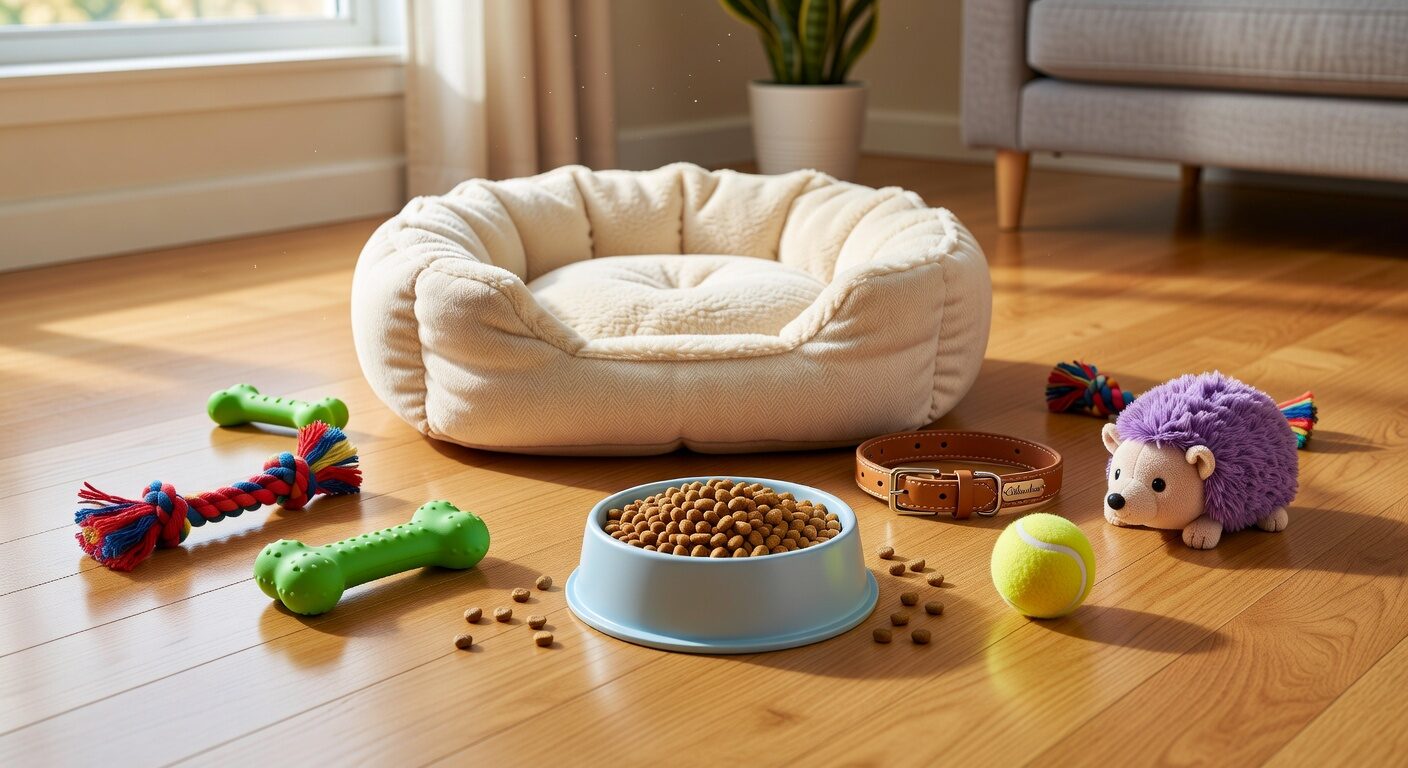
If you want to know about chihuahua home, you are in the right place. Understanding how to chihuahua puppy supplies starts with what actually happens in real life. In the two weeks before I picked up my chihuahua puppy Clover, I spent roughly four hundred dollars on supplies. I bought a crate, a carrier, three types of collars, two leashes, a retractable leash that I have never used, a bed that she ignored for the first three months, four kinds of treats, a brush, a comb, a nail trimmer I was terrified of, baby gates, chew toys, squeaky toys, a treat-dispensing ball, food and water bowls in a design that matched my kitchen, and a subscription to a monthly puppy box that arrived with items I still do not understand. About half of what I bought turned out to be needed. The other half was either unnecessary, wrong for a chihuahua, or purchased to make me feel prepared when preparation really just meant being ready to adapt.
Here is what I actually needed, what I wish I had skipped, and what nobody told me to buy that I had to run out and get at 9 PM on a Tuesday. For more detail, see the AKC Chihuahua breed health guide. For more detail, see the PetMD dog behavior resources.
The Crate: The Most Important Purchase You Will Make
I almost did not buy a crate because I thought it seemed cruel, and that mistake would have cost me weeks of housebreaking progress. A wire crate with a divider panel is the way to go for a chihuahua. The divider lets you make the interior space smaller when your puppy is young and expand it as they grow. The crate should be big enough for your dog to stand up, turn around, and lie down comfortably, but not so big that they can use one end as a bathroom.
Related: common Chihuahua health issues.
The wire style is better than a plastic carrier for home use because it lets your chihuahua see out in all directions, which makes them feel included in the household rather than isolated. Clover’s crate sits in the living room corner, draped with a light blanket on three sides to create a den-like feeling while still letting her see the room through the front. She goes in there voluntarily now when she wants quiet time, which is the whole point.
Collars, Leashes, and the Harness I Should Have Bought First
I bought a traditional buckle collar and a standard leash, both of which are fine for a chihuahua who already knows how to walk on a leash. For a puppy who does not, they are a recipe for a lot of choking and coughing and a very unpleasant walking experience. Chihuahuas have delicate throats and tracheas that can be easily damaged by pressure from a collar during leash training.
What I should have bought first was a harness. A properly fitted harness distributes pressure across the chest and shoulders instead of the throat, which is much safer for a small dog and much more comfortable during the learning process. I ended up buying one after Clover’s first walk, during which she pulled against the collar, gagged, and looked at me like I was trying to strangle her. The harness solved the problem immediately.
Treats: What Works for Training
I overbought on treats, but I also bought the wrong kinds. For training a chihuahua puppy, you want treats that are very small, soft, and can be consumed quickly so they do not interrupt the training flow. Hard biscuits that take thirty seconds to chew are not training treats. Small pieces of freeze-dried liver, tiny cubes of cheese, or commercial training treats that can be broken into pea-sized pieces are what you need. Clover responds best to dehydrated chicken, which I buy in strips and tear into tiny fragments.
Longer-lasting chews like bully sticks and dental chews are good for keeping your chihuahua occupied in their crate or during quiet time, but they are a separate category from training treats. And a note of caution on rawhide: some chihuahuas can have trouble with it, and pieces that break off can be a choking hazard for a dog this small. I avoid it entirely and use safer alternatives.
Chihuahua Puppy Supplies: Grooming Supplies for a Chihuahua
A soft slicker brush and a medium-toothed comb are your primary grooming tools. How often you need to use them depends on whether you have a smooth coat or long coat chihuahua. Clover is a smooth coat, so a weekly brushing is sufficient to remove loose hair and distribute skin oils. Long coat chihuahuas need more frequent brushing to prevent tangles and mats.
A nail trimmer is non-negotiable, but I understand the fear. Chihuahua nails are small and the quick, the blood vessel inside the nail, is easy to hit if you are not careful. Ask your vet or groomer to show you the proper technique before you attempt it yourself. I had my vet demonstrate it twice before I felt confident doing it at home, and even now I take it very slowly and trim a tiny bit at a time. com/8-chihuahua-training-tips-that-work/” title=”8 Training Tips That Actually Work for”>8 Training Tips That Actually Work for.
Baby Gates and Puppy-Proofing Your Space
Baby gates were one of my best purchases. They allowed me to restrict Clover’s access to certain areas of the apartment without closing doors, which meant she could still see and hear the household while being kept out of rooms that were not puppy-proofed. Stairs are a particular concern for chihuahua puppies because their joints are still developing and repeated stair climbing can cause problems. I blocked the stairs until Clover was over a year old and even now I limit her stair use.
What I Wish I Had Bought Sooner
An enzyme cleaner. I did not buy one until after the first accident, and by then the carpet had already absorbed enough to create a repeat offender spot. Buy it before you bring the puppy home.
A car seat or secured carrier for the car. Clover’s first car ride home was on my partner’s lap, which felt fine until she tried to climb under the brake pedal. A secured carrier or a dog car seat with a harness attachment keeps everyone safe. Understanding chihuahua home makes a real difference.
A simple first aid kit with gauze, antiseptic solution, tweezers, and your vet’s emergency number written on a card. You do not need it until you desperately need it.
Clover is a year old now and the tower of supplies I started with has been refined into a much smaller collection of things we actually use. The lesson I took away from the experience is that your chihuahua needs far fewer things than the pet store wants you to believe, but the things they do need have to be the right ones. For more on puppy preparation, read about caring for chihuahua puppies and check out these responsible care steps for chihuahua owners.
I have been through this with my own chihuahua. It is one of those things that looks simple on paper but gets complicated fast when you are actually dealing with a four-pound dog who has opinions about everything.
The truth about chihuahua home is that there is no single right answer. What works for one chihuahua might be completely wrong for another. Mine took weeks to adjust. Some dogs figure it out in days. The size of your chihuahua matters. Their age matters. Their personality matters most of all.
Here is what I wish someone had told me earlier. Start small. Do not try to change everything at once. Chihuahuas are stubborn but they are also sensitive. Push too hard and they shut down. Go too slow and nothing changes. The sweet spot is somewhere in the middle and you have to find it yourself.
I talked to other chihuahua owners about chihuahua home and heard the same thing over and over. Patience. Consistency. And a willingness to look a little silly in public because chihuahuas do not care about your dignity.
If you are just getting started with chihuahua home, give yourself grace. You will make mistakes. Your chihuahua will make more of them. That is the whole process. And honestly, once you get through the hard part, it is worth it.
Chihuahuas are one of the longest-lived dog breeds with an average lifespan of 14 to 16 years. Some reach 20 years with proper care. Regular vet checkups, dental care, a healthy diet, and maintaining proper weight all contribute to longevity. The oldest recorded chihuahua lived to be 22.
Chihuahuas can be good family dogs in homes with older children who understand gentle handling. They are too fragile for rough play with toddlers. Chihuahuas bond deeply with their family but may be wary of strangers. Proper socialization from a young age helps them be more accepting of new people.
Two 15 to 20 minute walks per day plus some indoor playtime meets most chihuahuas’ needs. They have more energy than people expect but tire out faster than larger breeds. Mental stimulation through puzzle toys and training sessions is just as important as physical exercise for this intelligent breed.
The most common health issues include dental disease, patellar luxation, heart murmurs, hypoglycemia in puppies, tracheal collapse, and hydrocephalus. Regular vet visits catch many of these early. Dental care is especially important because chihuahuas are prone to tooth loss and gum disease throughout their lives.
Chihuahuas bark because they are alert, protective, anxious, or bored. Their hearing is sharp and they react to sounds other dogs ignore. Training a reliable quiet command helps. Ignore demand barking completely. Address the underlying cause rather than just the noise. A tired chihuahua barks less than a bored one.
How long do chihuahuas live on average?
Chihuahuas are one of the longest-lived dog breeds with an average lifespan of 14 to 16 years. Some reach 20 years with proper care. Regular vet checkups, dental care, a healthy diet, and maintaining proper weight all contribute to longevity. The oldest recorded chihuahua lived to be 22.
Are chihuahuas good family dogs?
Chihuahuas can be good family dogs in homes with older children who understand gentle handling. They are too fragile for rough play with toddlers. Chihuahuas bond deeply with their family but may be wary of strangers. Proper socialization from a young age helps them be more accepting of new people.
How much exercise does a chihuahua need?
Two 15 to 20 minute walks per day plus some indoor playtime meets most chihuahuas’ needs. They have more energy than people expect but tire out faster than larger breeds. Mental stimulation through puzzle toys and training sessions is just as important as physical exercise for this intelligent breed.
What health problems are common in chihuahuas?
The most common health issues include dental disease, patellar luxation, heart murmurs, hypoglycemia in puppies, tracheal collapse, and hydrocephalus. Regular vet visits catch many of these early. Dental care is especially important because chihuahuas are prone to tooth loss and gum disease throughout their lives.
Why do chihuahuas bark so much?
Chihuahuas bark because they are alert, protective, anxious, or bored. Their hearing is sharp and they react to sounds other dogs ignore. Training a reliable quiet command helps. Ignore demand barking completely. Address the underlying cause rather than just the noise. A tired chihuahua barks less than a bored one.