There is a photo that stops people mid-scroll. A large pit bull carrying a tiny chihuahua in his mouth, gently, the way a mother cat carries kittens. The chihuahua is not struggling. She is relaxed, legs dangling, looking almost bored, like this is just how she gets around. And it is. Because the chihuahua is paralyzed, and the pit bull is her self-appointed mode of transportation. Regarding pit bull paralyzed chihuahua, I learned most of what I know the hard way.
Their names are Spike and Luna. They live with a family in New Mexico who adopted both dogs from the same rescue within a year of each other. Luna, a two-pound chihuahua, lost the use of her back legs after a spinal injury she sustained before being surrendered to the shelter. Spike, a five-year-old pit bull who had been returned to the shelter twice for being “too much energy,” took one look at Luna and decided she was his responsibility.
How Spike Became Luna’s Legs
The family did not train Spike to carry Luna. They did not even encourage it at first, because they were nervous about a large dog picking up such a fragile animal. But Spike was extraordinarily gentle with her from day one. He would lie next to her while she dragged herself around on her front legs. He would nudge her food bowl closer when she could not reach it. And then one day, when Luna was struggling to get from the living room to the kitchen, Spike picked her up by the scruff of her sweater and carried her there.
The family watched in stunned silence. Luna did not squirm. She did not cry. She just let Spike carry her, set her down gently near her food bowl, and went about her business. From that point on, Spike carried Luna whenever she seemed stuck or frustrated. Across the yard, through the house, from the bed to the water bowl. He became her mobility device, her chauffeur, her best friend.
Luna’s Condition
Luna’s paralysis is the result of intervertebral disc disease, which is relatively common in small breeds. Her back legs are completely non-functional, but she has full feeling and movement in her front legs and shows no signs of pain. The vet fitted her with a tiny wheelchair for outdoor use, which she tolerates but does not love. She prefers Spike. According to Wag Walking, dogs with rear paralysis can live full, happy lives with appropriate support and accommodation.
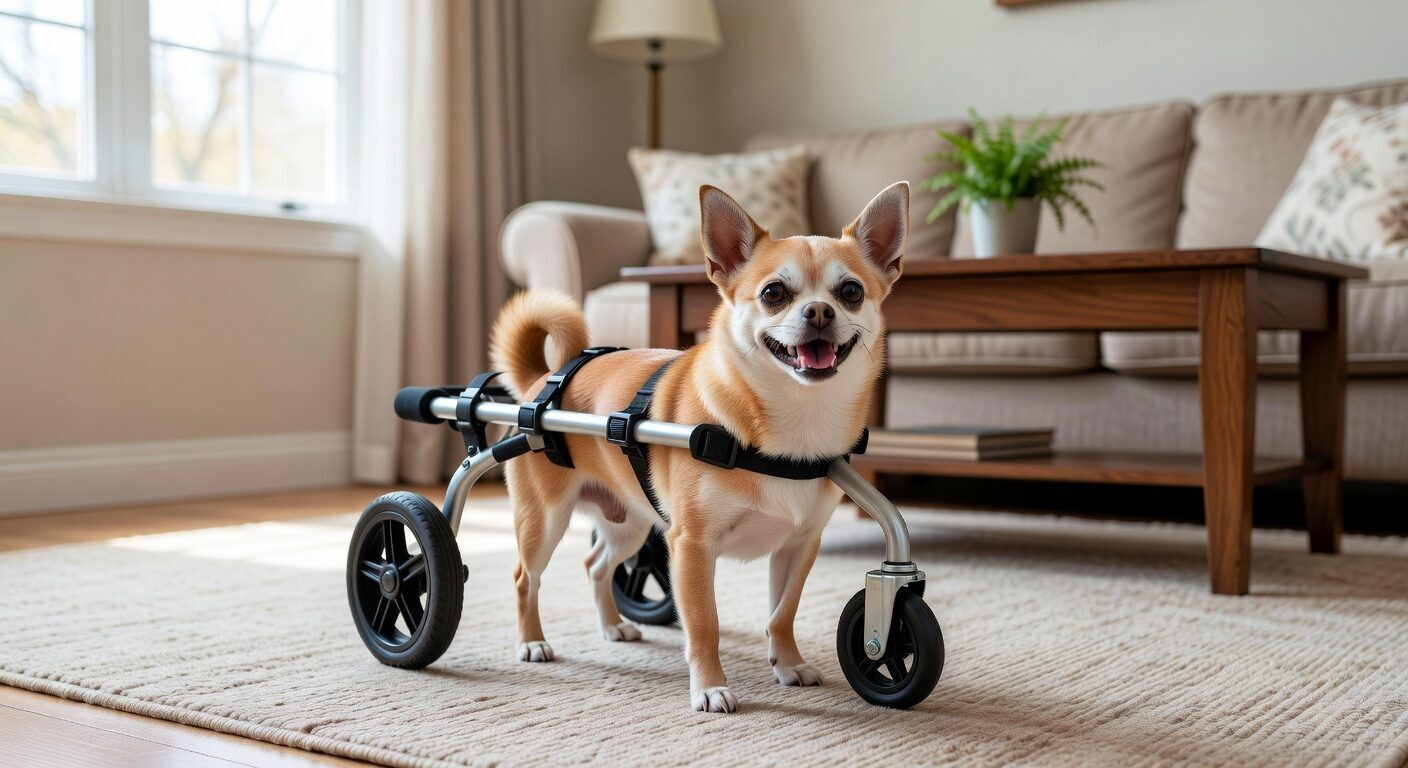
Chihuahua health issues like IVDD are a reality of the breed, and when they result in paralysis, the prognosis depends on the severity and the quality of care the dog receives. Luna’s family provides everything she needs, from daily physical therapy to ramps and padded surfaces. But Spike provides what no medical device can. Companionship that does not see disability.
This kind of interspecies care is well documented in animal behavior research. Dogs living together will often adjust their behavior to accommodate a companion’s limitations. Pit bulls and chihuahuas might seem like an odd pairing, but their relationship follows patterns scientists have observed across many species, the strong protecting the vulnerable, not out of obligation, but out of bond.
Spike and Luna Today
Luna is three years old now and thriving. She scoots around the house on her front legs with impressive speed, uses her wheelchair in the yard, and rides in Spike’s mouth when she decides the distance is too far for scooting. Spike, whose “too much energy” got him returned to the shelter twice, has found the perfect outlet for all that drive. He has a purpose. He has a tiny chihuahua who needs him, and he shows up for her every single day.
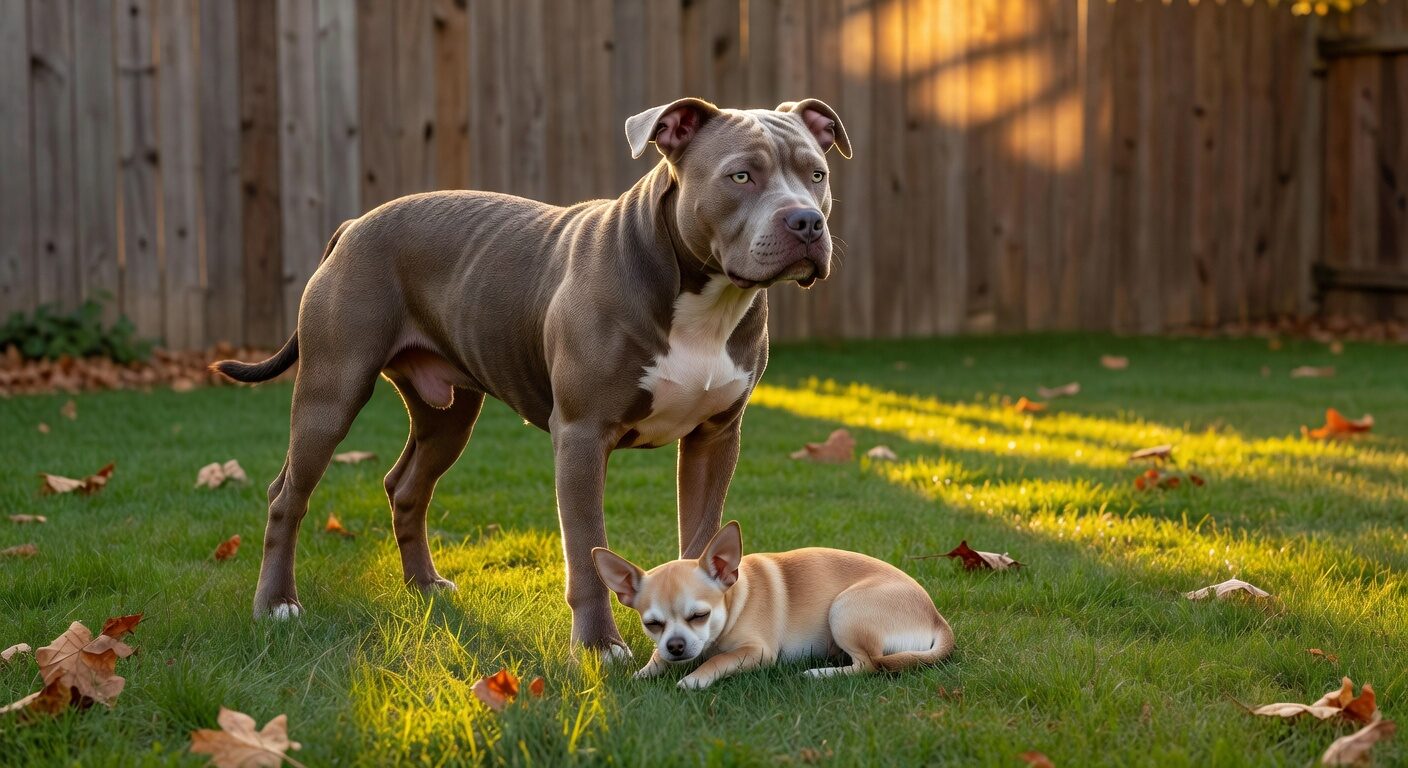
The family says adopting both dogs was the best decision they ever made. Not because it is easy, managing a paralyzed chihuahua and a high-energy pit bull is a full-time commitment, but because watching these two together is a daily reminder that love does not care about limitations. It just figures out a way to carry them.
The Bond Between Chihuahuas That Goes Beyond What We Expect
What strikes me most about stories like this one is how they challenge our assumptions about what dogs are capable of feeling and doing for each other. We tend to think of empathy and caregiving as uniquely human traits, or at least as traits that exist in dogs primarily in relation to their human companions. But the relationship between these two dogs demonstrates something deeper. The pit bull in this story did not learn to carry his paralyzed companion through training or commands. He did it because something in their bond compelled him to help. I have witnessed similar dynamics on a smaller scale in my own household. When one of my chihuahuas had surgery and was recovering in a cone and moving gingerly, my other chihuahua adjusted her behavior completely. She stopped initiating play, she gave the recovering dog the preferred sleeping spot without being asked, and she would position herself next to her sister during rest periods as if standing guard. Nobody taught her to do any of that. The capacity for compassion between dogs is something we are only beginning to understand scientifically, and stories like this pit bull and his paralyzed friend give us a window into just how profound those interspecies bonds can be. com/20-best-dog-foods-for-chihuahuas-in-2023/” title=”Best Dog Foods for Chihuahuas”>Best Dog Foods for Chihuahuas.
What Caring for a Disabled Dog Actually Looks Like
Stories about disabled dogs get a lot of attention online, and they should, but I think we owe it to these animals and their caregivers to talk honestly about what daily life looks like beyond the heartwarming viral moment. Caring for a paralyzed or mobility impaired dog is a significant commitment that affects every aspect of your routine. The dog may need help with bathroom functions, which means manual bladder expression or diaper management multiple times a day. Pressure sores are a constant concern for dogs who cannot reposition themselves, requiring regular skin checks and padded bedding. Physical therapy, whether through a professional or through exercises at home, becomes a regular part of the schedule. The financial aspect is real too, with wheelchairs, specialized equipment, veterinary specialists, and medications adding up quickly. I am not saying any of this to discourage people from caring for disabled dogs. I am saying it because the people who do this work every day deserve recognition for the sustained effort it requires, not just applause for the cute video. The owner of these dogs mentioned that the hardest part was not the physical care itself but the emotional toll of watching your dog struggle with things that used to come easily. That resonated with me because I have experienced a version of it with aging chihuahuas whose mobility declined in their senior years, and even on a smaller scale it is emotionally demanding in ways you cannot fully prepare for.
Why Stories Like This Matter for How We See All Breeds
I want to address something specific about this story that I think is important for the broader conversation about how we perceive different dog breeds. The dog doing the carrying in this story is a pit bull, a breed that faces enormous prejudice and breed specific legislation in many places. The pit bull in this story is gentle, attentive, and devoted to his disabled companion. He embodies everything that responsible pit bull owners have been trying to tell the world for years, that these dogs are capable of extraordinary tenderness and loyalty when they are raised in loving environments. I think about this parallel a lot in relation to chihuahuas, who face their own set of breed stereotypes. Chihuahuas are dismissed as aggressive, yappy, and difficult, just as pit bulls are unfairly characterized as dangerous. Both breeds suffer from reputations that are shaped more by irresponsible ownership and media portrayal than by anything inherent to the dogs themselves. Stories like this one remind us to look at individual dogs rather than breed labels. The pit bull who carries his paralyzed friend is not exceptional because he is a pit bull doing something surprising. He is exceptional because he is a dog demonstrating the depth of connection that any breed is capable of when given the chance. Every time we share these stories and celebrate the individual dog rather than reinforcing breed assumptions, we push back against the kind of thinking that leads to breed bans and discrimination that costs good dogs their homes and sometimes their lives.
For more detailed guidance on this topic, the VCA Hospitals offers excellent resources backed by veterinary professionals.
I have been through this with my own chihuahua. It is one of those things that looks simple on paper but gets complicated fast when you are actually dealing with a four-pound dog who has opinions about everything.
The truth about pit bull paralyzed chihuahua is that there is no single right answer. What works for one chihuahua might be completely wrong for another. Mine took weeks to adjust. Some dogs figure it out in days. The size of your chihuahua matters. Their age matters. Their personality matters most of all.
Here is what I wish someone had told me earlier. Start small. Do not try to change everything at once. Chihuahuas are stubborn but they are also sensitive. Push too hard and they shut down. Go too slow and nothing changes. The sweet spot is somewhere in the middle and you have to find it yourself. The American Kennel Club has useful guidance on this for chihuahua owners.
I talked to other chihuahua owners about pit bull paralyzed chihuahua and heard the same thing over and over. Patience. Consistency. And a willingness to look a little silly in public because chihuahuas do not care about your dignity. com/toddler-still-grieving-chihuahua-after-3-years/” title=”Toddler Still Grieving Chihuahua After”>Toddler Still Grieving Chihuahua After.
If you are just getting started with pit bull paralyzed chihuahua, give yourself grace. You will make mistakes. Your chihuahua will make more of them. That is the whole process. And honestly, once you get through the hard part, it is worth it.
The family did not train Spike to carry Luna. They did not even encourage it at first, because they were nervous about a large dog picking up such a fragile animal. But Spike was extraordinarily gentle with her from day one.
Luna’s paralysis is the result of intervertebral disc disease, which is relatively common in small breeds. Her back legs are completely non-functional, but she has full feeling and movement in her front legs and shows no signs of pain.
Luna is three years old now and thriving. She scoots around the house on her front legs with impressive speed, uses her wheelchair in the yard, and rides in Spike’s mouth when she decides the distance is too far for scooting.
I have been through this with my own chihuahua. It is one of those things that looks simple on paper but gets complicated fast when you are actually dealing with a four-pound dog who has opinions about everything.
She is relaxed, legs dangling, looking almost bored, like this is just how she gets around.
The family watched in stunned silence.