
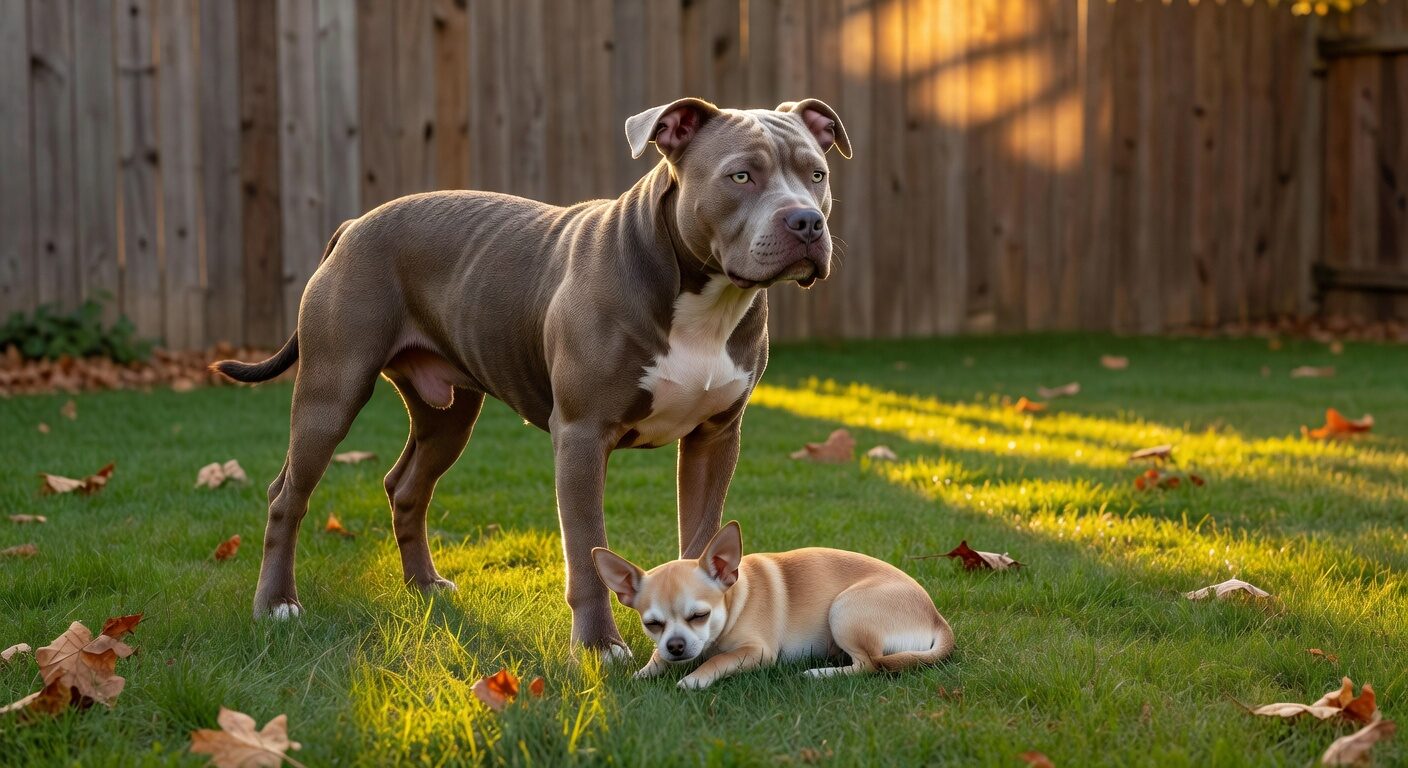
On a small farm twenty miles east of Albuquerque, in a household that has, by my last count, seven dogs and eighteen acres, a five-year-old American pit bull terrier named Spike picks up a two-pound chihuahua named Luna and carries her, gently in his mouth the way a mother cat carries kittens, to the next room she has decided to be in. Luna is paralyzed below the shoulders from a spinal injury she sustained as a young dog before she was surrendered to the rescue. Her back legs do not move. Spike has, by his own working definition, become Luna's legs.
Tag @ChihuahuaCorner or use #TinyButLegendary if you want us to consider your story for an upcoming piece.
favoriteThe household is one I have been calling for two years. The owner is a hospice nurse named Carmen; the dogs were adopted from a small-breed rescue in Bernalillo County within nine months of each other, in 2023. The cross-species story belongs to a category the magazine's archive files under chihuahua hero stories, but the more accurate description is that Spike has done a kind of work the household had not asked him to do.
How They Met
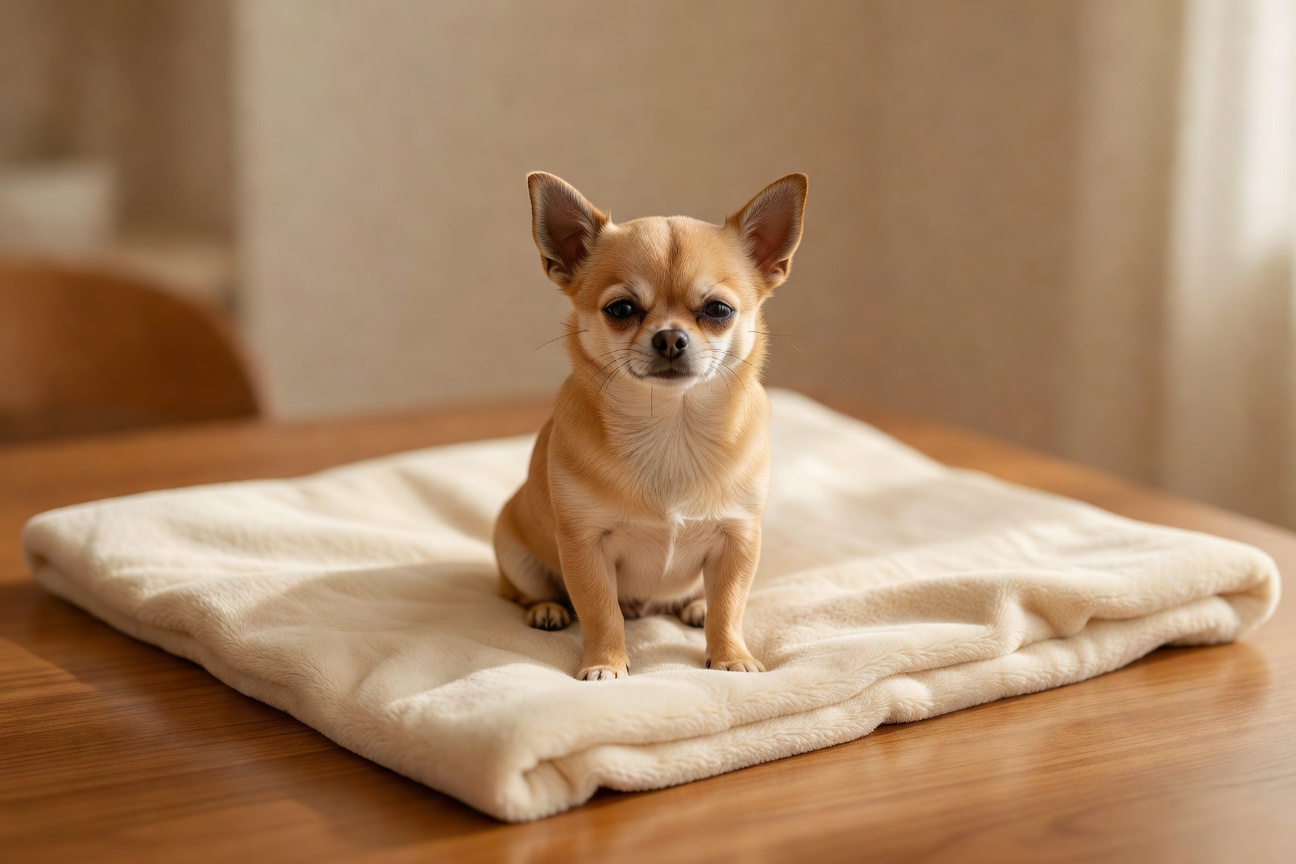
Luna came home first. The rescue had pulled her from a county shelter where she had been surrendered with the spinal injury and slated for euthanasia; the foster who pulled her had a small-dog cart at home and the patience to teach her to use it. Carmen adopted Luna at two and a half years old; the cart was part of the package. The 2017 study by Hetts and Estep, summarized in the Journal of Veterinary Behavior, treats long-term mobility-aid integration in toy breeds as achievable for most temperaments; Luna adapted to the cart in three weeks.
Spike came home eight months later. He had been returned to the same shelter twice, both times for "too much energy"; he was four at adoption, sixty-two pounds, with a soft-mouthed, retrieve-driven temperament that the second returning family had specifically described as "she keeps trying to bring me things." The shelter was on the verge of pulling his evaluation when Carmen walked in.
How Spike Became Luna's Legs
The household did not train this. Carmen is specific on this point, having been asked about it by every visitor for the last two years: nobody asked Spike to carry Luna; nobody encouraged it; the first time he did it, Carmen was deeply uneasy and watched the entire interaction with her hand on his shoulder ready to intervene. The pit bull picked up the chihuahua in his mouth, walked the twenty feet from the kitchen to the back porch, and put her down in the patch of sun she had been trying to reach.
He has, in the two years since, refined the technique. He carries Luna by the loose skin at the back of her neck, the way a mother cat carries kittens, never by a limb or by the harness. He drops her, soft, on whatever surface he has decided she was heading for. He does this approximately three to four times a day, by Carmen's observation, in the absence of any reinforcement or training.
The cross-species cognitive literature does not have a clean explanation for this. The closest framework is the 2018 work by Bensky, Gosling, and Sinn in Animal Cognition on canine task generalization; the model accepts that a dog who has had retrieve and "soft mouth" experience can transfer the behaviors to novel targets, but the proximate motivation in cases like Spike's is not well-characterized. The household interpretation is that Spike has, on his own time, decided Luna is his responsibility.
What the Veterinarian Says
The dog's veterinarian, a Dr. Khoury at the Bernalillo Veterinary Group, has examined Luna six times since the carrying behavior began and found no signs of stress, restraint injury, or behavioral disturbance attributable to the practice. Spike's mouth pressure on the chihuahua's scruff is, by Dr. Khoury's assessment, well within the soft-mouth range that retriever lineages and well-temperamented pit bulls share. He has cleared the practice as safe; he has not commented on whether it should be encouraged or discouraged, because, as he told Carmen on the second visit, the dogs have already negotiated the arrangement.
A Small Final Image
The photograph that has circulated most widely, and the one that prompted my first call to Carmen, was taken last March on the back porch in Tijeras. Spike is standing with Luna in his mouth, looking off-frame at something Carmen had stepped out to photograph. Luna is hanging from his jaw, her front legs folded against her chest, her face entirely composed, looking at the camera the way a person looks at a camera they have been photographed by many times. The companion piece on Meatball and Taco in Austin covers a different cross-species bond at the lighter end; the Spike-and-Luna case is the working version.
For more reportage from the field, browse the Stories desk or subscribe for the next dispatch.
Community Insights favorite
We asked our readers: Has your Chihuahua done something bold? Here's what you shared.
“My chihuahua chased a raccoon out of our garage. We are still not sure who was more surprised.”
“Tiny but mighty. These dogs have no idea how small they are.”
“Not just a story. The chihuahua spirit, in three pounds.”
Tag @ChihuahuaCorner or use #TinyButLegendary if you want us to consider your chihuahua story for an upcoming piece.
Know a Chihuahua with a legendary story? If you have a chihuahua story we should look into, tell us where it happened.
favorite