

If you have a chihuahua at home, or you are about to bring one home, the three chihuahua health problems below are the ones that send pet parents to the emergency clinic most often, and most of them are preventable. The good news is that once you know what to watch for, you can spot trouble early, take a clear next step, and keep your dog out of the after-hours queue. This article is the explainer your veterinarian wishes you had read before your first visit.
Chihuahuas are not delicate. They are small, and small means the margin for error is tighter than what owners of bigger breeds are used to.
First: The Size-Related Risks Other Breeds Shrug Off
The first thing every owner must know is that the average chihuahua weighs three to six pounds, the same as a bag of flour. The bone structure is thin, the trachea is delicate, and the skull, in puppies and some small adults, has a soft spot called an open fontanel where the skull plates have not fused. None of that is a defect. It is the breed standard. It does change what counts as safe in your home. The Merck Veterinary Manual catalogues these breed-specific traits in detail.

Drops from couch height can cause a spiral fracture of a chihuahua's foreleg, the kind of injury a Labrador shrugs off. Pick your dog up, do not let your dog jump down. Look before you sit, because chihuahuas burrow into laundry, couch cushions, and blankets. Switch from a standard collar to a Y-front harness, since collar pressure on a small trachea can trigger a cough or worse. And keep human medications in a closed cabinet, not on a nightstand, because a single regular-strength acetaminophen tablet can be fatal for a dog this size.
Call your veterinarian within twenty-four hours for any limp that does not resolve in an hour, any cry of pain when you pick your dog up, any swelling at the top of the head in a young puppy, or any cough that sounds like a goose honk. A spiral fracture repair runs $1,500 to $4,000 depending on your region, and pet insurance for chihuahuas is generally affordable because the dog is small. Talk to your veterinarian about whether a plan makes sense for your household, and review the AVMA pet owner resources for breed-aware questions to bring to the visit.
Second: Hypoglycemia, the Toy-Breed Trap
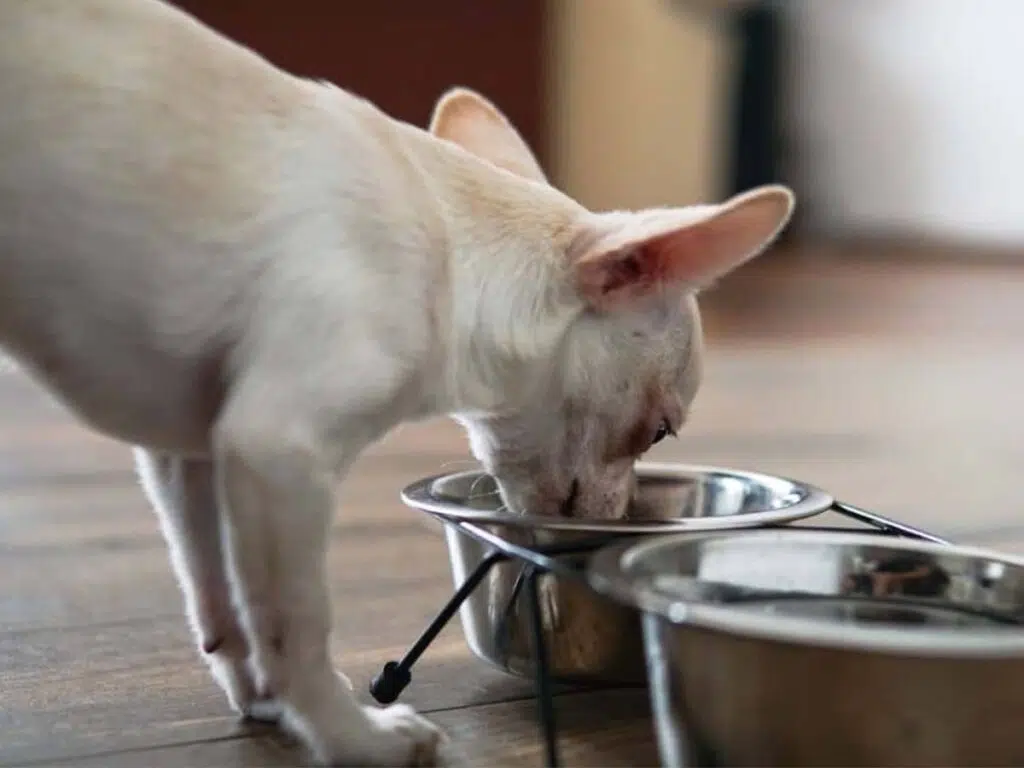
The second thing every owner must know is chihuahua hypoglycemia, low blood sugar, the condition that catches more new owners off guard than any other. Toy breeds carry very little body fat, and they burn through glucose quickly. A skipped meal, a long play session, a stressful car ride, or a cold morning can be enough to drop a chihuahua's blood sugar into dangerous territory. Puppies under six months are at the highest risk.
The signs progress in a recognizable order. First, sudden lethargy after a period of normal play, very tired and not interested in normal activities. Then weakness in the back legs, wobbling, an unsteady walk. Then glassy eyes, slow blinking, a checked-out look. Then pale or grey gums (lift the lip, press gently, normal gums are pink and refill in under two seconds), tremors or muscle twitching, and finally collapse, seizure, or unresponsiveness. Knowing the order is the difference between a corn-syrup fix at home and a 2 a.m. emergency visit.
At the first sign, rub a half-teaspoon of corn syrup, honey, or commercial glucose paste like Nutri-Cal or Nutri-Stat onto the gums. Do not pour anything down the throat of an unresponsive dog, since aspiration is a real risk. Get the dog warm, wrap them in a towel, and call your veterinarian right away. Any chihuahua who has had a hypoglycemic episode needs to be seen, even if the corn syrup worked, because repeated episodes can point to a liver shunt, parasites, or another underlying cause your veterinarian will want to rule out.
Prevention is mostly a feeding-schedule problem. Puppies need four small meals a day until twelve weeks, then three until six months. Adults do best on two meals a day, not one. Keep a tube of glucose paste in your bag, in the car, and by the bed. The cost is about eight dollars, and it has saved more chihuahuas than any other single item on this list.
Third: Patellar Luxation, the One in Four
The third thing every owner must know is chihuahua patellar luxation, because roughly one in four small-breed dogs will develop some grade of it in their lifetime. The kneecap, the patella, slips out of the groove it is meant to ride in. Sometimes it slips back on its own. Sometimes it does not.
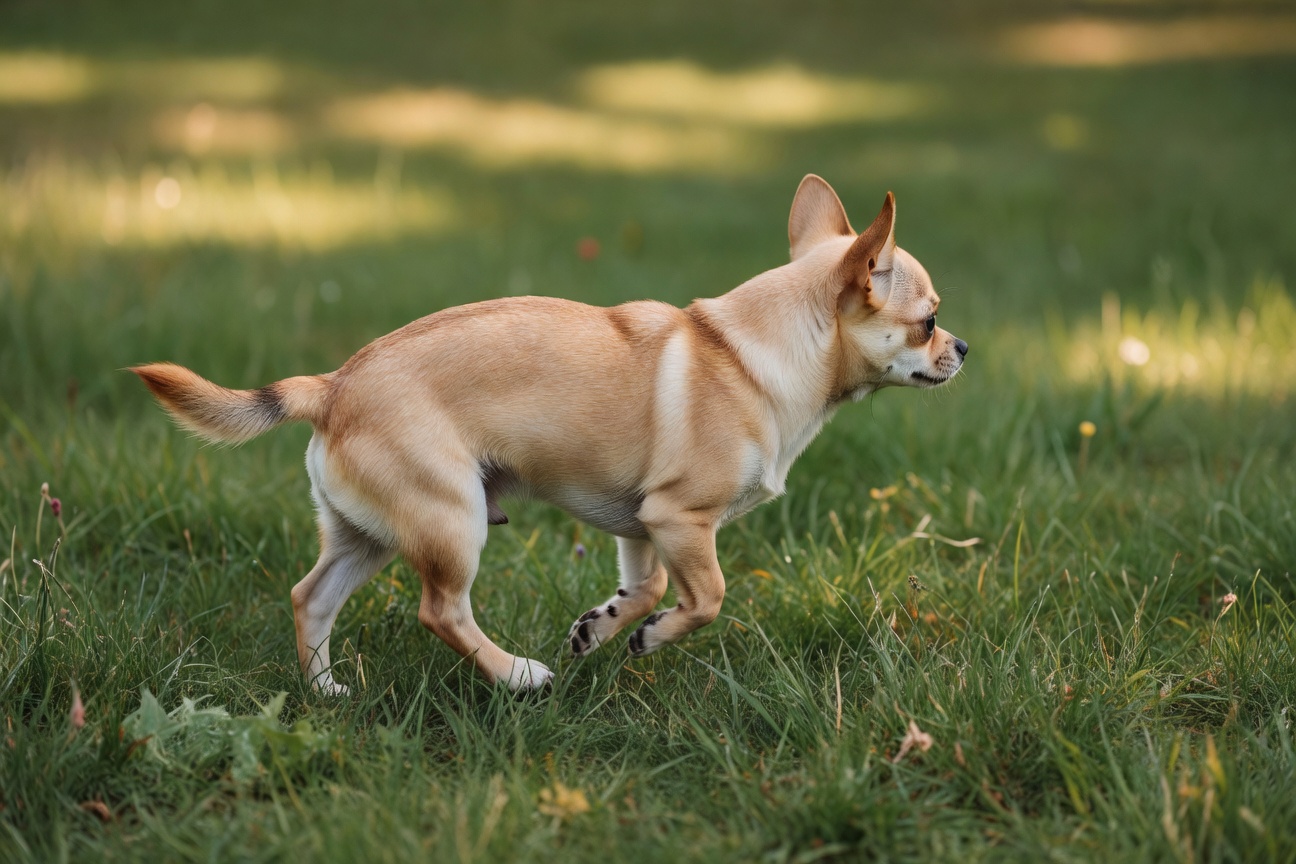
At home, what you will see is a sudden skip in the back-leg gait, where your dog hops on three legs for a few strides and then resumes a normal walk. Other signs include a reluctance to jump up onto a step or a couch, a back leg held out to the side or kicked back during a stretch, and stiffness on cold mornings that loosens up with movement.
Patellar luxation is graded one through four by your veterinarian. Grades one and two are often managed conservatively with weight control, joint supplements, controlled exercise, and a soft, supportive bed. Grades three and four often need surgery, and a board-certified veterinary surgeon is the right person to do it. Surgical repair runs $1,500 to $3,500 per knee depending on your region. Schedule a vet visit, not an emergency visit, any time you see the skipping gait more than once or twice a week, or any time your dog is reluctant to bear weight on a back leg the morning after activity.
There is prevention you can start this week. Keep your chihuahua at a lean weight, ribs easily felt, waist visible from above. Skip the couch jumps and use a small ramp or pick the dog up. Walk on grass and dirt rather than concrete when you can. Ask your veterinarian whether a glucosamine and omega-3 joint supplement is appropriate for your individual dog.

The Five-Minute Weekly Check
Most chihuahua health issues announce themselves quietly before they become emergencies. Five minutes a week, the same time you trim a human nail or change the bedsheets, is enough to catch them. Weigh your dog on a kitchen scale, since a quarter-pound shift in either direction in a dog this size is a real change. Lift the lip and look at the teeth and gums for tartar at the gumline or a smell. Feel each kneecap with a thumb to check that it sits firmly in its groove. Check the eyes and ears for discharge, head shaking, or odor. Run your hands over the ribs, and you should feel each one like piano keys under a thin sheet.
When to call your veterinarian, summarized.
| Situation | Call within |
|---|---|
| Limp that does not resolve in 1 hour | 24 hours |
| Cough that sounds like a goose honk | 24 hours |
| Hypoglycemic episode (any age, any duration) | Same day |
| Recurring back-leg "skip" | This week |
| Pale or grey gums | Immediately, emergency clinic |
| Seizure or collapse | Immediately, emergency clinic |
Common First-Visit Questions
A few questions come up in nearly every first chihuahua visit. Are chihuahuas a hard breed for first-time owners? They are not the easiest, but they are not the hardest either. The size makes the medicine more demanding, and the intelligence makes the training rewarding. What is the most common chihuahua health problem? Dental disease, by a wide margin, because the mouth is small and the teeth are crowded. The companion why chihuahua dental care matters piece covers the home brushing routine in detail. Daily tooth brushing and an annual dental cleaning at your veterinarian's office are the two highest-return habits in the breed. Can I give my chihuahua human medication in a pinch? No. Acetaminophen, ibuprofen, naproxen, and aspirin are all dangerous in this size range. Call your veterinarian, or after hours, the ASPCA Animal Poison Control Center at (888) 426-4435.
Watch the size-related risks, keep glucose paste close, learn the patellar skip on sight, and run the five-minute weekly check. Talk to your veterinarian if anything in this article describes what you are seeing at home, especially if it is new, has changed, or is happening more than once or twice a week.
Editorially reviewed against AVMA pet owner guidance and the Merck Veterinary Manual. This article is for informational purposes and does not replace a veterinary examination. If your chihuahua's symptoms are new, escalating, or unfamiliar, contact your veterinarian.
Health at a Glance: What to Watch monitor_heart
| Condition | Key Signs | Prevention Tips |
|---|---|---|
| Dental Disease | Bad breath, tartar, red gums | Daily brushing, dental treats |
| Patellar Luxation | Limping, skipping, leg lifting | Weight control, avoid high jumps |
| Tracheal Collapse | Dry cough, gagging | Harness walking, avoid smoke |
| Heart Disease | Coughing, fatigue, fainting | Regular check-ups, heart-healthy diet |
| Hypoglycemia | Shaking, weakness, lethargy | Small, frequent meals |
Community Insights – FAQ help
help_outline Are chihuahuas a hard breed for first-time owners? expand_more
They are not the easiest, but they are not the hardest either. The size makes the medicine more demanding, and the intelligence makes the training rewarding.
help_outline What is the most common chihuahua health problem? expand_more
Dental disease, by a wide margin, because the mouth is small and the teeth are crowded. The companion why chihuahua dental care matters piece covers the home brushing routine in detail. Daily tooth brushing and an annual dental cleaning at your veterinarian's office are the two highest-return habits in the breed.
help_outline Can I give my chihuahua human medication in a pinch? expand_more
No. Acetaminophen, ibuprofen, naproxen, and aspirin are all dangerous in this size range. Call your veterinarian, or after hours, the ASPCA Animal Poison Control Center at (888) 426-4435.
Have a health question? Ask your question in the comments. We will bring it up with the vet team.
favorite