
Is a merle chihuahua just a chihuahua with a prettier coat, or is there something going on under the surface you should know about before you fall in love with one? The short answer: the marbled coat is genuinely striking, and the gene that makes it carries real health implications you deserve to understand. Knowing how merle works will not change how much you love your dog, but it will make you a far better advocate for that dog at the vet's office.
I am writing this as a veterinarian, not a breeder or a show judge. My interest is what the merle gene does to a chihuahua's ears, eyes, and skin, and helping you ask the right questions before you bring one home.
What "merle" actually is
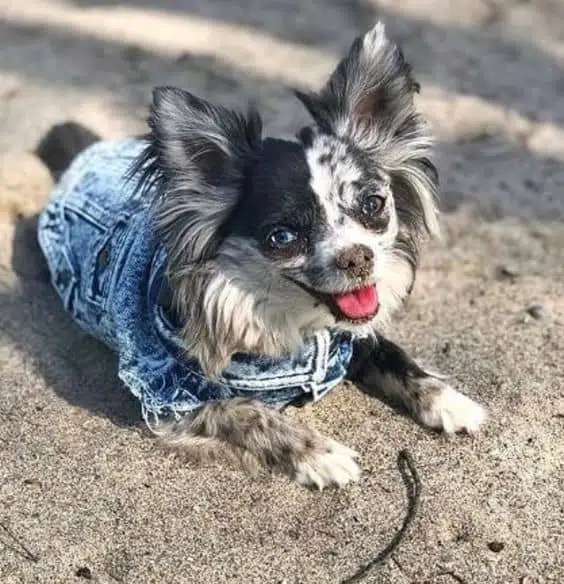
Merle is not a color. It is a pattern caused by a gene, sometimes called "dapple" in other breeds, that dilutes random patches of the base coat and leaves the rest at full saturation. The result is that marbled, mottled look: dark splotches scattered across a lighter, washed-out background. The same gene can streak the nose, lighten the skin, and turn one or both eyes blue.

Here is the part that matters medically. The merle gene is what geneticists call a modifier, meaning it changes how pigment is distributed throughout the body, not only in the coat. Pigment cells, called melanocytes, do more than add color. In the inner ear and parts of the eye, these same cells are involved in normal development. When the merle gene disrupts pigment in those tissues, it can disrupt their function too. That is the thread connecting a pretty coat to a potential hearing or vision problem, and it is why this is a health topic and not just a cosmetic one.
One copy versus two: why double merle is the real issue
Most merle chihuahuas you meet carry a single copy of the merle gene. They have the marbled coat, and a single-copy merle is usually a typical, healthy dog with a striking pattern.
The trouble starts when two merle dogs are bred together. When a puppy inherits a merle gene from both parents, it is what breeders call a "double merle," and the effects compound rather than blend. These puppies are often largely white, because so much pigment has been suppressed, and that loss of pigment is exactly where the danger lives.
The two conditions most strongly associated with double-merle breeding are congenital deafness and a cluster of eye abnormalities. "Congenital" simply means present at birth. The hearing loss can affect one ear or both, and because it is structural, it does not improve as the puppy grows. The eye defects can include an unusually small eye (microphthalmia), problems with the iris and pupil, and other developmental abnormalities that affect vision. This association between two merle copies and sensory defects is documented across the breeds that carry the gene. You can read more about merle genetics from the University of Cambridge Department of Veterinary Medicine.
I want to be careful here, because absolutes are rarely honest in medicine. Not every double-merle puppy will be deaf or blind, and severity varies. But the risk is meaningfully elevated, well documented, and entirely avoidable. That last point is the one that matters.
Signs to watch for in a merle puppy or dog
If you already share your life with a merle chihuahua, or you are evaluating one, here are the things worth paying attention to:
- Not startling at sounds, sleeping through noise that should wake a dog, or not responding to its name when it cannot see you
- Bumping into furniture, hesitating at steps or curbs, or seeming uncertain in dim light
- One or both eyes that look unusually small, cloudy, or structurally different from a typical chihuahua eye
- A coat that is almost entirely white, especially around the head and ears, which can be a marker of the double-merle pattern
- Increased squinting or sensitivity in bright sun, which is common in dogs with blue eyes and light pigment
A blue eye on its own is not a diagnosis. Plenty of merle dogs have one or two blue eyes and see perfectly well. These signs are reasons to ask questions, not reasons to panic.
When to talk to your veterinarian
Bring up the following with your veterinarian rather than waiting:
- If you suspect your dog is not hearing well, ask whether a BAER test (brainstem auditory evoked response) is available. It is the objective way to measure hearing, and it can test each ear separately.
- If the eyes look abnormal or your dog seems to be struggling to see, ask for a referral to a veterinary ophthalmologist for a proper exam.
- If your dog has the pale, pigment-poor skin that often comes with the merle pattern, ask about sun protection. Light skin sunburns more easily, and chronic sun exposure raises the long-term risk of skin damage.
The good news is that deafness and low vision are not the end of a good life. Many deaf or partially sighted chihuahuas live full, happy lives with owners who learn hand signals, keep routines predictable, and supervise them around stairs and streets. The knowledge just lets you parent that dog well, with eyes open.
What responsible breeding looks like
Almost everything difficult about the merle pattern traces back to one decision: pairing two merle dogs. Ethical breeders do not do this. The standard, sensible practice is to breed a merle dog only to a non-merle partner, which produces merle puppies without stacking two copies of the gene and without the elevated deafness and eye risk that comes with it.
There is one wrinkle worth knowing, because it trips up even well-meaning breeders. Some dogs carry a "cryptic" or "ghost" merle gene, meaning they have the gene but show little or no merle pattern in their coat. A dog like this can look solid-colored and still pass merle to its puppies. If it is unknowingly bred to another merle, you get a double-merle litter by accident. This is exactly why DNA testing matters. A reputable breeder genetically tests their breeding dogs rather than relying on what the coat looks like.
If you are looking for a merle chihuahua, ask a breeder three direct questions: Were both parents DNA tested for the merle gene? Was this litter a merle-to-non-merle pairing? Have the puppies had their hearing and eyes checked? A breeder who welcomes those questions is the kind you want. A breeder who gets defensive is telling you something too.
It is also worth knowing that the merle pattern in chihuahuas is contested within the breed world. Some kennel clubs have declined to register merle chihuahuas, partly because the pattern is not considered native to the breed and partly because of these welfare concerns. That debate is beyond what you need for your dog's health, but it is the backdrop to why you will see strong opinions on both sides.
The bottom line
A merle chihuahua can be a healthy, wonderful dog. The pattern itself does not doom an animal, and a single-copy merle from a thoughtful breeder is, in most respects, just a chihuahua with an unusual coat. The real, avoidable harm comes from double-merle breeding, which raises the risk of being born deaf, visually impaired, or both. Understanding that distinction is what separates an impulse buy from an informed decision.
This article is general information, not a diagnosis for your individual dog. If you have a merle chihuahua and you are worried about its hearing, vision, or skin, talk to your veterinarian, and ask specifically about a BAER hearing test and an ophthalmology referral if the signs above sound familiar. The point of all this is simply to make you better equipped to speak up for that dog when it counts.
Keep reading: Chihuahua Health Problems: 3 Things Every Owner Must Know
Health at a Glance: What to Watch monitor_heart
| Condition | Key Signs | Prevention Tips |
|---|---|---|
| Dental Disease | Bad breath, tartar, red gums | Daily brushing, dental treats |
| Patellar Luxation | Limping, skipping, leg lifting | Weight control, avoid high jumps |
| Tracheal Collapse | Dry cough, gagging | Harness walking, avoid smoke |
| Heart Disease | Coughing, fatigue, fainting | Regular check-ups, heart-healthy diet |
| Hypoglycemia | Shaking, weakness, lethargy | Small, frequent meals |
Community Insights – FAQ help
help_outline When should I call my vet about a behavior change? expand_more
Sooner than feels reasonable. A change in appetite, energy, or routine that lasts more than 48 hours is worth a phone call, not a wait-and-see.
help_outline How often should a healthy adult chihuahua see the vet? expand_more
Once a year through age seven. Twice a year from eight on. Dental checks are part of every visit.
help_outline Do chihuahuas need different care than larger breeds? expand_more
Yes. Smaller medication dosing, more frequent dental work, and closer monitoring for tracheal and patellar issues are standard in toy-breed care.
Have a health question? Ask your question in the comments. We will bring it up with the vet team.
favorite