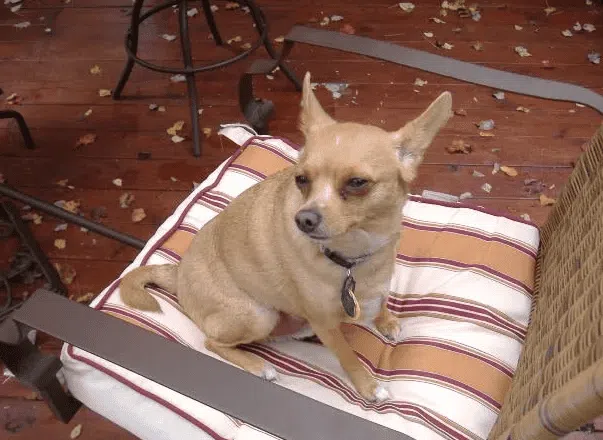

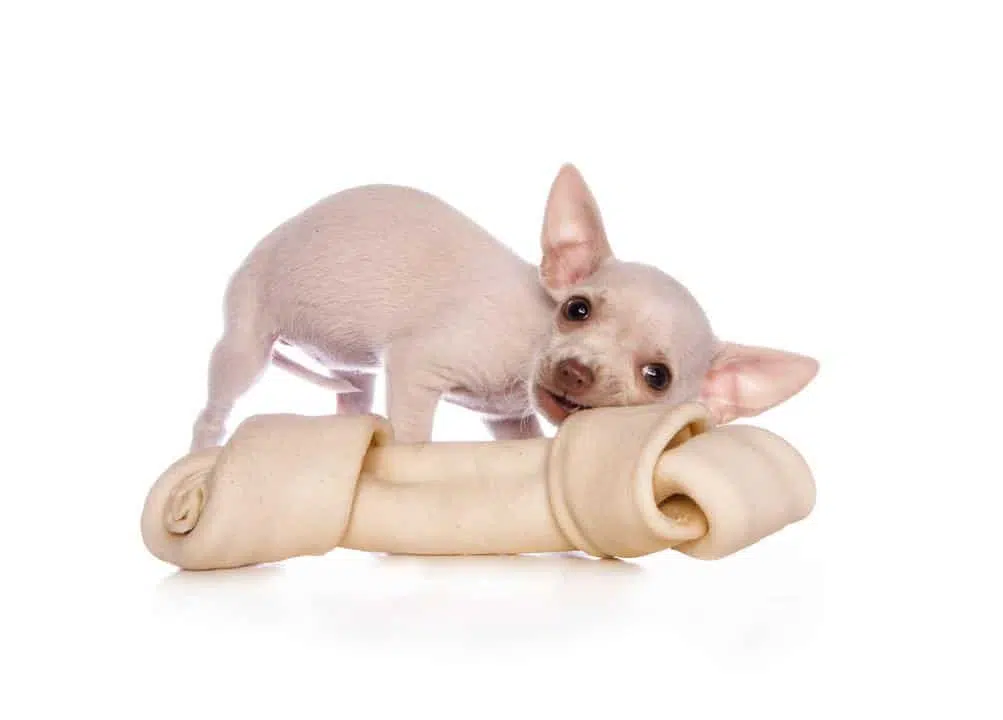
Why does my Chihuahua puppy have a dome-shaped head and seem a step behind her littermates? If the top of your puppy's skull is rounded and high, her eyes drift down or out, and she is slow to catch on to house training and basic learning, you may be looking at hydrocephalus. It is one of the breed-specific conditions Chihuahua parents should know about, and the good news is that recognizing it early gives you the best shot at protecting your puppy's brain.
Here is the plain-English version of what your veterinarian will explain.
What hydrocephalus actually is
Hydrocephalus, often translated as "water on the brain," is a buildup of cerebrospinal fluid inside the skull. Cerebrospinal fluid (the clear fluid that normally cushions and bathes the brain and spinal cord) is produced, circulated, and reabsorbed in a steady loop. When that loop is blocked or the fluid cannot drain properly, it collects in the spaces inside the brain called the ventricles. As the fluid accumulates, it raises the pressure inside the skull and presses on the developing brain tissue.
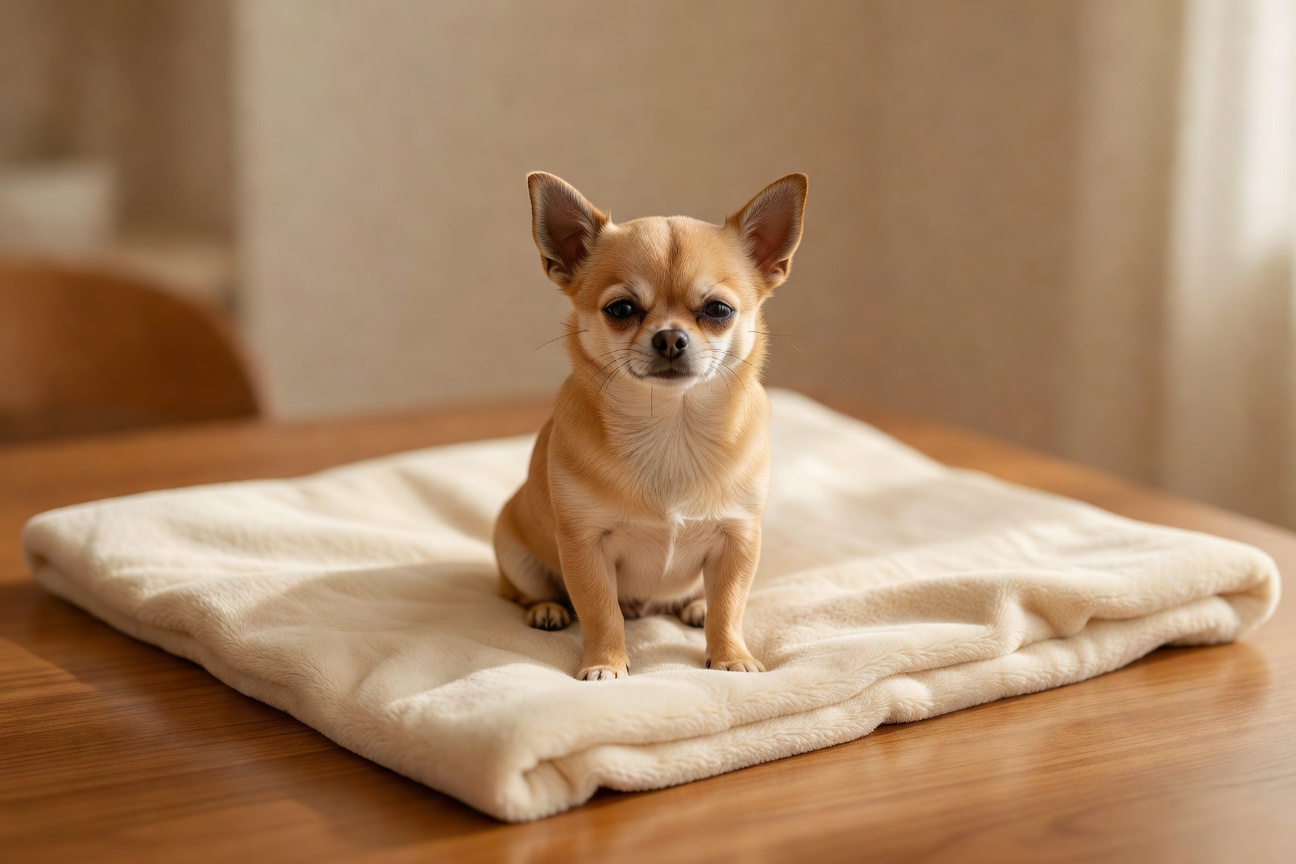
In puppies, that pressure has somewhere to go at first, which is part of why we see it in young Chihuahuas before anywhere else.
Why toy and apple-head Chihuahuas are on the list
Hydrocephalus is most often congenital, meaning a puppy is born with it, and it shows up disproportionately in small and toy breeds. Chihuahuas sit on that list alongside breeds like Maltese, Pomeranians, Yorkshire Terriers, Toy Poodles, Pugs, and Boston Terriers. The Merck Veterinary Manual describes congenital hydrocephalus as a recognized inherited anomaly of the nervous system, and small and toy breeds are among those most often affected.
The apple-head shape that defines the Chihuahua breed standard is part of the conversation here. Many Chihuahua puppies are born with a molera, a soft spot on the top of the skull where the bones have not fully fused, similar to the fontanelle on a human baby. A small molera that closes on its own is common in the breed and is not the same thing as hydrocephalus. But because the skull is not fully closed, rising fluid pressure can push the head outward into that classic dome shape rather than being contained, which is why an enlarging, dome-shaped head is one of the earliest visible clues in a young puppy. A molera by itself is not a diagnosis. It is one piece of information your veterinarian will weigh alongside everything else.
Early signs to watch for
Some puppies show very little early on, and signs can be subtle before they are obvious. If you notice any of the following in your Chihuahua puppy, it is worth a call to your veterinarian:
- A dome-shaped or unusually rounded, high skull
- "Sunset eyes," where the eyes appear to point down and out, sometimes with the whites showing above the iris
- Wide-set or crossed eyes
- Seizures
- Slow learning, trouble with house training, or seeming behind littermates
- Compulsive circling, pacing, or head pressing against walls and furniture
- Disorientation, restlessness, or sudden behavior changes
- Lethargy (very tired and not interested in normal puppy activities)
- Loss of coordination, a wobbly gait, or vision problems
One quick note that matters for Chihuahua parents: several of these signs overlap with hypoglycemia (low blood sugar), which is also common in toy-breed puppies. That overlap is exactly why guessing at home is not the goal. Sorting it out is a job for your veterinarian.
How your veterinarian diagnoses it
Your veterinarian will start with a physical and neurological exam and your description of what you have seen at home, including when the signs started and how they have changed. In a young puppy with an open molera, your veterinarian may be able to use ultrasound through that soft spot to look at the ventricles. To confirm the diagnosis and measure how much fluid has built up, advanced imaging such as MRI or CT is the gold standard, and these are typically done by a veterinary neurologist or at a referral hospital. Your veterinarian may also recommend bloodwork to rule out other causes of the same signs, such as the low blood sugar mentioned above.
Treatment and prognosis, honestly
I want to be straight with you here, because the realities vary a lot from puppy to puppy and the outcome depends heavily on how early it is caught and how much pressure has built up.
For mild cases caught early, medical management is often the first step. The goal is to reduce the production of cerebrospinal fluid and ease the pressure and inflammation. Your veterinarian may prescribe corticosteroids, sometimes a diuretic, and anti-seizure medication if your puppy is having seizures. Some dogs do reasonably well on medication for a meaningful stretch of time.
For more significant cases, or those that do not respond to medication, the surgical option is a shunt: a small device that drains excess fluid from the brain down into the abdomen, where the body can reabsorb it. Shunt surgery is performed by a veterinary neurosurgeon, it is genuinely expensive, and it carries real risks and a need for follow-up. The American College of Veterinary Surgeons describes shunt placement as the main surgical treatment for hydrocephalus in dogs. It is a conversation to have with a specialist, not a decision to make from a blog post.
The honest part: prognosis ranges widely. Some puppies with mild, well-managed hydrocephalus go on to have a good quality of life. Others have severe disease where the kind path, after talking it through with your veterinarian, is focused on comfort and quality of life. Cost is a real factor in these decisions, and you are not a bad pet parent for asking about it. Ask your veterinarian directly about the range of options, what each one realistically buys in terms of quality of life, and whether payment plans, pet insurance, or a referral to a teaching hospital might change what is possible for your family.
When to talk to your veterinarian
Talk to your veterinarian if your Chihuahua puppy has a dome-shaped head, sunset eyes, is slow to learn or house train, or is circling, pressing her head, or seeming disoriented. If your puppy has a seizure, is collapsing, or seems to suddenly lose vision or coordination, call your veterinarian or an emergency clinic the same day. Early evaluation gives you the most options, and knowing what you are looking at makes you a far stronger advocate for your puppy in the exam room.
This article is for general education and is not a substitute for veterinary care. Always talk to your veterinarian about diagnosis and treatment for your own dog.
Health at a Glance: What to Watch monitor_heart
| Condition | Key Signs | Prevention Tips |
|---|---|---|
| Dental Disease | Bad breath, tartar, red gums | Daily brushing, dental treats |
| Patellar Luxation | Limping, skipping, leg lifting | Weight control, avoid high jumps |
| Tracheal Collapse | Dry cough, gagging | Harness walking, avoid smoke |
| Heart Disease | Coughing, fatigue, fainting | Regular check-ups, heart-healthy diet |
| Hypoglycemia | Shaking, weakness, lethargy | Small, frequent meals |
Community Insights – FAQ help
help_outline When should I call my vet about a behavior change? expand_more
Sooner than feels reasonable. A change in appetite, energy, or routine that lasts more than 48 hours is worth a phone call, not a wait-and-see.
help_outline How often should a healthy adult chihuahua see the vet? expand_more
Once a year through age seven. Twice a year from eight on. Dental checks are part of every visit.
help_outline Do chihuahuas need different care than larger breeds? expand_more
Yes. Smaller medication dosing, more frequent dental work, and closer monitoring for tracheal and patellar issues are standard in toy-breed care.
Have a health question? Ask your question in the comments. We will bring it up with the vet team.
favorite