

Is your Chihuahua obsessed with you? If your dog shadows you from room to room, leans into your leg the second you sit down, and locks eyes with you across the dinner table, the short answer is yes, your dog is deeply bonded to you. The longer answer, and the one worth your time, is that there is a healthy version of this devotion and an unhealthy version, and the signs look almost identical from the couch. Knowing the difference is what lets you tell adoration from anxiety, and that is the whole point of this piece: an empowered pet parent can spot the line before it gets crossed.
I am a veterinarian, and I see the unhealthy version walk through the exam room door more often than people expect. Chihuahuas are velcro dogs by temperament. They bond hard, they bond fast, and they bond to one or two people with an intensity that is genuinely charming until it tips into distress. So let us go through what the devotion looks like, what is happening behind it, and the specific point at which I would want you to talk to your veterinarian.
What a deeply bonded Chihuahua actually does
Attachment in dogs is not a metaphor. It is a measurable behavioral system, and researchers have studied it using the same framework used for human infants and their caregivers. In a landmark study, dogs showed a "secure base effect," exploring and playing more confidently when their owner was present than when a stranger was, which is one of the clearest signs of a real attachment bond rather than simple food-seeking (Horn et al., PLOS ONE). Here is how that bond shows up in your living room.
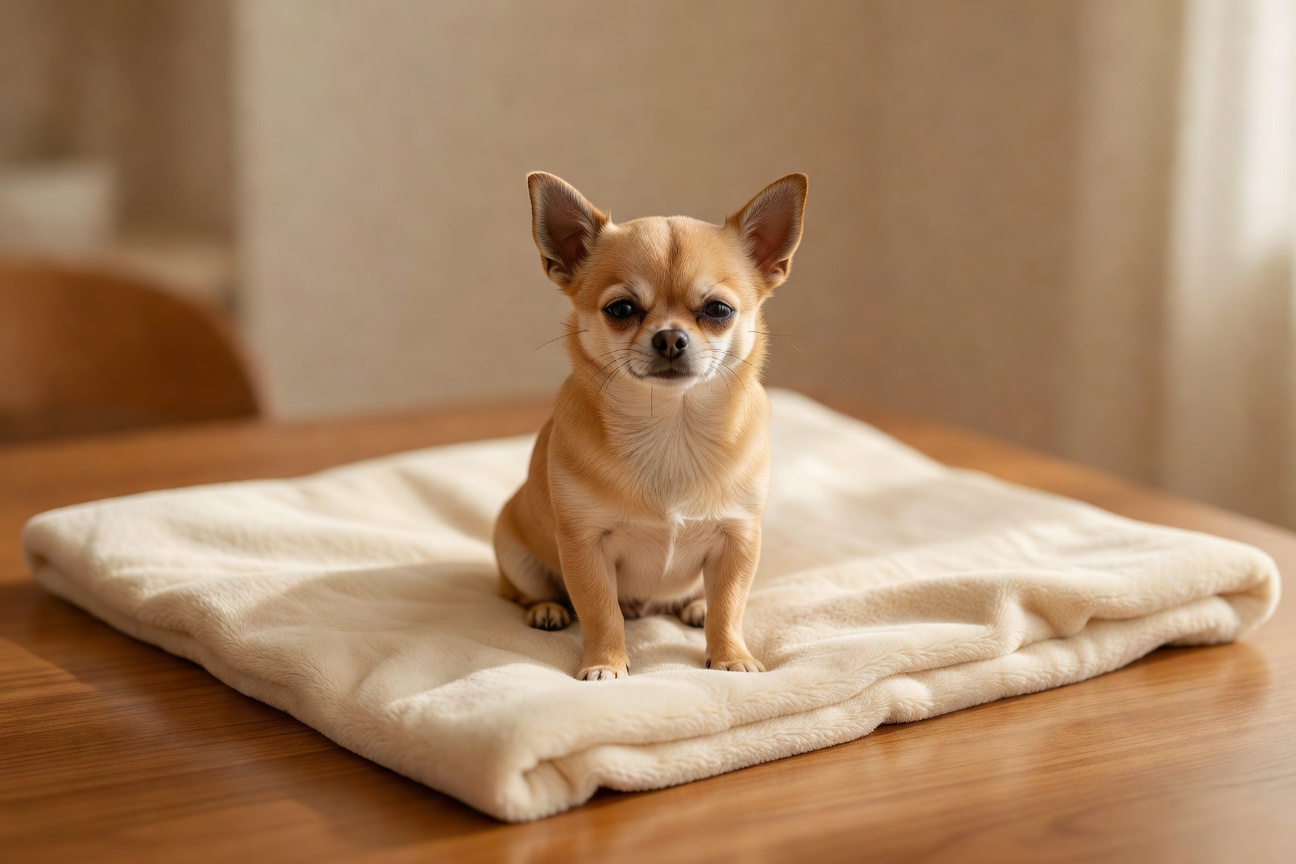
Shadowing. Your dog follows you from the kitchen to the bathroom to the bedroom and back. In a securely bonded dog, the following is relaxed. He trails you, settles wherever you land, and is content to nap nearby. This is normal social behavior for a pack-oriented animal who has decided you are the pack.
Leaning and contact-seeking. Your Chihuahua presses his body into your leg, burrows under a blanket against you, or insists on being in your lap. Physical contact lowers stress hormones in dogs, and toy breeds, who run cold because of their high surface-area-to-body-mass ratio, also lean for simple warmth. Two motivations, one cozy result.
Eye contact. That soft, sustained gaze is one of the most striking signs of a bond. When dogs and their owners look at each other, both release oxytocin, the same bonding hormone involved in parent-infant attachment, in a positive feedback loop documented in dogs but not in hand-raised wolves (Nagasawa et al., Science). When your dog holds your gaze and his face is loose and blinky, that is affection you can practically measure.
Mirroring your routine. Your dog learns when you wake, when you eat, when the leash comes out, and organizes his day around yours. Dogs are exquisite readers of human cues and routine, and a bonded dog will also "catch" your emotional state, settling when you are calm and getting keyed up when you are. Contagious yawning, where your dog yawns after you do, falls into this same family of social syncing.
None of these signs is a problem. A dog who follows you, leans on you, watches you, and tracks your schedule is a dog who is bonded and, in all likelihood, content. The good news is that this is exactly what a healthy Chihuahua relationship looks like.
When devotion tips into separation anxiety
Here is the clinical-then-warm part. The behaviors above describe your dog when you are present. Separation anxiety is defined by what your dog does when you are absent or about to be. That is the dividing line I want you to hold onto: a bonded dog is calm when you leave and delighted when you return; an anxious dog comes apart at the seams the moment you reach for your keys.
Separation-related distress is common. Behavioral studies estimate that a substantial share of dogs show signs of it, and in many cases owners do not recognize the behavior as anxiety because it happens while they are out of the house (Sargisson, review in Psychology Research and Behavior Management). Toy breeds, with their intense single-person bonds, are well represented in the dogs I see for this.
Signs that the bond has tipped into something unhealthy:
- Distress at departure cues. Pacing, trembling, whining, or panting when you pick up your keys, put on shoes, or grab your bag, before you have even opened the door.
- Vocalizing when alone. Persistent barking, howling, or crying that starts shortly after you leave. A pet camera or a neighbor's complaint is often how owners find out.
- Destructive behavior focused on exits. Scratching at doors, chewing window sills, or damaging the area where you left, rather than random play-chewing.
- House-soiling in a trained dog. A reliably housetrained dog who urinates or defecates only when left alone.
- Refusing to eat when alone. The high-value treat you left is untouched until you walk back in.
- Frantic, prolonged greeting. Not a happy wiggle, but minutes of breathless, can't-settle excitement every single time, even after a five-minute absence.
- Self-trauma. Licking or chewing himself raw, or injuries from trying to escape a crate or room. This one warrants a call sooner rather than later.
One important note, because this is veterinary medicine and not just behavior: several of these signs overlap with medical problems. House-soiling can be a urinary tract infection. New restlessness or vocalizing in an older Chihuahua can be pain, cognitive decline, or even the discomfort of conditions this breed is prone to, such as dental disease or a collapsing trachea. That is why anxiety that appears suddenly, especially in a previously easygoing adult or senior dog, deserves a veterinary exam to rule out a physical cause before you assume it is behavioral.
What to do about it
If your dog is securely bonded and simply adores you, you do not need to fix anything. Enjoy your shadow. If you are seeing the distress signs above, the goal is to teach your dog that being alone is safe and unremarkable. This is gradual independence training, and the operative word is gradual.
- Build alone-time in small doses. Practice having your dog settle on a bed a few feet away from you while you stay in the room. Reward calm. Slowly increase the distance, then start stepping out of sight for seconds, then minutes, always returning before your dog panics.
- Defuse your departure cues. Pick up your keys and then sit back down. Put on your shoes and watch TV. Repeated dozens of times, this teaches your dog that the keys no longer predict abandonment.
- Make departures and arrivals boring. No emotional goodbyes, no frantic hellos. Calm, low-key, matter-of-fact. You are modeling that leaving is nothing to grieve.
- Give the brain a job. A food puzzle or a frozen stuffed toy offered only when you leave can help a mildly anxious dog build a positive association with solo time. For a severely anxious dog, this alone will not be enough.
- Keep exercise and enrichment up. A Chihuahua whose physical and mental needs are met has less surplus energy to pour into worry.
Here is when to bring in professional help rather than going it alone. If your dog is injuring himself, panicking within minutes of every departure, or not improving after a few weeks of consistent independence work, talk to your veterinarian. True separation anxiety is a recognized welfare problem, and the most severe cases often respond best to a combination of a structured behavior-modification plan and, when appropriate, anti-anxiety medication prescribed by your veterinarian or a board-certified veterinary behaviorist. Medication here is not a shortcut or a sedative; it lowers the panic enough that the training can actually work. There is no shame in needing it, any more than there is shame in needing insulin.
So, is your Chihuahua obsessed with you? Almost certainly, and in the best cases that obsession is just a small dog who has decided you hung the moon. Watch how he behaves when you walk out the door, not just when you walk in. If he is calm in your absence and joyful at your return, you have a healthy, beautifully bonded dog. If your departures trigger genuine distress, talk to your veterinarian, and do it within the next week or two if you are seeing self-injury or panic. Knowing the difference is what makes you the advocate your dog cannot be for himself.
Health at a Glance: What to Watch monitor_heart
| Condition | Key Signs | Prevention Tips |
|---|---|---|
| Dental Disease | Bad breath, tartar, red gums | Daily brushing, dental treats |
| Patellar Luxation | Limping, skipping, leg lifting | Weight control, avoid high jumps |
| Tracheal Collapse | Dry cough, gagging | Harness walking, avoid smoke |
| Heart Disease | Coughing, fatigue, fainting | Regular check-ups, heart-healthy diet |
| Hypoglycemia | Shaking, weakness, lethargy | Small, frequent meals |
Community Insights – FAQ help
help_outline When should I call my vet about a behavior change? expand_more
Sooner than feels reasonable. A change in appetite, energy, or routine that lasts more than 48 hours is worth a phone call, not a wait-and-see.
help_outline How often should a healthy adult chihuahua see the vet? expand_more
Once a year through age seven. Twice a year from eight on. Dental checks are part of every visit.
help_outline Do chihuahuas need different care than larger breeds? expand_more
Yes. Smaller medication dosing, more frequent dental work, and closer monitoring for tracheal and patellar issues are standard in toy-breed care.
Have a health question? Ask your question in the comments. We will bring it up with the vet team.
favorite