

If you want to know about chihuahua grooming tools, you are in the right place. I have spent more money on grooming tools that did not work for my chihuahua than I care to admit. Brushes that were too harsh for her skin, clippers that terrified her, scissors that were meant for breeds three times her size, and a nail trimmer that I bought three separate times because I kept losing it in the junk drawer. After five years of experimenting, returning products, and reading reviews at midnight when I should have been sleeping, I have finally arrived at a grooming kit that actually works for a chihuahua specifically, and I want to save you the same expensive experience of discovery.
The truth about grooming a chihuahua is that it is simultaneously easier and trickier than grooming larger breeds. Easier because there is simply less dog to cover. Trickier because everything about them is smaller, more delicate, and less tolerant of mistakes. A grooming tool that works beautifully on a Golden Retriever can be completely wrong for a five-pound chihuahua with thin skin and a low threshold for nonsense.
The Brush and Comb: Start Here
If you have a smooth coat chihuahua, you need a soft-bristle brush or a rubber grooming mitt. That is it. A slicker brush, which has those fine metal pins, is too aggressive for a smooth coat chi’s delicate skin and can cause irritation. I learned this after using a slicker on my smooth coat girl Mango and noticing tiny red marks on her skin afterward. The rubber mitt is gentle, she actually enjoys it, and it does an excellent job of removing loose hair and distributing the natural oils that keep her coat healthy.
Related: common Chihuahua health issues.
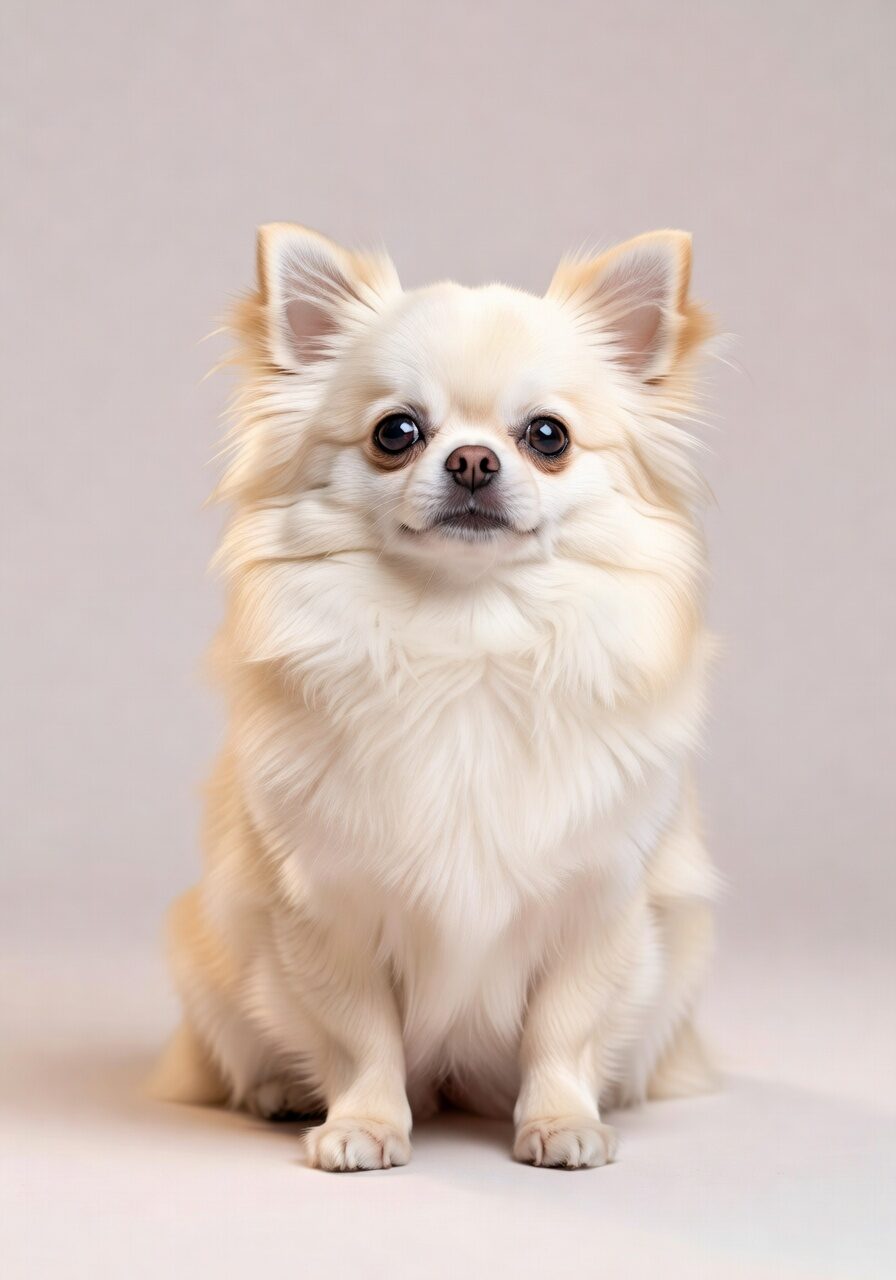
If you have a long coat chihuahua, the situation is different. You need a soft slicker brush for puppies and a firmer one for adults, plus a two-sided comb with medium and wide teeth. The slicker removes tangles and loose undercoat, and the comb follows behind to make sure you did not miss anything. The long coat chihuahua grooming routine is more involved because their fur mats easily, especially behind the ears, under the arms, and around the collar area. I brush my long coat chihuahua Cinnamon three times a week, and during seasonal shedding it becomes a daily task.
Nail Trimming: The Part Everyone Dreads
I am going to be straight with you. I was afraid of trimming my chihuahua’s nails for the first two years I owned her. The nails are small, the quick, which is the blood vessel inside the nail, is hard to see especially on dark nails, and the consequences of cutting too deep include bleeding, pain, and a dog who will never let you near their feet again without a fight.
The nail trimmer style matters for chihuahuas. I tried the guillotine style first, which works by placing the nail through a hole and squeezing a blade through it, and I found it hard to control precisely enough for nails this small. The plier style or scissor style clippers give me more control and a better view of where I am cutting. I trim a tiny amount at a time, checking after each cut, and I always have styptic powder nearby in case I nick the quick.
Dental Care Tools
Chihuahuas are notorious for dental problems. Their small mouths create crowding that traps food and bacteria, and they are prone to tartar buildup, gum disease, and tooth loss at rates much higher than larger breeds. A dental care routine is not optional for chihuahuas, it is essential.
I use a finger brush and dog-specific enzymatic toothpaste to brush Mango’s teeth several times a week. A finger brush is a small rubber cap with bristles that fits over your fingertip, and it gives you much more control than a long-handled toothbrush when you are working in a chihuahua-sized mouth. Never use human toothpaste on a dog because the fluoride and other ingredients can be toxic.
A dental scaler can be used to gently remove tartar buildup between professional cleanings, but use it carefully and only on visible buildup along the gum line. If you are not comfortable doing this, leave it to your vet. A dental mirror can help you see areas that are hard to examine directly, and regular visual inspections of your chihuahua’s teeth and gums will help you catch problems early.
Ear Cleaning and Nose Care
Chihuahuas with large, upright ears are less prone to ear infections than floppy-eared breeds, but they still need regular ear maintenance. I use a vet-approved ear cleaning solution and a cotton ball to gently wipe the visible part of the ear canal once a week. Never insert anything into the ear canal itself. If you notice redness, discharge, or an unusual smell, see your vet because those are signs of infection. com/the-wrong-collar-could-be-hurting-your-chihuahuas-neck-and-you-would-never-know/” title=”The Wrong Collar Could Be Hurting Your”>The Wrong Collar Could Be Hurting Your.
For the nose and facial area, a damp cloth is usually sufficient. Some chihuahuas develop tear staining around their eyes, which is more visible on light-colored dogs. A gentle wipe with a tear stain solution keeps the area clean and prevents bacterial growth in the moisture that collects there.
Bathing: How Often and What to Use
I bathe Mango about once a month unless she gets into something that requires an emergency bath, which happens more often than you would expect from a dog who weighs five pounds. Over-bathing strips the natural oils from their coat and dries out their skin, so resist the urge to bathe your chihuahua weekly unless your vet recommends it for a specific skin condition.
Use a shampoo formulated for dogs, not humans. Human shampoo has a different pH than dog shampoo and can irritate your chihuahua’s skin. For chihuahuas with sensitive skin, a hypoallergenic or oatmeal-based shampoo is a good choice. I keep the water lukewarm, work the shampoo in gently, and make sure to rinse thoroughly because shampoo residue can cause itching. After the bath, I towel dry Mango and then let her air dry in a warm room. I do not use a blow dryer because the noise stresses her out and the heat can burn her delicate skin.
The Grooming Routine That Keeps It Manageable
The key to chihuahua grooming is frequency and brevity. Short sessions several times a week are better than one marathon session that stresses both of you out. My weekly schedule looks roughly like this: brushing two to three times, dental care three times, a quick nail check once, and ear cleaning once. Baths happen monthly. The whole routine takes maybe ten to fifteen minutes per session, which is manageable even on busy days.
The grooming sessions have also become bonding time that both my chihuahuas seem to enjoy, or at least tolerate with dignified patience. Mango leans into the brush. Cinnamon holds still for nail trims as long as there is a treat at the end. Grooming is not just about appearance. It is about health, comfort, and the regular close contact that lets you notice changes in your chihuahua’s body before they become problems. For more grooming guidance, check out grooming and shampoo for chihuahuas and read about home remedies for chihuahua bad breath.
For more detailed guidance on this topic, the American Kennel Club offers excellent resources backed by veterinary professionals.
I have been through this with my own chihuahua. It is one of those things that looks simple on paper but gets complicated fast when you are actually dealing with a four-pound dog who has opinions about everything.
The truth about chihuahua grooming tools is that there is no single right answer. What works for one chihuahua might be completely wrong for another. Mine took weeks to adjust. Some dogs figure it out in days. The size of your chihuahua matters. Their age matters. Their personality matters most of all.
Here is what I wish someone had told me earlier. Start small. Do not try to change everything at once. Chihuahuas are stubborn but they are also sensitive. Push too hard and they shut down. Go too slow and nothing changes. The sweet spot is somewhere in the middle and you have to find it yourself.
I talked to other chihuahua owners about chihuahua grooming tools and heard the same thing over and over. Patience. Consistency. And a willingness to look a little silly in public because chihuahuas do not care about your dignity.
If you are just getting started with chihuahua grooming tools, give yourself grace. You will make mistakes. Your chihuahua will make more of them. That is the whole process. And honestly, once you get through the hard part, it is worth it.
What are the most common health issues in chihuahuas?
Dental disease, luxating patellas, hypoglycemia, tracheal collapse, and heart murmurs are the most frequent. Regular veterinary checkups catch most conditions early when they are easiest to manage.
How often should a chihuahua see the vet?
Annual checkups for adults, bi-annual for seniors over eight years old. Puppies need visits every three to four weeks until their vaccination series is complete at around 16 weeks.
When should I worry about my chihuahua's health?
Seek veterinary care for lethargy lasting more than 24 hours, refusal to eat for two or more meals, difficulty breathing, persistent vomiting or diarrhea, and any sudden behavior change. With small dogs, early intervention is always safer than waiting.
What should I know about chihuahua grooming kit?
Understanding chihuahua grooming kit requires attention to breed-specific needs. Chihuahuas are small dogs with unique health, behavioral, and care requirements. Consulting your veterinarian and learning from experienced owners provides the most reliable guidance for your specific situation.