
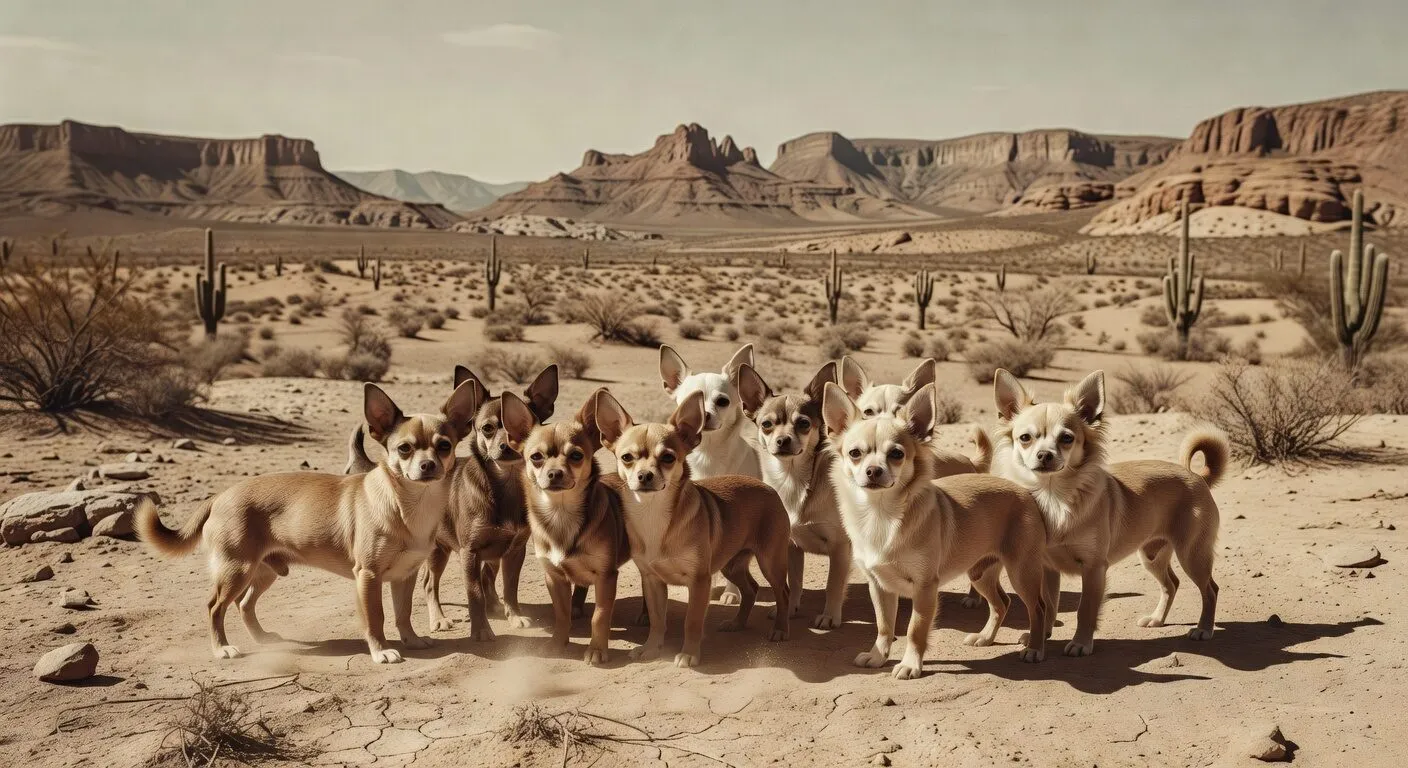

The chihuahua breed history is one of those topics that pulled me in years ago and never let go. I remember sitting on the couch with my Chi curled up on my lap, wondering where these tiny chihuahuas actually came from. Turns out, their story goes back thousands of years to ancient Mexico, and it is way more interesting than most people realize.
Ancient Roots in Mexico
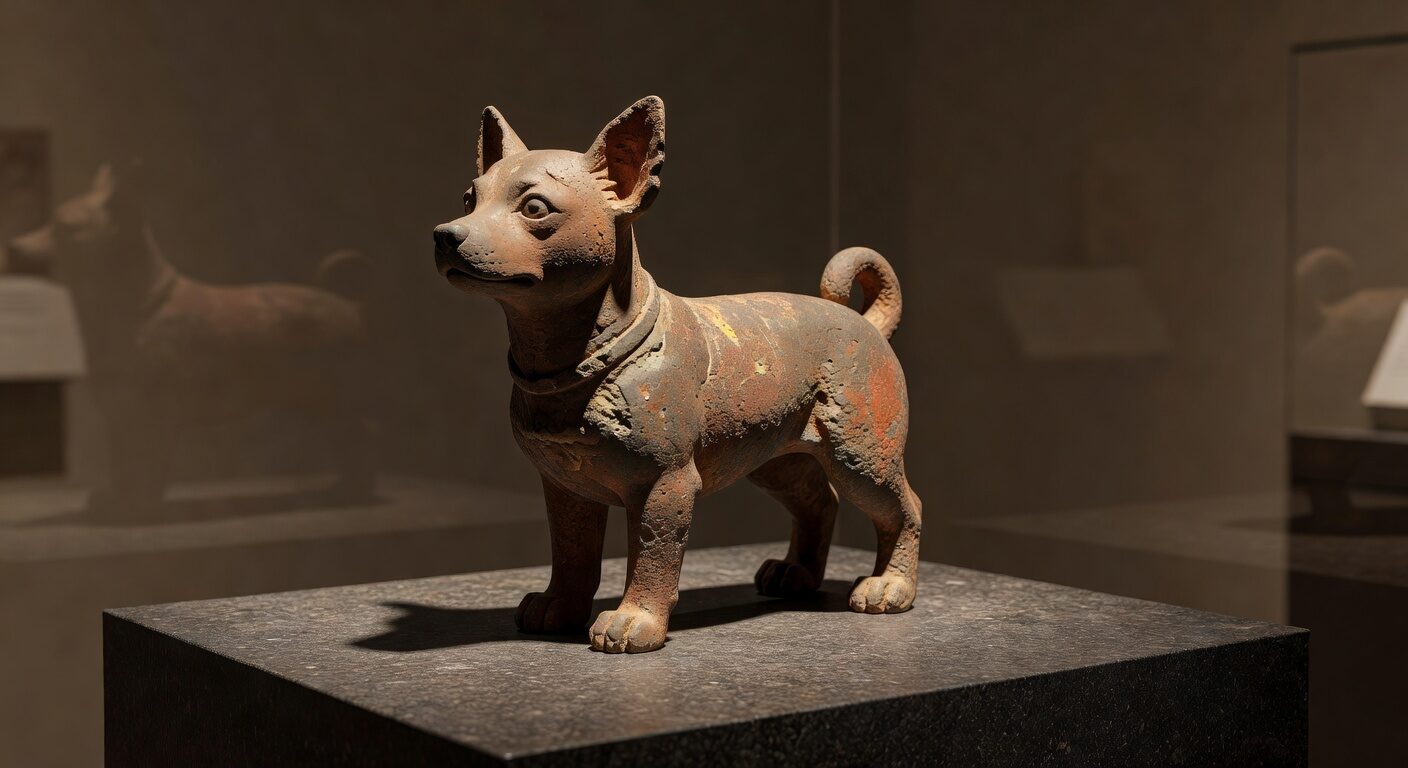
Most historians agree that Chihuahuas descended from a chihuahua called the Techichi, which lived with the Toltec civilization around the 9th century. These little chihuahuas were considered sacred. They showed up in carvings, pottery, and burial sites across Mexico. I find it pretty amazing that a breed so small held such spiritual importance in a culture known for building massive pyramids and temples.
The Aztecs later adopted the Techichi and believed these chihuahuas could guide souls through the underworld. That might sound dramatic, but when you look into your Chihuahua’s eyes, you get it. There is something old and knowing in that stare. Some Aztec families kept these chihuahuas as companions during life and honored them in death, placing small clay figures in tombs alongside their owners.
Related: common Chihuahua health issues, Chihuahua body language.
Archaeological digs in Mexico have uncovered Techichi remains dating back to around 300 BC, which means these chihuahuas have been walking alongside humans for well over two thousand years. That is a bond that runs incredibly deep.
How Chihuahuas Came to the United States
In the 1800s, travelers to the Mexican state of Chihuahua started noticing these small chihuahuas and bringing them home. That is actually where the name comes from. American tourists and traders fell in love with their big personalities and pocket sized bodies. Some reports say these chihuahuas were being sold near the border towns, and Americans could not resist them.
My first Chihuahua was nothing like the stereotype. She was bold, stubborn, and had zero interest in being carried anywhere. I learned the hard way that these chihuahuas have their own agenda and they will let you know about it. The Hollywood version of Chihuahuas does not capture the real experience of living with one at all.
Xavier Cugat, the famous bandleader in the 1940s and 50s, was one of the first celebrities to make Chihuahuas fashionable. He carried his Chi everywhere, and the trend slowly caught on from there. com/surprising-things-chihuahuas-love/” title=”Things Chihuahuas Love: Surprising”>Things Chihuahuas Love: Surprising.
Why Their History Matters Today
Understanding where Chihuahuas come from helps explain so much about their behavior. Their alertness, loyalty, and tendency to bond deeply with one person all trace back to centuries of close companionship with humans. They were never outdoor working breeds. They were always meant to be close to their people, providing warmth and companionship in the most literal sense.
When someone tells me their Chihuahua follows them from room to room, I just smile. That is literally what they were bred to do for thousands of years. That clingy behavior is not a quirk. It is deeply wired into who they are as a breed.
A Breed WorthThe more I learned about chihuahua breed history, the more respect I gained for these little chihuahuas. They are not just cute faces. They carry a legacy that stretches back to ancient civilizations, through colonial eras, and into modern living rooms around the world. Every time my Chi gives me that signature head tilt, I like to think there is a little bit of Aztec royalty in there somewhere. there somewhere.
If you are thinking about bringing a Chihuahua into your life, take some time to appreciate where they came from. It makes the bond even deeper when you understand the centuries of history sitting right there in your lap. com/size-of-a-chihuahua-unveiling-the-tiny-breed/” title=”Size of a Chihuahua: Everything About This Tiny Breed”>Size of a Chihuahua: Everything About This Tiny Breed.
The Role of Chihuahuas in Ancient Trade Routes
Something that often gets overlooked in discussions about chihuahua history is how these dogs likely moved along ancient trade networks across Mesoamerica. Archaeological evidence suggests that small dogs resembling modern chihuahuas have been found at sites far from the Chihuahua region of Mexico, indicating they were traded or traveled with merchants along established routes. I find this fascinating because it means chihuahuas, or their ancestors, were valued enough to be transported significant distances at a time when moving anything over land required real effort and commitment. Some researchers believe these dogs served multiple purposes in ancient societies, not just as companions but as spiritual guides, food sources in times of scarcity, and even as living hot water bottles. That last one always makes me smile because anyone who has had a chihuahua burrow under the covers with them on a cold night knows that these dogs generate an absurd amount of heat for their size. The idea that ancient peoples recognized and utilized this same quality thousands of years ago connects us to chihuahua owners across an enormous span of human history in a way that I find genuinely moving.
Myths Versus Facts About Chihuahua Origins
There are a lot of myths floating around about where chihuahuas came from, and I think it is worth separating the stories from what we actually know. One popular claim is that chihuahuas are descended from the Techichi, a small companion dog kept by the Toltec civilization. This one has some real archaeological support, including small dog bones and pottery depicting dogs that look remarkably like modern chihuahuas found at Toltec sites. Another claim suggests that chihuahuas descended from Chinese crested dogs brought to the Americas by Spanish traders. This theory has largely been debunked by genetic studies that place chihuahuas firmly in the lineage of pre-Columbian American dogs with no significant Chinese breed contribution. Then there is the wildest theory of all, which suggests that chihuahuas evolved from a type of large eared fox native to the region. While this is almost certainly not true based on what we know about canine genetics, you can see where the idea comes from when you look at a chihuahua’s oversized ears and alert, slightly feral expression. The most current genetic research points to a clear link between modern chihuahuas and ancient Mexican dogs, with the breed being refined and standardized after being discovered by American travelers in the Mexican state of Chihuahua in the mid 1800s.
How the Breed Changed After Arriving in America
When chihuahuas first started appearing in the United States in the late 1800s, they looked somewhat different from the chihuahuas we know today. Early photographs and breed descriptions suggest they were slightly larger, with longer muzzles and less rounded heads than the modern standard. The American Kennel Club recognized the chihuahua in 1904, making it one of the older recognized breeds in the registry, and from that point forward the breed standard began to shape what breeders were selecting for. The apple head shape that is so distinctive in today’s show chihuahuas was emphasized through selective breeding over the following decades. The deer head variation, which has a longer muzzle and a less pronounced forehead, is actually closer to what those early chihuahuas probably looked like, yet it is the apple head that became the official standard. I think about this sometimes when people argue about which type is the real chihuahua. Both types trace back to the same ancestors, and the differences between them are largely the result of human preferences expressed through breeding programs. The chihuahua that exists today is as much a product of American and European breed culture as it is of ancient Mexican history, and I think acknowledging that full picture gives us a richer understanding of where these remarkable little dogs come from.
For more detailed guidance on this topic, the American Kennel Club offers excellent resources backed by veterinary professionals.
You Might Also Enjoy
Understanding this starts with recognizing the specific needs and behaviors of the breed. Chihuahuas are unique in their sensitivity, size, and temperament, and what works for larger breeds often needs adjustment for these tiny dogs.
Living with a chihuahua means adapting to their personality and physical requirements. This affects everything from your schedule to your home environment, and being prepared makes a significant difference in both your quality of life and your dog’s.
If you notice persistent changes in your chihuahua’s behavior, appetite, energy level, or physical condition related to chihuahua breed history, schedule a vet visit. Early intervention is always better than waiting, especially with a breed as small as a chihuahua. The Dogster offers additional guidance on breed history.
What should every chihuahua owner know about this?
Understanding this starts with recognizing the specific needs and behaviors of the breed. Chihuahuas are unique in their sensitivity, size, and temperament, and what works for larger breeds often needs adjustment for these tiny dogs.
How does this affect your daily life with a chihuahua?
Living with a chihuahua means adapting to their personality and physical requirements. This affects everything from your schedule to your home environment, and being prepared makes a significant difference in both your quality of life and your dog’s.
When should I talk to a vet about this?
If you notice persistent changes in your chihuahua’s behavior, appetite, energy level, or physical condition related to chihuahua breed history, schedule a vet visit. Early intervention is always better than waiting, especially with a breed as small as a chihuahua. The Dogster offers additional guidance on breed history.