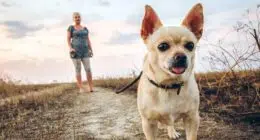
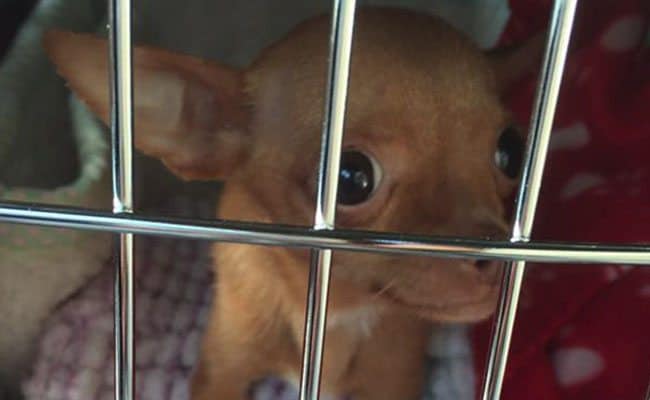

When rescuers pulled Brie from the puppy farm, she weighed one pound. She had been drowning in a slurry pit. She had already produced two litters of puppies for the operation. And she was suffering from post-traumatic shock so severe that she could barely stand.
She was a Chihuahua. She was alive. And against every reasonable expectation, she was about to go viral.
What a Puppy Farm Did to Brie
Puppy farms — also called puppy mills — are commercial breeding operations where dogs are treated as production units. Females are bred as frequently as possible, kept in minimal conditions, and discarded when they are no longer profitable.
Brie was one of those dogs. She had been bred twice by the time rescuers found her, which for a Chihuahua weighing one pound is not just cruel — it is medically reckless. Chihuahuas under four pounds face serious risks during pregnancy and delivery, including eclampsia, obstructed labor, and death.
The slurry pit where Brie was found is exactly what it sounds like: a waste pit on a farm property. She had either fallen in or been put there. Nobody was coming to get her out.
The rescue team pulled her from the pit, cleaned her off, and took her to emergency veterinary care. She was hypothermic, malnourished, and in shock. The vet team was not optimistic.
The Recovery Nobody Expected
Brie spent her first weeks in foster care under constant monitoring. At one pound, she was too small and too fragile for a normal kennel environment. She needed round-the-clock warmth, hand-feeding, and the kind of patient, quiet care that only a dedicated foster home can provide.
She was kept in darkness initially — the post-traumatic shock made her reactive to light and sound. Loud noises sent her into trembling fits. Sudden movements made her freeze. She was, by every measure, a dog who had learned that the world was a place where bad things happened.
But she was eating. And gaining weight. And slowly, over weeks, she began to look less like a rescue case and more like a Chihuahua.
Going Viral
When photos of Brie were shared online, the response was immediate and enormous. The contrast between what she had survived and how she looked now — tiny, bright-eyed, impossibly delicate — resonated with people in a way that rescue organizations dream about.
Her story reached millions. Donations poured in. Other rescue organizations reported increased interest from potential adopters who had seen Brie’s story and wanted to help a dog like her.
That is the power of a single story told well. One tiny dog, nearly killed by an industry that profits from treating animals as disposable, surviving against every odd — it cuts through the noise in a way that statistics alone never can.
The Problem with Puppy Farms
Brie’s story is not rare. It is common. Puppy farms operate across the US, UK, and Europe, producing puppies for pet shops and online sellers. The breeding dogs — the ones who never leave the farm — live in conditions that most buyers never see.
If you are thinking about getting a Chihuahua, here is how to avoid supporting puppy farms:
- Adopt from a rescue. Rescue Chihuahuas are available in almost every state. Many are already house-trained and past the puppy chaos.
- If buying from a breeder, visit in person. A responsible breeder will let you see where the dogs live. If they refuse, walk away.
- Never buy from pet stores or online ads. The puppies in pet store windows come from somewhere. That somewhere is usually a puppy farm.
- Check for health clearances. Reputable breeders test for genetic conditions and can show you documentation.
- Ask about the parents. If a breeder cannot or will not let you meet the mother, that is a red flag the size of a billboard.
What Brie Is Now
Brie is no longer one pound. She is no longer in a slurry pit. She is no longer producing puppies for profit.
She is a Chihuahua who survived something that should have killed her, recovered in front of an audience of millions, and reminded everyone who saw her story that rescue is not just a nice idea. It is a life-or-death intervention for dogs who have no other way out.
Want to support Chihuahua rescue? Read about the adoption process or learn how to help a rescued Chi adjust to their new home.