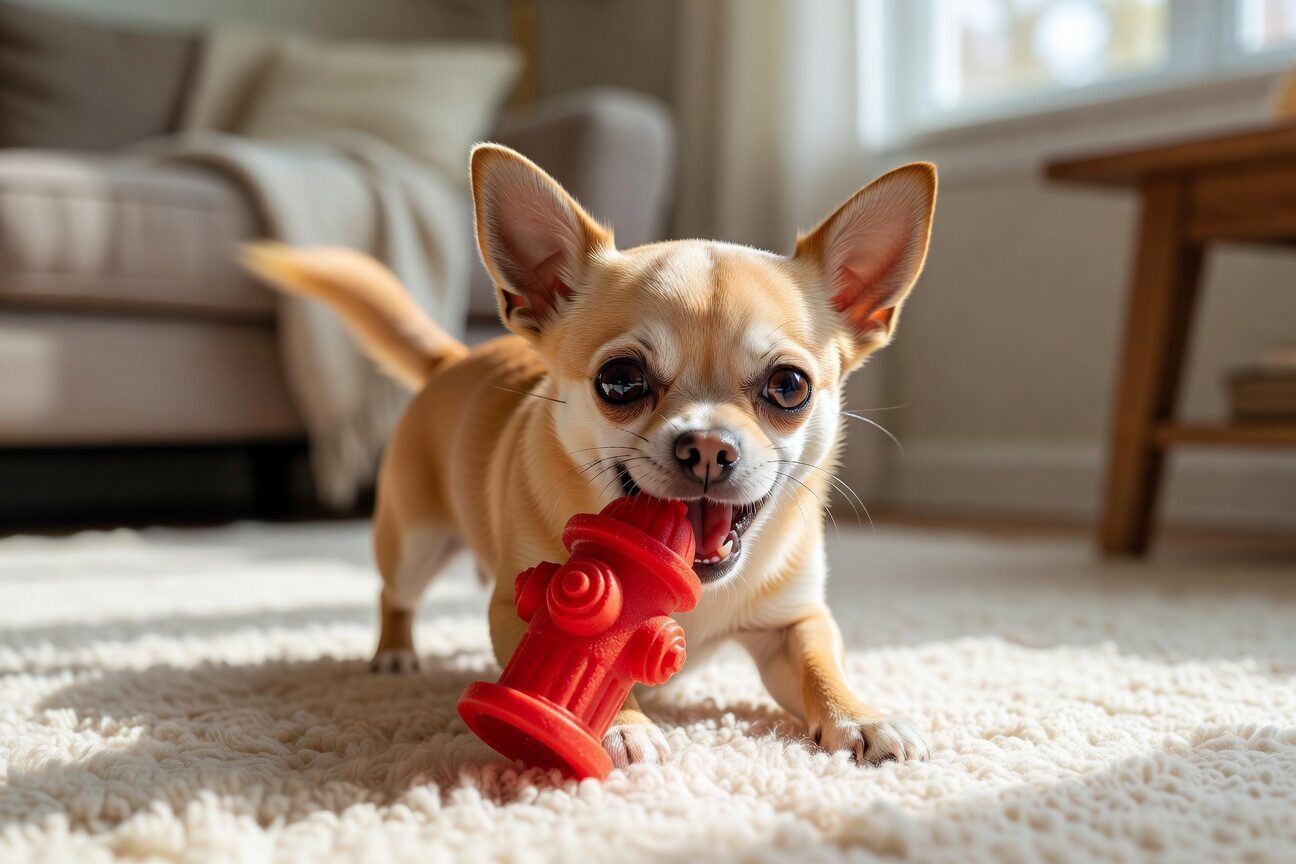

My chihuahua has a toy box that is, honestly, embarrassing. There are at least thirty toys in there, and she plays with exactly four of them. The rest sit in a pile like a museum exhibit of my poor purchasing decisions. I have bought plush toys she ignored, rubber toys she was scared of, rope toys she pretended did not exist, and one squeaky chicken that she loved for exactly two days before burying it under the couch cushion and never looking at it again.
Finding the right toys for chihuahuas is harder than it sounds. Most dog toys are designed for bigger dogs, and what works for a lab or a golden does not work for a dog whose entire mouth is the size of a tennis ball’s shadow. After years of trial, error, and wasted money, I have figured out which types of toys chihuahuas actually want, and more importantly, which ones are safe for their tiny jaws and delicate teeth.
1. Small Plush Toys with Squeakers
This is the category my chihuahua lives for. Small, soft plush toys with a squeaker inside that she can carry around the house like a trophy. The key word is small. A plush toy designed for a medium dog is too big for a chihuahua to grip comfortably, and the oversized squeaker inside takes too much jaw pressure to activate. Look for toys specifically labeled for extra-small or toy breeds. The squeaker should be responsive to gentle pressure, because a chihuahua’s bite force is not exactly industrial strength.
Related: common Chihuahua health issues.
According to ASPCA general dog care, proper care and attention to breed-specific needs makes the biggest difference in outcomes.
My chihuahua has a tiny stuffed hedgehog that she has carried to bed every night for two years. It is missing one eye and most of its stuffing, and she guards it like it contains state secrets. According to the American Kennel Club, plush toys satisfy a dog’s natural prey drive, which is why your chihuahua shakes them violently and then cuddles them. It makes no sense, and it makes perfect sense.
2. Puzzle and Treat-Dispensing Toys
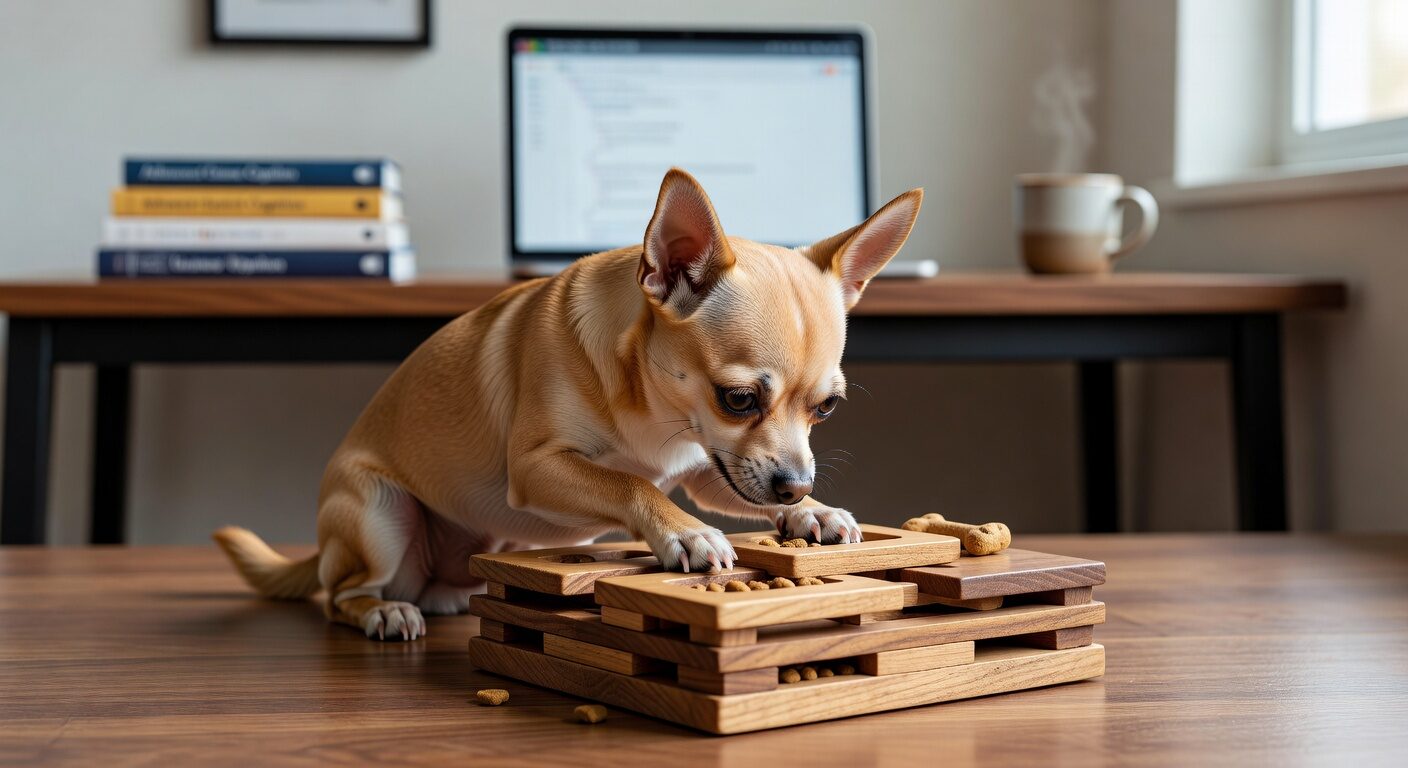
Chihuahuas are smarter than most people give them credit for, and a bored chihuahua is a destructive chihuahua. Puzzle toys that require them to figure out how to get a treat keep their brains engaged and their teeth off your furniture. A small Kong stuffed with peanut butter or a treat ball that releases kibble as they roll it are both excellent options.
Start with easy puzzles and work up to harder ones. My chihuahua figured out the basic treat ball in about four minutes and then sat next to it looking at me like she was waiting for a more challenging assignment. Anxious chihuahuas especially benefit from puzzle toys because the mental focus required to solve them redirects nervous energy into productive activity.
What I Wish I Knew Earlier
Rope toys are also great for gentle tug of war, which is one of the few interactive games where the size difference between you and your chihuahua does not matter much. Just let them win sometimes. Losing every game is demoralizing, even for a dog. Chihuahua dental health should be a priority for every owner, and a toy that cleans teeth while providing entertainment is a win on every level.
3. Rope Toys for Dental Health
I did not think much about rope toys until my vet mentioned that my chihuahua’s teeth could use some help between brushings. Turns out, small rope toys are one of the best dual-purpose toys you can give a chihuahua. The woven fibers act like a natural floss as your dog chews and tugs, working between teeth and along the gum line to help remove plaque buildup. For a breed that is notoriously prone to dental problems, any toy that cleans teeth while your dog thinks she is just having fun is worth its weight in gold.
The key is finding rope toys that are actually sized for a chihuahua. Most rope toys on the shelf at your average pet store are designed for dogs who weigh thirty pounds or more, and handing one of those to a chihuahua is like giving a toddler a jump rope and expecting them to know what to do with it. Look for mini rope toys, usually around six to eight inches long, with thin braids that a small mouth can actually grip. Cotton rope is the safest option because it is soft on their delicate gums and will not splinter like some synthetic materials can.
My chihuahua has a tiny braided rope that she carries around like it is a prized possession. She chews on it after meals, plays tug with me when she is feeling social, and occasionally whips it around the living room with a ferocity that suggests the rope personally wronged her. I replace it every few weeks when it starts to fray, because loose threads can be a choking hazard if swallowed. But as long as you supervise and swap them out regularly, rope toys are one of the smartest additions to any chihuahua toy collection.
4. Crinkle Toys
There is something about the crinkle sound that drives chihuahuas absolutely wild. Crinkle toys are usually flat or lightly stuffed, making them easy for a small dog to grip and shake, and they produce a satisfying crunching noise with minimal effort. My chihuahua has a crinkle toy shaped like a taco that she attacks with a ferocity that suggests she is working through something. It is her go-to when she needs to burn off energy but the weather is too bad for a walk.
Crinkle toys are also one of the safest options because they do not have small parts that can be chewed off and swallowed. No buttons for eyes, no hard plastic noses, just fabric and a crinkle insert. For a dog breed that will eat anything suspicious, safety matters. com/chihuahua-separation-anxiety-what-actually-helps/” title=”Your Chihuahua Has Separation”>Your Chihuahua Has Separation.
5. Fetch Balls Sized for Small Dogs
Do not hand your chihuahua a tennis ball and expect anything good to happen. A standard tennis ball is too large for a chihuahua to pick up comfortably and too heavy for them to carry without looking like they are trying to smuggle a grapefruit. Small rubber balls, about the size of a golf ball or slightly larger, are the right fit. They should be soft enough that your chihuahua can grip them without straining her jaw but durable enough to survive being punctured by tiny, determined teeth. Understanding toys chihuahuas makes a real difference.
Not all chihuahuas are fetchers. Mine will chase a ball enthusiastically but then stand over it looking at me like “you threw it, you pick it up.” But for the chihuahuas who do fetch, a properly sized ball turns a hallway into a gymnasium and provides cardio for a breed that needs it more than their couch-potato reputation suggests.
Toy Safety for Chihuahuas
A few essential rules. Never give your chihuahua a toy with parts small enough to be chewed off and swallowed. Check toys regularly for wear and replace them when stuffing starts coming out or squeakers become exposed. Avoid hard plastic or nylon toys that are designed for aggressive chewers, because chihuahua teeth are fragile and can crack on surfaces that are too hard. And supervise play with any new toy until you know how your dog interacts with it.
The best toy for your chihuahua is the one she actually plays with. It does not matter if it is expensive or branded or recommended by every dog blog on the internet. If your chihuahua ignores it, it is a bad purchase. If she carries it to bed every night and growls when you try to wash it, you found the one. Trust your dog’s judgment. She knows what she wants. She always does.
I have been through this with my own chihuahua. It is one of those things that looks simple on paper but gets complicated fast when you are actually dealing with a four-pound dog who has opinions about everything.
The truth about toys chihuahuas is that there is no single right answer. What works for one chihuahua might be completely wrong for another. Mine took weeks to adjust. Some dogs figure it out in days. The size of your chihuahua matters. Their age matters. Their personality matters most of all.
Here is what I wish someone had told me earlier. Start small. Do not try to change everything at once. Chihuahuas are stubborn but they are also sensitive. Push too hard and they shut down. Go too slow and nothing changes. The sweet spot is somewhere in the middle and you have to find it yourself.
I talked to other chihuahua owners about toys chihuahuas and heard the same thing over and over. Patience. Consistency. And a willingness to look a little silly in public because chihuahuas do not care about your dignity.
If you are just getting started with toys chihuahuas, give yourself grace. You will make mistakes. Your chihuahua will make more of them. That is the whole process. And honestly, once you get through the hard part, it is worth it.
Are chihuahuas hard to train?
Chihuahuas are intelligent but independent. They respond well to positive reinforcement with high-value treats. Harsh corrections are counterproductive. Short, consistent training sessions of five minutes produce better results than longer ones.
How long does it take to train a chihuahua?
Basic commands can be learned in two to four weeks with daily practice. Behavior modification for established issues like barking or biting typically takes six to twelve weeks of consistent work. Patience is more important than intensity.
What is the best training method for chihuahuas?
Positive reinforcement using food rewards works best. Chihuahuas are food-motivated and respond to clear, consistent cues paired with immediate rewards. Punishment-based methods increase fear and worsen most chihuahua behavior problems.
What should I know about chihuahua toys?
Understanding chihuahua toys requires attention to breed-specific needs. Chihuahuas are small dogs with unique health, behavioral, and care requirements. Consulting your veterinarian and learning from experienced owners provides the most reliable guidance for your specific situation.