
If you want to know about chihuahua licking, you are in the right place. There was a period of about three months where my chihuahua Maple licked herself so relentlessly that I genuinely worried she was going to lick a bald spot into her own leg. It started subtly, a little more paw attention than usual after walks, some extra grooming of her belly at night. Then it escalated. She was licking her paws until they were damp and pink. She was licking her legs, her flanks, and any part of herself she could reach with a focus that bordered on obsessive. And she was doing it for hours at a time, sometimes well past midnight while I lay awake listening to the rhythmic sound of it and wondering what I was missing. This chihuahua licking guide covers what every chihuahua owner needs.
Figuring out why a chihuahua licks excessively is a process of elimination, because there are at least five distinct reasons it happens and they look almost identical from the outside. I went through all five with Maple before landing on the real answer, and I want to walk you through each one because the journey taught me more about reading my chihuahua than anything else has. For more detail, see the AKC Chihuahua breed health guide. For more detail, see the PetMD dog behavior resources.
Reason One: They Might Just Be Dirty
This sounds too simple to be real, but it is the first thing to rule out. A chihuahua who spends time outside, rolling in grass, walking through mud, or exploring areas with long vegetation, picks up dirt and debris that can irritate their skin. The licking is their attempt to clean themselves, which is a perfectly normal behavior that becomes problematic only when the irritation persists.
Related: common Chihuahua health issues.
I gave Maple a thorough bath with a vet-approved shampoo and made sure to brush out her coat completely beforehand. The licking continued, which told me we were not dealing with a simple hygiene issue. But it was worth checking because sometimes the answer really is that straightforward.
Reason Two: Skin Conditions and Allergies
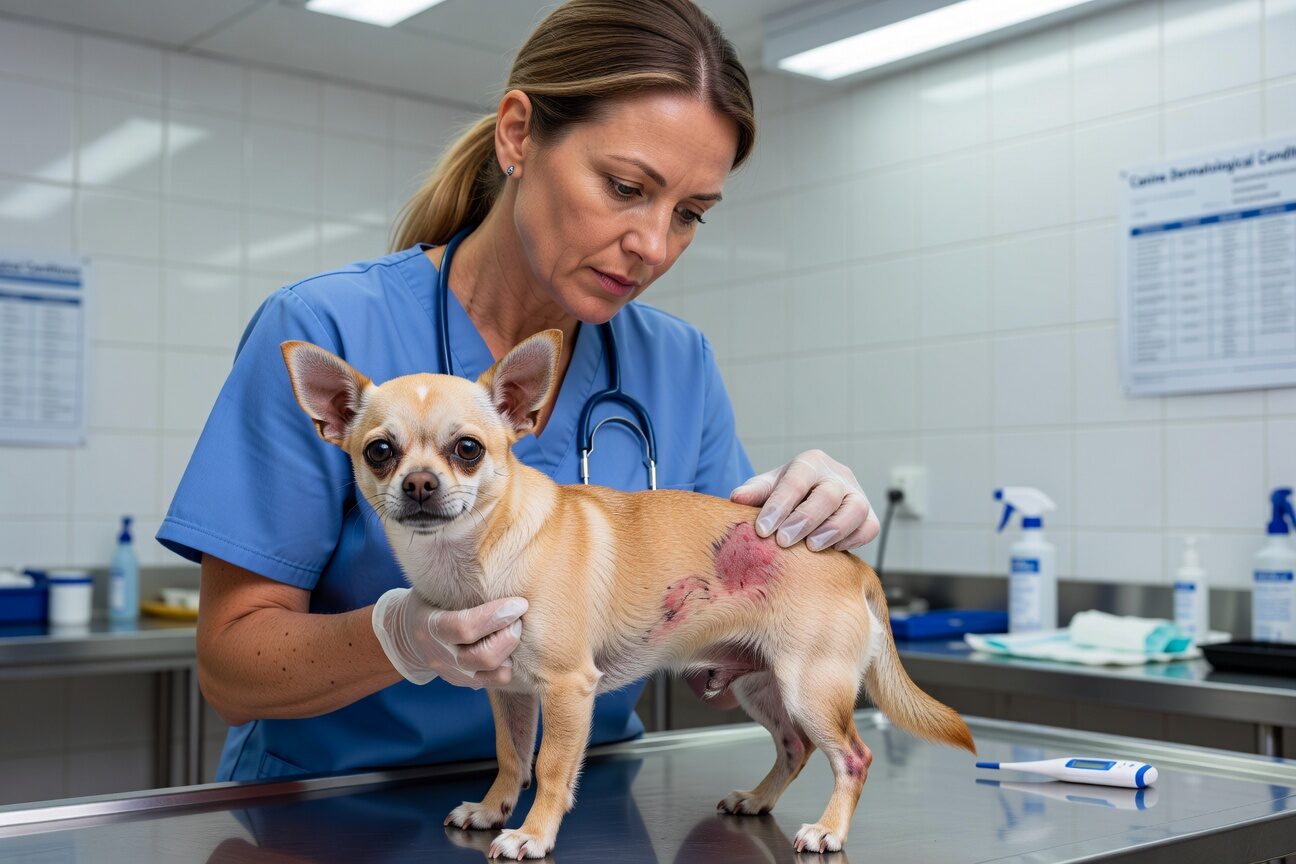
After the bath ruled out simple dirt, the vet checked Maple for skin conditions. Mange, which is caused by mites, and dermatitis, which can be triggered by allergies to food, environmental substances, or flea saliva, are both common causes of obsessive licking in dogs. The licking is a response to the itching and discomfort that these conditions create.
Maple’s skin exam came back relatively clear, no mites, no obvious dermatitis, no signs of flea activity. The vet suggested we try an elimination diet to rule out food allergies, which we did over the course of eight weeks. Her licking decreased slightly on the new diet but did not stop, suggesting that food might be a contributing factor but was not the primary cause.
Reason Three: Stress and This turned out to be the primary driver of Maple’s licking, and I am going to be honest that it took me too long to recognize it. Compulsive licking in dogs is often a self-soothing behavior triggered by stress, similar to how some people bite their nails or pick at their skin when they are anxious. The licking releases endorphins that temporarily make the dog feel better, which creates a cycle where the behavior becomes self-reinforcing. should consider.
The stress in Maple’s case was separation anxiety, which I had been somewhat aware of but had not connected to the licking. She licked more intensely in the hours before I left for work and in the period after I returned, which the vet behaviorist explained was consistent with anticipatory anxiety and the residual stress of being alone. com/the-chihuahua-who-chased-a-coyote-out-of-a-backyard-and-became-a-neighborhood-legend/” title=”The Chihuahua Who Chased a Coyote Out of a Backyard”>The Chihuahua Who Chased a Coyote Out of a Backyard.
We addressed the separation anxiety with a gradual desensitization program, starting with very short departures and slowly building up to longer ones. I also added puzzle toys, a background radio, and a snug anxiety wrap during the worst periods. Over about six weeks, the licking decreased significantly as the underlying anxiety was addressed.
Reason Four: Physical Injury or Pain
A dog who suddenly starts licking a specific area may have an injury you cannot see. A thorn in the pad, a small cut, a sore joint, or even a dental issue that causes facial pain can all trigger focused licking. Dogs use saliva as a natural antiseptic, so licking a wound is actually a functional behavior, but when the underlying injury is not treated, the licking can cause secondary problems like hot spots or infections.
Maple did not have a visible injury, but the vet checked her thoroughly including her mouth, paws, and joints. If your chihuahua is licking one specific spot repeatedly, it is worth having your vet examine that area carefully. Sometimes the issue is internal, like arthritis in a joint, which manifests as licking over the affected area even though the skin looks fine. com/i-switched-my-chihuahua-to-a-natural-diet-and-here-is-what-happened/” title=”I Switched My Chihuahua to a Natural Diet”>I Switched My Chihuahua to a Natural Diet.
Reason Five: Boredom and Habit
Some chihuahuas develop licking as a habit that persists even after the original trigger has been resolved. They have excess energy, insufficient mental stimulation, or simply learned that licking is something to do when nothing else is happening. This was a secondary factor for Maple. Even after we addressed her anxiety, she would default to licking during quiet, unstimulating periods.
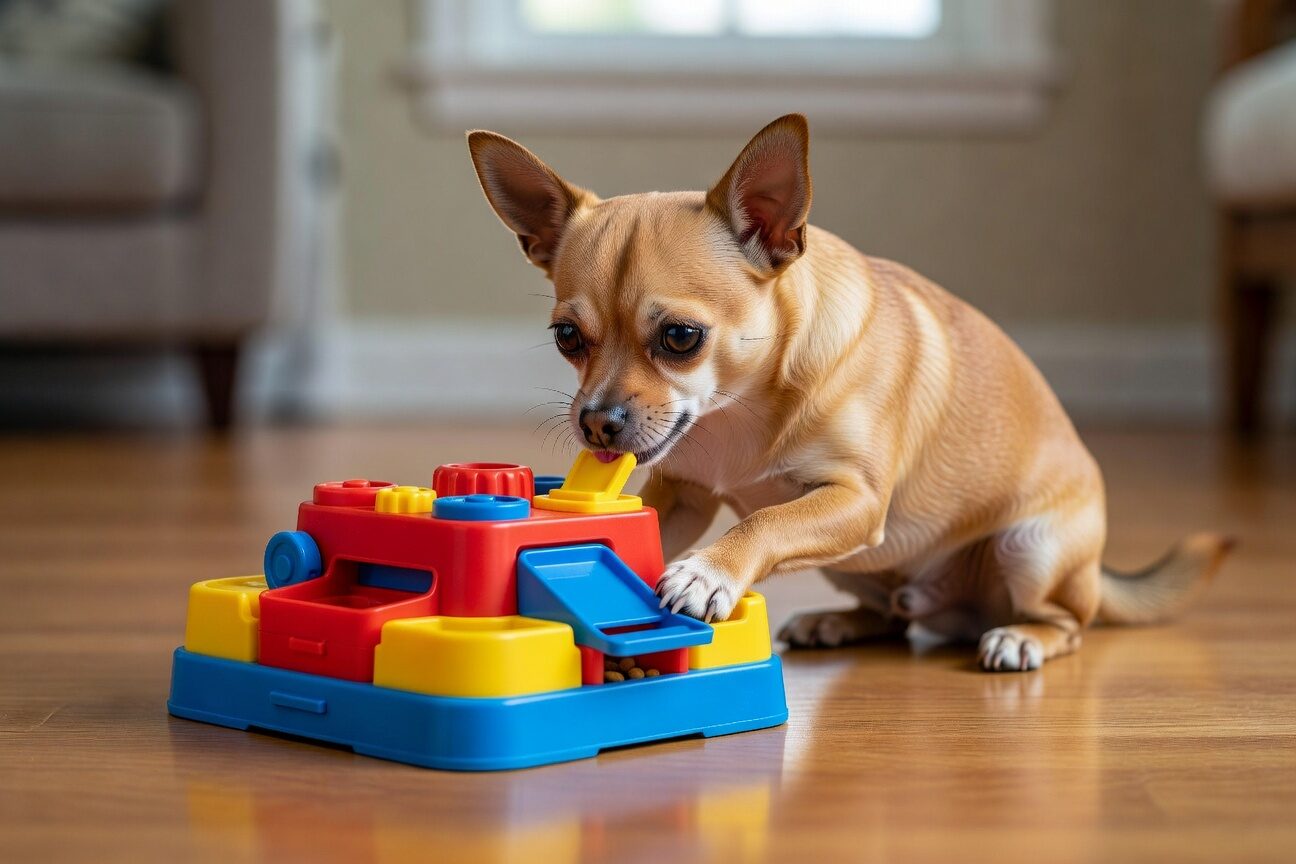
The solution was increasing her activity level and mental engagement. More walks, more training sessions, more puzzle toys, and more interactive play throughout the day left her with less idle time and less need for self-soothing behaviors. A tired chihuahua who has had their brain worked is a chihuahua who falls asleep on the couch instead of spending the evening licking their paws. Understanding chihuahua licking makes a real difference.
When Licking Becomes a Medical Problem
Chronic licking can cause real damage. Lick granulomas are thickened, irritated patches of skin caused by persistent licking in the same area. They can become infected and require veterinary treatment including antibiotics and sometimes behavioral medication to break the cycle. If your chihuahua has licked an area to the point of hair loss, redness, swelling, or open sores, do not try to manage it at home. See your vet.
Maple’s licking never got to the granuloma stage because we caught it early enough and addressed the underlying causes. But I have spoken with chihuahua owners whose dogs developed severe lick granulomas that required months of treatment, and every one of them said the same thing. They wish they had taken the licking seriously sooner.
For more on understanding your chihuahua’s behaviors, read about the reasons chihuahuas love to lick and learn about grooming and shampoo for chihuahuas to keep their skin healthy.
I have been through this with my own chihuahua. It is one of those things that looks simple on paper but gets complicated fast when you are actually dealing with a four-pound dog who has opinions about everything.
The truth about chihuahua licking is that there is no single right answer. What works for one chihuahua might be completely wrong for another. Mine took weeks to adjust. Some dogs figure it out in days. The size of your chihuahua matters. Their age matters. Their personality matters most of all.
Here is what I wish someone had told me earlier. Start small. Do not try to change everything at once. Chihuahuas are stubborn but they are also sensitive. Push too hard and they shut down. Go too slow and nothing changes. The sweet spot is somewhere in the middle and you have to find it yourself.
I talked to other chihuahua owners about chihuahua licking and heard the same thing over and over. Patience. Consistency. And a willingness to look a little silly in public because chihuahuas do not care about your dignity.
If you are just getting started with chihuahua licking, give yourself grace. You will make mistakes. Your chihuahua will make more of them. That is the whole process. And honestly, once you get through the hard part, it is worth it.
Understanding this starts with recognizing the specific needs and behaviors of the breed. Chihuahuas are unique in their sensitivity, size, and temperament, and what works for larger breeds often needs adjustment for these tiny dogs.
Living with a chihuahua means adapting to their personality and physical requirements. This affects everything from your schedule to your home environment, and being prepared makes a significant difference in both your quality of life and your dog’s.
If you notice persistent changes in your chihuahua’s behavior, appetite, energy level, or physical condition related to chihuahua licking, schedule a vet visit. Early intervention is always better than waiting, especially with a breed as small as a chihuahua.
What should every chihuahua owner know about this?
Understanding this starts with recognizing the specific needs and behaviors of the breed. Chihuahuas are unique in their sensitivity, size, and temperament, and what works for larger breeds often needs adjustment for these tiny dogs.
How does this affect your daily life with a chihuahua?
Living with a chihuahua means adapting to their personality and physical requirements. This affects everything from your schedule to your home environment, and being prepared makes a significant difference in both your quality of life and your dog’s.
When should I talk to a vet about this?
If you notice persistent changes in your chihuahua’s behavior, appetite, energy level, or physical condition related to chihuahua licking, schedule a vet visit. Early intervention is always better than waiting, especially with a breed as small as a chihuahua.