


I am going to admit something at the top, before any judgment of other owners: I created my chihuahua's fussy-eating phase entirely by myself. I spent forty dollars on an organic, grain-free, salmon-and-sweet-potato kibble in 2018 because she had refused the previous food, and she sniffed the new one, looked at me, and walked away. That was the moment I realized that the problem was not, in any sense, the food. The problem was me.
Tag @ChihuahuaCorner and use #ChiDrama. Your chihuahua might show up in a future column. Ours is busy guarding a sock.
favoriteI want to write this column with the full benefit of having been the owner I am about to gently describe. The chihuahua-fussy-eater situation, I have come to understand over years of trial and error and at least one veterinary consultation I now find embarrassing, is, in roughly ninety percent of cases, an owner-created behavioral pattern. The dog is not, on examination, a small Michelin inspector. The dog is a small opportunist who has noticed that not eating produces interesting results.
How this almost always starts
The pattern, on every household I have ever asked about it, runs roughly the same.
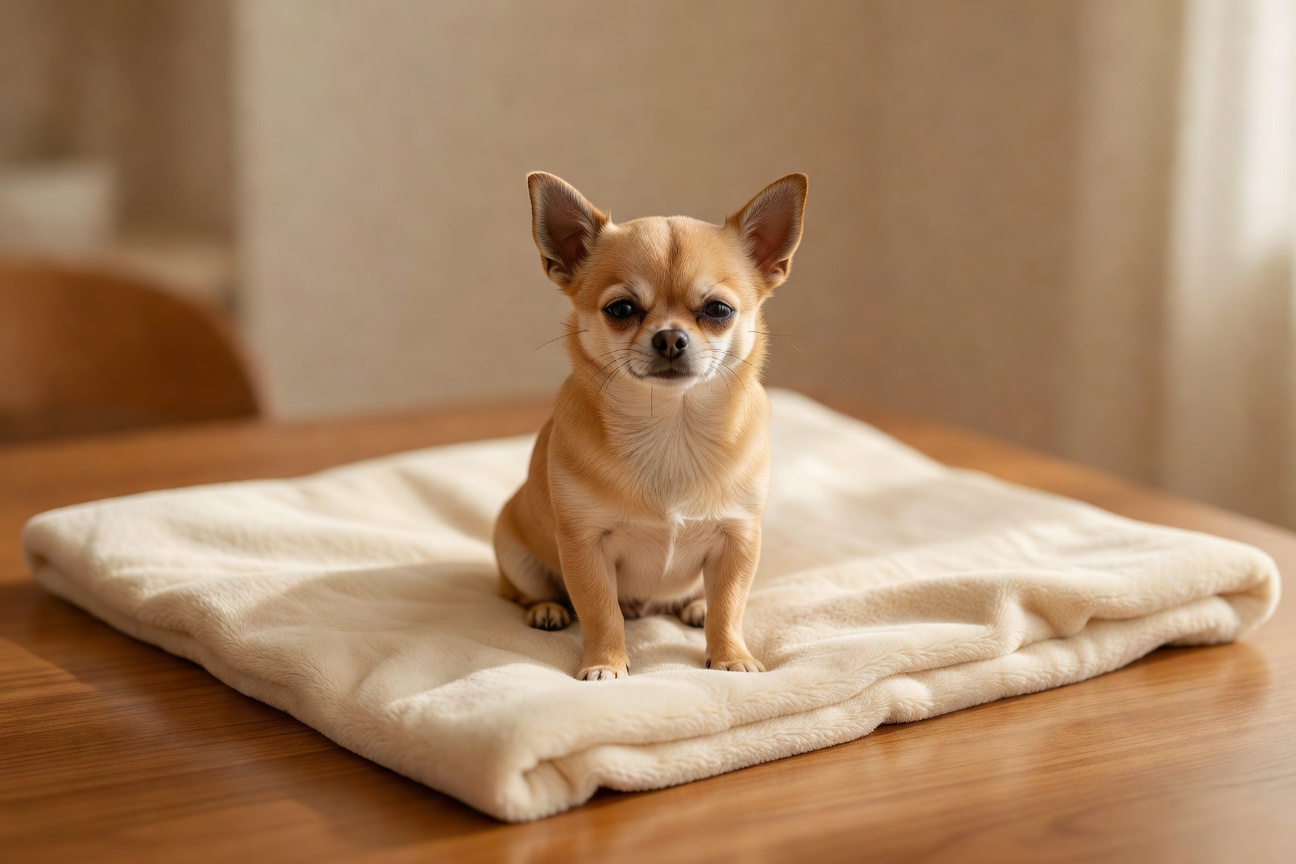
Day one: the puppy or new adult dog refuses a meal. The owner, reasonably concerned, takes the bowl away and offers something more enticing. A small piece of chicken. A bit of cheese. The dog accepts.
Day two: the dog refuses the regular food again. The owner, now slightly worried, repeats the chicken-and-cheese intervention. The dog accepts.
Day three: the dog refuses the regular food, sits at attention, and stares at the human until the chicken-and-cheese intervention arrives. The household has, at this point, completed the training of the dog. The dog has learned that not eating regular food produces, with reliable timing, the chicken.
I am not making this up. I did all three days personally. By day five I was hand-feeding her a rotating menu of organic deli meats, and by week two I was, on a dim awareness, in trouble.
The fix, which is calmer than you think
The fix, which my veterinarian explained in a tone of practiced patience that I now recognize from my own conversations with new owners, takes about one to two weeks and works as follows.
Step 1: Pick a single complete-and-balanced food. The brand matters less than two factors. It should be AAFCO-certified for the dog's life stage, and it should be a food the dog has previously eaten without obvious refusal. The puppy-supplies piece covers the food question for new puppies; for adult dogs, almost any quality kibble or canned food works.
Step 2: Set a fifteen-minute window twice a day. Put the bowl down at breakfast and at dinner. Leave it down for fifteen minutes. At the fifteen-minute mark, pick the bowl up, regardless of how much the dog has eaten.
Step 3: No food between meals. No treats. No table scraps. No "she might be hungry" peace offerings. This is the part the household will struggle with most, for sympathy reasons.
Step 4: Wait. The dog will, almost certainly, refuse the first meal. She may refuse the second. Most chihuahuas, on this protocol, are eating from the bowl by day two or three; some take a week. None starve. A healthy adult chihuahua can skip several meals without medical concern, and the veterinary consensus is that the protocol is, on the available evidence, safe.

The sincere paragraph, planted on cue
I will plant the sincere paragraph here. The thing about chihuahua fussy eating, on later reflection, is that it is not a quirk of the breed. It is a small predictable behavioral pattern that any small intelligent dog will, given enough opportunity, train her household into. The pattern is not the dog being difficult; it is the dog correctly identifying, with the same intelligence that makes her good company, that the household responds to refusals with upgrades. The fix is not a fight with the dog. The fix is the household agreeing, between the household members, that the protocol is the protocol.
This paragraph is also where I admit that, in the household that included the deli-meat phase, the human members had to have a meeting before the protocol started, because two of us had been undermining each other in good faith. The protocol works only if the whole household runs it. If one person hand-feeds chicken at 3 p.m. while another person leaves the kibble bowl down for fifteen minutes at 7 p.m., the dog is, correctly, learning that 3 p.m. is the productive hour.
When it is actually a medical issue, briefly
I do want to flag the small fraction of cases (probably ten percent or less) where the dog is genuinely refusing food because of a medical issue. The signs, on the available AAHA guidance, are roughly:
- Refusal that comes on suddenly in a previously normal eater.
- Refusal paired with vomiting, diarrhea, lethargy, or weight loss.
- Reluctance to chew or visible mouth pain. Dental disease is the most common medical cause in chihuahuas specifically.
- Increased thirst paired with reduced appetite.
Any of these is a same-week vet call. The fifteen-minute-window protocol is for behavioral fussy eating; medical anorexia is a different problem and requires a different intervention.
The end of the column, briefly
If you are reading this with a chihuahua who has, over months or years, trained you into a hand-fed deli-meat rotation, I want you to know two things. First, you are not alone; this household pattern is one of the most common ones I have observed in chihuahua-owning friends and readers. Second, the fix is not a fight; it is a calm two-week protocol in which the household agrees on the routine and the dog adapts.
My own dog, post-protocol, eats a perfectly normal kibble at 7 a.m. and 6 p.m. without complaint. She still sniffs it for a moment first, in what I read as her residual professional opinion. She then eats it. The deli-meat phase is, on the household's accounting, behind us. I am, on the available evidence, no longer the chef.
The Chihuahua Drama Checklist pets
How many does your Chi check off today?
- Side-eyed at least one human
- Burrowed like a pro
- Scoffed at their dinner
- Acted offended
- Demanded to be carried
- Gave a dramatic sigh
- Barked at something invisible
- Danced for a treat
- Stole the warmest spot
- Looked adorable while doing it all
Got a dramatic Chi moment we missed? Share your story in the comments. Worst case, our editor laughs at it alone.
favorite

