

If you are about to bring a chihuahua puppy home, the pet-store haul that the cashier rings up will, by my count and by every other chihuahua owner I have asked, be roughly half wrong. The collar is wrong; the bed is wrong; the food bowl could double as a wading pool for a dog that weighs less than a bag of sugar. I went through this in 2017 with my first chihuahua, returned about $120 of the original $240, and have, since then, kept a short list of what actually works.
Below is the household-tested version of the chihuahua-puppy supply list. It is shorter than the pet-store recommendation, which is, in my experience, the right direction.
Skip the collar; get a Y-front harness instead
This is the single most important item. Chihuahua puppies, and chihuahuas in general, have a tracheal anatomy that does not tolerate collar pressure well. The breed is overrepresented in tracheal-collapse cases at most veterinary clinics, and a pulling-on-collar habit in puppyhood is associated with later respiratory issues.
Buy a Y-front harness, specifically a soft-sided model that distributes pressure across the chest rather than the throat. The chest strap should sit two finger-widths behind the front legs; the neck opening should be wide enough to fit two fingers between the strap and the dog's neck. Plan to replace the harness at least once during the first year, as the puppy grows.
Cost: $15 to $30 for a good harness. Avoid the $5 ones; the buckles fail. Keep an ID tag attached to the harness, not to a separate collar.
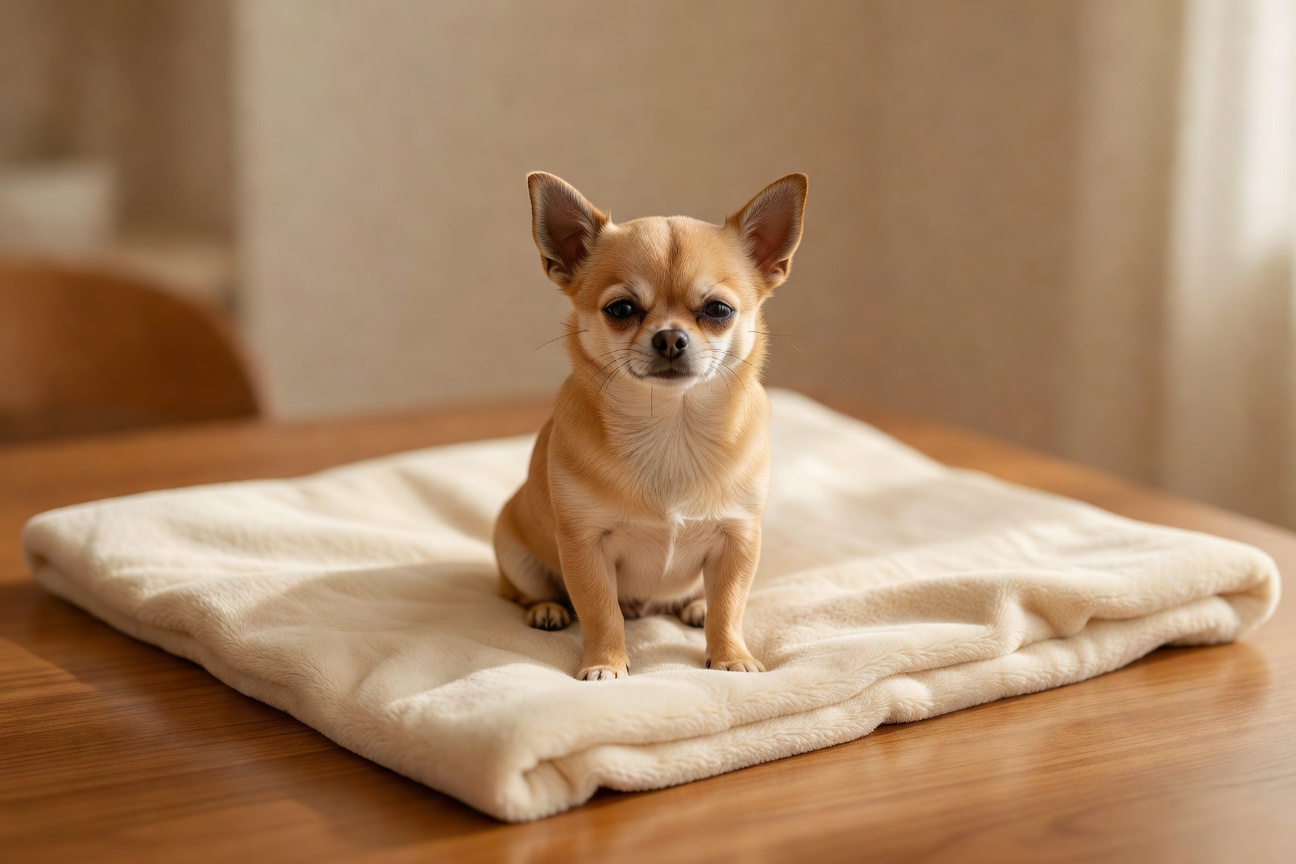
A small bed, not the medium one
A chihuahua puppy will look, in any pet-store bed display, like she belongs in a bed labeled "extra small" or "toy breed." This is correct. Buy that one. The medium bed, which the store will recommend as "she will grow into it," will be the wrong size for the entire dog's life; chihuahuas are full-sized at six to twelve months and the medium bed will swallow her permanently.
A specific feature to look for: low sides on at least one edge so the puppy can step in and out without jumping. Jumping in and out of a bed with high sides repeatedly during a day is one of the small accumulating loads on chihuahua patellar joints. The common health-issues primer covers patellar luxation; minimizing repetitive small jumps in puppyhood is a small upstream contribution.
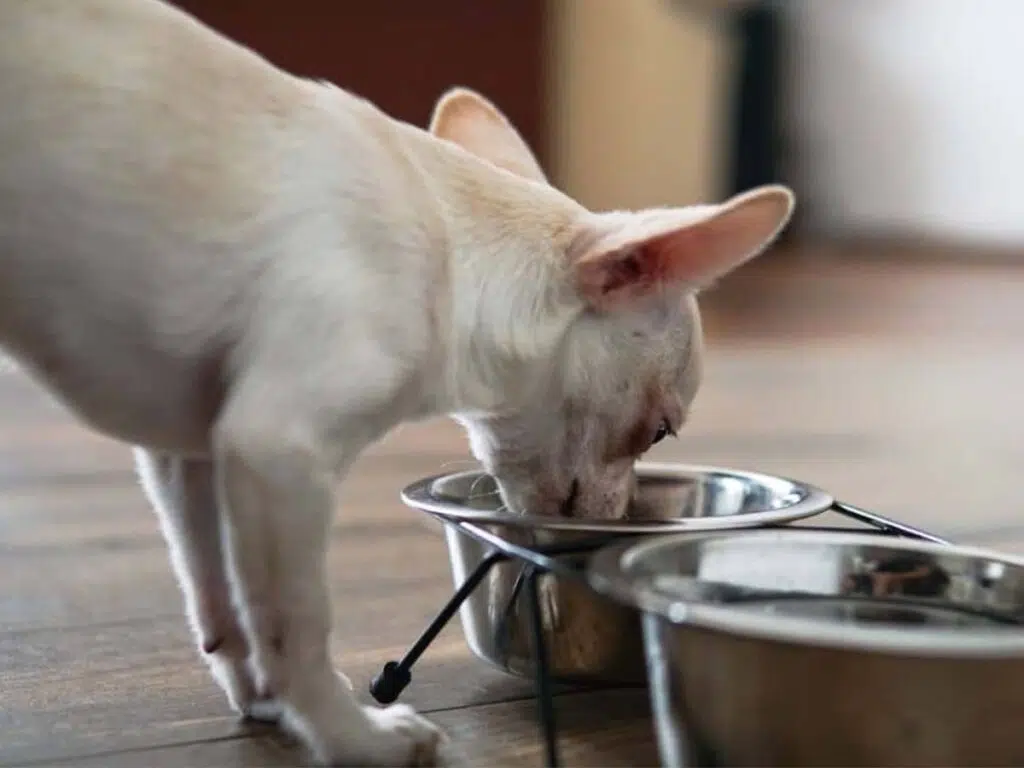
A small food bowl, ideally ceramic or stainless
A chihuahua puppy needs a bowl roughly the diameter of a coffee mug. Plastic bowls are not ideal; they harbor bacteria in scratches and can contribute to chin acne in some dogs. Ceramic or stainless steel cleans better and lasts longer.
The water bowl should be slightly wider and heavier than the food bowl, since chihuahua puppies are remarkably good at tipping a light water bowl. A non-skid mat under both bowls keeps the floor area cleaner and reduces the dog's tendency to chase the bowl across the kitchen.
Food, briefly, since this is where new owners overspend
The food brand matters less than two factors: it should be an AAFCO-certified small-breed puppy formula, and it should be the food the breeder or rescue was already feeding when you brought the puppy home. Switching foods is a stress on a small puppy's digestive system and is best done over a one-to-two-week gradual transition rather than on day one.
Talk to your veterinarian about the right food at the first wellness visit; the conversation is short and worth more than a pet-store associate's recommendation. The AAFCO consumer guide covers what the certification actually means.
Potty-training supplies, lean version
A small set, not the full pet-store kit:
- An enzymatic urine cleaner. One bottle. The supermarket general-purpose cleaner does not break down the proteins that signal "this is the bathroom"; an enzymatic cleaner does.
- Reusable potty pads or grass-mat trays. Useful for apartment dwellers and for the first few weeks of housetraining. Disposable pads work too; the reusable washable ones save money over time.
- A small treat pouch. Worn at the hip during the housetraining period so the reward is delivered within two seconds of the correct behavior. The puppy training primer covers the timing.
You do not need a separate "puppy doorbell" or any of the fancier accessories. The puppy will learn by routine and reward; the gear is mostly the cleaner and the treat pouch.
A small crate, used correctly
A crate is, in modern training literature, a useful tool when sized correctly and introduced gradually. The right size for a chihuahua puppy: just large enough that she can stand up, turn around, and lie down. A crate too large defeats the purpose; the puppy will use one corner as the bathroom.
The crate-training primer covers the introduction protocol. The crate should be a positive space the puppy enters voluntarily; it should not be used as punishment. Most owners need an 18-inch or 24-inch crate, depending on adult size.
A small sweater for indoors, a coat for outdoors
A chihuahua puppy at four to six pounds loses heat quickly. A small fleece sweater for inside the house in winter, a fleece-lined coat for walks below 50 degrees, and a rain jacket for wet weather are the practical inventory. You do not need a closet's worth; one of each, replaced as the puppy grows.
Things you do not need, briefly
A short list of pet-store items that are, in my experience, optional or unnecessary for a chihuahua puppy:
- Decorative bandanas, costumes, and seasonal outfits.
- The "starter" toy multipack; pick one or two appropriate-sized toys instead.
- Scented training sprays. The enzymatic cleaner does the work.
- Anything labeled "for puppies" that is also sized for a 30-pound dog.
The total spend, on the lean list, is roughly $130 to $180 plus the food and the harness. The pet-store haul is closer to $300 to $400 and includes a meaningful amount of furniture you will return.
The practical bottom line, going home day
Talk to your veterinarian at the first wellness visit about anything specific to your dog. The general list above covers most chihuahua-puppy households. The lean version saves money, fits the dog correctly, and is in line with what most experienced chihuahua owners I have asked say they would have bought if they could redo the first week. The pre-adoption primer covers the broader frame; this list is the going-home-day specific version.
Health at a Glance: What to Watch monitor_heart
| Condition | Key Signs | Prevention Tips |
|---|---|---|
| Dental Disease | Bad breath, tartar, red gums | Daily brushing, dental treats |
| Patellar Luxation | Limping, skipping, leg lifting | Weight control, avoid high jumps |
| Tracheal Collapse | Dry cough, gagging | Harness walking, avoid smoke |
| Heart Disease | Coughing, fatigue, fainting | Regular check-ups, heart-healthy diet |
| Hypoglycemia | Shaking, weakness, lethargy | Small, frequent meals |
Community Insights – FAQ help
help_outline When should I call my vet about a behavior change? expand_more
Sooner than feels reasonable. A change in appetite, energy, or routine that lasts more than 48 hours is worth a phone call, not a wait-and-see.
help_outline How often should a healthy adult chihuahua see the vet? expand_more
Once a year through age seven. Twice a year from eight on. Dental checks are part of every visit.
help_outline Do chihuahuas need different care than larger breeds? expand_more
Yes. Smaller medication dosing, more frequent dental work, and closer monitoring for tracheal and patellar issues are standard in toy-breed care.
Have a health question? Ask your question in the comments. We will bring it up with the vet team.
favorite