

What does a chihuahua actually go to the vet for? In a small-animal practice, the same handful of conditions come up again and again: dental crowding and dental disease, patellar luxation, hypoglycemia in puppies, tracheal collapse, mitral valve disease in seniors, and a few skin and eye issues that come with the breed’s morphology. None of them are surprises if you know to look for them, and most are manageable when caught early. This is the short list, in plain language.
I am going to walk through each one the way I would in an exam room, with a sentence on what it is, a sentence on what you might notice, and a sentence on what to do about it.
Dental crowding and periodontal disease
Chihuahuas have the same forty-two adult teeth as a 70-pound retriever, packed into a jaw a fraction of the size. The result is dental crowding, retained baby teeth, and a high rate of periodontal disease starting young. The American Veterinary Dental College reports periodontal disease in roughly 80 percent of dogs by age three; in toy breeds the curve is steeper.

What you might notice: bad breath that does not improve with chews, brown buildup at the gumline, reluctance to chew on one side, food preferences shifting toward soft.
What to do: a baseline dental exam and full-mouth dental radiographs at the next wellness visit, daily home brushing if your dog will tolerate it, and a professional cleaning under anesthesia on the schedule your veterinarian sets, usually every twelve to twenty-four months. The AAHA Dental Care Guidelines are the document your vet is working from.
Patellar luxation
The patella is the kneecap; in toy breeds the groove it sits in can be shallow, and the kneecap slides medially out of place. The classic sign is a sudden three-legged hop that resolves after a few seconds when the kneecap pops back. It is graded I to IV; mild cases are conservative, moderate to severe cases sometimes need surgery.
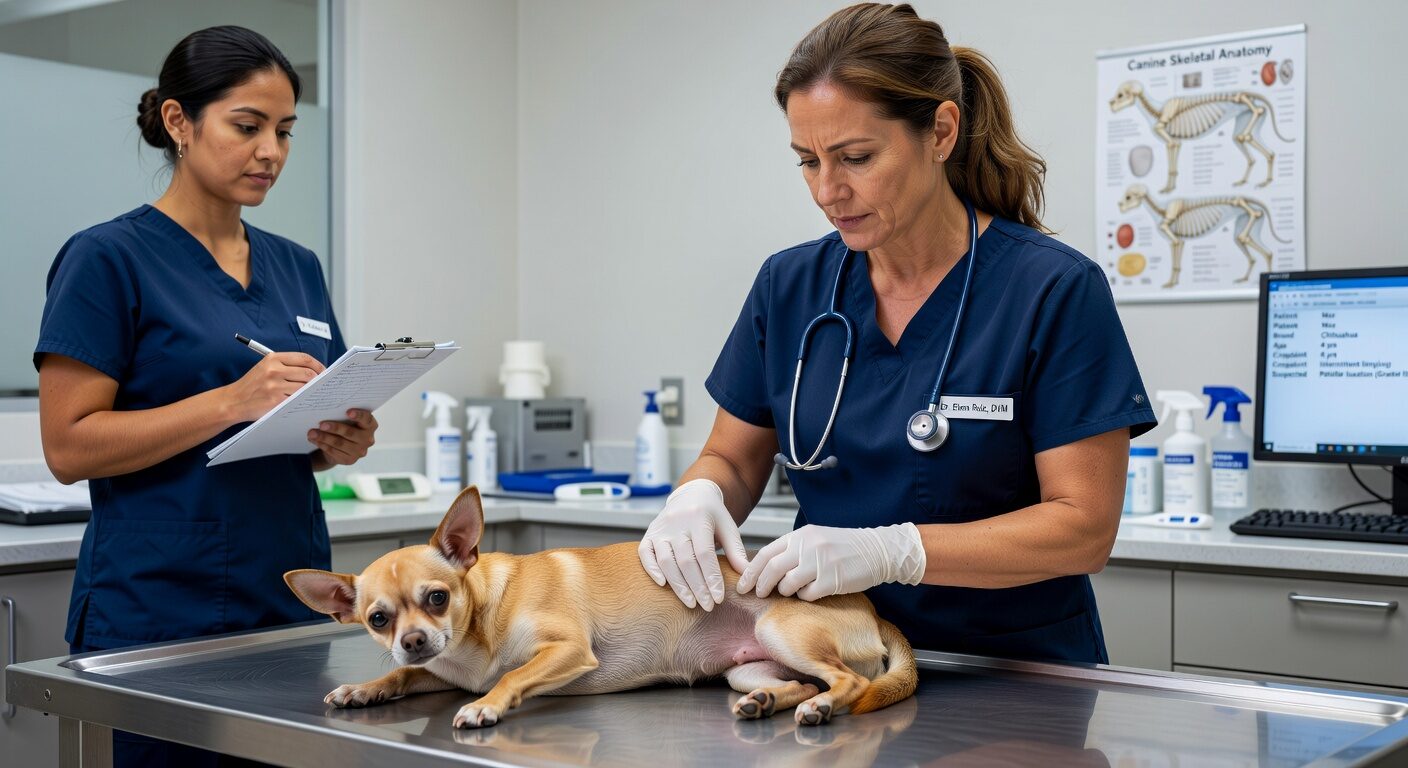
What you might notice: the intermittent skip-hop on a back leg, especially after running or jumping; reluctance to jump up onto the couch.
What to do: ask your veterinarian for a knee exam at your next visit. They can grade the patellas in a minute. A sudden non-weight-bearing limp that does not resolve is a different conversation and a same-week call.
Hypoglycemia in puppies
A chihuahua puppy under twelve weeks has very little glycogen reserve. Stress, missed meals, or illness can drop blood sugar fast. The signs are subtle until they are not: lethargy, weakness, a wobbly gait, and in severe cases seizures or collapse.
What to do: feed three to four small meals a day in the first three months; keep a small tube of corn syrup or Karo syrup in the house; and call your veterinarian immediately if your puppy will not stand up. My puppy-care primer has the full schedule.
Tracheal collapse
A flexible cartilage ring around the windpipe weakens with age in some toy breeds; the trachea narrows on inhalation and the dog produces a characteristic honking cough, especially when excited or pulled by a collar. It is more common in middle-aged and senior chihuahuas.
What to do: switch to a Y-front harness rather than a collar for walks; keep your dog at a healthy weight, which reduces the load on the airway; and bring up any honking cough at the next vet visit. The Merck Veterinary Manual has a clear summary if you want to read further.
Mitral valve disease
Degenerative mitral valve disease (MVD) is the most common heart condition in small breeds. The valve between the left atrium and left ventricle thickens with age and starts to leak, producing a soft heart murmur that your vet may catch on a routine exam years before any symptoms.
What to do: a yearly cardiac auscultation as part of the wellness exam from age six on. If a murmur is heard, your veterinarian may recommend an echocardiogram and follow the EPIC and ACVIM staging protocols, which can extend asymptomatic life with the right medication started at the right stage.
A short list of the rest
A few common but smaller items, for completeness:
- Hydrocephalus and molera. Some chihuahuas keep a soft spot on the skull (the molera) into adulthood. Most are clinically silent; ask your vet to note it on the chart.
- Eye conditions. Dry eye, corneal ulcers, and cataracts come up; the breed’s prominent eyes are more exposed to injury. Any squinting or eye discharge is a same-week vet call.
- Skin and ears. Allergies and yeast infections are common; a focused work-up for itching is more useful than rotating shampoos.
- Obesity. The single condition that raises the risk of every other condition on this list. A 6.4-pound chihuahua is not "a little fluffy"; that is +20 percent over breed weight, which on a four-legged frame is meaningful.
The bottom line
The list is finite. None of these conditions is surprising once you know the breed. What helps the most is the cadence of care: a wellness exam every six to twelve months, a dental cleaning on the schedule your vet sets, and a willingness to call early when something is off. Small dogs have small reserves. The window between "off" and "in trouble" is shorter than at fifty pounds.
If you have read this far and your chihuahua is overdue for any of the above, schedule the visit this week. Bring the list. Your veterinarian will appreciate the focused conversation, and your dog will benefit from the cadence.
Health at a Glance: What to Watch monitor_heart
| Condition | Key Signs | Prevention Tips |
|---|---|---|
| Dental Disease | Bad breath, tartar, red gums | Daily brushing, dental treats |
| Patellar Luxation | Limping, skipping, leg lifting | Weight control, avoid high jumps |
| Tracheal Collapse | Dry cough, gagging | Harness walking, avoid smoke |
| Heart Disease | Coughing, fatigue, fainting | Regular check-ups, heart-healthy diet |
| Hypoglycemia | Shaking, weakness, lethargy | Small, frequent meals |
Community Insights – FAQ help
help_outline When should I call my vet about a behavior change? expand_more
Sooner than feels reasonable. A change in appetite, energy, or routine that lasts more than 48 hours is worth a phone call, not a wait-and-see.
help_outline How often should a healthy adult chihuahua see the vet? expand_more
Once a year through age seven. Twice a year from eight on. Dental checks are part of every visit.
help_outline Do chihuahuas need different care than larger breeds? expand_more
Yes. Smaller medication dosing, more frequent dental work, and closer monitoring for tracheal and patellar issues are standard in toy-breed care.
Have a health question? Ask your question in the comments. We will bring it up with the vet team.
favorite