

Why is your chihuahua scratching? The clinical answer is one of five categories, in roughly descending order of prevalence: parasites, allergic skin disease, dry-skin barrier failure, secondary infection, and contact irritation. Chihuahua skin allergies are the second-most-common cause overall and the most common cause in cases that do not respond to flea-preventive alone.
This piece is the differential. None of it is a substitute for an examination by your own veterinarian.
1. Fleas Until Proven Otherwise
The first move on any persistent scratching case is a flea check. The Merck Veterinary Manual's flea entry covers the diagnostic; the practical version is a fine-toothed flea comb run from neck to tail base, with the comb wiped on a damp white paper towel. Black specks that turn red on the wet towel are flea dirt, and a single confirmed sighting is a household-treat decision, not a single-dog one.
Flea-allergy dermatitis, the immune reaction to flea saliva, can produce intense itching from a single bite in hypersensitive dogs. The intervention is a year-round, vet-recommended preventive; AKC's flea-prevention reference covers the active-ingredient options.
2. Chihuahua Skin Allergies (Atopy and Food)
Atopic dermatitis is the chronic allergic skin disease driven by environmental allergens (pollens, dust mites, mold). The chihuahua is over-represented in the toy-breed atopy literature. The signs to read for: seasonal onset, paw chewing (especially between the toes), facial rubbing on furniture, ear inflammation, and the chihuahua's characteristic rolling-on-the-rug pattern.
Food allergy is less common than atopy but does occur. The diagnostic is an eight-week elimination diet trial run with a hydrolyzed-protein veterinary food. The 2015 Olivry consensus on adverse food reactions is the clinical reference.
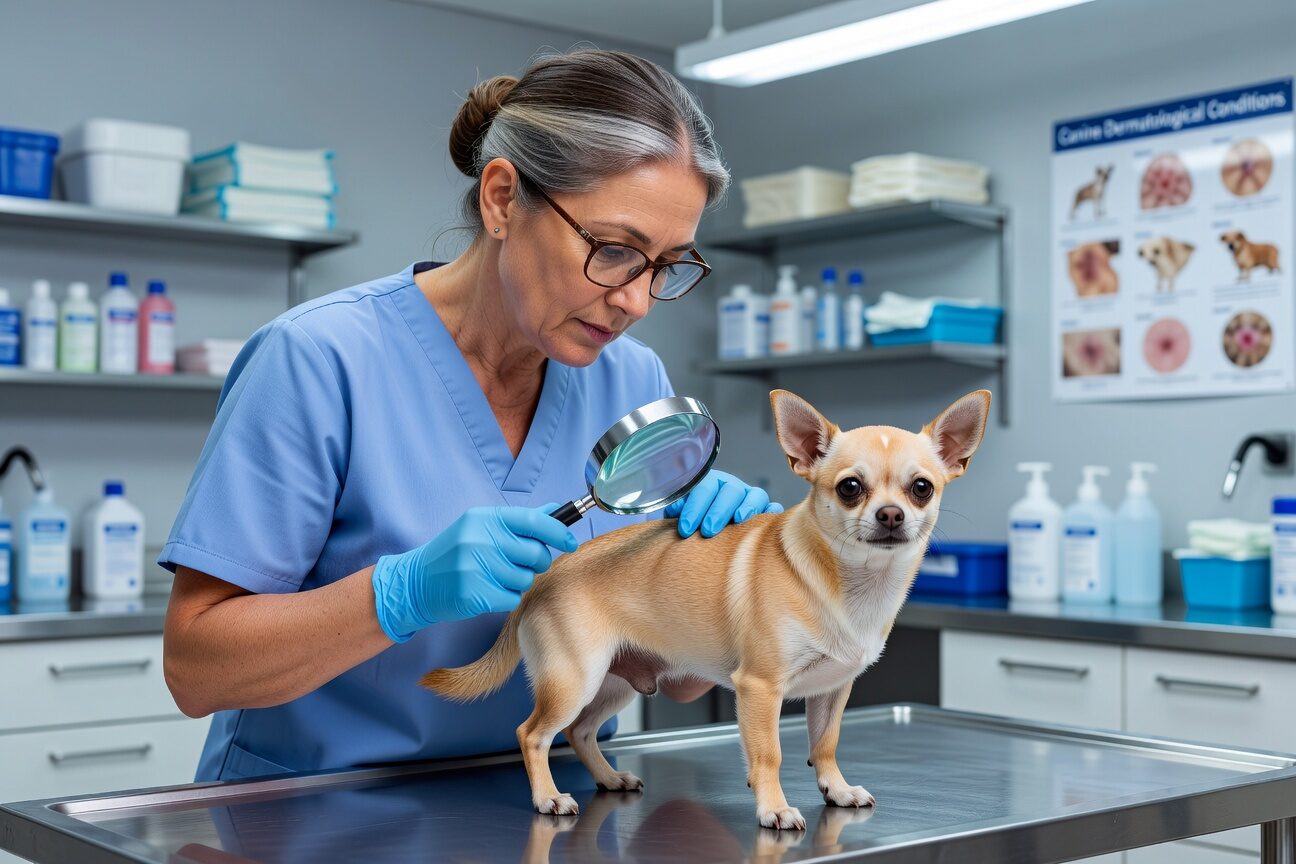
3. Dry-Skin Barrier Failure
In the chihuahua, the skin barrier is unusually thin and the smooth-coat in particular is exposed. Low ambient humidity in winter, over-bathing, and harsh shampoos all produce barrier compromise. The intervention is a chihuahua-appropriate shampoo (the companion grooming and shampoo guide covers the ingredient list) and omega-3 fatty acid supplementation (the companion omega-3 piece covers dosing).
4. Secondary Yeast or Bacterial Infection
A persistently itchy dog, particularly in the inter-digital spaces between the toes and along the ventral abdomen, often develops secondary yeast or bacterial infection on top of the original cause. The yeast presents as a sweet musty odor; the bacterial infection as a dark exudate. Both require veterinary treatment with topical or systemic medication and, importantly, both will recur if the underlying cause is not addressed.
5. Contact Irritation
Detergents, fabric softeners, lawn chemicals, and ice-melt salts on winter sidewalks can produce localized contact dermatitis on the paw pads and ventral abdomen. The companion paw care piece covers the post-walk paw rinse that prevents this.
When to Call Your Veterinarian
Same-day reasons: open lesions, hot spots, sudden severe scratching that is keeping your chihuahua from sleeping, ear discharge or odor, hair loss with red skin underneath. Within the week: persistent scratching that has not responded to a confirmed flea-preventive trial; recurrent paw chewing, particularly between the toes; coat thinning along the flanks (an endocrine red flag).
What to Do This Week
One practical action: do the flea-comb test on a damp paper towel tonight. If it comes back clean, schedule the vet visit for the differential workup; the next four steps should be run by your veterinarian, not by the pet-store aisle.
For more clinical explainers, browse the Health desk or subscribe for the next dispatch. Talk to your veterinarian about anything that does not look right at home.
Health at a Glance: What to Watch monitor_heart
| Condition | Key Signs | Prevention Tips |
|---|---|---|
| Dental Disease | Bad breath, tartar, red gums | Daily brushing, dental treats |
| Patellar Luxation | Limping, skipping, leg lifting | Weight control, avoid high jumps |
| Tracheal Collapse | Dry cough, gagging | Harness walking, avoid smoke |
| Heart Disease | Coughing, fatigue, fainting | Regular check-ups, heart-healthy diet |
| Hypoglycemia | Shaking, weakness, lethargy | Small, frequent meals |
Community Insights – FAQ help
help_outline When should I call my vet about a behavior change? expand_more
Sooner than feels reasonable. A change in appetite, energy, or routine that lasts more than 48 hours is worth a phone call, not a wait-and-see.
help_outline How often should a healthy adult chihuahua see the vet? expand_more
Once a year through age seven. Twice a year from eight on. Dental checks are part of every visit.
help_outline Do chihuahuas need different care than larger breeds? expand_more
Yes. Smaller medication dosing, more frequent dental work, and closer monitoring for tracheal and patellar issues are standard in toy-breed care.
Have a health question? Ask your question in the comments. We will bring it up with the vet team.
favorite