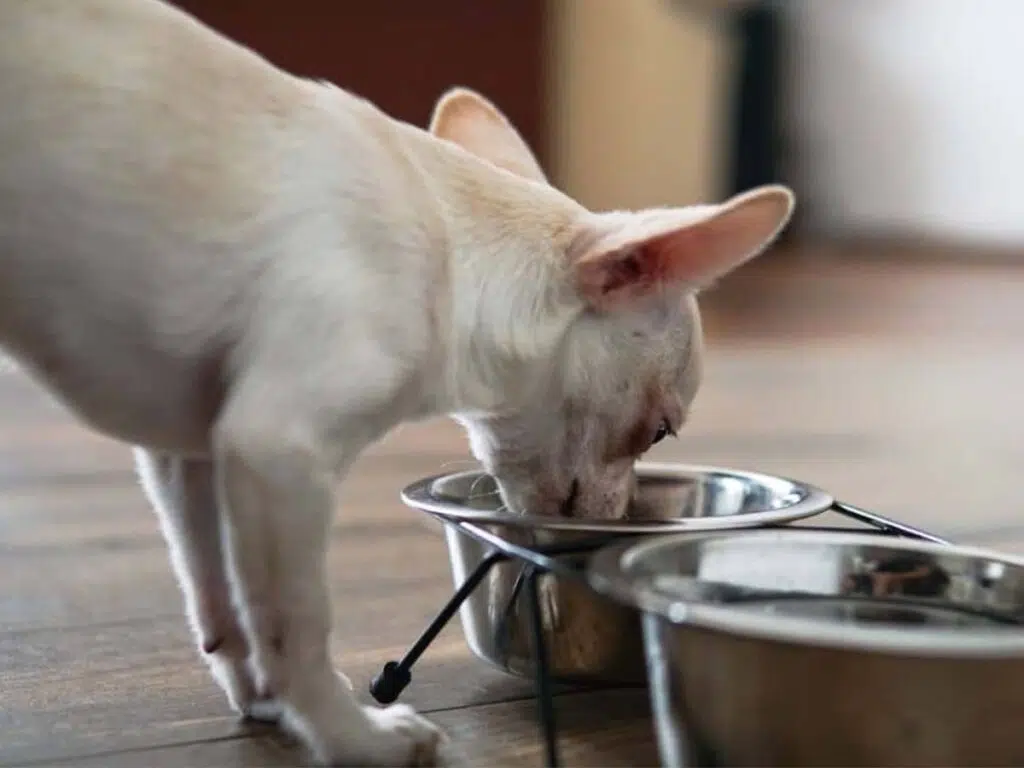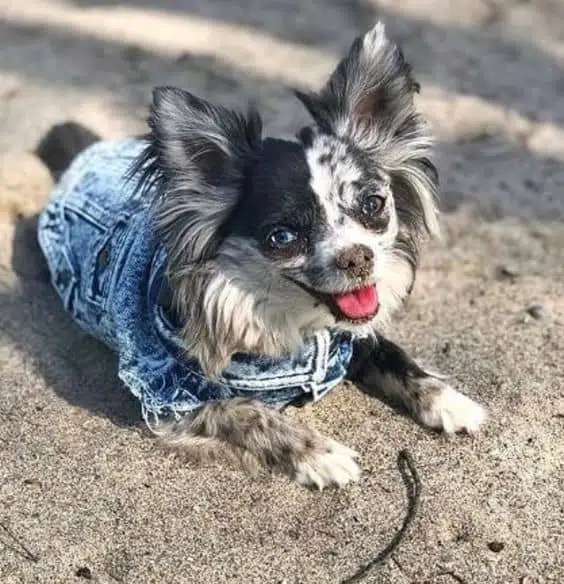


What does chihuahua paw care actually require? At minimum, a paw-pad inspection at the end of every walk, a pavement-temperature check before any walk above eighty degrees Fahrenheit, and chihuahua nail trimming on a two-to-three-week cadence. The longer answer, which is the one your veterinarian wants you to read before the first hot-pavement burn, is that chihuahua paws live closer to the ground than the rest of the dog and absorb every variable the dog encounters.
This piece is the practical version. None of it is a substitute for an examination by your own veterinarian.
Why Chihuahua Paws Need Specific Attention
The chihuahua's belly clears the sidewalk by perhaps four inches. The paw pads are smaller, thinner, and absorb a higher proportion of mechanical and thermal load per square inch than larger breeds. The breed-specific risk profile, summarized in the Merck Veterinary Manual, lists pad burns, cracking, foreign-body penetration, and ice-melt chemical exposure as the four most common at-home presentations in toy dogs.
The pavement test
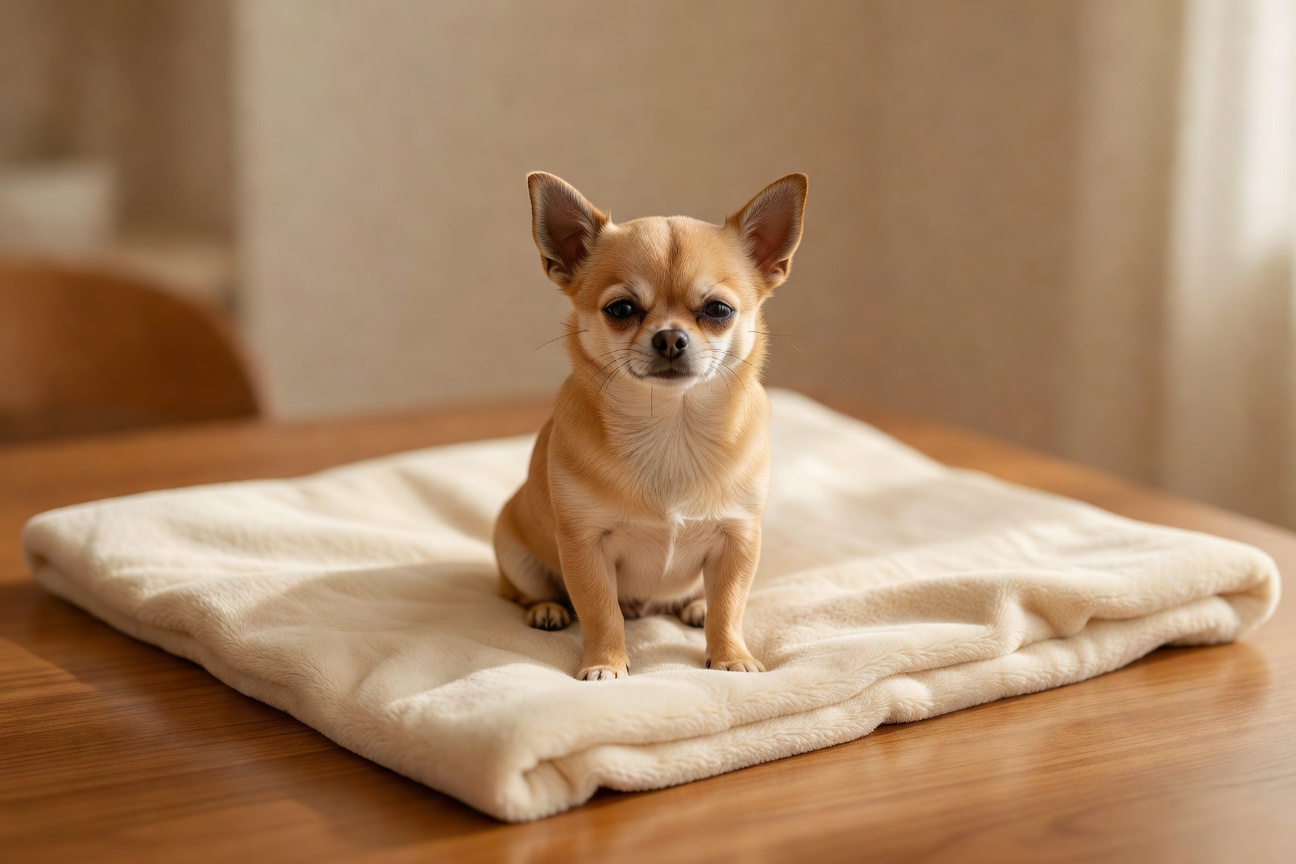
A practical, fast test: place the back of your hand on the pavement for five seconds. If you cannot hold it there comfortably, your chihuahua cannot walk on it. AKC's pavement-temperature reference confirms the rule and adds the specific number that most owners do not know: at an air temperature of eighty-six degrees Fahrenheit, asphalt can reach 135 to 145 degrees. Pad burns occur in under sixty seconds at those values.
In summer, walk before nine in the morning or after sunset. In winter, watch for ice-melt salt; commercial salts contain chlorides that produce contact burns and gastrointestinal upset if the dog licks the paw afterward.
Chihuahua Nail Trimming: How Often and How
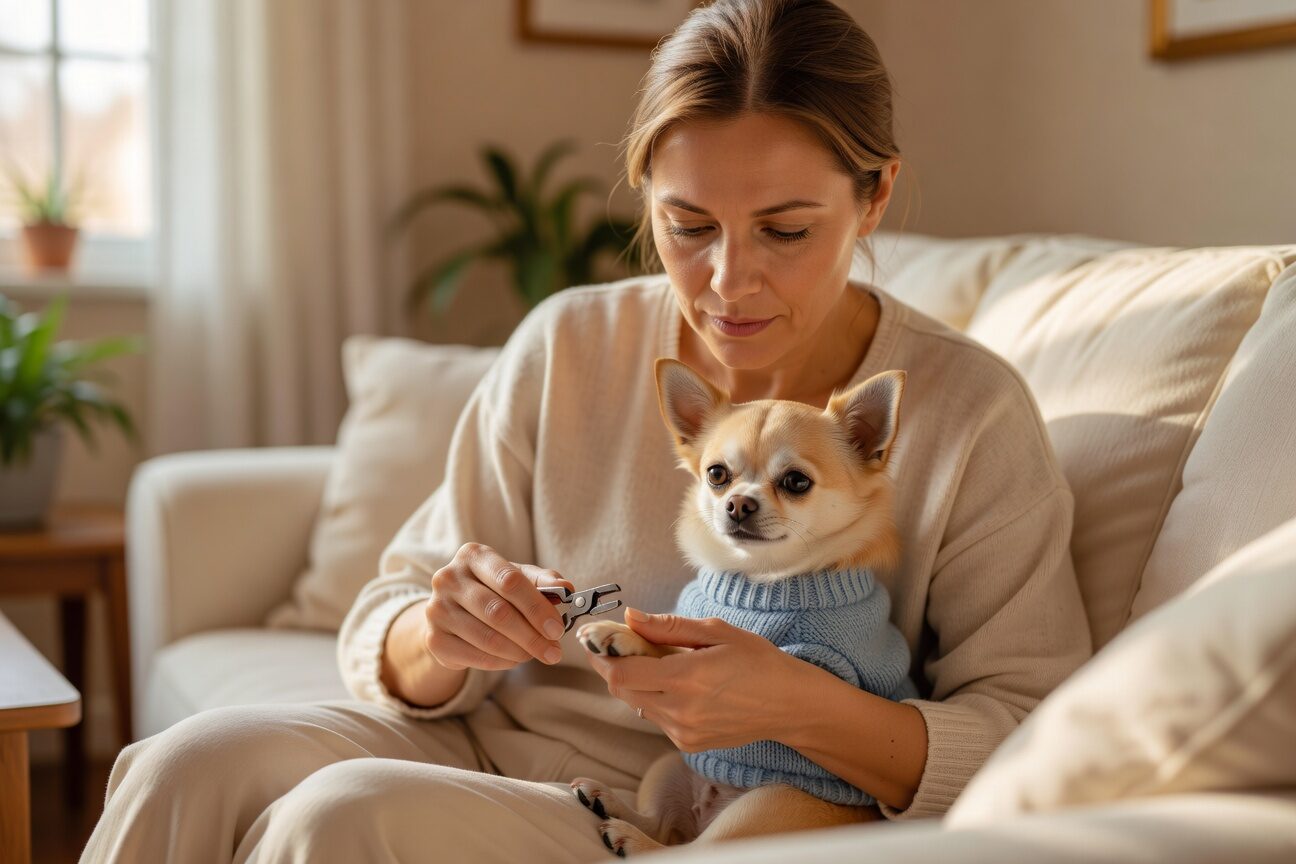
The cadence: every two to three weeks. The signal: when you can hear the click on a hard floor, the nail is too long. The mechanical reason matters: an overgrown nail forces the toe joints into a chronic mal-position, which over months produces orthopedic complaints up the kinetic chain.
What you need
Small, sharp clippers (the AKC nail-trimming guide treats either a small guillotine-style or scissor-style as appropriate for toy dogs); a styptic pencil or styptic powder for inadvertent quicking; a small flashlight for finding the quick on dark nails. The companion piece on grooming and shampoo for chihuahuas covers the broader at-home care routine.
What to do when you cut the quick
Apply firm pressure with the styptic powder for thirty to sixty seconds. The bleeding will stop. Do not reattempt the trim that day; resume in twenty-four hours, on a different paw. The dog will remember; you will need to rebuild the trust over two or three sessions.
What to Watch for at Home
The weekly check is short. Lift each paw, separate the toes, and look at four things.
The pads themselves: smooth, slightly textured, and pink-to-grey. Cracks, peeling, redness, or dryness are first signs of burn or barrier compromise.
The interdigital spaces: the gaps between the toes are common sites for foxtails, grass seeds, mats in long-coat chihuahuas, and yeast or bacterial infection. Yeast infection presents as a sweet musty odor; bacterial infection as a dark exudate.
The nail beds: any swelling, redness, or sensitivity to gentle pressure warrants a vet conversation within a few days.
The carpal pads: the small pad on the back of the front "wrist" is often forgotten; check it during the same session.
When to Call Your Veterinarian
Same-day reasons: limping that does not resolve in an hour after rest; visible burn or open wound on the pad; a foreign body that does not come out with gentle attempt; sudden, severe paw chewing or licking. Within-the-week reasons: persistent licking of one paw or one toe; recurrent yeast smell; nail-bed swelling; any change in gait that persists.
The companion three things every chihuahua owner must know guide covers the broader breed-typical risks. The chihuahua lifespan piece covers the long-arc context for the orthopedic protection that good paw care provides over years.
A Routine You Can Start This Week
Three small habits. One: post-walk paw inspection, every walk. Two: a calendar reminder for nail trimming every two weeks. Three: the back-of-hand pavement test from May through September. The breed will reward all three with mobility that lasts into the senior years.
For more clinical explainers, browse the Health desk or subscribe for the next dispatch. Talk to your veterinarian about anything that does not look right at home.
Health at a Glance: What to Watch monitor_heart
| Condition | Key Signs | Prevention Tips |
|---|---|---|
| Dental Disease | Bad breath, tartar, red gums | Daily brushing, dental treats |
| Patellar Luxation | Limping, skipping, leg lifting | Weight control, avoid high jumps |
| Tracheal Collapse | Dry cough, gagging | Harness walking, avoid smoke |
| Heart Disease | Coughing, fatigue, fainting | Regular check-ups, heart-healthy diet |
| Hypoglycemia | Shaking, weakness, lethargy | Small, frequent meals |
Community Insights – FAQ help
help_outline When should I call my vet about a behavior change? expand_more
Sooner than feels reasonable. A change in appetite, energy, or routine that lasts more than 48 hours is worth a phone call, not a wait-and-see.
help_outline How often should a healthy adult chihuahua see the vet? expand_more
Once a year through age seven. Twice a year from eight on. Dental checks are part of every visit.
help_outline Do chihuahuas need different care than larger breeds? expand_more
Yes. Smaller medication dosing, more frequent dental work, and closer monitoring for tracheal and patellar issues are standard in toy-breed care.
Have a health question? Ask your question in the comments. We will bring it up with the vet team.
favorite