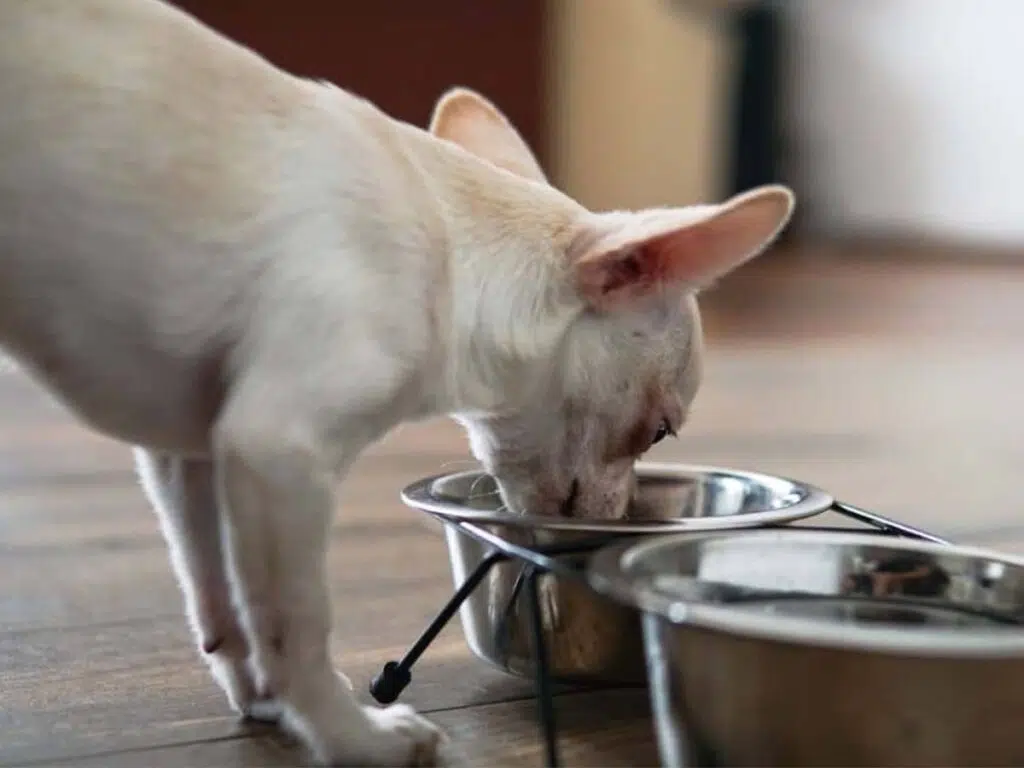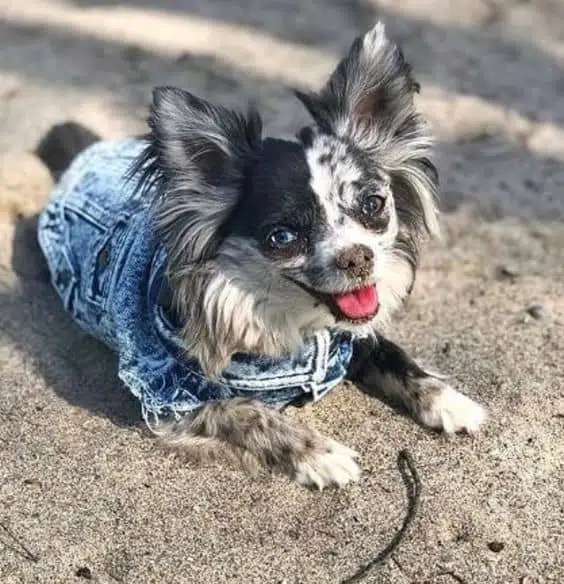


What is the best shampoo for a chihuahua, and how often should you bathe one? The short answer: a fragrance-free, sulfate-free, oat-based shampoo with a pH formulated for canine skin (around 7.0 to 7.5), used no more frequently than once every three to four weeks unless your veterinarian has prescribed otherwise. The longer answer, which is the one your veterinarian wants you to read before you buy the next twenty-dollar bottle of something marketed for sensitive skin, is that the chihuahua's skin barrier is unusually thin and unusually reactive, and the wrong shampoo can produce a contact reaction within hours.
Why Chihuahua Skin Demands a Different Shampoo
Canine skin, in general, has a less acidic pH than human skin; the Merck Veterinary Manual places the canine skin pH range at roughly 6.2 to 7.4, against human skin at 4.5 to 5.5. Chihuahua skin tends toward the upper end of that canine range, which means human shampoos, including baby shampoos, are too acidic and disrupt the skin barrier on contact.
Chihuahua coats, particularly the smooth-coat variety, also offer less mechanical shielding than thicker double-coats. Topical chemicals reach the skin faster and leave more slowly. The result is that ingredients a Labrador tolerates without comment can produce a contact dermatitis in a chihuahua within a wash cycle.
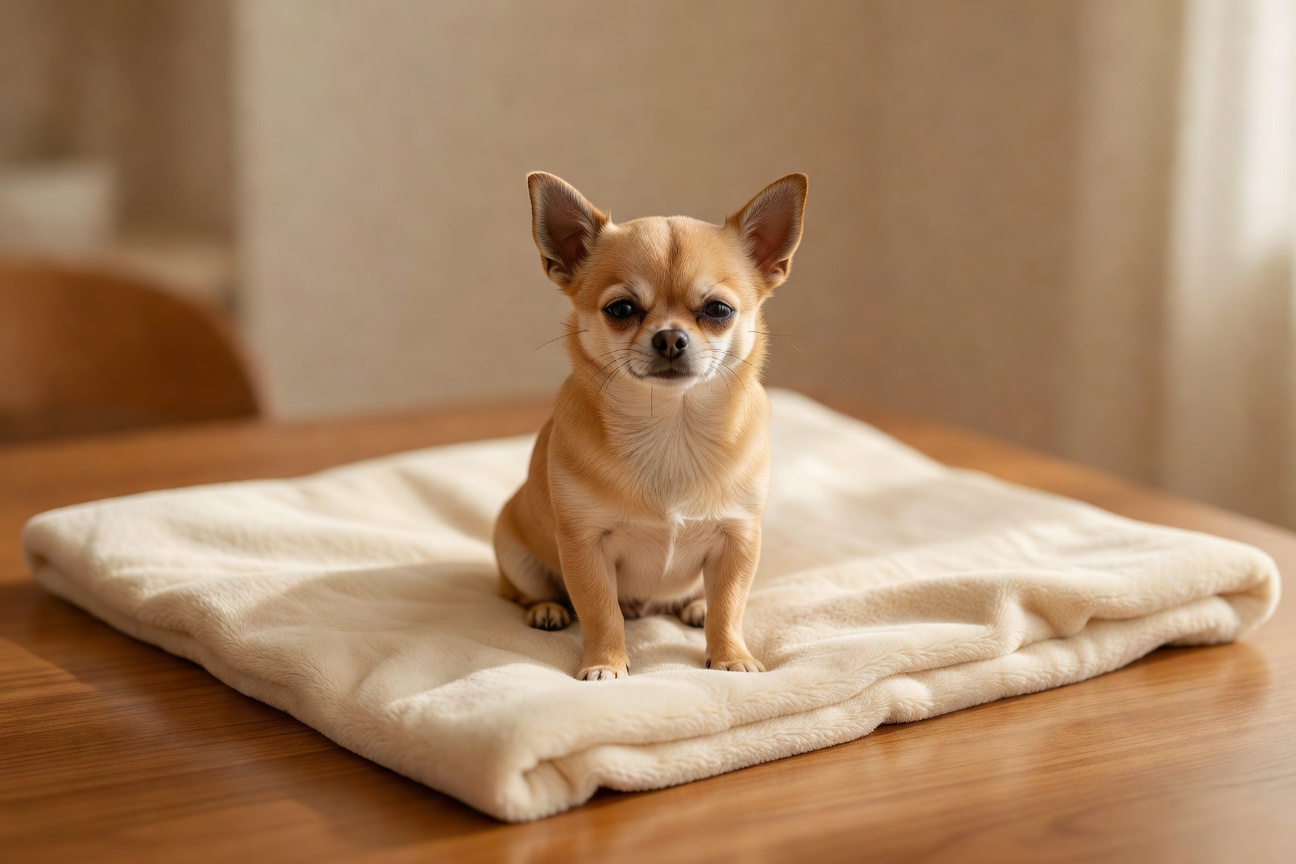
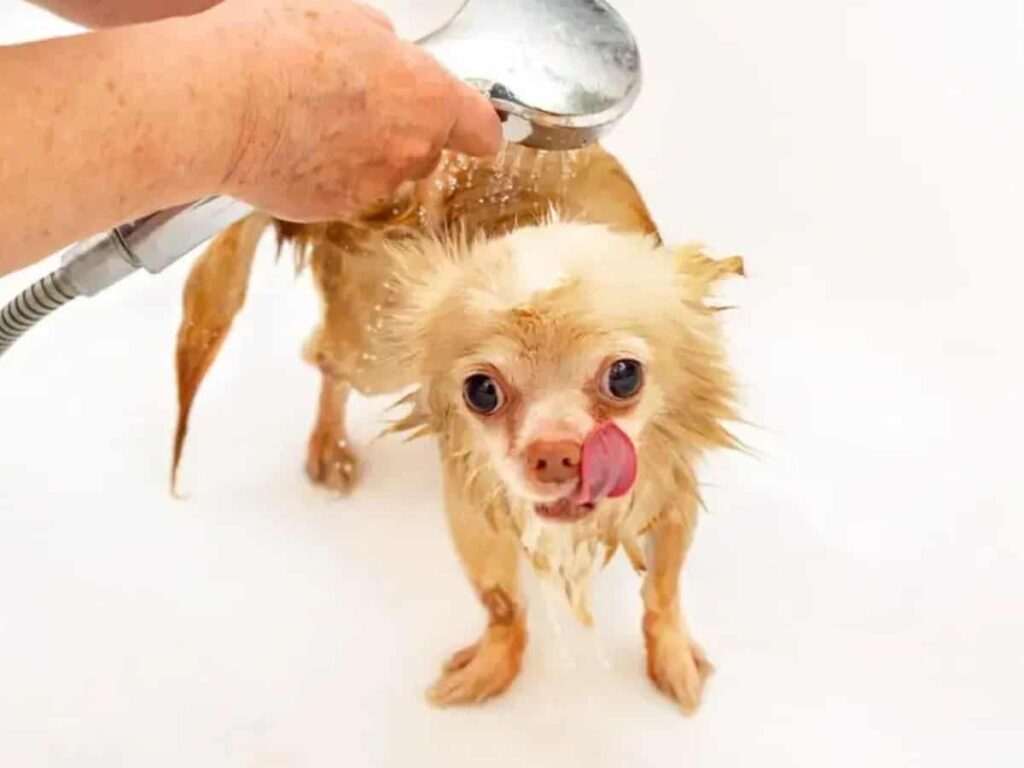
The Best Shampoo for a Chihuahua: What the Label Should Say
The short list of ingredients to want, in approximate order of evidence quality:
Colloidal oatmeal as a primary ingredient soothes the skin barrier without stripping the protective lipid layer; the AKC shampoo buyer's guide treats colloidal oatmeal as a default for sensitive small-breed skin. Aloe-based formulas work for dogs without aloe-specific allergies. Hypoallergenic formulations with a stated absence of fragrances and dyes are reliable for first-time use on a sensitive chihuahua.
The short list of ingredients to avoid: sulfates (sodium lauryl sulfate, SLES); artificial fragrances; artificial dyes; parabens; "whitening" agents; "deodorizing" agents; tea-tree oil at concentrations above 1% (concentrated tea-tree oil is mildly toxic to dogs in topical exposure, per the ASPCA Animal Poison Control Center).
Patch test before the first full wash
Apply a small amount of the lathered shampoo to a quarter-sized patch of skin behind the ear and rinse it after sixty seconds. Wait twenty-four hours. If the skin remains calm, proceed to the full wash. If you see redness, swelling, or scratching, the product is wrong for this dog; return it.
How Often to Bathe a Chihuahua
The default cadence is once every three to four weeks. The reason is straightforward: bathing strips skin lipids; over-bathing produces the dry, flaky, itchy skin most owners then try to fix with more bathing, which is the wrong direction. The AKC bathing-frequency reference treats this cadence as breed-appropriate for short-coated toy dogs without skin disease.
Variations from the default: if your chihuahua has a veterinary-prescribed medicated shampoo, follow your veterinarian's cadence; if your dog has rolled in something genuinely hazardous, an out-of-cycle bath is reasonable; if your dog is otherwise asymptomatic, do not bathe more often.
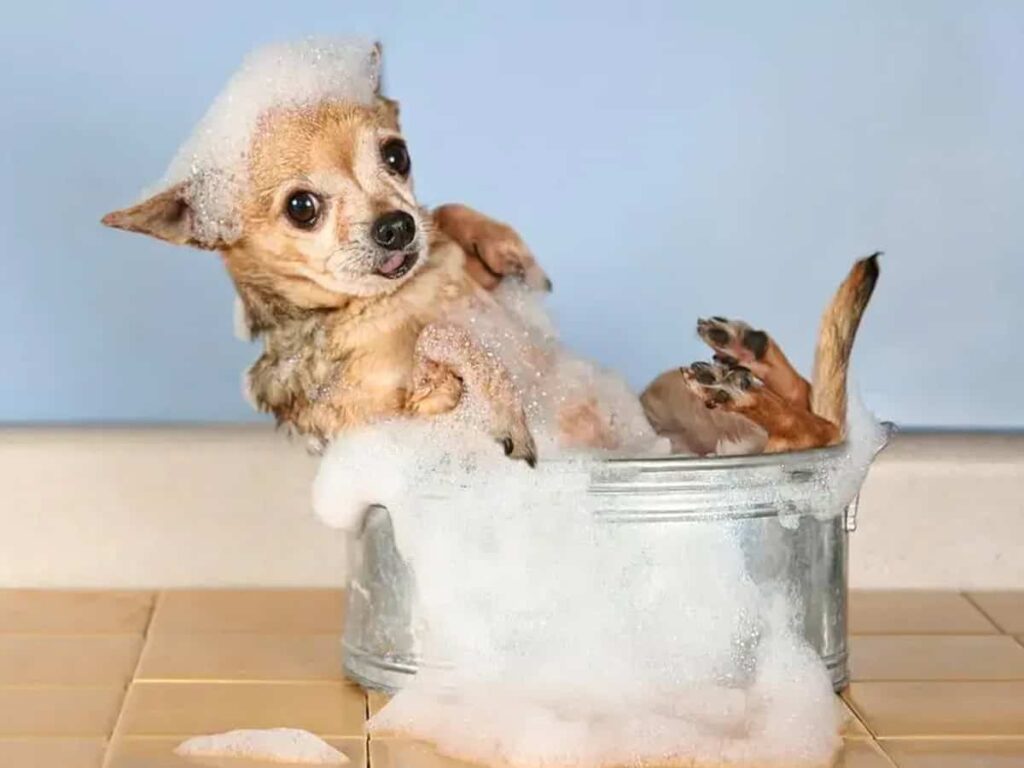
Brushing, Drying, and the Small Details Most Owners Skip
Brush before the bath. A pre-bath brush removes loose hair and debris and reduces the amount of product you need; it also reduces the matting that wet hair, particularly on long-coat chihuahuas, produces if combed late.
Water temperature should be lukewarm; cold water reduces lather and stresses a small dog, and hot water exacerbates inflammation. Rinse twice. The single most common cause of post-bath itching is residual shampoo, not the shampoo itself.
Dry with a towel first. If you use a hairdryer, use the cool or low setting; the chihuahua coat dries faster than you expect, and high-heat drying produces dry skin and, occasionally, burns.
When to Call Your Veterinarian, Not the Pet-Store Aisle
Same-day reasons: open lesions or hot spots; sudden severe scratching after a bath; coat shedding in patches with red skin underneath. Within-the-week reasons: persistent dandruff that does not respond to a switch in shampoo; recurrent paw licking; coat dullness that has not improved after eight weeks of chihuahua-appropriate grooming. The companion piece on the omega-3 intervention for itchy chihuahua skin covers the dietary side; the companion three things every chihuahua owner must know guide covers the broader breed-specific risks.
A Routine You Can Start This Week
Pick one chihuahua-appropriate shampoo. Patch test it. Set a calendar reminder for every twenty-eight days. Brush before, rinse twice, towel-dry first, low-heat dryer second. Talk to your veterinarian about the underlying skin profile if your dog has been chronically itchy; the right shampoo will not fix a primary skin condition, and the wrong one will worsen one.
For more clinical explainers, browse the Health desk or subscribe for the next dispatch. Talk to your veterinarian about anything that does not look right at home.
Health at a Glance: What to Watch monitor_heart
| Condition | Key Signs | Prevention Tips |
|---|---|---|
| Dental Disease | Bad breath, tartar, red gums | Daily brushing, dental treats |
| Patellar Luxation | Limping, skipping, leg lifting | Weight control, avoid high jumps |
| Tracheal Collapse | Dry cough, gagging | Harness walking, avoid smoke |
| Heart Disease | Coughing, fatigue, fainting | Regular check-ups, heart-healthy diet |
| Hypoglycemia | Shaking, weakness, lethargy | Small, frequent meals |
Community Insights – FAQ help
help_outline When should I call my vet about a behavior change? expand_more
Sooner than feels reasonable. A change in appetite, energy, or routine that lasts more than 48 hours is worth a phone call, not a wait-and-see.
help_outline How often should a healthy adult chihuahua see the vet? expand_more
Once a year through age seven. Twice a year from eight on. Dental checks are part of every visit.
help_outline Do chihuahuas need different care than larger breeds? expand_more
Yes. Smaller medication dosing, more frequent dental work, and closer monitoring for tracheal and patellar issues are standard in toy-breed care.
Have a health question? Ask your question in the comments. We will bring it up with the vet team.
favorite