

What does a good first eight weeks of training look like for a chihuahua puppy? In one sentence: short, calm, reward-based sessions that build a name response, potty habits, crate comfort, and a small set of basic cues, alongside the early socialization window that closes around sixteen weeks. The plan is not complicated; it just needs to be consistent.
I am going to walk through the first eight weeks home, week by week, with the practical sessions I run with new puppy owners.
Week one: name, food, sleep, potty
The first week is not about training in the traditional sense. It is about the puppy learning that the household is safe, predictable, and rewarding. Three small projects:
- Name recognition. Say the puppy’s name in a soft tone, then immediately drop a small treat on the floor. Ten times a day, in low-distraction moments. By Friday the name reliably produces a head turn.
- Potty cadence. A chihuahua puppy needs to go out roughly every 90 minutes during waking hours, plus immediately after waking, eating, and play. Pick one outdoor spot; carry the puppy there; reward the moment the elimination begins.
- Sleep. A small crate with a soft blanket, in your bedroom for the first month. The puppy hears your breathing; the puppy is not isolated; the crate becomes safe.
Weeks two to three: crate comfort, sit, settle
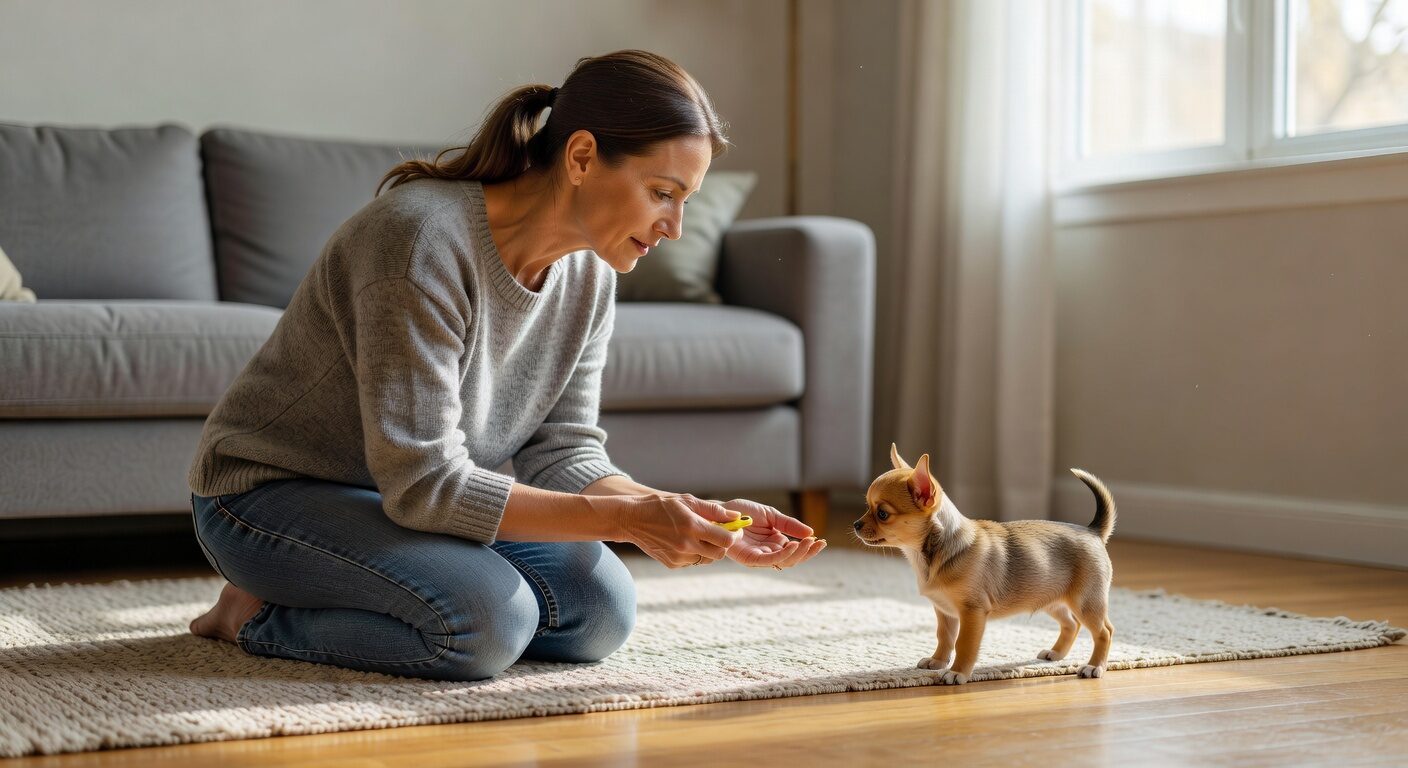
By week two, the puppy has settled into the household rhythm and is ready for the first explicit cues. I run two-minute sessions, twice a day, in a quiet room.
- Sit. Lure with a treat held above the nose, moving slowly back; the puppy’s head follows up and the rear lands. Mark and reward. Add the verbal cue once the body movement is reliable.
- Crate comfort. Toss treats into the open crate. Let the puppy go in and out freely. Build to short stays with the door closed while you sit nearby. Never use the crate as a punishment.
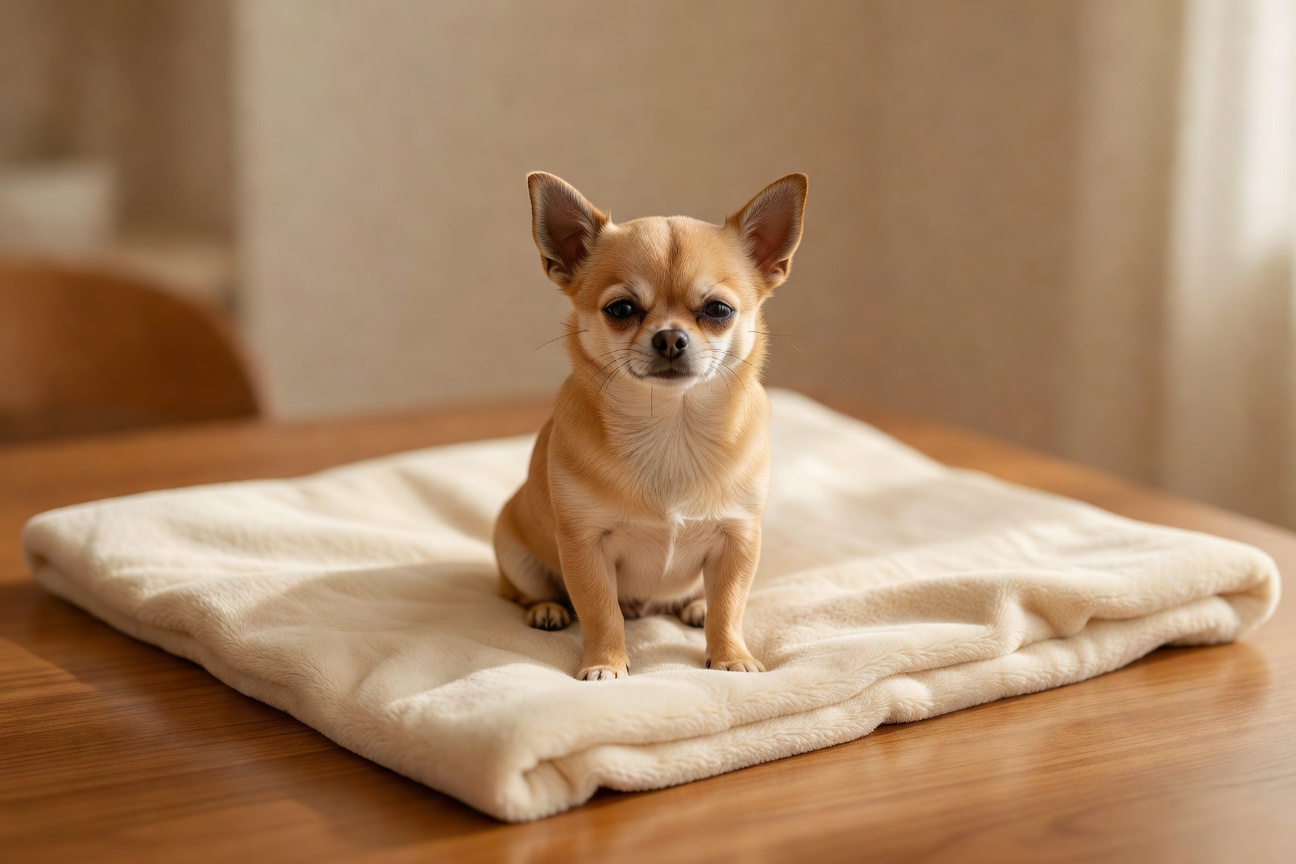
- Settle on a mat. Lure the puppy to a small mat, reward calmness, build duration. Two minutes a session is plenty.
Weeks four to six: come, leave it, and mild distractions
By week four, the puppy is ready for two more cues that, in my experience, do most of the safety work for the next decade.
- Come. In a low-distraction environment, call the puppy’s name, then "come" in a happy voice; reward heavily on arrival. Build distance slowly. Never call the puppy and then do something unpleasant; "come" must always be safe.
- Leave it. Hold a treat in a closed fist. The puppy paws and noses; eventually disengages. Mark the disengage and reward from the other hand. Build to dropped items on the floor; reward heavily for ignoring.
These two cues, more than any others, prevent the small-dog disasters I see in my caseload. A reliable "come" recovers a puppy who has slipped a leash. A reliable "leave it" prevents the chocolate-on-the-floor emergency.
Weeks six to eight: the world, in small doses
The early socialization window starts to close around week sixteen of the puppy’s life. By the time you have had your puppy for six to eight weeks, you are usually inside that window and need to be working on it. The AVSAB position statement is the document; the practical version is small, frequent, positive exposure.
A chihuahua-appropriate socialization plan looks like this: a quiet sidewalk twenty feet from a coffee shop, treats while the puppy watches; a friend’s calm adult dog at a distance, treats; a different surface (grass, gravel, tile) every other day, treats; a vet-office visit for a "happy visit" where nothing is done but treats from the receptionist. The full socialization field guide has the eight categories.
What to skip, and why
A few interventions I see new puppy owners try that are not, on the available evidence, helpful:
- Punishment-based corrections. Aversive training increases fear and reactivity in small breeds, which is the last problem you want to add. Reward-based methods are the recommendation of every major veterinary behavior body.
- Skipping the crate. A puppy without a calm safe space gets less sleep and is harder to potty-train.
- Long sessions. Two minutes is the right length at this age. Five is too long. The puppy is learning short bursts of focus, not endurance.
- Calling the puppy and then clipping the leash to leave the park. This poisons the come cue. A few stress-management protocols help if you are seeing early reactivity.
A note on potty troubleshooting
Potty training a chihuahua puppy takes longer than most owners expect, often three to six months for full reliability. Two specific issues come up often. First, a small dog can hide a small accident in a way a Labrador cannot; an accident behind the couch goes unnoticed for hours, and the smell becomes a re-marking cue. Use an enzymatic cleaner on every accident, not just a regular floor cleaner. Second, weather matters more than at fifty pounds; a chihuahua puppy in cold rain is unlikely to focus on elimination. A small puppy raincoat or a covered patch of yard meaningfully changes compliance.
If accidents are increasing in frequency rather than decreasing, the schedule is the first thing to revisit, not the puppy. The general puppy-care primer covers the feeding cadence that supports a predictable potty schedule.
One thing to do this week
If you have a chihuahua puppy at home and have not started any of this, do the simplest possible thing tonight: ten name-and-treat reps before bedtime. Soft tone, immediate reward. By Friday the name reliably gets a head turn, and you have the foundation for everything else.
The training plan is not a race. It is a cadence. Two minutes a session, twice a day, five days a week, for eight weeks. By the end you have a calm, name-responsive, mat-trained, recall-trained chihuahua who has begun to enjoy the world. The work is small. The compounding, over the next decade, is large.
Gear That Works backpack
Harness (Not Collar)
A step-in harness is safer and more comfortable.
Lightweight Leash
4–6 feet gives freedom without losing control.
Treat Pouch
Keep rewards accessible and distraction-free.
ID Tag & Microchip
Always be prepared in case of separation.
Trainer Tip: Success on walks starts with reading your Chihuahua's signals and respecting their pace.
Was this guide helpful?
Was this guide helpful? Save the guide. Share it with one other chihuahua owner this week.
favorite